
Social Studies Grade 9: Canada in the Contemporary World
Please review each article prior to use: grade-level applicability and curricular alignment might not be obvious from the headline alone.

Alberta’s timing targets for West Coast pipeline ‘best-case scenario’: CIBC analysts
4 minute read Preview Wednesday, May. 20, 2026
Americans are looking back centuries to find Canadian ancestors — and citizenship
10 minute read Preview Thursday, Jun. 11, 2026It takes a village to raise — and educate — a child
6 minute read Tuesday, May. 19, 2026The oft-quoted saying, “it takes a village to raise a child,” resembles an African proverb. In the Yoruba language, the saying goes “two eyes birth a child, but 200 eyes raise it.”
Over the past several decades, that saying has come to mean something entirely different from what villagers meant, in Africa and in the small town where I grew up. The saying meant two, equally important things. It meant the community has a stake in ensuring that children are properly cared for, but the saying also meant that children must be taught and understand their obligations to the community at large.
The 200 eyes raising the child in the village did not look away when the parents or a child failed to observe community standards. When a child disrespected someone in the community, they were corrected. The village had a clear code of conduct that governed what was expected behaviour. These mores, or societal expectations, were understood and enforced by both parents and community members.
Everyone needs to understand their society’s written and unwritten rules. It is our obligation to teach our children the expectations we have of each other.
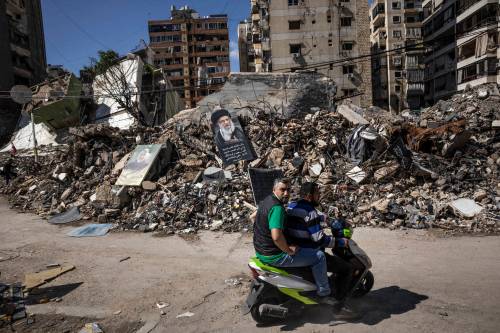
The folly of war: the wisdom of peace
6 minute read Preview Tuesday, May. 19, 2026
U.S. says it’s pausing long-standing military board with Canada
5 minute read Preview Tuesday, Jun. 9, 2026Solidarity Dialogues workshops counter polarization
5 minute read Saturday, May. 16, 2026Amal Elsana Alhjooj is not a person to sit idly by when she encounters a challenge, conflict or situation that needs correcting. Over the years, that attitude and activism have led her to establish several innovative social justice and civil society initiatives that, among other achievements, have enhanced the livelihood and independence of Bedouin women in Israel, where Alhjooj was raised, and the relationship between Jews and Arabs both in Israel, Palestine and in Canada, where Alhjooj now lives.
Alhjooj’s most recent venture is a series of workshops called Solidarity Dialogues.
Solidarity Dialogues is an offshoot of PLEDJ, a social change non-profit that Alhjooj, who is Muslim, co-established in 2021 with Brian Bronfman, the Jewish president of the Peace Network for Social Harmony, to empower and organize marginalized communities to address systematic injustices that impede their lives.
Solidarity Dialogues is more narrow in scope, as it is designed specifically to address the deep seated polarization currently permeating Canadian workplaces, schools and society in general. Solidarity Dialogues’ series of workshops provide participants with the tools to navigate that polarization and the heated, intolerant and uncomfortable exchanges that tend to characterize that polarization. By differentiating between dialogue and debate, and hurt and harm, the workshops provide participants with safe spaces in which to step out of their comfort zones, listen empathetically and openly to others’ lived experiences, and develop mutual understanding and an ability to respond to conflict.

$61-M investment in high-speed Internet planned for northern First Nations
4 minute read Preview Friday, May. 15, 2026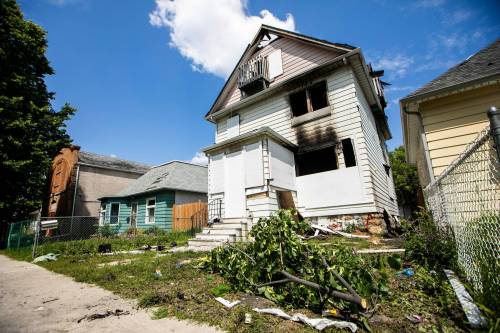
Province has to untie Winnipeg’s hands in fight against vacant, boarded-up properties
5 minute read Preview Friday, May. 15, 2026
AFN chief warns against changes to major projects development rules, calls for debate
4 minute read Preview Monday, Jun. 8, 2026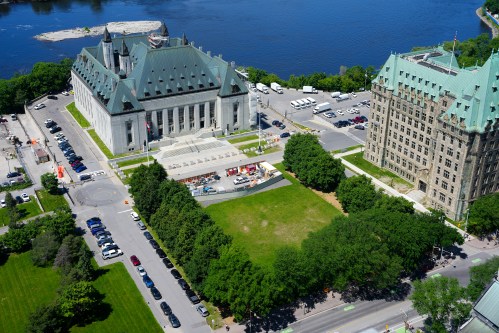
Supreme Court recognizes intimate partner violence as a legal basis for civil damages
5 minute read Preview Monday, Jun. 8, 2026The dangers of gambling on nuclear power
5 minute read Friday, May. 15, 2026Dismissing climate science, setting Canada apart from most nations and planting us firmly in the United States’ camp, the Carney government is betting the farm on a “nuclear renaissance.”
There have been numerous indications this was coming. But Energy Minister Tim Hodgson’s April 29 statement to the Canadian Nuclear Association, following immediately on the launch of the “Canada Strong Fund” left no doubt that our investment banker prime minister is determined to pursue his nuclear energy superpower dreams.
As the UN Climate Envoy, Mark Carney famously said there is “no path to net zero without nuclear.” This has been a mantra of successive Liberal governments even as Canada’s last nuclear build was in the 1980s, and nuclear’s share of global electricity production has been steadily declining. It’s also been the rallying cry of nuclear advocates spending big to persuade anxious populations experiencing floods, droughts and wildfires that nuclear power will solve our climate disaster in the making. That claim is false.
Eight years ago, the Liberals rolled out their “SMR roadmap,” predicting the first (slightly) smaller new reactors would be operational in 2026. It isn’t happening. A new report by M.V. Ramana and Susan O’Donnell — Assessing Small Modular Nuclear Reactors in Canada — details the $4.5 billion spent by Canadian governments on SMRs with zero kilowatts of electricity generated to date. Most of that money went to the potential first SMR in Canada, the BWRX 300, an American design by GE Hitachi that uses enriched uranium fuel, not available in Canada.

Indigenous hoopster’s son on mission to get dad inducted into Canadian Basketball Hall of Fame
8 minute read Preview Thursday, May. 14, 2026
Discussion paper floats ways Ottawa can help fund giant electrical grid buildout
4 minute read Preview Friday, May. 15, 2026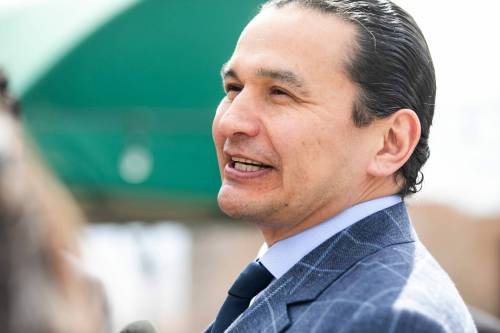
Kinew says watchdog could enforce proposed social media ban
3 minute read Preview Wednesday, May. 13, 2026City gets $4M from federal Housing Accelerator Fund
3 minute read Wednesday, May. 13, 2026Winnipeg is set to receive more than $4 million from the federal government for 150 housing units.
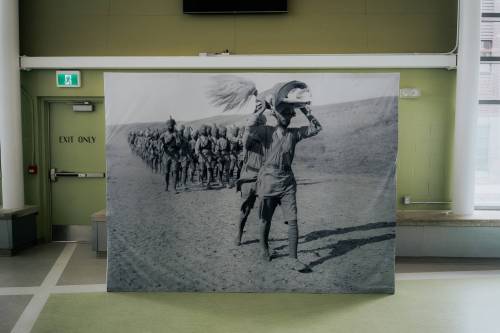
Exhibit helps tell story of Sikh immigrant who put life on line
4 minute read Preview Thursday, May. 14, 2026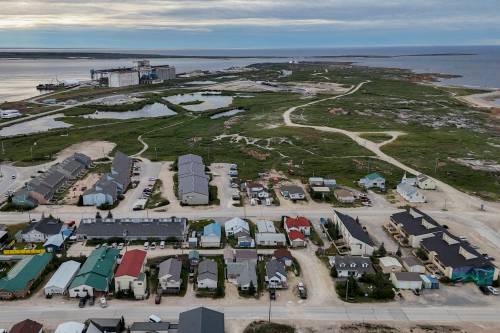
Churchill project not worth the risk
4 minute read Preview Tuesday, May. 12, 2026
Federal government dismisses calls for radar sites to remain as farmland
4 minute read Preview Wednesday, Jun. 3, 2026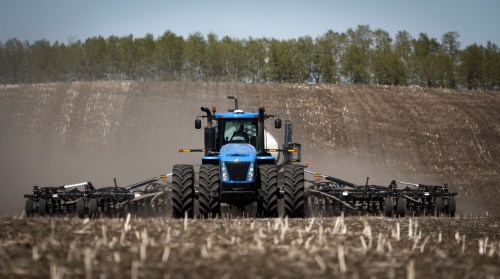
Canada well positioned to face food inflation risks from fertilizer shortages: report
3 minute read Preview Tuesday, May. 12, 2026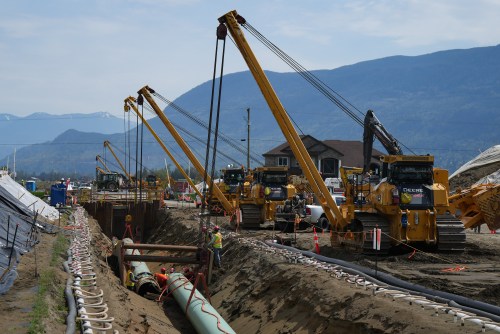
Economic growth now tops environment as priority in energy policy, poll suggests
6 minute read Preview Tuesday, May. 12, 2026
MPs amend bill criminalizing sexual deepfakes to include ‘nearly nude’ images
5 minute read Preview Wednesday, Jun. 3, 2026
Baltic, Nordic officials urge Canadians to learn from the Russian threats they face
6 minute read Preview Tuesday, Jun. 2, 2026Job-site policy cited in cost of Brandon school construction
5 minute read Saturday, May. 9, 2026BRANDON — The Construction Association of Rural Manitoba has said it will cost as much as 20 per cent more to build a school in Brandon because of the labour policy introduced by the provincial government in 2025.
The regulations include prioritizing union workers when adding extra staff and paying a fee of 85 cents per worker per hour, executive director Shawn Wood said.
“We know from talking to our members: if they’re going to bid on a project, just the additional admin costs and the additional cost of that 85 cents per man hour puts them anywhere from a five to 20 per cent increase in cost,” Wood said.
“I believe the Brandon school will be closer to the 20 per cent.”
