Power and Authority
Please review each article prior to use: grade-level applicability and curricular alignment might not be obvious from the headline alone.
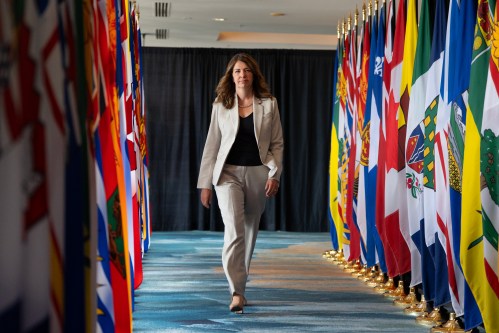
Alberta’s Smith bucks NDP call to cancel separation vote amid Canada-U.S. trade war
4 minute read Preview Friday, Aug. 28, 2026
Waverley West council candidates say city services haven’t kept up with fastest-growing ward
5 minute read Preview Thursday, Aug. 27, 2026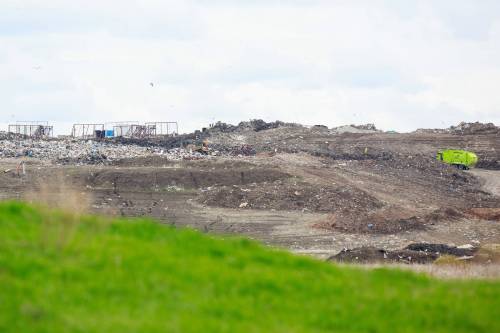
City’s landfill gas project hasn’t gained any steam after four years
5 minute read Preview Monday, Aug. 24, 2026
Quebecers support a right to cooling during heat waves, poll finds
4 minute read Preview Tuesday, Aug. 25, 2026
Small businesses at front lines of tariff war, as many lose sales
5 minute read Preview Tuesday, Aug. 25, 2026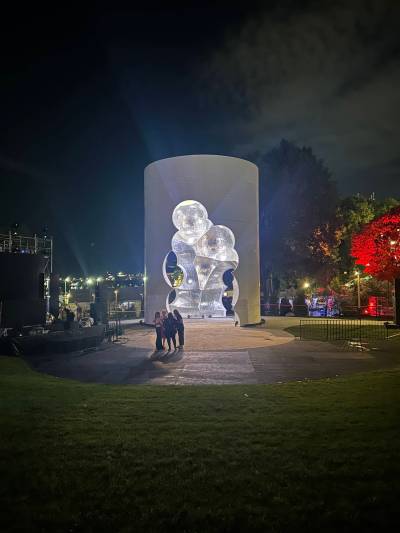
Winnipeg team behind national LGBT monument spent six years bringing it to fruition
5 minute read Preview Sunday, Aug. 23, 2026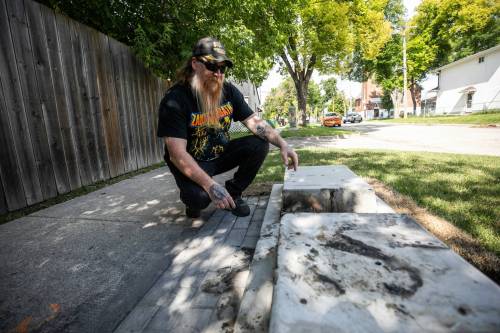
Residents fear mailbox crime sprees
4 minute read Preview Saturday, Aug. 22, 2026Members of Baha’i faith suffer intense persecution in Iran
5 minute read Saturday, Aug. 22, 2026The war between the U.S. and Iran has put some of us in an uncomfortable position.
On the one hand, we can feel like cheering on the Iranians as we watch them stand up to the American bully. It’s like the enemy of my enemy is my friend, as the old saying goes.
On the other hand, Iran doesn’t feel like much of a friend because of its terrible human rights record — including its treatment of religious minorities in that country such as Christians, Jews and Baha’is.
Those abuses only seem to be increasing due to the war. The United Nations has condemned the Iranian government for how it is treating religious minorities during this time, saying it is using the war as “a smokescreen to deepen their machinery of repression and carry out crimes under international law with impunity.”
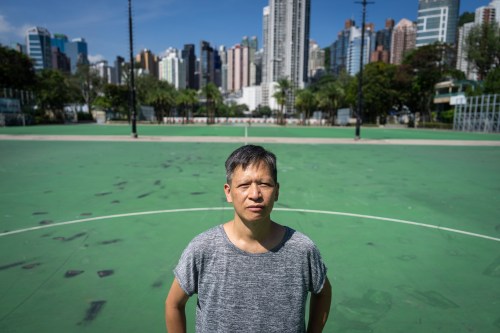
Former Hong Kong vigil organizer strives to mark Tiananmen crackdown despite convictions
5 minute read Preview Saturday, Aug. 22, 2026‘We need accountability’: foster parents, advocates rally for action at legislature
4 minute read Friday, Aug. 21, 2026Demonstrators rallied at the Manitoba legislature Friday, calling the abuse and death of children in care a “state of emergency.”
“These things continue to happen,” said Donna Dumas, a former foster parent of a child with special needs.
She pointed to the Aug. 9 death of a four-year-old girl in care on Long Plain First Nation. Two of the girl’s sisters, aged one and two, were hospitalized with injuries. The children’s mother, who was at Friday’s rally, previously told the Free Press she was working to get her kids back in her care after they were apprehended in October 2025.
Family reunification advocate Cheryl Wozniak said the NDP government was expected to help return children to their families.
Educated people vote
5 minute read Friday, Aug. 21, 2026I add my voice to Erna Buffie’s Think Tank piece “Democracy is a civic election issue” (Aug. 13) by asserting that democracy is a public education issue. Put another way, this fall’s municipal and school board elections are a test of public education — educating democratic citizens who appreciate our democratic inheritance enough to take responsibility for renewing it.
Private governance or public good
5 minute read Friday, Aug. 21, 2026The Manitoba government recently held public forums to discuss regulations for Bill 51, the Public Sector Artificial Intelligence and Cybersecurity Governance Act. I was able to participate in the meeting in Brandon and there was also a session in Winnipeg.
I was a bit fired up, ready to rail about data centres and phone terms and conditions and generally give it to big tech. The discussion, however, was focused on what the public sector responses should be regarding cybersecurity, data and privacy protections, and AI usage in government.
With all the recent attention on social media bans, the harms of AI, misinformation and the like, I was somewhat disappointed that these would not be tackled directly in this meeting. Those issues may be discussed at future forums.
At this event, as focus groups developed responses, the discussion between private companies and public governance kept getting mixed in, pointing out the reliance of government services on private companies in running their digital operations. As government operations become more dependent on digital infrastructure and towards AI agency and control, rethinking how technology is implemented may be crucial to our democracy.

Rural residents ‘outraged’ property owner charged after shots fired during confrontation with alleged thieves: MLA
5 minute read Preview Thursday, Aug. 20, 2026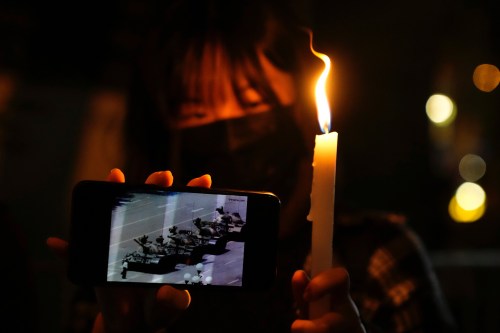
2 organizers of Hong Kong’s Tiananmen vigils convicted in national security case
6 minute read Preview Saturday, Aug. 22, 2026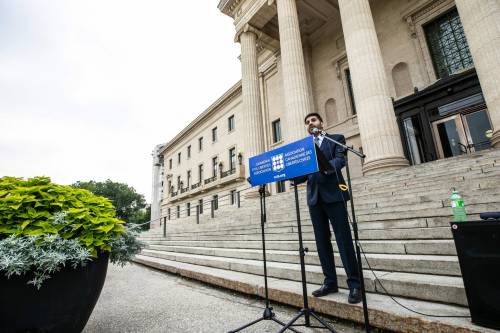
Legal aid underfunding violates Charter, lawsuit claims
4 minute read Preview Thursday, Aug. 20, 2026
WestJet ordered to scrap weight cap on power wheelchairs
4 minute read Preview Friday, Aug. 21, 2026Build the resources to help children with speech
6 minute read Thursday, Aug. 20, 2026Imagine your daughter says her first word later than her friends do. You wait, hoping she will catch up. By age three, she still is not putting words together the way other kids her age are. Your doctor refers you to a speech-language pathologist. You expect a call within a few weeks.
Instead, you wait. Six months. A year. Two years.
By the time your daughter is finally seen, she is heading into kindergarten. She still struggles to tell her teacher she needs the bathroom. She still cannot explain when something hurts. She still cannot join in the games her classmates play, because those games need more words than she has.
As a parent, your anxiety grows, the frustration leading to sleepless nights worrying about how your child’s life will be impacted by this lack of support. The rest of your family and circle of friends is deeply affected by this potential crisis, they can see you struggling, you feel the stain of stigma attaching itself to your precious daughter. Where can you turn to help your child?

Planned Elmwood Hub project combines 115 mixed-income housing units, social supports, programs
4 minute read Preview Friday, Aug. 21, 2026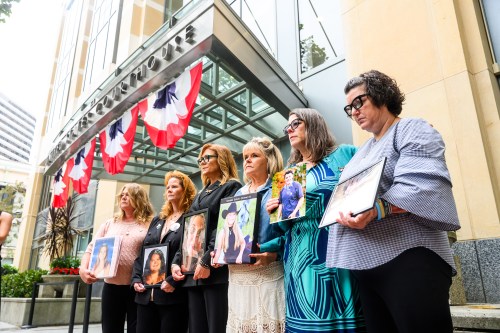
In Meta’s trial, families of social media victims see a pivotal moment for online safety
5 minute read Preview Wednesday, Aug. 19, 2026
Trump administration moves ahead to end roadless rule on national forests
4 minute read Preview Wednesday, Aug. 19, 2026
A grand jeté of climate-change denial
5 minute read Preview Tuesday, Aug. 18, 2026Improving building standards
4 minute read Tuesday, Aug. 18, 2026As I was working in my garden today, I was thinking that, while I still enjoy it, I am starting to wonder how much longer I will be able to care for a house and a yard. Like many my age, I have been thinking about the condominium option here in Winnipeg.
I am a mother and a grandmother and I am also very concerned about climate change and the need to recognize that our emissions from coal, oil, and gas are warming the Earth. As a climate activist, I do not want to pollute. Yet as a condo purchaser, I would have no control over how the building is insulated, heated and cooled or how much energy it would take to do so.
When I moved to Winnipeg four years ago, I intended to buy a house and install a heat pump, which heats and cools a home using electricity only.
Before that purchase, I phoned Manitoba Hydro and was advised to buy a home built after 1985, when national standards were upgraded to require better insulation. That was no trouble for me, given I had already moved from a 1960s house into a new house in 1989 and even though the new home was larger, our gas bill was cut in half because of the added insulation.
The moral courage of public dissent
5 minute read Tuesday, Aug. 18, 2026As a non-Jewish Canadian, I have watched our public conversation about Israel and Palestine become increasingly polarized. One feature of that debate has particularly caught my attention—not the disagreements themselves, but the moral courage required of Jewish Canadians who publicly dissent from influential voices within their own community.
Ironically, many non-Jewish Canadians who may have little familiarity with Jewish history assume that disagreement is somehow un-Jewish. The opposite is true. Debate has been central to Jewish intellectual life for centuries. The Talmud itself preserves arguments rather than erasing them.
To outsiders, minority communities can easily appear to speak with one voice. In Canada, organizations such as the Centre for Israel and Jewish Affairs (CIJA), Jewish Federations of Canada (UIA) and B’nai Brith are often perceived as representing the Jewish perspective on Israel and antisemitism. They undoubtedly represent many Canadian Jews. But they do not represent them all.
There are also Jewish organizations and individuals — including Independent Jewish Voices Canada, the United Jewish People’s Order, the recently formed Jewish Faculty Network and others — who reject the notion that any single institution or political perspective can define what it means to speak as a Jew in Canada. They frequently offer perspectives that differ from those advanced by many established Jewish organizations about Israel; defend the importance of free expression on university campuses; and argue that criticism of the actions of the Israeli government should not automatically be equated with antisemitism.