Media and Communications
Please review each article prior to use: grade-level applicability and curricular alignment might not be obvious from the headline alone.

AI is helping gas stations collude to raise California fuel prices, lawsuit says
3 minute read Preview Wednesday, Jun. 24, 2026
Websites suggest conspiracies fed accused Montreal gunman’s ‘buffet extremism’
5 minute read Preview Thursday, Jun. 25, 2026
Charlie Brown’s longtime pen pal is finally revealed in new Apple TV ‘Peanuts’ movie
5 minute read Preview Thursday, Jun. 25, 2026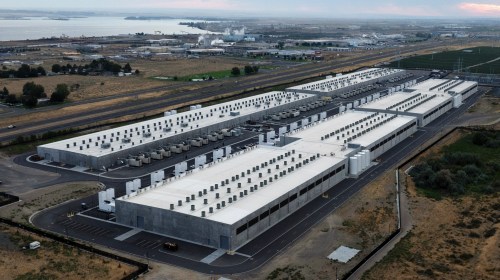
AI is an energy and water hog, here’s what you can do to counter that
7 minute read Preview Tuesday, Jul. 21, 2026
Hockey Night in Canada: A cultural tradition forever changed
4 minute read Preview Wednesday, Jun. 24, 2026
What is the 2026 song of the summer? AP offers some predictions
7 minute read Preview Thursday, Jun. 25, 2026
Top developers are pivoting from chatbots to physical AI
6 minute read Preview Tuesday, Jul. 21, 2026Chinese supercomputer displaces US machines as world’s fastest for first time since 2017
2 minute read Tuesday, Jun. 23, 2026A supercomputer in China now outranks its U.S. counterparts as the world’s most powerful, marking the first time since 2017 that a Chinese computer has topped a list sometimes viewed as a measure of a nation's technological prowess.
The LineShine computer in Shenzhen, China, displaced top-ranked U.S. computer El Capitan in the latest version of the TOP500 ranking announced Tuesday. It was the Chinese computer's debut on the list.
Scientists behind the TOP500 project said the LineShine computer at China’s National Supercomputing Center achieved 2.198 exaflops, meaning it can perform more than 2 quintillion calculations per second.
El Capitan, at the U.S. government’s Lawrence Livermore National Laboratory in California, now ranks second, ahead of two other U.S. supercomputers at national laboratories in Tennessee and Illinois. Dropping to fifth place is the Jupiter supercomputer in Germany. The five are the only publicly verified exascale computers in the world.
Locals are challenging a million-square-foot data center that would be the biggest in California
8 minute read Wednesday, Jul. 15, 2026In April, developers of the massive Imperial Data Center cleared a major hurdle after Imperial County Supervisors approved a plan to combine several tracts of land for the nearly one-million-square-foot facility in rural Southern California.
It would be the largest data center in the state; the parent company, Imperial Valley Computer Manufacturing, LLC describes it as a hyperscale facility, “designed exclusively for advanced artificial intelligence and machine learning operations.”
Last week, that progress came to a halt when the county board walked back its decision, declaring a 45-day moratorium on data centers and forming a public commission to advise the county on zoning policy for the facilities. Their reversal came after months of backlash, and a more than hour-long public hearing in which residents voiced sharp criticism of the sweeping project and its swift approval.
The developer, Sebastian Rucci, said he’s filing a lawsuit to seek a temporary restraining order against the moratorium today, arguing that the county failed to show a true emergency, explain what harms and impacts it will cause, and what specific concerns residents have raised.

One Extraordinary Photo: What it takes for inclement weather to become the news of the match
2 minute read Preview Tuesday, Jun. 23, 2026
Supreme Court kills suit claiming Cisco’s technology helped China persecute Falun Gong members
3 minute read Preview Wednesday, Jun. 24, 2026
Philippines temporarily blocks gaming app used by suspect in deadly school shooting
3 minute read Preview Wednesday, Jun. 24, 2026
40 mayors worldwide endorse a pact to shape data center development
6 minute read Preview Wednesday, Jun. 24, 2026
AI companies should release environmental impact, commit to clean energy, says UN chief
5 minute read Preview Wednesday, Jul. 15, 2026
AI chatbots hit the dating scene, becoming the lovelorn’s modern-day Cyrano
6 minute read Preview Wednesday, Jun. 24, 2026Ottawa commits $96.8M to internet connections
1 minute read Tuesday, Jun. 23, 2026Minister of Northern and Arctic Affairs Rebecca Chartrand on Monday announced more than $96.8 million in federal funding for a project by Winkler-based Valley Fiber Ltd. to bring high-speed internet access to communities across Manitoba.
The project will connect up to 7,875 households in more than 50 rural and remote sites.
The funding is provided through the Universal Broadband Fund, designed to ensure rural, remote and Indigenous communities have access to reliable high-speed internet.
Ottawa has committed to ensuring every household has access by 2030, and said Monday it is on track to meet its goal.
If life hands you a data centre, grow tomatoes
4 minute read Tuesday, Jun. 23, 2026People everywhere are protesting AI data centres, with good reason. They use a lot of water and energy, and they create a lot of noise. They create relatively few ongoing jobs after construction is complete.
Electricity used to power servers at AI centres creates heat. To keep running they must be cooled. More electricity is used to power chillers to cool the computers. In summer, chillers evaporate water and dissipate heat to the atmosphere. Lots of it. A few Olympic-size swimming pools worth, even in our cold climate.
A 100 MW (100,000 kW) data centre uses enough power to heat about 10,000 homes with electric baseboard heat or an electric furnace. Or about enough to heat 80 acres of greenhouse on the coldest days of January. To put that in perspective, the recently completed Keeyask dam produces about 695 MW of power. A 100 MW data centre uses about 14 per cent of the power produced by the Keeyask dam.
In Finland, a data centre was built under downtown Helsinki. Waste heat from the data centre is recycled to heat the buildings above it.

AI safety advocates say bill a good ‘first step’ on regulation, but more needed
5 minute read Preview Tuesday, Jul. 14, 2026
Stopping AI ‘slop shots’ in modern politics
5 minute read Preview Saturday, Jun. 20, 2026
How Canada can continue to lead on news policy
5 minute read Preview Saturday, Jun. 20, 2026
What prediction market trading is and why it’s gaining popularity
3 minute read Preview Friday, Jun. 19, 2026
Vehicle repair assistance startup creates practical, community-minded solution to real problem: Manitoba Innovates CEO
4 minute read Preview Wednesday, Jun. 17, 2026
Sea Bears’ hype guy Kosyuga is the man behind the light-up shades
6 minute read Preview Wednesday, Jun. 17, 2026