Search Results
Please review each article prior to use: grade-level applicability and curricular alignment might not be obvious from the headline alone.
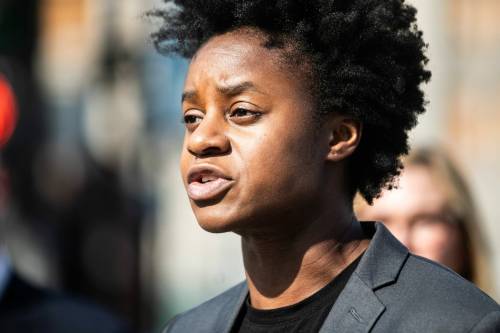
Manitoba supports MAID delay: Asagwara
5 minute read Preview Friday, Aug. 14, 2026
Classic Scoop founder left lucrative job to start business offering treats on-site for parties, festivals
5 minute read Preview Friday, Aug. 14, 2026
National Code Talker Day brings 101-year-old veteran to Phoenix
5 minute read Preview Saturday, Aug. 15, 2026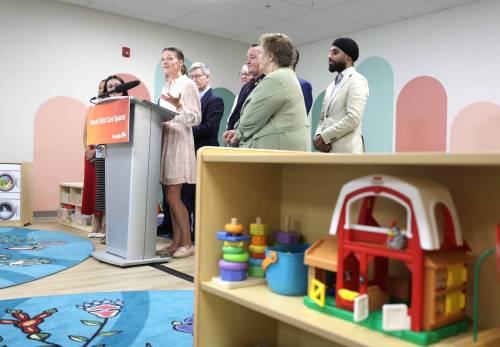
‘Much more to do’ to meet demand for licensed child care: education minister
4 minute read Preview Thursday, Aug. 13, 2026
The scoop on lawn bowling
3 minute read Preview Thursday, Aug. 13, 2026
Elections Canada says 40% of people in Indigenous communities voted federally in 2025
3 minute read Preview Saturday, Sep. 5, 2026
Fact File: Experts douse viral claim that wildfires caused by ‘weather manipulation’
5 minute read Preview Saturday, Sep. 5, 2026
Broken engine parts shattered the Ryanair plane window that a man’s head got sucked into: NTSB
5 minute read Preview Friday, Aug. 14, 2026
Nero’s Bridge emerges from Tiber River as Rome faces water crisis
1 minute read Preview Saturday, Sep. 5, 2026
Flock announces changes amid backlash over its license plate reader network
6 minute read Preview Friday, Aug. 14, 2026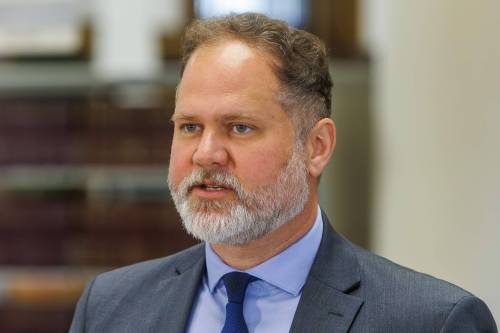
Opaskwayak restorative justice court to give offenders opportunity to ‘heal’
5 minute read Preview Thursday, Aug. 13, 2026
Rainbow Stage star relates to Elle Woods’ perseverance
4 minute read Preview Thursday, Aug. 13, 2026Meeting shines spotlight on internet safety
4 minute read Thursday, Aug. 13, 2026Concerns about status-quo literacy curriculum and website terms-of-service were repeatedly raised at a public consultation on how the provincial government can better protect internet users.
Roughly 50 people gathered in Winnipeg to weigh-in on how local governments should regulate personal data collection and artificial intelligence on Wednesday.
“The average person that selects ‘cookies’ has no idea what that means,” said Alan Campbell, a father of two and longtime school trustee who attended the evening event at St. Vital’s Norberry-Glenlee Community Centre.
Manitoba’s innovation and new technology department has hired KPMG to collect feedback and compile a report on recommendations for future AI use and cybersecurity incident reporting in the public sector.
Let’s move forward on disability rights
5 minute read Thursday, Aug. 13, 2026Tyson Sylvester wants to study computer science.
He has the intelligence, the determination, and the ambition to succeed in post-secondary education. Like thousands of young Manitobans graduating from high school, he wants to pursue higher education and build a career.
Instead, he is spending his young adult life fighting the provincial government to simply receive the supports he needs to get there.
Tyson lives with cerebral palsy, is blind and uses a wheelchair. The irony here is that Tyson can’t get government support because he scored too high on an IQ test.
Democracy is a civic election issue
4 minute read Preview Thursday, Aug. 13, 2026Differing goals of religion, politics
4 minute read Thursday, Aug. 13, 2026Kudos to David Driedger for modelling a more appropriate and constructive role for religion in politics than the one that has become commonplace today (Take care of them; there is enough, Think Tank, July 27).
Resisting the temptation to preach, coerce and control, he has chosen to remind, persuade and challenge. It could hardly more different to what we are witnessing everyday to the south of us. I thank him for his humility, courage and sense of responsibility to humanity.
Our recent experiences with religion’s forays into the political realm, both in the U.S. and parts of Canada have done little to endear us to either one. Religious fundamentalism, in its many forms, has wrought untold havoc on governments across the globe, with some of the most toxic iterations being right on our doorsteps — we might even call it a form of domestic terrorism.
In the U.S., Christian nationalism, represented by MAGA, has contaminated government and ordinary lives like a hazardous toxin escaping containment — corroding and poisoning the presidency, the legislature, the court system and law enforcement, and in the process threatening the very relationships which make a civilized society possible. Simply put, the positive ideal of godliness in the American constitution, which emphasized tolerance for, acceptance of and upheld the equal worth of all peoples is in peril.
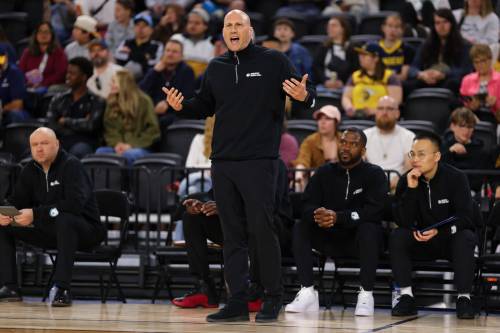
Unsafe conditions force Sea Bears, Honey Badgers into winner-take-all CEBL final in Winnipeg Saturday
4 minute read Preview Thursday, Aug. 13, 2026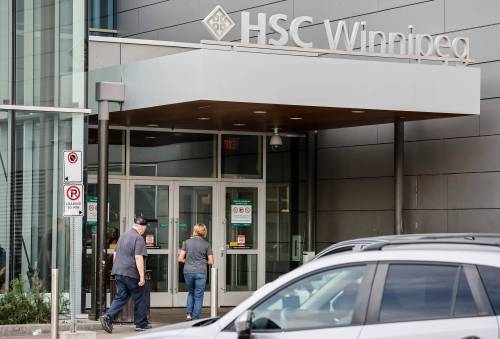
HSC nurses concerned info hacked in cyberattack
3 minute read Preview Wednesday, Aug. 12, 2026
Bringing home a Fish: Group of local baseball fans open doors to Goldeyes
7 minute read Preview Wednesday, Aug. 12, 2026
City charter ties council’s hands in wake of criminal allegations against Transcona councillor
5 minute read Preview Wednesday, Aug. 12, 2026