
Search Results
Please review each article prior to use: grade-level applicability and curricular alignment might not be obvious from the headline alone.
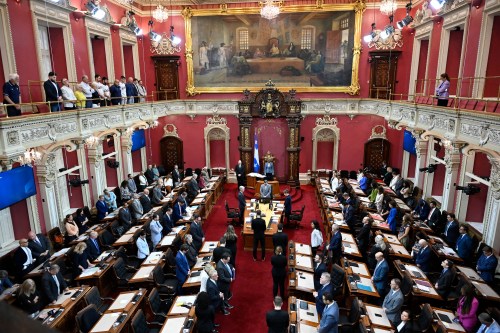
Lawyer challenges Quebec’s law ending manadatory oath of allegiance to the King
3 minute read Preview Friday, Sep. 4, 2026
ICE’s plan to give officers electric shock gloves draws outrage and fears of misuse
4 minute read Preview Thursday, Aug. 13, 2026
Organization works to support Black politicians as they face barriers, discrimination
4 minute read Preview Friday, Sep. 4, 2026
Insolvencies jumped 11.5% annually in June, Canada’s bankruptcy monitor shows
3 minute read Preview Friday, Sep. 4, 2026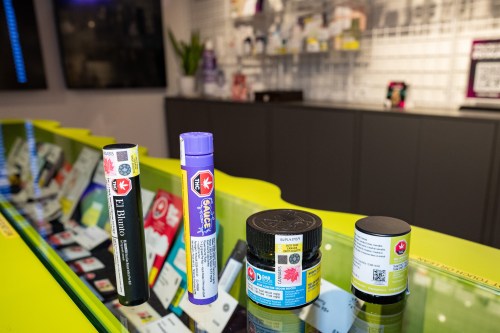
Federal government invests $24 million for cannabis and brain health research
2 minute read Preview Thursday, Aug. 13, 2026
Federal government announces $34M to help communities cope with climate change
2 minute read Preview Thursday, Aug. 13, 2026
Fun drop-in last chance to mentor grads of inner-city school with excellent track record
5 minute read Preview Wednesday, Aug. 12, 2026
A mission to make hearing care easier to access
4 minute read Preview Wednesday, Aug. 12, 2026
Quiet opening fitting for controversial site
4 minute read Preview Wednesday, Aug. 12, 2026‘Artificial intelligence’ based on large language models is shaping up to be the most efficient destroyer of value since the South Sea Bubble. After “the Crash”, which is inevitably coming, some specific functions of AI will eventually turn out to be genuinely revenue-generating, and a lot of jobs will duly disappear. But the biggest winner (and potentially biggest loser) is medical science.
Dr. Brian Hie, a chemical engineer at Stanford University in California, has just revealed that his team has made the first viruses designed by artificial intelligence. They are ‘bacteriophages’, viruses that only infect bacteria and are widely used to treat people with infections that resist other treatments.
However, natural bacteriophages sometimes fail, so Dr. Hie used generative AI to design new ones that might do the job. The AI generated thousands of designs for new genomes that more or less fit the bill, and he chose around 300 of them to build in the lab. It’s hard work, not magic, but he ended up with 16 ‘novel’ bacteriophages that might work.
He applied them to petri dishes containing two harmful strains of E. coli, a common bacteria that lives in the human gut, and they killed the bacteria off. It’s still early days, but if it is truly becoming possible to tailor-make bacteriophages that target specific bacteria, then we may be getting a major new weapon in the struggle against antibiotic resistance.

Governments pledge ‘storefront success’ with downtown grants
4 minute read Preview Tuesday, Aug. 11, 2026
Missing pet tortoise found at Oak Hammock Marsh
3 minute read Preview Tuesday, Aug. 11, 2026
A Winnipeg home with a mountain view? You won’t find a real one, but AI-generated visual suggests otherwise
6 minute read Preview Tuesday, Aug. 11, 2026
A new chapter: Renamed Winnipeg Book Festival takes to The Forks this fall
5 minute read Preview Tuesday, Aug. 11, 2026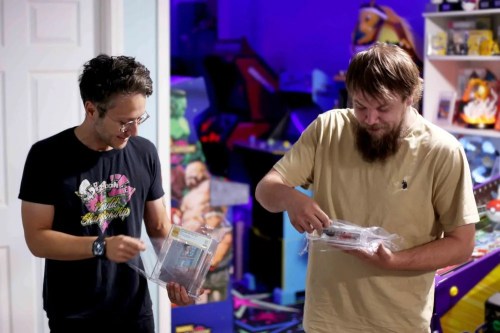
Ultrarare Nintendo Mario game cartridges discovered in Wisconsin
4 minute read Preview Friday, Sep. 4, 2026
Alberta seeks proposals for gambling addiction services as part of iGaming launch
2 minute read Preview Friday, Sep. 4, 2026
Mouth-to-mouth resuscitation saves otter pup found strangled by fishing net in B.C.
4 minute read Preview Friday, Aug. 14, 2026
Long-awaited supervised drug consumption site opens quietly after months of loud opposition
11 minute read Preview Tuesday, Aug. 11, 2026
Ducks Unlimited makes province’s largest-ever conservation-land purchase
3 minute read Preview Tuesday, Aug. 11, 2026
Manitoba opens province’s first supervised consumption site
3 minute read Preview Wednesday, Aug. 12, 2026The drugs changed — our systems didn’t
5 minute read Tuesday, Aug. 11, 2026A recovery-oriented system must connect housing, care, public safety and long-term community support.
Around 2016, something changed on Winnipeg’s streets. Methamphetamine became more prevalent. Fentanyl entered the supply. The drugs became more toxic, addiction more relentless and homelessness far more complex.
Our systems, however, largely remained the same.
For years, we have described Winnipeg’s homelessness crisis primarily as a housing problem. There is no question that we need affordable, supportive and transitional housing. But housing is only part of the crisis unfolding on our streets.