Looking back to move forward Winnipeg’s electric streetcars show no-emissions transit deeply interwoven with city’s history and development
Read this article for free:
or
Already have an account? Log in here »
To continue reading, please subscribe:

Digital Subscription
One year of digital access for only $205*
- Enjoy unlimited reading on winnipegfreepress.com
- Read the E-Edition, our digital replica newspaper
- Access News Break, our award-winning app
- Play interactive puzzles
*First annual payment billed as $205.00 + GST for one year. This annual subscription will automatically renew at $233.00 + GST every 52 weeks (10% off the regular annual price of $259.35). Offer available to new and qualified returning subscribers only. Cancel any time.
To continue reading, please subscribe:
Add Free Press access to your Brandon Sun subscription for only an additional
$1 for the first 4 weeks*
- Enjoy unlimited reading on winnipegfreepress.com
- Read the E-Edition, our digital replica newspaper
- Access News Break, our award-winning app
- Play interactive puzzles
*Your next Brandon Sun subscription payment will increase by $1.00 and you will be charged $17.95 plus GST for four weeks. After four weeks, your payment will increase to $24.95 plus GST every four weeks.
Read unlimited articles for free today:
or
Already have an account? Log in here »
Hey there, time traveller!
This article was published 29/12/2023 (993 days ago), so information in it may no longer be current.
Ask nearly any Winnipegger and they’ll tell you: the worst time to wait for public transit is a dark and frigid January night. This was just as much the case more than a century ago, when a crowd of eager transit riders gathered in “the bush of Fort Rouge” — an undeveloped plot of forest nestled south of the Assiniboine River — to await the result of an unprecedented experiment in Winnipeg’s still-early history.
In Transit
A special series examining the state of Winnipeg’s public transportation system
Huddled against the cold on Jan. 27, 1891, the crowd gathered around the warm glow of oil lamps strung from a wooden streetcar perched on a stretch of rail that ran from Osborne Street to Main Street along River Avenue.
At precisely 7:30 p.m., Winnipeg’s acting mayor T.W. Taylor gingerly raised the trolley arm to connect with an overhead wire.
The streetcar beamed with life, its five dazzling electric lights eclipsing the flickering glow of the lamps. The crowd lingered until midnight, as each passenger waited in the cold for their chance to ride the little streetcar from one end of River Avenue to the other. The electric streetcar was a success — a new era in public transportation had arrived.
Today, Winnipeg is among the legions of cities hoping to revolutionize its transit network with low-emission technologies like battery-electric and fuel-cell buses. The electric shift will require cities to reimagine their transit infrastructure and service delivery, incorporating new innovations still making their way to the market.
It’s not been a painless transition: Prairie cities like Winnipeg are renowned for decades of urban sprawl and car-centric development that have hamstrung the efficiency of transit networks. Winnipeg Transit today has a reputation for long waits, unreliable schedules and inefficient routes.
But at the turn of the 20th century, Winnipeg’s transit system was in a class of its own. The electric streetcar proved instrumental to shaping the city as its suburbs grew around the ever-expanding web of cheap, fast and emissions-free public transportation.
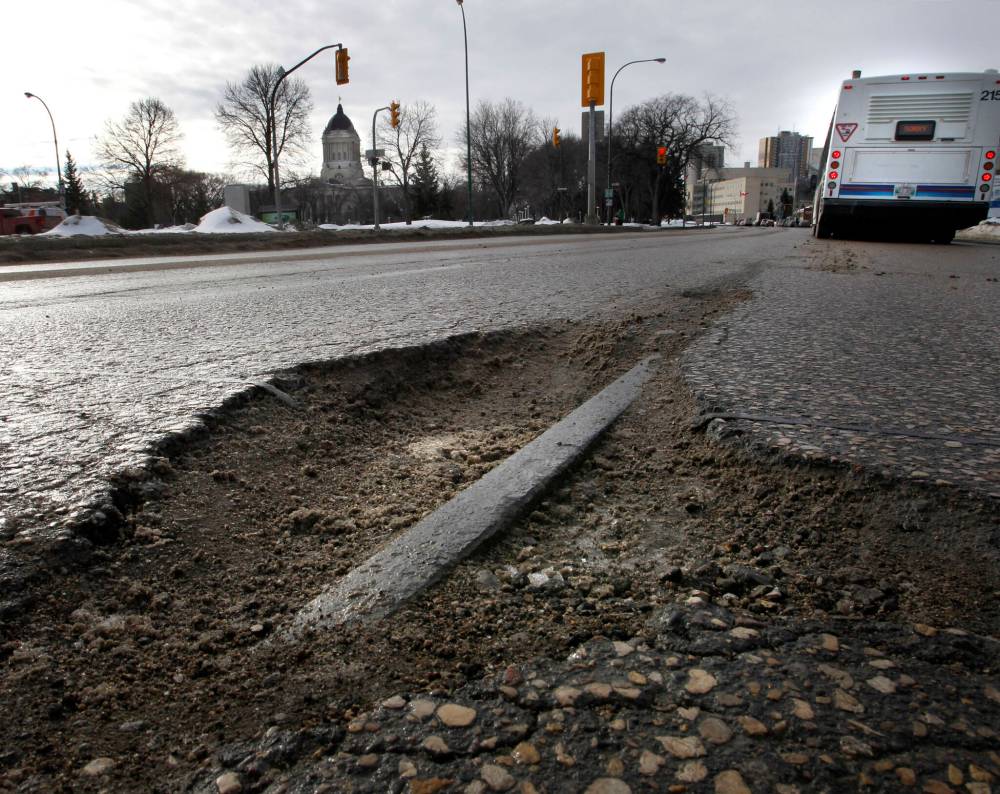
Every now and then, when construction or potholes peel away the asphalt on Winnipeg’s busiest streets, glimmers of forgotten steel rail lines serve as a reminder electric transit has always been part of the city’s fabric. Winnipeg’s public transit history was electric. Now, as countries around the world seek a lower-carbon economy, it’s increasingly looking like the city’s public transit future will be electric, too.
Toward the end of the 1800s, Winnipeg was “the fastest-growing city in North America,” Heritage Winnipeg president Greg Agnew says.
The trans-continental Canadian Pacific Railway had been laid through the centre of town on its way to the Pacific shoreline, and Winnipeg was slated to become “the Gateway to the West.” Rail workers, real-estate moguls and all manner of entrepreneurs made quick work of settling the muddy riverbanks. Money poured in at a rate the city has never seen since.
“Just from Graham to William Avenue we had 32 banks and financial institutions, which kind of gives you an idea of how wealthy we were,” Agnew says.
Winnipeg lore is rich with tales of the city’s early successes: There were more millionaires per capita than in New York. It was the third-largest city in the country — and soon among the fastest-growing, both in population and physical space.
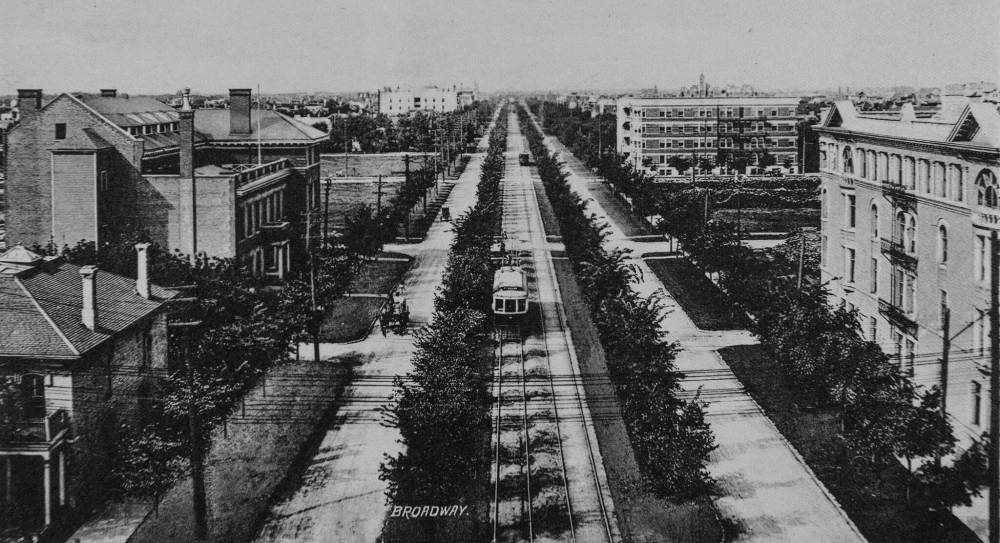
At the time, a young entrepreneur named Albert Austin had begun operating a small network of horse-drawn streetcars on rail lines through downtown. The streetcars were a hit with residents, Agnew says, offering an accessible alternative to walking or cycling — especially during the wetter seasons, when the quagmire of silt and clay from the riverbanks sloshed through the metropolitan centre.
Seeing a rise in ridership, Austin realized the city would soon need faster, cheaper and more reliable transit options.
“He was aware in his industry that electricity was coming. It was a new way to move streetcars and they moved faster and cost less to move. It was an ideal business opportunity,” David Wyatt, historian with the Manitoba Transit Heritage Association, explains.
Bankrolled by his father, who had founded the Dominion Bank, Austin had travelled through the United States looking for a way to bring his streetcar system into the future, and found answers in Richmond, Va., where the first successful electric streetcar was adopted in 1888.
For nearly two years, he “begged, pleaded, cajoled, ridiculed and demanded” a reluctant Winnipeg city council to let him try the electric rail at home, according to transit historian John Baker’s 1982 book Winnipeg’s Electric Transit.
“They were afraid of electricity,” Wyatt says of the city’s leadership at the time. “They expected people to die and horses to be killed.”

Council relented in 1891, but relegated the electric experiment to Fort Rouge, where it was less likely to cause serious damage if it failed. Austin built the River Avenue tracks in a matter of months, followed quickly by a much longer stretch of rail south on Osborne that led to two tracts of land he purchased and built up as public parks.
The single, Edison-style streetcar he bought was manufactured in St. Catharines, Ont., making it the first of its kind to be built — and operated — in Canada.
“He was really on the forefront of transit technology,” Wyatt says.
After the test run that cold January night, the electric streetcar became a staple on Winnipeg’s streets. The electric cars were faster than their horse-drawn alternatives and cost less to maintain. Once they’d been proven safe, the city allowed them to be installed on Main Street, Broadway and Portage Avenue.
“The electric streetcar in Winnipeg — and almost anywhere else — was the way to travel before automobiles,” Wyatt says.
“The electric streetcar in Winnipeg — and almost anywhere else — was the way to travel before automobiles.”–David Wyatt
They weren’t all glamour: the ride was bumpy and loud, most cars were open to the elements and slipping off the overhead wires was a regular occurrence.
In the winter, snow caked onto the rails and conductors came equipped with shovels and brooms in case the cars needed to be dug out of heavy drifts.
Still, the streetcar was a resounding success.
Related Articles
Bus? Pass!









In the end, Austin wouldn’t reap the rewards of his innovation. In a dramatic political showdown, he was pushed out of the railway business in 1894, clearing the way for the Winnipeg Electric Street Railway Company, which operated transit until the 1960s.
But Austin’s legacy had been cemented in Fort Rouge, where the arrival of the streetcar and the popularity of River Park — one of the parks he had built near today’s St. Vital bridge — prompted a small boom in housing and business development. Osborne Village, as it’s called today, became Winnipeg’s first suburb, setting a precedent for the development pattern that outlined the contours of a growing city.
“The demand for development built the streetcar lines and the streetcar lines drew the development to particular locations,” Wyatt explains.
“They often built out into undeveloped spaces, but then the houses came and the riders came from the houses.”
Julia-Simone Rutgers / Datawrapper / Winnipeg Free Press From its inaugural line ‘in the bush of Fort Rouge,’ through years of rapid pre-war growth and the struggles of the Great Depression, to the rise of the trolley, gas-powered bus, diesel engine and cars, Winnipeg’s web of streetcar lines traced the city’s evolution. 
City bylaws allowed council to demand a line be built anywhere within city limits so long as there were at least 400 people over the age of five living within a quarter mile of the route.
New manufacturing hubs saw lines stretch to the flour mills on Sutherland Avenue, the Union Stockyards east of the then-municipality of St. Boniface, the Weston Shops industrial hub in the west end of the city and the new university deep in the city’s south.
By 1914, the population had exploded and the streetcar network had extended to the burgeoning neighbourhoods of Kildonan, Tuxedo, Charleswood, St. Vital and St. Norbert. The western line on Portage Avenue ran as far as the market town of Headingley, beyond city limits. One northern line ran all the way to the nearby municipalities of Selkirk and Stonewall.
“If you look at a map of Winnipeg today … those (neighbourhoods) were mapping the streetcar lines,” Wyatt says.
But the streetcar’s dominance was not to last forever.
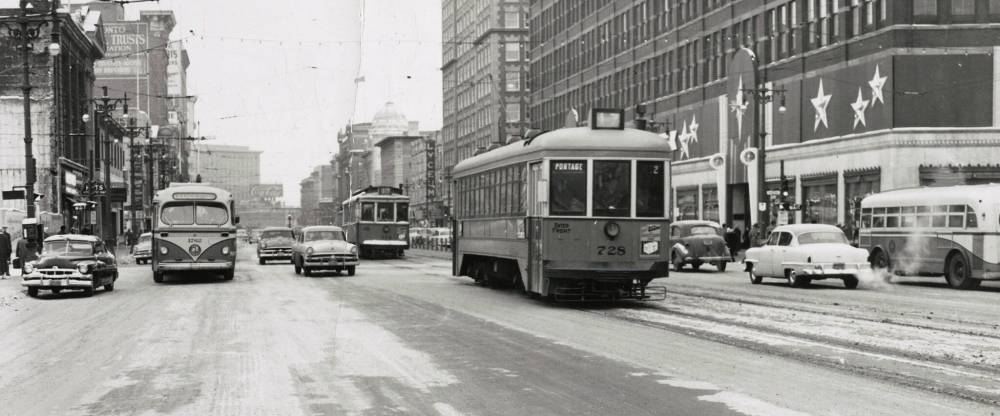
The first automobiles — mostly a type of taxi called jitneys — began sharing the streets with the electric streetcars during the First World War. There were just 663 vehicles registered in 1915, but they eventually caused such a dip in transit ridership that council opted to temporarily ban them.
More foreboding still: gasoline-powered buses had made their first appearance in Winnipeg in 1918 to serve as a feeder route from the growing Wolseley neighbourhood to the streetcars.

To make matters more complicated, the 1919 General Strike saw streetcar expansion grind to a halt. The strike culminated with the infamous “Bloody Saturday” clash, where strikers attempted to topple a streetcar in front of city hall, prompting a violent and deadly encounter with police.
Transit ridership was expected to rebound through the 1920s; that year a peak 65.2 million passengers rode the streetcar lines — double the 32.8 million trips logged on Winnipeg Transit buses in 2022. But three years later ridership dipped as vehicle registrations climbed rapidly to nearly 17,000 by 1923.
“The depression and the rise of the automobile changed the economics for public transit,” Wyatt explains, referring to the vicious drought cycle and 1929 stock market crash that hobbled the economy in the 1930s. “If it was profitable before, it was certainly losing its profitability — cost-cutting was the order of the day.”
“The depression and the rise of the automobile changed the economics for public transit.”–David Wyatt
Maintaining the infrastructure of an electric rail system was costly: the company was responsible for maintaining its rail cars, overhead wire system, tracks, and the sidewalks and roadways they ran down.
Buses, which had no need for rail infrastructure, were thought to be cheaper and more efficient on low-density routes. As traffic slowed on the electric rails, “bus-titution” began. Austin’s inaugural River Avenue route was the first to be scrapped and replaced by gas motors. Mass layoffs at the flour mills and factories shuttered the Sutherland line. Other lightly-used routes soon followed.
But gasoline buses hadn’t earned the same reputation for reliability as the streetcars just yet, and Winnipeg wasn’t ready to do away with electric-powered transport.
“Winnipeg was again innovative with trolley buses,” Wyatt says.
Trolley buses had begun popping up across the United States in the 1930s as an alternative to the streetcar. While they still relied on overhead power lines to run the motors, they weren’t hindered by the need for tracks, making them a flexible — and significantly cheaper — public transit option. Montreal introduced the electric trolley in 1937. Winnipeg followed suit in 1938.
Use soared on trolley buses as the Second World War prompted restrictions on car manufacturing and drove residents back into the welcoming arms of public transit. As each streetcar line reached the end of its life, it was replaced by a smaller, cheaper and more efficient trolley.
Winnipeg reached its all-time peak transit ridership in 1946 with 105 million passenger trips.
The last streetcars — as the first — were paraded through a crowd of eager onlookers in September 1955. The brightly painted cars were decorated with mournful faces and banners decrying the rise of the bus as they made their funeral march down Portage Avenue.
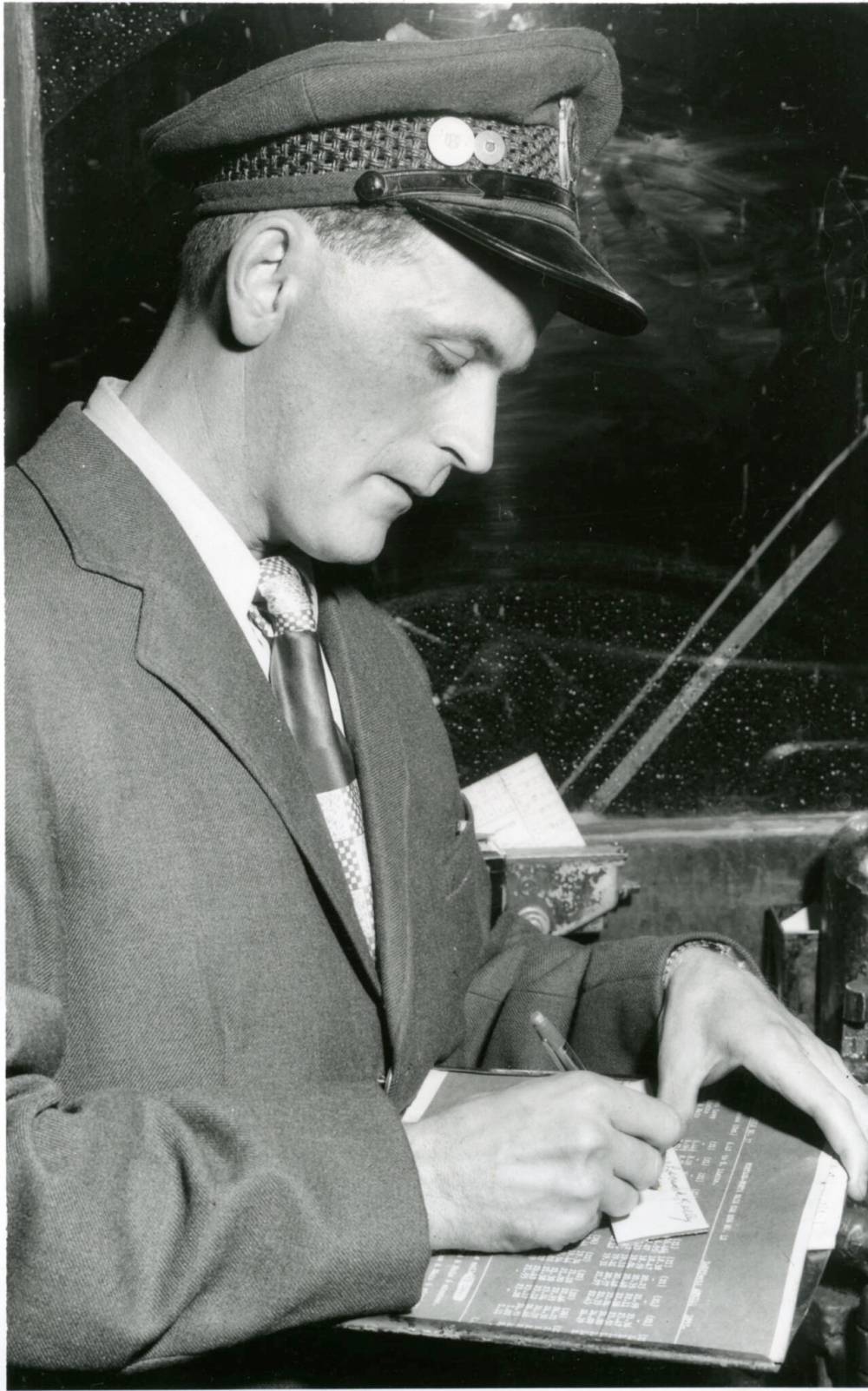
The trolley buses lasted another 15 years, but the rise of the diesel bus in the 1960s brought an eventual death knell for the overhead-electric transit system.
Agnew says it was the engine manufacturers who had discovered diesel as a cheap alternative to gasoline, and began promoting their engines as a new source of power for public transit.
“I don’t want to say they sold a bill of goods,” Agnew says. “But they went out and promoted their engine, and someone said OK to it, and someone else said OK, and then the trend starts.”
At the same time, the personal automobile had taken off in Winnipeg with an estimated 92,000 vehicles by 1957. Transit ridership was down, roads were crowded with cars and people wanted space to drive and places to park.
The diesel bus emerged as a more reliable and flexible way to navigate the busy streets.
“Not only had they eliminated the railway tracks in the street, but they’d also eliminated the electric infrastructure of overhead lines and electric substations,” Wyatt says. “It came down to cost, as it always seemed to, because they were cheaper to run.”
Agnew has fond memories of riding the trolley buses as a child. They weren’t perfect — the arms still slipped off the wires, stalling buses in intersections while conductors fiddled with the connection. He remembers the electric trolley buses as quiet, and fundamentally “an improvement on the streetcar,” he says.
When the trolleys faded, replaced by their diesel counterparts, “it was just another bus.”
The streetcars and trolleys were stripped for parts and left to rot in “boneyards,” he says. Only one — Streetcar 356, which Agnew has been helping restore — survives today. Some of the old tracks were pulled up, but most were simply buried under new asphalt.
The streetcar, fundamental to Winnipeg’s history, was all but erased from its collective memory.
And though it wasn’t a priority, Winnipeg was an early adopter of emissions-free transit. “You didn’t think of the environment or anything like that back then,” Agnew says. Today, of course, things have changed. Winnipeg is just one of many cities planning a cleaner, lower-emissions transportation network.
In a twist of fate, local company New Flyer Industries — who manufactured Winnipeg’s first diesel buses under the name Western Flyer in 1967 — secured a contract in 2022 to produce up to 166 battery-electric and hydrogen fuel cell buses for the city over the next four years. With electric bus technology will come a new era of electric transit infrastructure, including charging stations, hydrogen production capacity and a reconfiguration of the transit network.
“I think it’s ironic that we had streetcars for so many years, and then we dumped them because diesel was the ideal thing to do. And what are we looking at now? Electric buses,” Agnew says, chuckling.
julia-simone.rutgers@freepress.mb.ca
Julia-Simone Rutgers is a climate reporter with a focus on environmental issues in Manitoba. Her position is part of a three-year partnership between the Winnipeg Free Press and The Narwhal, funded by the Winnipeg Foundation.

Julia-Simone Rutgers is an investigative reporter who joined the Free Press in 2020. Read more about Julia-Simone.
Every piece of reporting Julia-Simone produces is reviewed by an editing team before it is posted online or published in print — part of the Free Press‘s tradition, since 1872, of producing reliable independent journalism. Read more about Free Press’s history and mandate, and learn how our newsroom operates.
Our newsroom depends on a growing audience of readers to power our journalism. If you are not a paid reader, please consider becoming a subscriber.
Our newsroom depends on its audience of readers to power our journalism. Thank you for your support.
History
Updated on Friday, December 29, 2023 9:23 PM CST: changes Canadian National Railways to Canadian Pacific Railways