

Indigenous artifacts also deserve legal protection

Advertisement
Read this article for free:
or
Already have an account? Log in here »
To continue reading, please subscribe:

Digital Subscription
One year of digital access for only $205*
- Enjoy unlimited reading on winnipegfreepress.com
- Read the E-Edition, our digital replica newspaper
- Access News Break, our award-winning app
- Play interactive puzzles
*First annual payment billed as $205.00 + GST for one year. This annual subscription will automatically renew at $233.00 + GST every 52 weeks (10% off the regular annual price of $259.35). Offer available to new and qualified returning subscribers only. Cancel any time.
To continue reading, please subscribe:
Add Free Press access to your Brandon Sun subscription for only an additional
$1 for the first 4 weeks*
- Enjoy unlimited reading on winnipegfreepress.com
- Read the E-Edition, our digital replica newspaper
- Access News Break, our award-winning app
- Play interactive puzzles
*Your next Brandon Sun subscription payment will increase by $1.00 and you will be charged $17.95 plus GST for four weeks. After four weeks, your payment will increase to $24.95 plus GST every four weeks.
Read unlimited articles for free today:
or
Already have an account? Log in here »
Following the 2003 U.S.-backed overthrow of Iraqi president Saddam Hussein, criminals looted important religious and political items from the country, whose civilization is more than 4,000 years old.
During the invasion, for example, an estimated 15,000 pieces of art, statues, books and other objects were stolen from the National Museum of Iraq.
In total, it is thought that more than 120,000 items of significance were stolen and sold on the global market — with the worst period being between 2014-17, when the militant group ISIS controlled large swaths of Iraqi territory and used smuggling to fund their efforts.
However, from 2018 to 2021, more than 17,000 of the items were seized and returned to Iraq by the U.S. government after it was discovered that multiple American citizens and organizations had illegally bought and distributed them.
This was due to an international lobby enforcing a series of international treaties, such as the 1954 Hague Convention for the Protection of Cultural Property and resolutions passed at the United Nations Security Council, which imposed a global ban on items stolen from Iraq and ordered their return.
Some of the worst culprits were the owners of the U.S.-based arts and craft chain Hobby Lobby, who had purchased the items for millions of dollars to display in their Museum of the Bible in Washington, D.C.
Forced to hand over the artifacts and forfeit $3 million, Hobby Lobby president Steve Green was sent the message that one nation’s history and heritage cannot be exploited, sacrificed and commodified for individual profit.
The enforcing of international laws and honouring the heritage of other nations, however, are not always given the same respect.
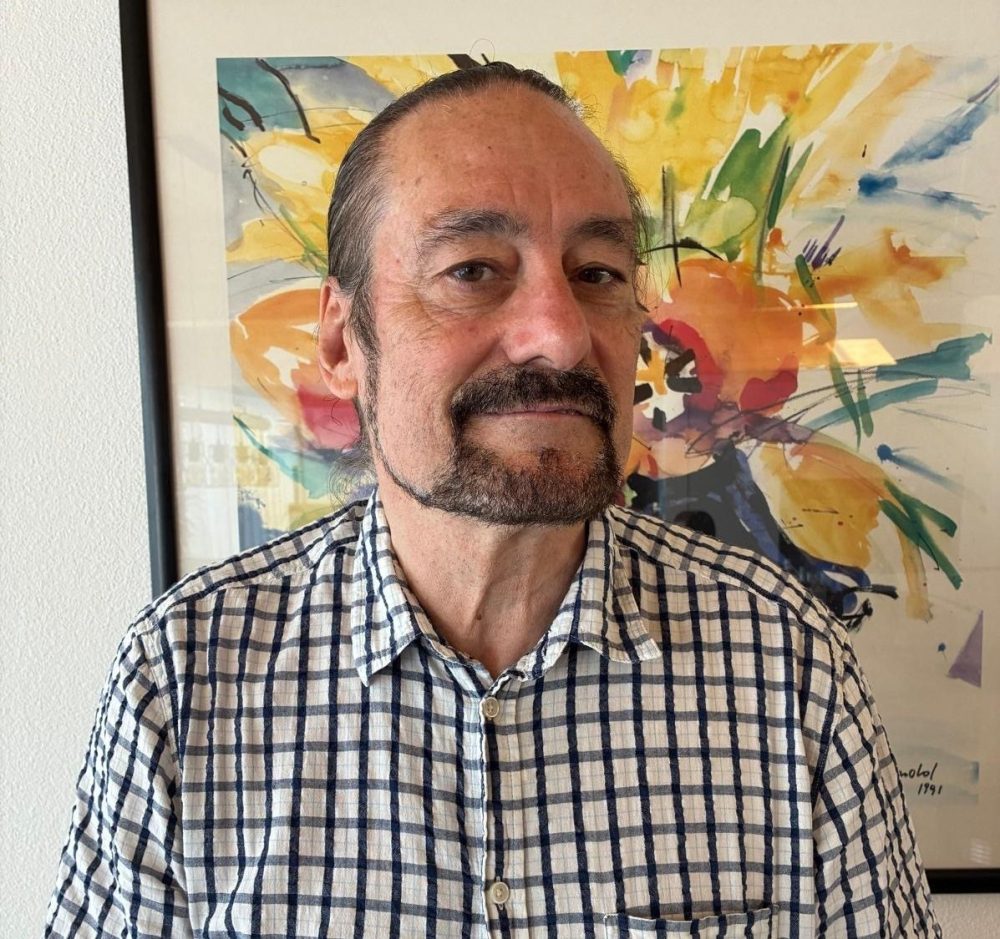
Since the 1970s, Swiss collector Vincent Escriba has obtained in excess of 3,500 Indigenous artifacts such as headdresses, moccasins, baby headboards and bandolier bags — many of which hold spiritual, ceremonial, historical and political significance.
Escriba has said that some of the items were purchased from collectors in Europe and the United States, while others were obtained from online markets and in pawn shops during his travels to the U.S.
On that last note — that some of the artifacts were bought in pawn shops — it should have been obvious that these artifacts were not likely given up without some trauma.
Many of the artifacts, Escriba claims, originate from the infamous Battle of the Little Bighorn, which took place from June 25-26 in 1876 — 150 years ago this month — and featured victory by Lakota, Dakota and Nakota warriors over the U.S. cavalry in one of the final major Indigenous-American wars in the American Midwest.
Whether or not those particular artifacts are connected to that battle is unknown, but this has not stopped Escriba from profiting from them by displaying them in his own private museum.
Nor has it stopped him from trying to make money from them one last time.
In the days before he closed his museum and retired last year, Escriba began contacting First Nations leaders and governments across the United States and Canada offering to sell his stockpile.
Escriba claims not to want to break up his collection — which he estimates as being worth up to $14 million — and instead wants to sell the items en masse in an effort to return them “to the people where it really belongs,” according to an interview he gave to The Canadian Press.
He has also said he is not willing to donate them.
First Nations leaders — who had an opportunity to peruse the artifacts while they were in Escriba’s museum — have said many are culturally recognizable.
Some are trying to lobby governments and private donors in an effort to fundraise nearly $20 million to verify their authenticity, purchase them and bring them home.
The issue, of course, is that this is what governments who commit to international laws are supposed to do — not Indigenous peoples.
The trafficking of items of civilizational, cultural and historical significance is a global issue.
Governments across the world have done this for countries such as Iraq.
Indigenous peoples, however, are not Iraqis.

There are specific, negotiated international agreements that seek to protect Indigenous peoples’ heritage in the world — the United Nations Declaration on the Rights of Indigenous Peoples, of which Canada is a signatory, comes to mind — but many are considered by governments to be non-binding and unenforceable.
On the issue of Indigenous rights alone, the items in Escriba’s possession should never have been trafficked, but it would be naïve to think most governments of the world would seize a headdress, pipe, drum or beaded jacket in an art collector’s hands.
It’s not out of the realm of possibility, however, to begin the legal mechanisms of seizing them now under international law.
The question is whether governments such as Canada — which claim to adhere to Indigenous rights nationally and internationally — will actually enforce the laws they pass.
niigaan.sinclair@freepress.mb.ca
Niigaan Sinclair is Anishinaabe from Peguis First Nation and a professor in the Department of Indigenous Studies at the University of Manitoba. He’s been a columnist for the Free Press since 2018. Read more about Niigaan.
Every piece of writing Niigaan produces is reviewed by an editing team before it is posted online or published in print — part of the Free Press‘s tradition, since 1872, of producing reliable independent journalism. Read more about Free Press’s history and mandate, and learn how our newsroom operates.
Our newsroom depends on a growing audience of readers to power our journalism. If you are not a paid reader, please consider becoming a subscriber.
Our newsroom depends on its audience of readers to power our journalism. Thank you for your support.
Niigaan Sinclair is Anishinaabe from Peguis First Nation and a professor in the Department of Indigenous Studies at the University of Manitoba. He’s been a columnist for the Free Press since 2018. Read more about Niigaan.
Every piece of writing Niigaan produces is reviewed by an editing team before it is posted online or published in print — part of the Free Press‘s tradition, since 1872, of producing reliable independent journalism. Read more about Free Press’s history and mandate, and learn how our newsroom operates.
Our newsroom depends on a growing audience of readers to power our journalism. If you are not a paid reader, please consider becoming a subscriber.
Our newsroom depends on its audience of readers to power our journalism. Thank you for your support.
Related Articles
Swiss collector wants thousands of Indigenous artifacts returned to communities
Advertisement Advertise With Us
Advertisement Advertise With Us