Whose story is being told? How perspectives shape our understanding

Please review each article prior to use: grade-level applicability and curricular alignment might not be obvious from the headline alone.
No Subscription Required

Sacred red thread around devotee’s wrist a source of protection for Hindus

Romona Goomansingh 5 minute read Preview
No Subscription Required

Sacred red thread around devotee’s wrist a source of protection for Hindus

Romona Goomansingh 5 minute read Saturday, Mar. 7, 2026

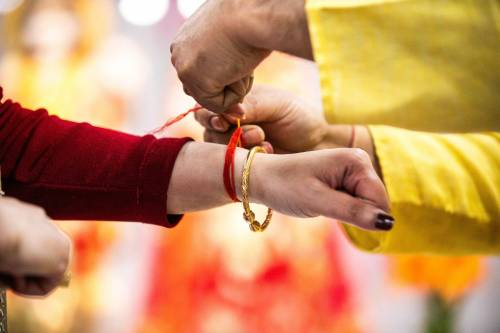
In the Hindu faith, when the sacred red thread is tied around a devotee’s wrist, it is a symbol of divine protection and blessings.

Made from cotton yarn, with predominantly red and some yellow threads, the protective amulet is typically wrapped around the wrist either five or seven times with three knots. Its red colour signifies good fortune, vitality and positive energy, while its yellow hue signifies wisdom, purity and spiritual energy. The thread is approximately six to 10 inches in length. Varying traditions will determine which wrist, right or left, the thread is tied on for males and females.

Tied by a Hindu priest, while a mantra, or sacred hymn for protection is recited, the thread is referred to as raksha sutra, a Sanskrit word that means a thread of protection. Devotees also refer to it as mauli translated from Sanskrit to mean being “above all”, referring to the sanctity of the thread. With the purpose to ward off negative energy, whether bad habits, sickness or evil eyes, “the thread is used for protection from all dangers … people use it as a protection from regular problems of life”, says Pandit Venkat Machiraju, one of the Hindu Society of Manitoba’s priests. He further shares the red thread negates negative forces occupying space in your mind and thoughts as well as it removes any negative aura around you.

At the start of religious ceremonies, the thread is tied before rituals begin. Devotees wear the thread for the duration of all rituals, which for different ceremonies can be performed over many days. Machiraju says the thread reminds devotees of the auspiciousness of their duties, adding “it is a protection for the entire ritual process and ensures the rituals are completed successfully.” The raksha sutra is tied and worn during Hindu rituals for poojas/yajnas (holy offerings), festivals, weddings and temple visits.

Read
Saturday, Mar. 7, 2026
No Subscription Required

Five examples of representation in recognition of International Women’s Day

Taylor Allen 10 minute read Preview
No Subscription Required

Five examples of representation in recognition of International Women’s Day

Taylor Allen 10 minute read Friday, Mar. 6, 2026

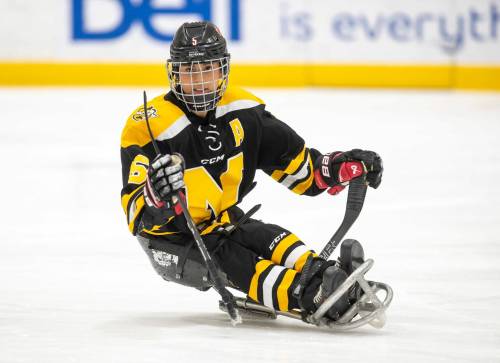
To mark International Women’s Day on Sunday, the Free Press is spotlighting five Manitobans doing impactful work in sports.


Alyssa White — para hockey athleteWhite was 14 when she made the Canadian women’s para hockey squad.

“It’s kind of wild still to me to think about because I had only started playing hockey a year prior to that,” said the now 20-year-old.

Read
Friday, Mar. 6, 2026

Children’s book on Ramadan put back on school shelves

Maggie Macintosh 3 minute read Preview

Children’s book on Ramadan put back on school shelves

Maggie Macintosh 3 minute read Friday, Mar. 6, 2026

A Ramadan-themed children’s book is returning to elementary school shelves in Winnipeg following public outcry.

The Louis Riel School Division announced on Friday afternoon that it was bringing Upside-Down Iftar back into circulation.

The newly released picture book by Palestinian author Maysa Odeh is about a girl and her grandmother preparing a traditional dish for their family to break their fast together after sunset.

It was temporarily pulled from schools last week following a complaint about an illustration of a map.

Read
Friday, Mar. 6, 2026
No Subscription Required

Making infant sleep environments as safe as possible

Uyiosa Chukwuka, Diane Roussin and Sherry Gott 5 minute read Thursday, Mar. 5, 2026

Every year in Canada and around the world, families are devastated by the loss of an infant sleeping peacefully yet never waking. These heartbreaking tragedies, known as sleep-related infant deaths, encompass SIDS (sudden infant death syndrome), accidental suffocation, and other unexplained causes.

In 2024, the Manitoba Advocate for Children and Youth (MACY) released Shifting the Lens, reporting that between 2019 and 2021, Manitoba experienced 48 such deaths — each one a life cut short, a dream shattered, and a family and community forever changed. Although overall rates initially declined over previous decades, progress has stalled, and inequities persist. As we approach Safe Sleep Week 2026, let’s reimagine our collective approach — from policy to public messaging — to make infant sleep environments as safe as possible for all.

Families facing poverty, housing instability, histories of colonization and systemic inequities are disproportionately affected by sleep-related infant deaths. Addressing these deaths requires shifting the focus from blame and fear to structural solutions and opportunity.

Sleep-related infant deaths are often framed as matters of parental choice or individual behaviours, yet social determinants of health play a decisive role in shaping the conditions in which families care for infants. Factors such as income, housing stability, education, access to culturally safe health care, and systemic inequities influence whether families can consistently follow safe sleep recommendations. For example, overcrowded or unstable housing may limit access to a separate, safe sleep surface. Financial strain can make it difficult to obtain cribs or bassinets. Colonialism, racism and geographic isolation further compound risk. Experiences of racism create barriers to accessing prenatal and postnatal care as well as reduce opportunities for culturally relevant guidance about safe sleep. Systemic racism also takes the form of unfairly judging parents as being unable to properly care for their children, resulting in families being involved with the child welfare system and children being apprehended.
No Subscription Required

Moms describe being trapped in a cycle of anguish when a loved one faces mental health crises

Nicole Ireland and Hannah Alberga, The Canadian Press 12 minute read Preview
No Subscription Required

Moms describe being trapped in a cycle of anguish when a loved one faces mental health crises

Nicole Ireland and Hannah Alberga, The Canadian Press 12 minute read Friday, Apr. 24, 2026

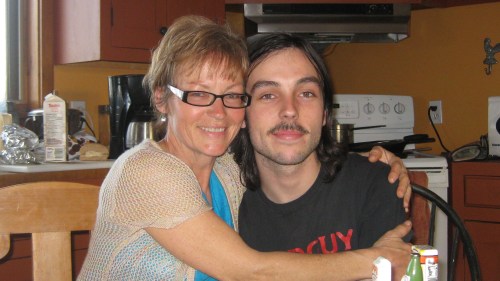
TORONTO - Nancy Saunders says her son Ben Brennan accomplished so much in his short life.

He was an exceptional musician, loved writing and was a freelance recording engineer, she said.

Brennan played in bands across Canada and toured Europe. He studied at the University of King’s College in Halifax.

Deeply kind and compassionate, “he just had a huge soft heart,” Saunders said.

Read
Friday, Apr. 24, 2026
No Subscription Required

Portage la Prairie School Division holds firm to religious exemption refusal

Maggie Macintosh 4 minute read Wednesday, Mar. 4, 2026

The Portage la Prairie School Division is upholding a decision to reject a family’s request for a religious exemption from activities related to Indigenous spirituality.

Sharon Sanders Zettler and Vince Zettler have spent the better part of the academic year seeking accommodations for their children at Yellowquill School.

“I have raised my kids in the Catholic faith from Day 1 and I am just looking for respect for that,” said Sanders Zettler, a mother of students enrolled in Grades 5 and 7 in Portage la Prairie.

Her husband echoed those comments while noting they are not interested in policing what other children learn.

Reflecting on February’s ‘I Love to Read’ Month

Xiaoxiao Du, Melanie Janzen and Paige Boyd 4 minute read Wednesday, Mar. 4, 2026

In schools, February is widely known as “I Love to Read Month,” a dedicated celebration aimed at cultivating a love of reading.
Local Iranians bittersweet about war

Chris Kitching 5 minute read Preview

Local Iranians bittersweet about war

Chris Kitching 5 minute read Wednesday, Mar. 4, 2026

Farimehr Hakemzadeh is communicating with loved ones in Iran and refreshing news and social media feeds as often as possible for updates on the escalating war in the Middle East.

The Iranian-Canadian, who lives in Winnipeg, has gone through a range of emotions since the U.S. and Israel launched air strikes against Tehran’s repressive Islamic regime Saturday — from hope for change and peace, to fear for the safety of family and friends.

“It’s very obvious that there’s a lot of fear in all of our hearts for the people, for the innocent lives that are being affected,” she said Tuesday.

“For nearly half a century the Iranian people have been living under this fear. They have been living under fear for executions, imprisonment and trauma (by Iran’s regime).”

Read
Wednesday, Mar. 4, 2026

Survey results crystal-clear: transit system overhaul a disaster

Tom Brodbeck 5 minute read Preview

Survey results crystal-clear: transit system overhaul a disaster

Tom Brodbeck 5 minute read Tuesday, Mar. 3, 2026

When more than eight in 10 of your core customers say you’ve made things worse, that’s not a minor hiccup. That’s a collapse in confidence.

And it’s exactly where Winnipeg Transit finds itself after its sweeping network overhaul launched last year.

The redesign was billed as a bold modernization — a smarter, more efficient system built around frequent primary routes and timed connections.

Instead, it has produced a level of dissatisfaction among downtown riders that is as striking as it is alarming.

Read
Tuesday, Mar. 3, 2026
No Subscription Required

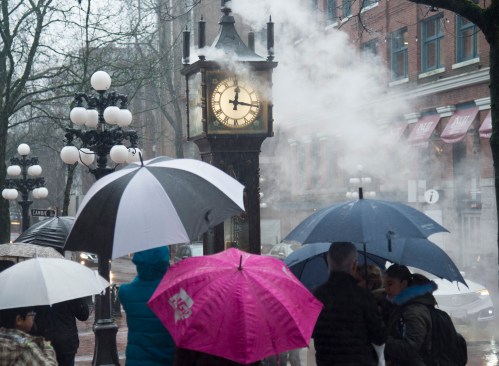
Last spring forward for B.C. as it moves to permanent daylight time

Wolfgang Depner, The Canadian Press 6 minute read Preview
No Subscription Required

Last spring forward for B.C. as it moves to permanent daylight time

Wolfgang Depner, The Canadian Press 6 minute read Tuesday, Mar. 24, 2026

VICTORIA - British Columbia's southern population centres will be facing winter sunrises around 9 a.m. — and around 9:30 a.m. in the north — after the decision to adopt year-round daylight time, springing forward by one hour this Sunday for the last time.

Premier David Eby said Monday the decision is about making life easier for families, reducing disruptions for businesses and supporting a stable, thriving economy.

"British Columbians have been clear that seasonal time changes do not work for them,” Eby said.

He announced the change inside the legislature's Hall of Honour, surrounded by about 40 local elementary schoolchildren, and he addressed them first.

Read
Tuesday, Mar. 24, 2026