

Analysis
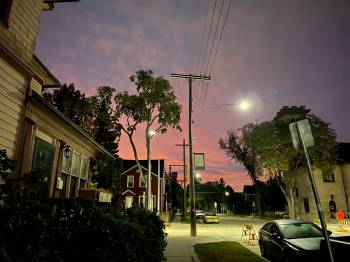
In praise of the deliberately slower lane
5 minute read 2:00 AM CDTBefore I begin this story, I should first confess that I once suffered from a serious affliction — that nasty urban disease known as road rage.
Advertisement
Energy security, not more gas tax cuts
4 minute read 2:00 AM CDTIn the wake of U.S. and Israeli attacks on Iran, oil and gas prices have surged, triggering what’s widely expected to be the worst energy crisis on record. Amid ongoing affordability challenges, governments are reaching for policy tools to soften the blow for consumers.
Small towns and temporary foreign workers
4 minute read 2:00 AM CDTOn any given day in a small town, restaurants should be busy. Orders coming in. People being served. The steady rhythm of a place that’s part of the community.
Instead, more and more locations are running below capacity; not because customers aren’t there, but because there aren’t enough staff.
This is the reality in many rural and tourism communities across Canada.
Recently, Ottawa took a small but important step to begin to address it.
Landlords, tenants and the cost of renovations
5 minute read Saturday, Apr. 18, 2026Why are landlords calling on tenants to oppose stronger rent control?
When the provincial government introduced the “largest expansion of rent control in decades,” landlord pushback was predictable. While Manitoba’s Professional Property Managers Association typically keeps its policy advocacy fairly quiet, they have made their position known through local media and paid social media ads urging tenants to oppose the expansion of rent control.
Real estate appraiser Carson Horsburgh, having knowledge of landlords’ consultations with the province, warned in the Free Press of “sweeping regulatory changes,” (Bad policy: the fallout from rent changes, Think Tank, March 24) but landlord pushback has primarily centred on a specific proposed amendment to the residential rent regulation. The proposal is to cut the portion of capital expenses landlords can claim toward rent increases by 50 per cent, which would essentially cut renovation-related rent increases in half.
Many tenants will surely welcome this relief, especially after a PPMA spokesperson publicly warned higher rent increases were coming after the province ended the education property tax rebate last year.
The challenge of aging
4 minute read Saturday, Apr. 18, 2026Time stops for no one. It keeps ticking away like a perpetual motion machine erasing our youth. Aging is entropy inevitably moving us into a state of disorder.
We wake up one morning and say, “What happened?” Our friends ask us: “Are you living the dream?” Retirement is supposed to be the pot of gold at the end of the rainbow. Except it often doesn’t feel like that.
Suddenly, we are contending with hip and knee replacements, angioplasty or by-pass surgery, chemotherapy and cancer surgery, cataract surgery, emergency visits to the hospital, not to mention cognitive and physical decline associated with degenerative illnesses.
And then there are the numerous medications we are required to take to help us cope with these various medical disorders, all of which have side effects. To counter these side effects, we need to take a different set of medications. We live a life of neverending alarms going off telling us which meds we need to take and when.
Crossing the floor: crossing your voters?
5 minute read Preview Saturday, Apr. 18, 2026
My friend Tannis chased knowledge and adventure
5 minute read Friday, Apr. 17, 2026I had a foggy idea of Winnipeg from childhood. A middle-aged niece of my maternal grandmother lived there, and she would visit us in Toronto for family occasions. Her dry and tepid humour, no-nonsense approach and sensible shoes gave me the impression that Winnipeg must be a very cold place — with no joie de vivre.
Ironically, when I moved to Winnipeg in 2002 after a courtship with my future husband, I could finally and positively confirm my childhood assumptions. Yes, I did experience many winters at -32 C, but the latter conjecture was far from the truth.
To uproot oneself from your place of birth and to start life anew in another city is not easy. Once I settled into matrimonial bliss, moved to the ’burbs, and secured a fulfilling job, the goal before me was clear: make new friends. And I did. I made new lifelong friends who I cherish dearly. While age is indeed a number, I often wondered about the genesis of one intergenerational friendship.
As fate would have it, I landed a fundraising job at The Manitoba Museum. Soon after starting, I was tasked with overseeing a tribute dinner for George T. Richardson. In the execution of the gala, I had a chance meeting in the elevator with Tannis: statuesque, elegant and impeccably dressed. It was just the two of us.
We can’t leave Canadians behind
4 minute read Friday, Apr. 17, 2026As many people in Canada gathered around their tables during the recent Easter weekend, sharing warm meals with family and friends, there was a quieter, far less comfortable reality unfolding behind closed doors across the country.
For many people with disabilities, this holiday was not defined by abundance, but by impossible choices — between paying rent or buying groceries, between keeping the lights on or filling a prescription.
The rising cost of living in Canada has become a dominant national concern, but its impact is not felt equally. Inflation has driven up the price of basic necessities — food, housing, electricity and medication — at a pace that far outstrips income supports for the most vulnerable. Among those hit hardest are people with disabilities, many of whom rely on fixed or limited incomes that have not kept up with this rapid escalation in costs.
About 27 per cent of people in Canada live with a disability. And they are more than twice as likely to live in poverty compared to those without disabilities.
Climate change: Keeping a sense of proportion
5 minute read Preview Friday, Apr. 17, 2026
Why claims of sentience can’t guide black bear policy
5 minute read Preview Thursday, Apr. 16, 2026
Let sleeping dogs lie — lessons from dogs and museums
5 minute read Preview Thursday, Apr. 16, 2026
Climate change is class warfare — fight back
6 minute read Wednesday, Apr. 15, 2026Climatology is driven by scientific research, but climate change is caused by intersecting forces that exist far beyond science. And that’s a problem. Because if no one field of study constitutes the ‘truth of climate change,’ then it renders everyone working in climate studies a non-expert about the phenomenon.
Many scientists are uncomfortable tackling the intersecting causes of climate change. But there are brilliant exceptions.
Since the 1980s, the climatologist and former NASA scientist James Hansen has doggedly engaged with politicians and popular media to warn us about climate change. And in 2020, the physicist Mike Lynch-White and astrophysicist Tim Hewlett started a coalition of concerned scientists, modelled on Extinction Rebellion, called the “Scientist Rebellion.”
It has taken science activism to the next level: civil disobedience. In May 2023, Lynch-White was given a 27-month sentence in the U.K. for peacefully protesting the production of military components used to kill Palestinians.
Free trade in South America: not without issues
5 minute read Preview Wednesday, Apr. 15, 2026
Premier’s claims don’t match the facts
4 minute read Preview Tuesday, Apr. 14, 2026
Changes to rent regulation needed to protect tenants
5 minute read Tuesday, Apr. 14, 2026Summer in Winnipeg brings sunshine, BDI ice cream, the Winnipeg Folk Festival and a renewed sense of joy.
For us, it also brings another rent increase and another struggle.
Every July, we receive a new rental lease agreement for the coming year from our landlord, and with it, three questions to reflect on: will we be able to afford our home for another year? Can we keep saving for a house? Can we afford to save right now? For the past three consecutive years our new rental agreement has come with a notice that our landlord is trying to raise our rent above the provincial rent increase guideline. The first year it was an eight per cent increase, then another 16 per cent the next year, and this past fall it was an additional seven per cent demand.
Each year, the Residential Tenancies Branch (RTB) sets a guideline percentage that landlords are allowed to increase rent-controlled units by. However, a landlord can apply to the RTB for an above the guideline increase if they can show that the guideline won’t cover their cost increases.
On not draining the swamp
4 minute read Tuesday, Apr. 14, 2026“When you’re up to your ass in alligators, it’s hard to remember that your original goal was to drain the swamp,” goes a not-very-old folk saying.
Eighty years ago we set out to drain the swamp because we feared that otherwise we would all be pulled under. At least 50 million people were dead after the greatest war in history, around half the cities in the northern hemisphere had been smashed flat, and the first nuclear weapons had just been dropped on Japanese cities.
People were in shock. They hadn’t known how destructive war could get, and now they realized that the next big war would be incomparably worse: nuclear war. So they decided that in the future the goal must be not to win wars but to end war.
Don’t think they were naive. They were having this conversation standing hip-deep in the wreckage of the last war. Many of them had fought in it, and almost all of them had lost people close to them. So between 1945 and 1948, they wrote new rules that made war illegal.
LOAD MORE