

Euro 2020 has been anything but a flop, with the exception of one Raheem Sterling moment
Advertisement
Read this article for free:
or
Already have an account? Log in here »
To continue reading, please subscribe:

Digital Subscription
One year of digital access for only $205*
- Enjoy unlimited reading on winnipegfreepress.com
- Read the E-Edition, our digital replica newspaper
- Access News Break, our award-winning app
- Play interactive puzzles
*First annual payment billed as $205.00 + GST for one year. This annual subscription will automatically renew at $233.00 + GST every 52 weeks (10% off the regular annual price of $259.35). Offer available to new and qualified returning subscribers only. Cancel any time.
To continue reading, please subscribe:
Add Free Press access to your Brandon Sun subscription for only an additional
$1 for the first 4 weeks*
- Enjoy unlimited reading on winnipegfreepress.com
- Read the E-Edition, our digital replica newspaper
- Access News Break, our award-winning app
- Play interactive puzzles
*Your next Brandon Sun subscription payment will increase by $1.00 and you will be charged $17.95 plus GST for four weeks. After four weeks, your payment will increase to $24.95 plus GST every four weeks.
Read unlimited articles for free today:
or
Already have an account? Log in here »
Hey there, time traveller!
This article was published 08/07/2021 (1890 days ago), so information in it may no longer be current.
If it was easy and without a bit of controversy, would it even be England?
The routes England and Italy took to get to Sunday’s Euro 2020 final are in part what makes soccer so unique, and in many ways, why soccer is still on the fringes of the mainstream sports landscape in North America.
For those that didn’t grow up with the sport, the diving and the flopping are as striking as the beautiful feats, like Cristiano Ronaldo’s trickery or Mikkel Damsgaard’s free kick goal on Wednesday — the first goal England had conceded in 691 minutes.
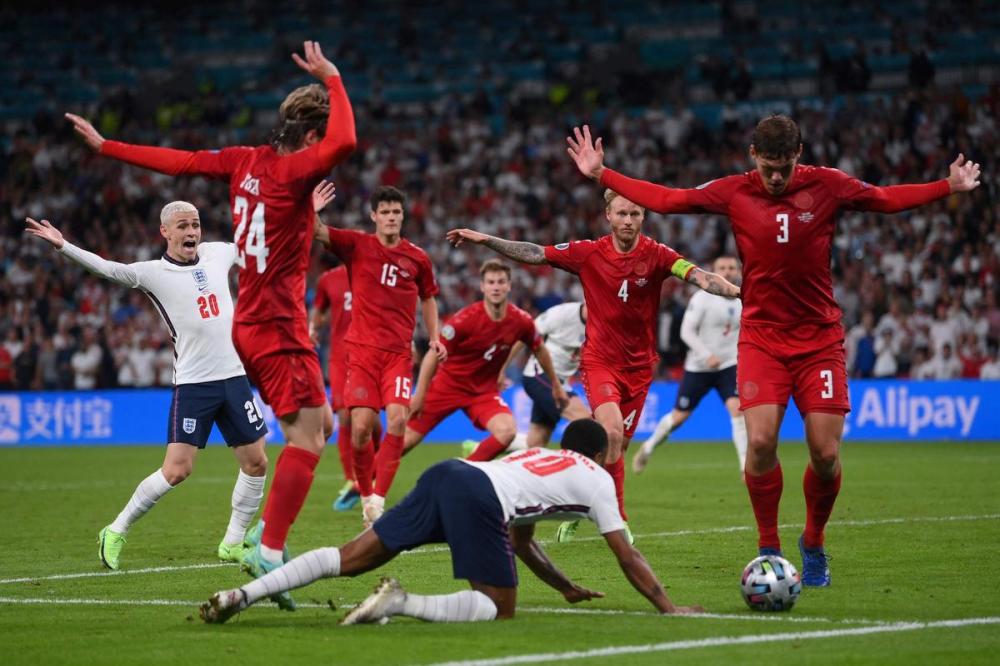
But the unjust moments, where a player tries to deceive the referee, allow the less-inclined viewer to dismiss The Beautiful Game. “When multimillionaire men become petulant children,” is how my wife describes it. It is something that has greatly decreased in recent years thanks to the introduction of VAR. But it is the image of Raheem Sterling falling on all fours that will live in the minds of Danish fans, the way Thierry Henry’s handling of the ball on the byline in that fateful World Cup qualifier 12 years ago is something the Irish will never forget.
Had England not been awarded the extra-time penalty, which was expertly saved by Kasper Schmeichel before Harry Kane converted the rebound effort, the Three Lions might have collapsed in a penalty shootout. Regardless of England’s history, the odds would have favoured the Danes. Like his legendary father Peter Schmeichel, Kasper is one of the sharpest goalkeepers in the Premier League and had won the FA Cup with Leicester City in that same stadium just eight weeks ago. But the fingernails of English fans, and Jordan Pickford’s Twitter mentions, were spared from the emotional turmoil that Italian and Spanish supporters endured Tuesday.
The penalty shootout has decided knockout ties at the European Championship since 1976. It is a cruel way to decide a winner. But it is not a lottery. There is skill and strategy even before the shooter places the ball on the spot. Italian captain Giorgio Chiellini was laughing and joking during the coin toss, to decide whether Italy or Spain would shoot first, like he was playing in a testimonial match with nothing on the line. Spanish captain Jordi Alba was visibly confused and at least partially annoyed by the elder statesman’s abnormally relaxed attitude ahead of one of the most defining moments of the international game.

With the pressure weighing heavy on the shoulders of Spain’s talented forwards, Dani Olmo sent Spain’s first effort over the bar, and Álvaro Morata, who has transformed from hero to villain more times than a WWE wrestler, had his shot saved by Gigi Buffon’s successor, Gianluigi Donnarumma.
The thought of Italy playing in the Euro 2020 final was unthinkable four years ago when the Azzurri failed to qualify for the 2018 World Cup, losing in the very stadium Donnarumma had called home for six seasons with AC Milan. But Roberto Mancini has transformed the Italian national team, who still rely on Chiellini and Leonardo Bonucci on defence, into a dynamic side that is as pleasing on the eye as Italian desserts are on my stomach.
This entire tournament has been a delight. We were starved of the joys of international soccer, and so much more, for too long. The universe has rewarded us with a storybook tournament that will be remembered for: Switzerland stunning France on penalties; Belgium’s golden generation bowing out with a whimper; Scotland standing up to England; England beating Germany; Goran Pandev introducing the sporting world to North Macedonia; Patrik Schick’s stunning strike; and, of course, Christian Eriksen’s heart attack on the pitch that stopped the world and galvanized his teammates to a semifinal run.
Just one question remains: Is it “coming home?” Or is it coming to Rome?
Toronto Star contributor Brendan Dunlop is host of “Headers and Footers,” the nightly UEFA EURO 2020 recap podcast. Follow him on Twitter: @brendan_dunlop
Related Articles
HFX Wanderers down FC Edmonton 2-1 for first win England takes on Italy to end title drought









Advertisement Advertise With Us
Advertisement Advertise With Us