Carbon pricing alone is not enough — other measures are needed to meet Paris Agreement targets

Advertisement

Advertise with us

This article was originally published on The Conversation, an independent and nonprofit source of news, analysis and commentary from academic experts. Disclosure information is available on the original site.

Read this article for free:


or

Already have an account? Log in here »

To continue reading, please subscribe:

Subscribe and receive a limited-edition Free Press branded hat or tote.

Digital Subscription

One year of digital access for only $205*

  • Enjoy unlimited reading on winnipegfreepress.com
  • Read the E-Edition, our digital replica newspaper
  • Access News Break, our award-winning app
  • Play interactive puzzles

*First annual payment billed as $205.00 + GST for one year. This annual subscription will automatically renew at $233.00 + GST every 52 weeks (10% off the regular annual price of $259.35). Offer available to new and qualified returning subscribers only. Cancel any time.

To continue reading, please subscribe:

Add Free Press access to your Brandon Sun subscription for only an additional

$1 for the first 4 weeks*

  • Enjoy unlimited reading on winnipegfreepress.com
  • Read the E-Edition, our digital replica newspaper
  • Access News Break, our award-winning app
  • Play interactive puzzles
Start now

*Your next Brandon Sun subscription payment will increase by $1.00 and you will be charged $17.95 plus GST for four weeks. After four weeks, your payment will increase to $24.95 plus GST every four weeks.

Hey there, time traveller!
This article was published 20/12/2023 (1004 days ago), so information in it may no longer be current.

This article was originally published on The Conversation, an independent and nonprofit source of news, analysis and commentary from academic experts. Disclosure information is available on the original site.

___

Authors: Sean Cleary, BMO Professor of Finance, Queen’s University, Ontario and Neal Willcott, PhD Candidate – Finance, Queen’s University, Ontario

As the world grapples with the dramatic effects of record temperatures in recent months, the United Nations has issued a dire warning about the potential for average global temperature increases to hit a “hellish” 3 C by the end of the century.

Carbon pricing policies have been a central part of the conversation about avoiding the worst effects of climate change. Carbon pricing is a market-based solution that incentivizes organizations and individuals to emit less greenhouse gases and invest in climate solutions.

Addressing an audience at the COP28 climate summit in Dubai, European Commission President Ursula von der Leyen made the case for carbon pricing: “If you pollute, you have to pay a price for that. If you want to avoid paying that price, you innovate and invest in clean technologies.”

However, it’s vital to understand both the potential and limitations of these policies. Our recent research shows that global carbon pricing policies must advance much more rapidly, and be combined with other mitigation measures, to avoid harmful warming scenarios. As von der Leyen said in her remarks, “we must go further and faster.”

Carbon pricing needs to rise

Carbon pricing can be a powerful tool to combat climate change and reduce emissions, but not on its own. Our research shows that carbon pricing in isolation will not allow us to meet the Paris Agreement target 1.5 C or 2 C warming scenarios.

If carbon pricing is implemented more aggressively and broadly, it could significantly contribute to meeting these targets. The current global average carbon price, which we estimate in our report at being a meagre US$2.79 per tonne of emissions, needs to increase rapidly.

Our study modelled the effects of a rising global price on carbon, in isolation from other policies, on reducing greenhouse gas emissions across a range of scenarios.

We found that while carbon pricing on its own could limit global warming to 2.4 C, the global price would have to rise dramatically and rapidly to accomplish this. The price would have to start at $223.31 per tonne in 2023 and increase to $435.55 per tonne by 2045.

While such an abrupt global policy change is unlikely, the price would not need to be so high if it was accompanied by other measures, including regulations that provide clarity and stability regarding green investments, clean technology subsidies and financing mechanisms (such as those facilitating transition investing by companies).

For example, if we look at the carbon price needed to stay within 3 C scenario, it’s around US$85 per tonne — not much higher than our current Canadian carbon price of $65 per tonne. With the right other policies working in concert with that carbon price, and potentially funded by greenhouse gas emitters, we could still hit much lower than 3 C by the end of the century.

The case for carbon pricing

Our research also looked at the benefits of avoiding higher warming scenarios. The resulting savings from avoiding climate-related damage and economic loss from droughts, wildfires, floods, storms and rising sea levels would be enormous.

Our research estimates that cumulative damages under a 3 C warming scenario of US$480 trillion would be US$213 trillion higher than under a 2 C scenario, and US$326 trillion more than under a 1.5 C scenario. This confirms the importance of hitting the Paris Agreement targets.

Even if lower warming targets are missed, there is a strong case for carbon pricing. For example, keeping global warming to 3 C by 2100 in contrast to the zero-carbon price scenario of 4.2 degrees warming, could prevent cumulative damages of US$284.73 trillion — almost three times the current global GDP of US$105 trillion.

We are talking about worlds of damage here — and that is just the economic price tag, of course. It doesn’t account for the devastating human cost of climate disasters that we’re already seeing in homes destroyed, livelihoods ruined and lives lost. The message is not to give up, but to intensify efforts and co-ordinate globally.

___

Sean Cleary does not work for, consult, own shares in or receive funding from any company or organisation that would benefit from this article, and has disclosed no relevant affiliations beyond their academic appointment.

___

This article is republished from The Conversation under a Creative Commons license. Disclosure information is available on the original site. Read the original article:

https://theconversation.com/carbon-pricing-alone-is-not-enough-other-measures-are-needed-to-meet-paris-agreement-targets-218989

Report Error Submit a Tip

More Stories

Cabernet Sauvignon star of wine festival

Ben Sigurdson 5 minute read Preview

Cabernet Sauvignon star of wine festival

Ben Sigurdson 5 minute read 3:00 AM CDT

The Winnipeg Wine Festival will celebrate the king of red wine grapes next weekend — the theme of this year’s festival, which takes place Sept. 25 and 26 at the RBC Convention Centre, is Cabernet Sauvignon.

Cab Sauv, as it’s also known, is the world’s most widely planted wine grape of any colour, first coming to prominence in the 1800s in France’s Bordeaux region, where the grape is still popular. Rather than single-variety wines, Bordeaux reds tend to be blends, with those coming from the left bank of the Gironde estuary being Cabernet-dominant, while right-bank wines are Merlot-dominant, with Cabernet Sauvignon playing a supporting role. Cabernet and Merlot work well together and many other countries have followed suit in blending the two.

A team at University of California Davis put Cabernet Sauvignon through a DNA test in 1996 and discovered its parent grapes are Cabernet Franc and Sauvignon Blanc — it’s likely that at some point the two varieties, planted next to each other in some vineyard, crossed and mutated and became the grape we know today. (Someone growing grapes in the 19th century must have had an inkling of what was up, as the grape has been called Cabernet Sauvignon since long before the DNA test.)

Flavour-wise, most Cabernet Sauvignon wines are big and bold, with a core of deep dark berry flavours, some graphite and spice notes and relatively bright acidity. It’s a grape that is well-suited to barrel aging, with most examples seeing at least some time in wood.

Read
3:00 AM CDT

Steinbach Credit Union member warns others after scammer steals $10K

Scott Billeck 5 minute read Preview

Steinbach Credit Union member warns others after scammer steals $10K

Scott Billeck 5 minute read Yesterday at 5:19 PM CDT

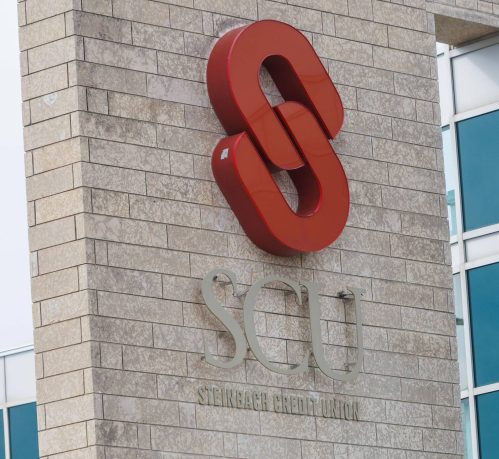
A Winnipeg single mother whose bank account was drained of nearly $10,000 says Steinbach Credit Union needs to warn its members about what she believes is a broader security problem.

The woman, who is not being named to protect her identity, said a scammer gained access to her account earlier this week after calling SCU’s contact centre, claiming to be her and successfully completing the credit union’s authentication process.

She said she knows of at least six others who have experienced similar incidents in which callers impersonate SCU account holders and pass the authentication checks.

The woman discovered something was wrong when her minor son asked why money had been transferred out of an account they jointly hold.

Read
Yesterday at 5:19 PM CDT

A quick look at where provinces and territories stand on time changes

The Canadian Press 2 minute read Preview

A quick look at where provinces and territories stand on time changes

The Canadian Press 2 minute read Updated: Yesterday at 6:28 AM CDT

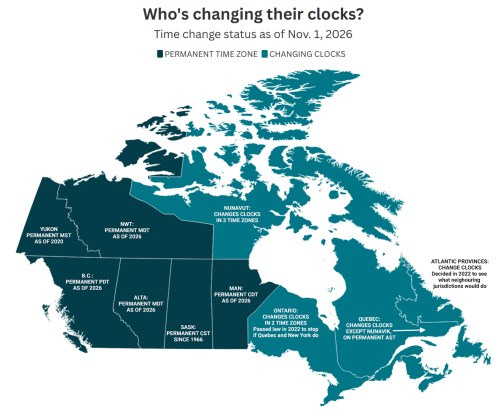
WINNIPEG - Manitoba's government said Thursday the province will be sticking with daylight time year-round, making it the latest jurisdiction to move away from twice-annual time changes. Here's a look at where things stand across Canada:

British Columbia said in March that it was moving to permanent Pacific daylight time. The change also means that parts of northeastern B.C., which have been on mountain standard time year round, are now in alignment with the rest of the province.

Alberta also switched to permanent daylight time this year in what it calls Alberta time. The change means it now has the same time as Saskatchewan year round.

Saskatchewan has been on permanent central standard time since 1966.

Read
Updated: Yesterday at 6:28 AM CDT

Not good bet to shoulder gambling issue alone

Maureen Scurfield 5 minute read 2:01 AM CDT

DEAR MISS LONELYHEARTS: We’re living a lie over at our house, but it’s holding the family together.

I know my husband is deeply into gambling. If it weren’t for my steady job I don’t know where the family would be! I insist on paying all of our bills. I also funnel some major cash off to my sister, in case my husband tries to tap into my accounts somehow when I’m out of the house.

He doesn’t know my passwords, since I keep changing them, but he sometimes shows up behind me when I’m online, like he’s dying to ask something.

I say, “What are you looking at? Stop looking over my shoulder!” Then he makes a lame joke and goes away.

Desperate Poilievre wants Canadians to believe the sky is falling when it’s just cloudy outside

Tom Brodbeck 5 minute read Preview

Desperate Poilievre wants Canadians to believe the sky is falling when it’s just cloudy outside

Tom Brodbeck 5 minute read Yesterday at 12:47 PM CDT

Pierre Poilievre has a problem.

Canadians just don’t seem to be paying much attention to him anymore.

So, naturally, the Conservative Opposition leader has decided to turn up the volume.

At a recent party caucus retreat in Penticton, B.C., Poilievre delivered the familiar message: Canada is in trouble, Canadians are hurting and the Liberal government is making everything worse.

Read
Yesterday at 12:47 PM CDT

Siloam Mission, WFPS discussing on-site paramedic to reduce staggering number of emergency calls

Scott Billeck 4 minute read Preview

Siloam Mission, WFPS discussing on-site paramedic to reduce staggering number of emergency calls

Scott Billeck 4 minute read Yesterday at 2:00 AM CDT

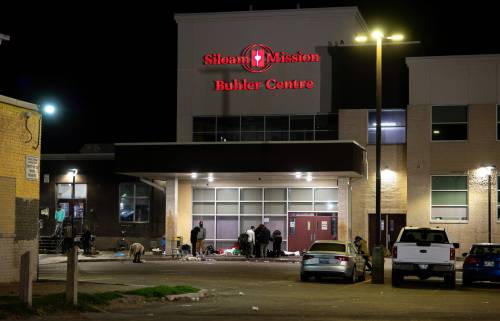
Winnipeg’s fire-paramedic service and its largest homeless-serving organization are discussing what it would look like to station at least one paramedic at Siloam Mission, as emergency calls to the downtown facility surge.

The ongoing discussions come as Winnipeg Fire Paramedic Service crews were dispatched 1,771 times during the first eight months of the year to the two adjacent Siloam properties at 303 Stanley St. and 300 Princess St.

WFPS said most of the calls were related to overdoses or other consequences of substance use, with the total nearly double the 854 calls recorded over the same period last year. By comparison, there were 831 calls during the same span in 2024, and 591 in 2023.

“The number of emergency calls isn’t sustainable for us as a service, but it’s certainly not sustainable for them as an agency trying to provide services,” WFPS chief Ryan Sneath told the Free Press. “And they recognize that they’re impacting emergency services, not them specifically, but the site in a significant way.”

Read
Yesterday at 2:00 AM CDT