Pardon me
When the courts get it wrong, sometimes the government has to make it right
Advertisement
Read this article for free:
or
Already have an account? Log in here »
To continue reading, please subscribe:

Digital Subscription
One year of digital access for only $205*
- Enjoy unlimited reading on winnipegfreepress.com
- Read the E-Edition, our digital replica newspaper
- Access News Break, our award-winning app
- Play interactive puzzles
*First annual payment billed as $205.00 + GST for one year. This annual subscription will automatically renew at $233.00 + GST every 52 weeks (10% off the regular annual price of $259.35). Offer available to new and qualified returning subscribers only. Cancel any time.
To continue reading, please subscribe:
Add Free Press access to your Brandon Sun subscription for only an additional
$1 for the first 4 weeks*
- Enjoy unlimited reading on winnipegfreepress.com
- Read the E-Edition, our digital replica newspaper
- Access News Break, our award-winning app
- Play interactive puzzles
*Your next Brandon Sun subscription payment will increase by $1.00 and you will be charged $17.95 plus GST for four weeks. After four weeks, your payment will increase to $24.95 plus GST every four weeks.
Read unlimited articles for free today:
or
Already have an account? Log in here »
Hey there, time traveller!
This article was published 05/03/2016 (3859 days ago), so information in it may no longer be current.
It seems our new prime minister is determined to finish the work his father started.
In 1967, Pierre Trudeau, then Canada’s Liberal justice minister, introduced a bill that, among other things, called for the decriminalization of homosexual acts between consenting adults.
“Remember that the state has no place in the bedrooms of the nation,” the elder Trudeau said.
Prime Minister Justin Trudeau, Pierre’s son, intends to recommend a pardon be granted posthumously to Everett George Klippert, one of the last men convicted under Canada’s anti-homosexuality laws in the 1960s.
Klippert spent four years in prison after his first conviction in Calgary, and another conviction in 1965 in Hay River, N.W.T., landed him behind bars for another three years. He was released from prison in 1972 and died in 1996 at the age of 69.
A government news release said Trudeau plans to grant the pardon under the “Royal Prerogative of Mercy,” the ancient right of the British monarch to grant clemency. It also boasted the government will review the cases of other gay men who were convicted before homosexuality was decriminalized in 1969.
In honour of the Klippert case, here’s our list of the Top Five Historic Pardons That Generated Headlines and Raised Eyebrows Around the World:
5. Blackbeard the pirate king
The pardon: Yes, we’re talking about the most notorious pirate of all time, the pirate who shivered the timbers of all the other barnacled bad boys in the 1700s.
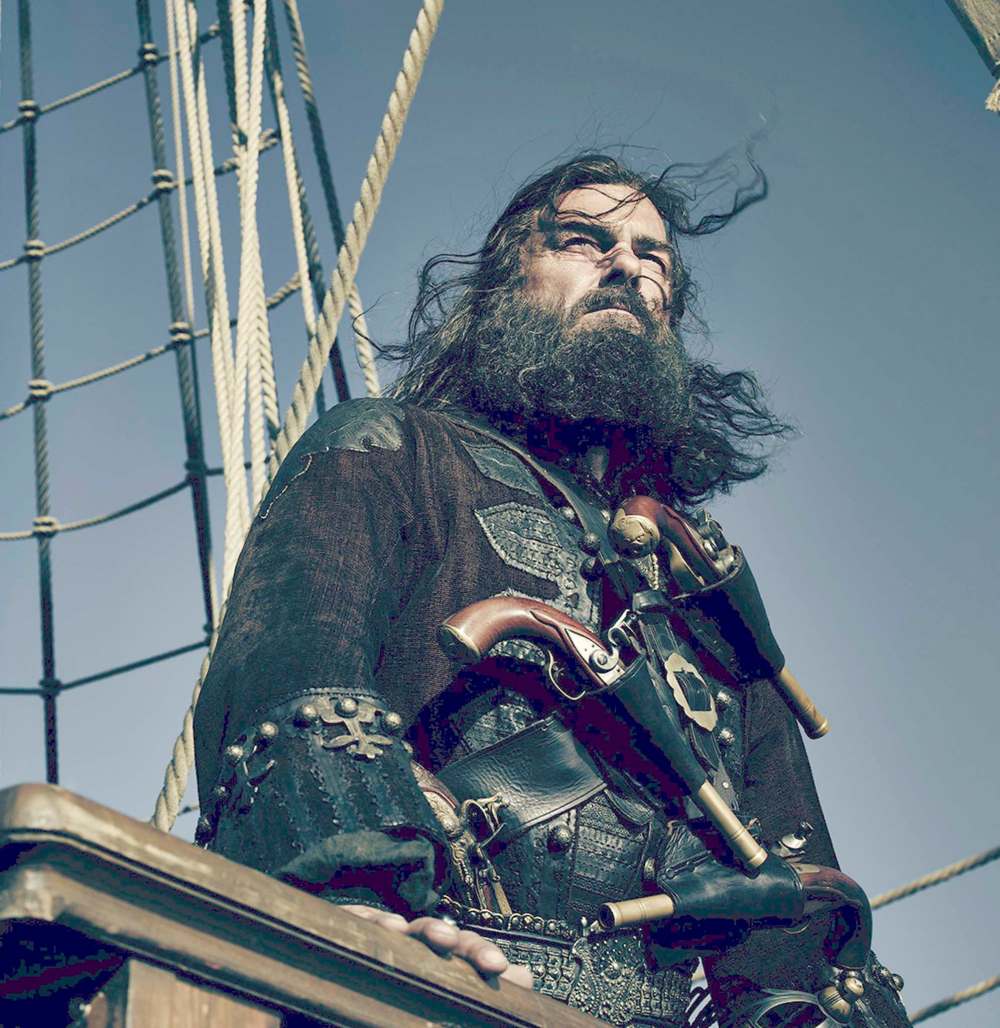
Born Edward Teach, he was an English sailor whose pirating career began in 1713 when he became a crewman aboard a Caribbean sloop commanded by Benjamin Hornigold.
When Hornigold accepted a general amnesty and retired in 1717, Teach took over a captured French merchantman, equipped it with 40 guns and famously renamed it Queen Anne’s Revenge.
It seems his cruel image was worse than his deeds. He was a legendary plunderer, but judicious in his use of force, reportedly never killing anyone prior to his final, fatal battle with the Royal Navy.
King George I had decreed any pirate who surrendered to a British governor by September 1718 would be pardoned for all crimes committed before Jan. 5 and could even keep his plunder.
In the summer of 1718, after the Queen Anne’s Revenge and another vessel were shipwrecked, Blackbeard sailed to Bath in North Carolina and met with Governor Charles Eden, who agreed to give the pirate the king’s pardon, some say in exchange for a share of his booty.
But retirement didn’t suit him, and just two months later he was back plundering ships. On Nov. 22, 1718, Blackbeard was killed in a bloody battle off Ocracoke Island.
His severed head was kept as a trophy.
4. Folk music legend Peter Yarrow
The pardon: No one will be surprised a pirate named Blackbeard was in need of a pardon. But Peter Yarrow, a man who rocketed to fame in the 1960s as part of the iconic folk trio Peter, Paul and Mary?

The same Peter Yarrow who co-wrote Puff, the Magic Dragon, a song he swears is about the innocence of childhood lost, not smoking marijuana?
You might be shocked to learn this legendary musician and political activist’s resumé includes a sex crime.
In 1970, a 14-year-old girl and her 17-year-old sister went to Yarrow’s hotel room in Washington, D.C., seeking an autograph, the New York Post noted. It was reported Yarrow, then about 32, answered the door naked and made sexual advances that stopped short of intercourse.
The singer was convicted of taking “improper liberties” with the 14-year-old fan, and spent three months of a one- to three-year sentence behind bars. In 1981, on his last day in office, then-president Jimmy Carter granted Yarrow a pardon.
“It was an era of real indiscretion and mistakes by categorically male performers,” Yarrow later said of the scandal. “I was one of them. I got nailed. I was wrong. I’m sorry for it.”
He also told the Baltimore Jewish Times in 2006: “You feel terrible about it, make your amends. In that time, it was common practice, unfortunately — the whole groupie thing.”
3. Kidnapped heiress Patty Hearst
The pardon: As the granddaughter of newspaper tycoon William Randolph Hearst, Patricia Hearst had it all. But her life was shattered on the evening of Feb. 4, 1974, when members of a radical guerrilla group calling itself the Symbionese Liberation Army dragged the 19-year-old heiress screaming at gunpoint from her apartment, threw her into the trunk of a car and drove her to a hideaway south of San Francisco.
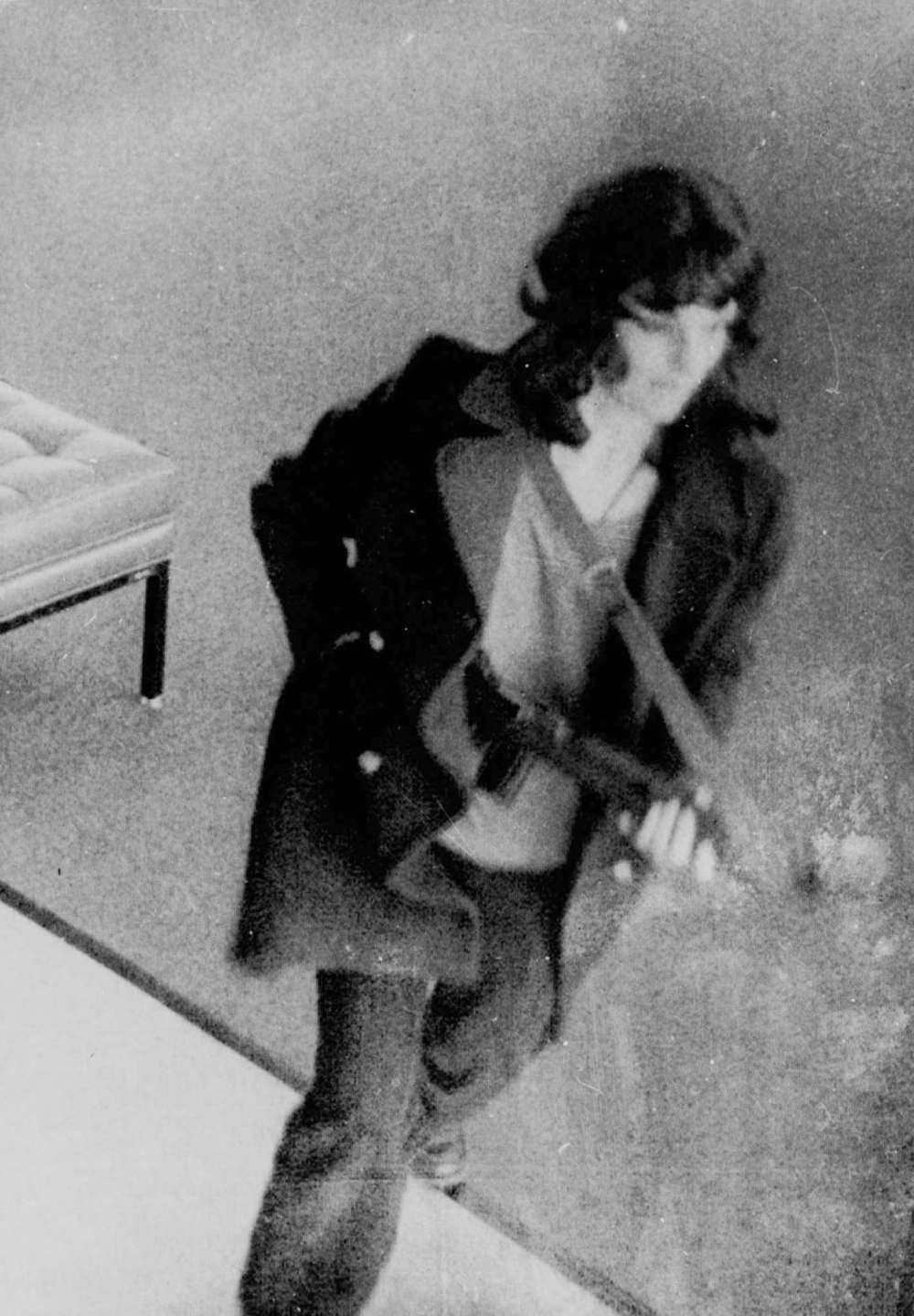
According to her biography, the SLA kept Hearst locked in a closet for 57 days, and she was subjected to radical rantings, abuse and rape. “Blindfolded, gagged, tied up,” she told CNN host Larry King. She has said her only option was to join the SLA or be killed.
She began the ordeal as a hostage, but shocked the world by announcing she had joined the ranks of her captors, taking the name “Tania.” Hearst is now considered the classic example of Stockholm syndrome, wherein victims come to sympathize with the goals of their captors.
Two months later, she was famously photographed robbing a San Francisco bank while brandishing an assault rifle. On May 16, 1974, she sprayed a barrage of gunfire outside a Los Angeles sporting goods store to help free an SLA member detained for shoplifting.
Hearst spent more than a year on the run before being snared in an FBI dragnet in 1975. Her attorneys argued she had been brainwashed, but the defence didn’t work, and the unlikely revolutionary was convicted of bank robbery.
She spent nearly two years behind bars before then-president Jimmy Carter commuted her seven-year sentence in 1979.
But it was president Bill Clinton who, at Carter’s urging, granted her a full pardon on the last day of his presidency, Jan. 20, 2001.
2. Richard Nixon, 37th president of the United States
The pardon: In 1972, with the Vietnam War in full swing, “Tricky Dick” needed a little help to get re-elected.
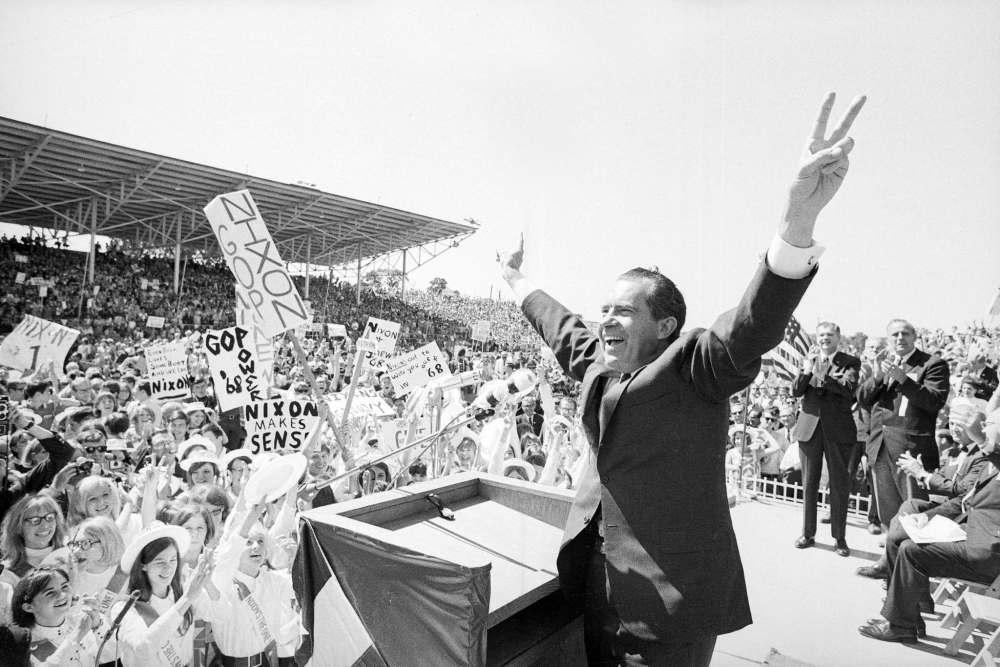
In the early hours of June 17, 1972, several burglars were arrested inside the office of the Democratic National Committee in the Watergate complex in Washington, D.C. The burglars were linked to Nixon’s committee to re-elect the president (CREEP) and were nabbed while trying to wiretap phones and steal secret documents.
Nixon infamously denied any involvement with this now-legendary defence: “I am not a crook.”
It turned out tape recordings made by Nixon in the Oval Office showed he had lied and attempted to cover up activities that took place after the break-in.
In August 1974, after his role in the conspiracy became known, and as impeachment proceedings began, Nixon resigned, the only U.S. president chased out amid a scandal that changed U.S. politics forever.
Just under a month later, newly installed president Gerald Ford gave his predecessor a full and unconditional pardon for any crimes committed while in office.
Ford justified his decision by claiming a drawn-out trial would only split the nation. “It could go on and on and on, or someone must write the end to it,” he said on live TV. “I have concluded that only I can do that, and if I can, I must.” He likely sealed his own fate, as many blame the pardon for his loss to Carter in the 1976 election.
For his part, Nixon admitted he was “wrong in not acting more decisively and more forthrightly in dealing with Watergate.”
You think, Dick?
1. Viola Desmond
The pardon: This is a story every Canadian needs to know.
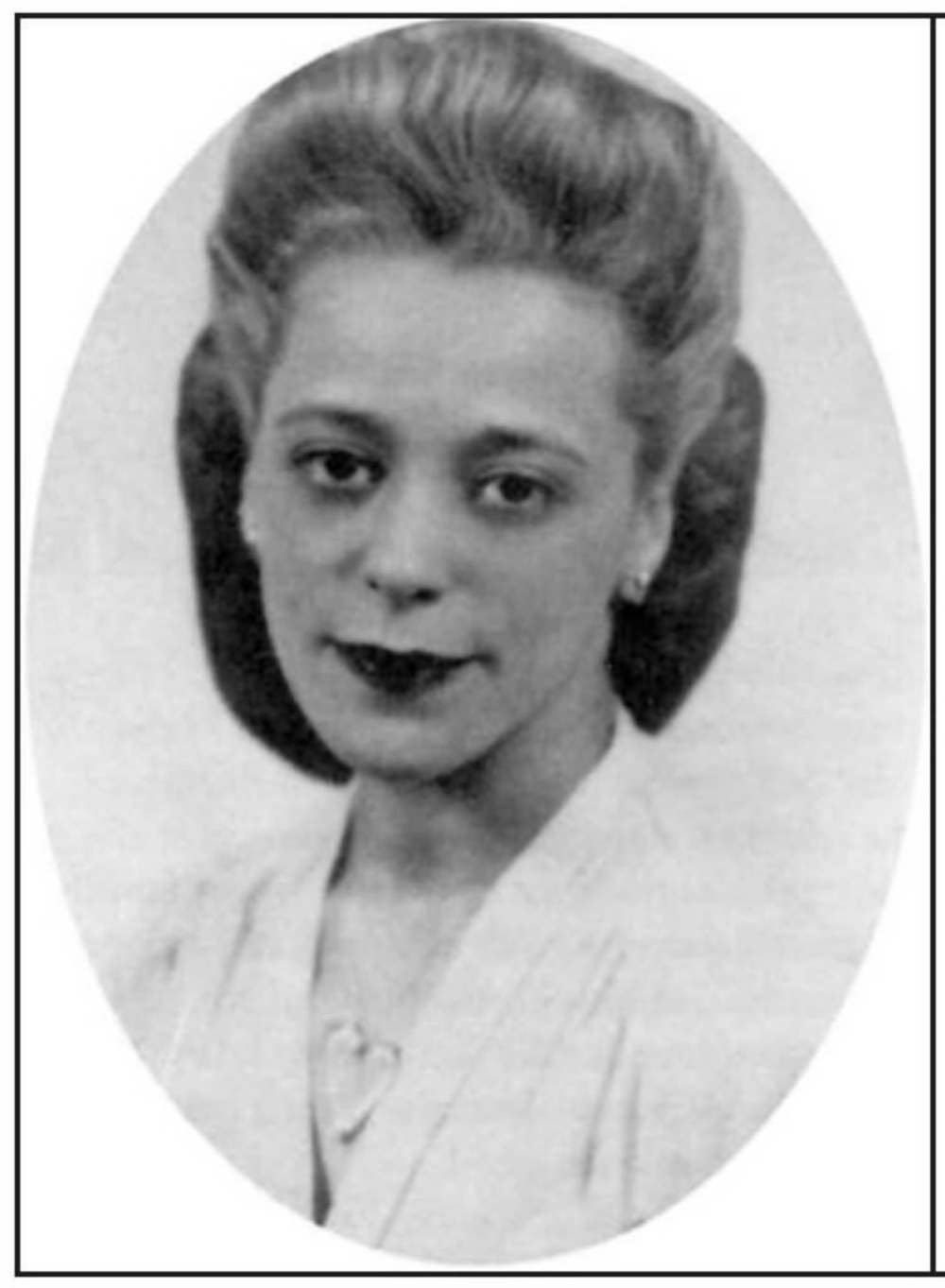
A black Halifax beautician, Desmond became a hero in the fight against racial injustice Nov. 8, 1946, when she was jailed and fined for sitting in a whites-only section of a New Glasgow movie theatre.
According to the Canadian Encyclopedia, she made an unplanned stop in the small community after her car broke down en route to a meeting in Sydney, N.S. Told the repair would take hours, Desmond, 32 at the time, decided to watch a movie at the Roseland Theatre.
When she refused to leave her seat in the downstairs section, which was reserved for whites, a police officer dragged her out and took her to jail. Under theatre policy, blacks were only permitted to sit in the balcony.
For her “crime,” Desmond was jailed 12 hours. In court the next morning, noted the Halifax Chronicle Herald, the successful businesswoman was convicted of defrauding the province of a penny — the difference in tax on a 40-cent ticket to sit downstairs versus a 20-cent ticket for upstairs.
During her trial, it was clear Desmond had offered to pay the extra 10 cents for a downstairs ticket, but theatre staff would not accept it. She was ordered to pay a $20 fine, plus $6 for the theatre’s court costs.
She fought the case to the province’s Supreme Court, which ruled against her.
On April 15, 2010, Desmond was granted a free pardon at a ceremony in Halifax, the first time in Canada such a pardon had been granted posthumously.
Unlike a federal pardon, a free pardon is based on a person’s innocence and recognizes a wrongful conviction.
Desmond, who died in 1965 at age 50, was hailed as a Canadian hero. The pardon was accompanied by an apology from then-Nova Scotia premier Darrell Dexter, who said: “The arrest, detainment and conviction of Viola Desmond is an example in our history where the law was used to perpetuate racism and racial segregation — this is contrary to the values of Canadian society.”
In 2010, the Viola Desmond Chair in Social Justice was established at Cape Breton University. In 2012, Canada Post issued a stamp bearing her image.
It is a tragedy Viola Desmond is no longer with us, because we are the ones who need to beg her pardon.
doug.speirs@freepress.mb.ca