Hope for clarity, relief in dense-breast screening
Advocates call for better supplemental testing in Manitoba

Advertisement
Read this article for free:
or
Already have an account? Log in here »
To continue reading, please subscribe:

Digital Subscription
One year of digital access for only $205*
- Enjoy unlimited reading on winnipegfreepress.com
- Read the E-Edition, our digital replica newspaper
- Access News Break, our award-winning app
- Play interactive puzzles
*First annual payment billed as $205.00 + GST for one year. This annual subscription will automatically renew at $233.00 + GST every 52 weeks (10% off the regular annual price of $259.35). Offer available to new and qualified returning subscribers only. Cancel any time.
To continue reading, please subscribe:
Add Free Press access to your Brandon Sun subscription for only an additional
$1 for the first 4 weeks*
- Enjoy unlimited reading on winnipegfreepress.com
- Read the E-Edition, our digital replica newspaper
- Access News Break, our award-winning app
- Play interactive puzzles
*Your next Brandon Sun subscription payment will increase by $1.00 and you will be charged $17.95 plus GST for four weeks. After four weeks, your payment will increase to $24.95 plus GST every four weeks.
Read unlimited articles for free today:
or
Already have an account? Log in here »
Hey there, time traveller!
This article was published 27/10/2024 (712 days ago), so information in it may no longer be current.
Manitoba’s health minister is open to the possibility of expanded cancer screening for women who have dense breast tissue.
Uzoma Asagwara said in an interview that while the province relies on the expertise of CancerCare Manitoba, it is prepared to factor in emerging research to guide decision-making. The comments come in the wake of a Free Press report that raised questions on whether some women with dense breast tissue are falling through screening cracks.
“(CancerCare has) experts and researchers that inform and guide the way that they roll out policies and provide care to Manitobans,” Asagwara said. “I also have our department looking at research nationally and beyond to help inform decisions that I make as minister.
Ruth Bonneville / Free Press
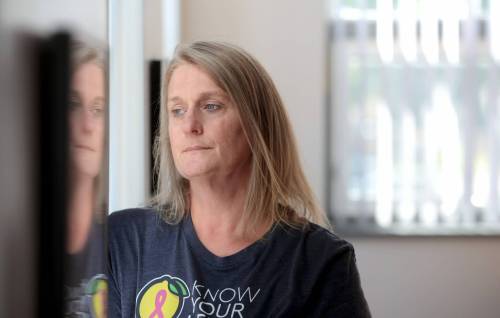
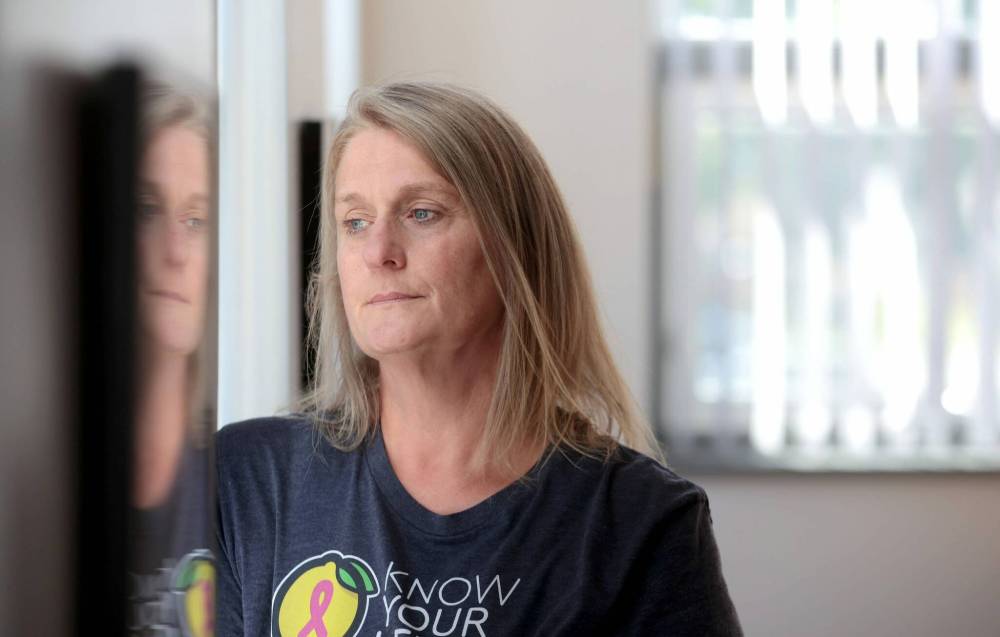
Jennifer Borgfjord, 54, was diagnosed with breast cancer after contradictory messaging in her mammogram reports and no offer of supplemental screening.
“We want to make sure that we are staying on top of the science and the best information that is available to us.”
A cancerous tumour and dense breast tissue both present as white on a mammogram, creating a masking effect for women in categories C and D, the two densest breast categories.
In Category D density, mammograms miss about 40 per cent of breast cancers; in Category C, about 25 per cent are missed.
Some advocates and experts are concerned about a policy gap affecting women in Manitoba who are told in their mammogram result letters that they have dense breasts, but are not advised to seek supplemental screening.
Jennifer Borgfjord, 54, had mammograms at age 50 and 52. She found a lump on her breast a month after her second mammogram, which turned out to be cancerous. The mammograms were unable to detect the lump.
“Both my results letters included information about my breast-tissue density and my second letter identified me as having Category C dense breasts, which it said can increase the risk of cancer.”
However, a leaflet accompanying the letter stated dense breast tissue is common and does not mean a woman will develop breast cancer.
“The literature contradicts itself,” Borgfjord says. “I have Category C dense breasts, which appear white on mammogram imaging. Cancer also appears white on mammogram imaging. I needed supplemental screening — ultrasound and MRI — to find the 2.3-centimetre tumour. But there is no call to action in the letter. They do not offer supplemental screening.”
Borgfjord and others are calling for screening ultrasounds be offered to women over 40 with C or D breast density, as well as lowering the screening age so women 40-plus can self-refer for mammograms.
The provincial government recently announced plans to increase breast cancer screening and lower the age for self-referrals to 45 at the end of 2025 and 40 by the end of 2026. However, it provided no clarity regarding supplemental screening, such as ultrasounds and MRIs, being offered to women with dense breasts.
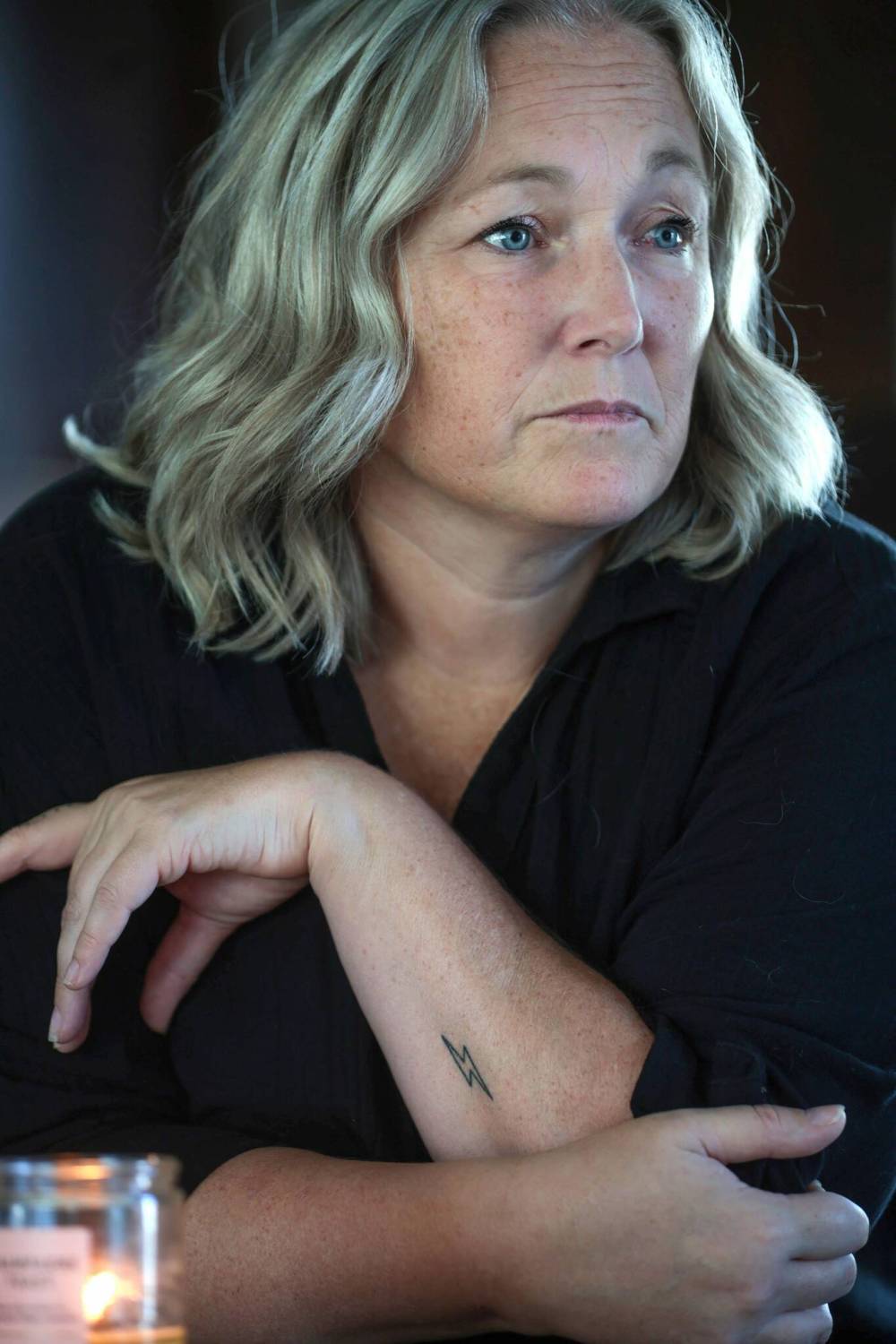
Heather Brister went through an experience similar to Bjorgfjord’s. She was 44 when she first felt a small lump the size of a pea on her right breast. After a diagnostic mammogram did not reveal anything was amiss, Brister was sent home without being offered additional screening or information regarding breast density.
When the lump had grown to 10 centimetres, Brister was sent for an ultrasound, with the resulting biopsy revealing she had triple negative advanced invasive ductal carcinoma.
The cancer had spread to her lymph nodes; she was a Stage 3C breast-cancer patient.
Dr. Lorne Brandes, a Winnipeg oncologist, said Brister should have been referred for an ultrasound when the initial mammogram was unable to locate the lump.
“If a radiologist doesn’t at that point refer that woman for an ultrasound then there is something really radically wrong with their judgment, in my opinion,” he said.
“People put their trust in you, and you have to do the right thing. The right thing is always: don’t leave a stone unturned.”
Ruth Bonneville / Free Press Files
An ultrasound was needed to detect Heather Brister’s tumour.
While women under 50 will eventually be able self-refer for mammograms, a requisition from a physician is required for an ultrasound.
“It’s up to the family doctor to be aware of the issue and to decide whether or not that patient should be seen by a breast specialist or in most cases have something like an ultrasound,” Brandes said.
However, some women in Manitoba are not getting the supplemental screening even after their physician has requested it.
A former Ottawa resident, who now lives in Manitoba, has Category C breasts and was advised by her doctor in Ottawa that she would need a followup.
Unable to register with a family doctor here, the woman, who asked to remain anonymous, visited a walk-in, where she “convinced a reluctant doctor” to send an ultrasound requisition to a breast-screening clinic.
However, she was turned away, as the clinic radiologist deemed it unnecessary.
The woman is currently still unable to access the necessary followup screening in Winnipeg.
Theresa, 33, is originally from Germany. She has a history of breast cancer in her family and was advised to have regular breast-cancer checkups from a young age by her gynecologist in Europe.

When her GP here was unable to determine whether she had a lump, she was referred for a screening ultrasound. However, she was scheduled for a mammogram instead.
“Radiologists said that ultrasounds don’t do anything. I eventually filed a complaint against the clinic with the College of Physicians, but my complaint was dismissed because no screening ultrasounds are currently done in Manitoba,” she said.
Because her mother’s cancer was detected late, Theresa (who did not want her last name used) booked herself in for an ultrasound at a private clinic in Toronto. She has since been told she requires a followup.
“Ideally, I want to see this being offered by our health-care system for free to all Manitobans. Early detection is such a big thing when it comes to breast cancer. I would like it if it was a service I could access here on an annual basis,” she said.
av.kitching@freepress.mb.ca
AV Kitching is an arts and life writer at the Free Press. She has been a journalist for more than two decades and has worked across three continents writing about people, travel, food, and fashion. Read more about AV.
Every piece of reporting AV produces is reviewed by an editing team before it is posted online or published in print — part of the Free Press‘s tradition, since 1872, of producing reliable independent journalism. Read more about Free Press’s history and mandate, and learn how our newsroom operates.
Our newsroom depends on a growing audience of readers to power our journalism. If you are not a paid reader, please consider becoming a subscriber.
Our newsroom depends on its audience of readers to power our journalism. Thank you for your support.
Silenced symptoms
Downplayed. Dismissed. Devalued.
In this monthly Free Press series, we’ll explore underdiagnosed, underrecognized and undertreated health issues affecting the lives of women, nonbinary and trans people.
We will share stories and lived experiences, while also raising awareness.
AV Kitching is an arts and life writer at the Free Press. She has been a journalist for more than two decades and has worked across three continents writing about people, travel, food, and fashion. Read more about AV.
Every piece of reporting AV produces is reviewed by an editing team before it is posted online or published in print — part of the Free Press‘s tradition, since 1872, of producing reliable independent journalism. Read more about Free Press’s history and mandate, and learn how our newsroom operates.
Our newsroom depends on a growing audience of readers to power our journalism. If you are not a paid reader, please consider becoming a subscriber.
Our newsroom depends on its audience of readers to power our journalism. Thank you for your support.
Related Articles
Dense breast tissue raises cancer risk, complicates screening





Advertisement Advertise With Us
Advertisement Advertise With Us