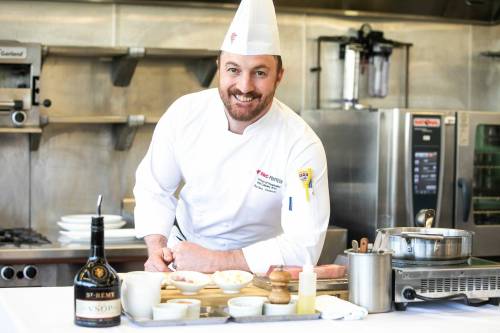
Meaty wisdom worth savouring From finding a butcher to that final pinch of salt, RRC Polytech chef Jordan Carlson shares best practices on meat cookery
Read this article for free:
or
Already have an account? Log in here »
To continue reading, please subscribe:

Digital Subscription
One year of digital access for only $205*
- Enjoy unlimited reading on winnipegfreepress.com
- Read the E-Edition, our digital replica newspaper
- Access News Break, our award-winning app
- Play interactive puzzles
*First annual payment billed as $205.00 + GST for one year. This annual subscription will automatically renew at $233.00 + GST every 52 weeks (10% off the regular annual price of $259.35). Offer available to new and qualified returning subscribers only. Cancel any time.
To continue reading, please subscribe:
Add Free Press access to your Brandon Sun subscription for only an additional
$1 for the first 4 weeks*
- Enjoy unlimited reading on winnipegfreepress.com
- Read the E-Edition, our digital replica newspaper
- Access News Break, our award-winning app
- Play interactive puzzles
*Your next Brandon Sun subscription payment will increase by $1.00 and you will be charged $17.95 plus GST for four weeks. After four weeks, your payment will increase to $24.95 plus GST every four weeks.
Read unlimited articles for free today:
or
Already have an account? Log in here »
Hey there, time traveller!
This article was published 21/10/2025 (302 days ago), so information in it may no longer be current.
Today’s Homemade Cooking School class is all about meat.
Homemade: Celebrating home cooking in Manitoba
Our guide on this protein-rich adventure is Jordan Carlson, a chef and culinary instructor at Red River College Polytech.
Cooking has always been a means to an end for Carlson, who grew up in Onanole and got his first job as a dishwasher at 13 years old.
“It’s the only thing I’ve ever done,” he says with a laugh.
He worked his way up through Elkhorn Resort and moved to Winnipeg to attend culinary school at Red River, where he developed a passion for fine dining. He worked at St. Charles Country Club for nearly a decade before returning to his alma mater to inspire the next generation of cooks, passionate, practical and otherwise.
Meat is a vast, varied and expensive food group. Proper cooking techniques can create a satisfying return on investment.
MIKAELA MACKENZIE / FREE PRESS Meat is a vast, varied and expensive food group. Jordan Carlson offers tips to demystify the cooking process.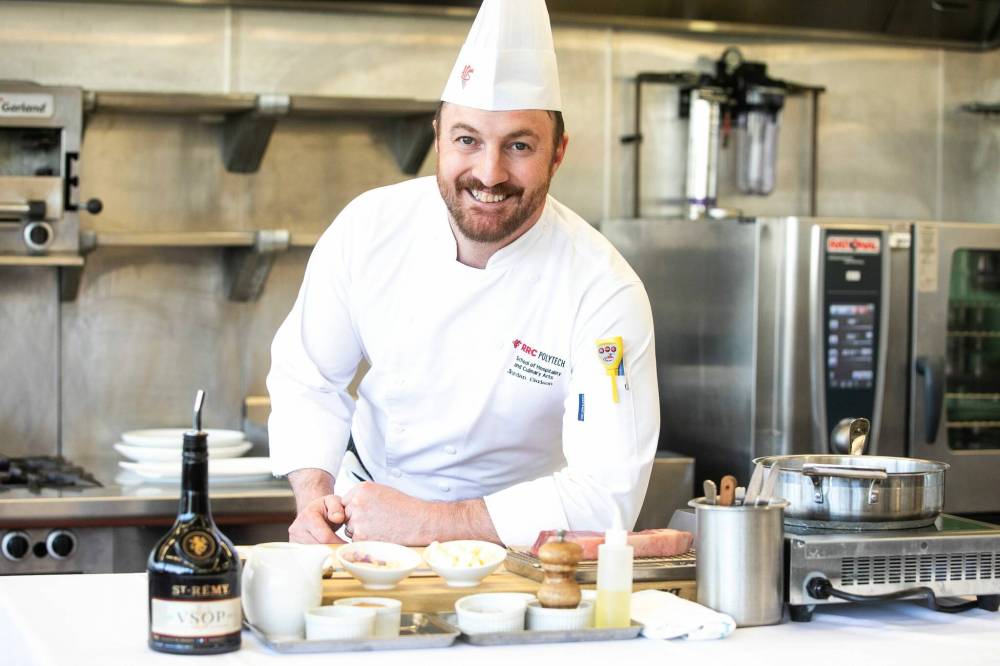
Shopping
For Carlson, price and relationships are top priorities when shopping for meat.
“Finding a good butcher is as important as having a good mechanic or a family doctor. Then you can talk to someone about what you want to do and they can give you advice,” he says.
Buying meat directly from local farmers is another way to build relationships, “and then you know exactly where it’s coming from,” Carlson says.
Other tips include buying the right cut (more on that below) for the recipe and cooking fresh fish the day it’s purchased. Meat purchased in bulk can be divided and frozen for later use.
Tempering
Three things make the biggest impact when cooking protein: “Temper your meat, season it well and rest it well,” says Carlson.
Tempering is the process of bringing protein to room temperature before seasoning and heating to ensure even cooking. Aim to remove meat from the fridge 20 minutes to an hour prior to cooking, but be mindful of food safety with larger cuts.
“If you’ve got a big roast or a big prime rib or something, you don’t want that sitting on the counter for hours,” Carlson says.
MIKAELA MACKENZIE / FREE PRESS Demonstrating how to cook a steak at RRC Polytech, Jordan Carlson advises bringing the meat to room temperature first, but mind food safety rules.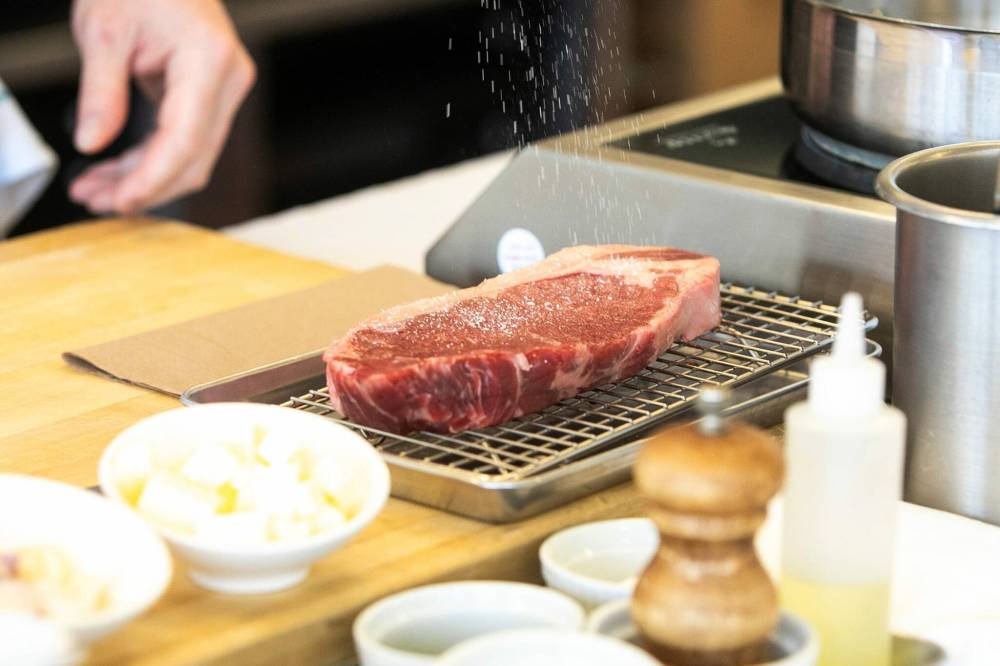
Seasoning
Salt helps lock in moisture, break down proteins and improve browning — so season early and use a heavy hand.
“Seasoning is the thing most people don’t do enough of,” Carlson says.
He recommends salting poultry and red meat at least 45 minutes before cooking in conjunction with tempering. Fish is generally more delicate and requires a shorter seasoning window.
Pat the protein with a paper towel to remove excess moisture, and cover the entire surface of the cut with a generous amount of good-quality salt, such as kosher. If cooking a whole chicken or turkey, salt the inside of the cavity as well. Add fresh-cracked black pepper and other seasonings just before searing or roasting.
MIKAELA MACKENZIE / FREE PRESS Always pat meat dry before cooking.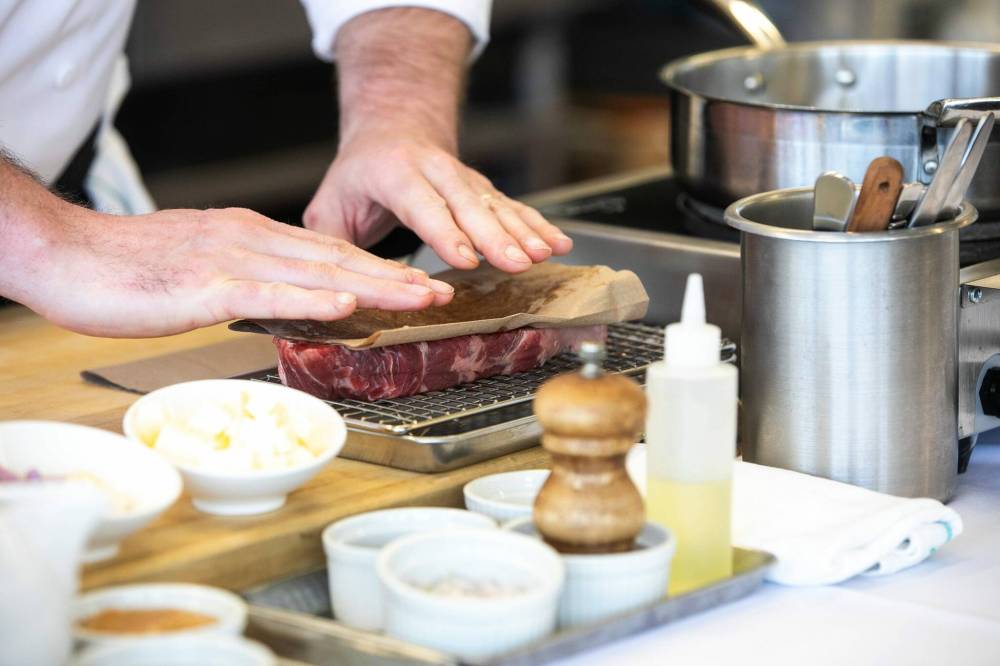
Brining and marinating are other common ways to add flavour.
A brine is a solution of water, salt and other desired herbs and spices. Meat should be completely submerged and left in the fridge overnight or longer, depending on the size. Brining adds moisture and works best for larger cuts and leaner proteins, such as poultry and pork.
“A marinade can add flavour and it can tenderize the meat as well,” Carlson says.
Oil-based marinades gently infuse meats with flavour, while those containing acids, such as lemon juice or vinegar, break down the proteins for a juicier end result. The enzymes in buttermilk and yogurt have a similar tenderizing effect.
Cooking
The cooking method depends on the kind of cut you’re working with.
Lean, tender meat — such as steak, pork chops and chicken breast — is best cooked at higher temperatures for a shorter amount of time.
Pan frying unlocks the Maillard reaction, a chemical reaction between proteins, sugars and heat, resulting in rich browning and additional flavour. To achieve the Maillard reaction, heat oil in a pan over medium-high heat until shimmering. Add the meat and let it cook undisturbed before flipping.
Too much surface moisture can derail the process, hence the importance of drying meat prior to seasoning, as mentioned above.
Cooking low and slow is the other end of the spectrum.
“Generally, the muscles animals use more tend to be tougher and need a longer cooking time,” Carlson says.
(Braising helps break down the fat and connective tissue of hardier (and often cheaper) cuts of meat, such as thighs, shoulders, ribs and brisket. After seasoning, meat is first seared in a hot pan and then covered partway with water, stock, wine or other liquid. Transfer to the oven and cook until the meat is fork-tender.
Roasting follows a similar methodology, but without liquid. Meat can be pan-seared prior to roasting or placed directly in the oven and cooked at a low temperature.
Temperature
A digital thermometer is your best ally in the fight against under- and overcooked meat.
Test the thickest part of the cut, avoiding any bones, for the most accurate reading. Here are some common recommended cooking temperatures from Health Canada:
- Beef — 160 F for ground, between 145 F and 170 F for rare to well-done
- Pork — 160 F
- Poultry — 165 F for individual cuts, 180 F for whole birds
- Seafood — 158 F for fish, 165 F for shellfish and crustaceans
Resting
MIKAELA MACKENZIE / FREE PRESS Jordan Carlson’s final word of advice? Add more salt.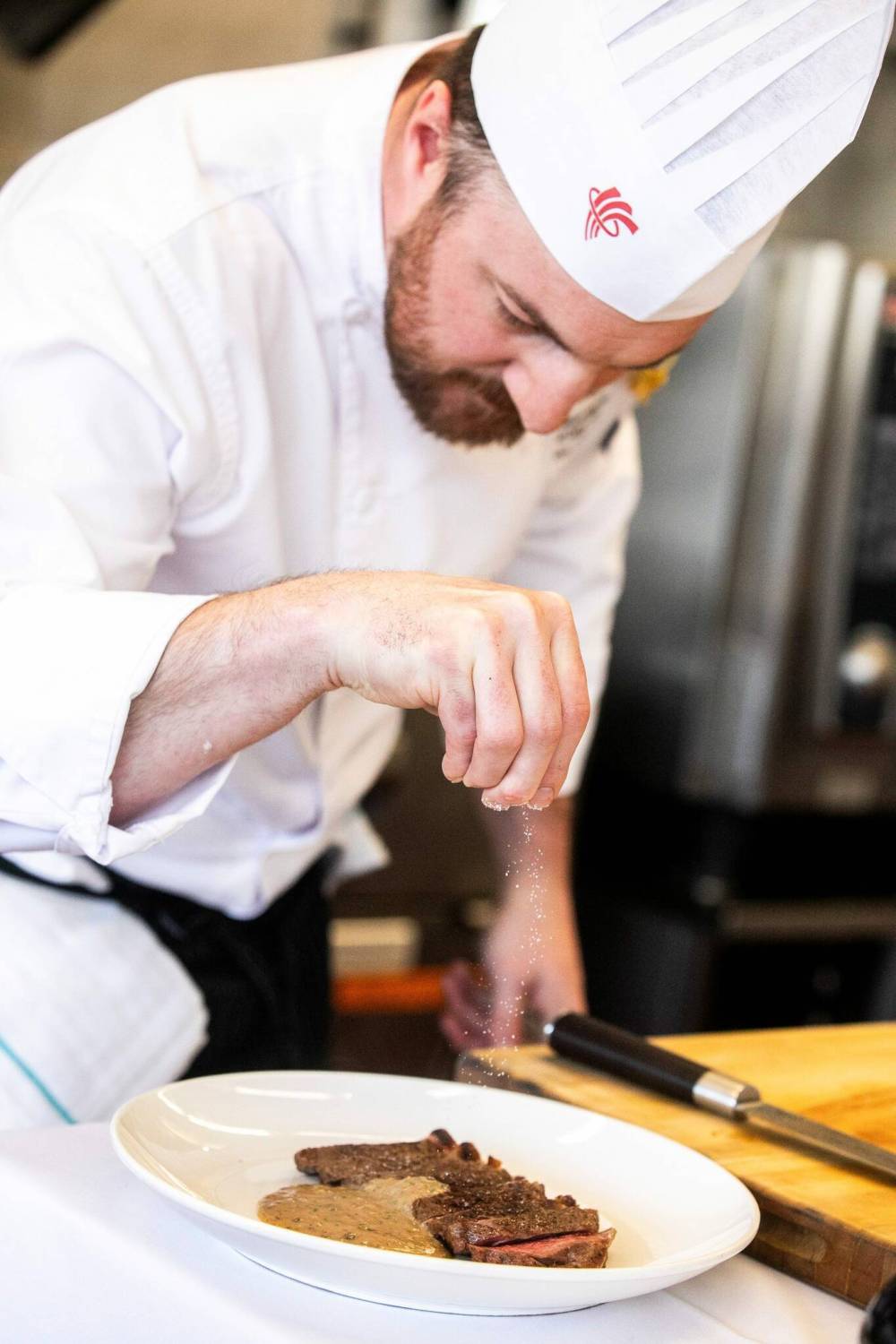
Once you’ve achieved the perfect temperature, remove your meat from the heat and let it rest for several minutes before cutting. This allows the muscle fibres to relax and retain moisture created during cooking.
Tenting with aluminum foil can help maintain heat when working with roasts or whole chickens, which should be rested for 10 or more minutes.
“Tent it loosely because you don’t want to create a seal and start to steam your meat,” Carlson says.
A final word of advice? Add more salt.
“Even if you covered something in salt for a day, it’s not going that deep inside the meat, so season it once you cut it,” he says.
eva.wasney@winnipegfreepress.com
Steak Diane
- 2 170-g (6-oz) beef tenderloin, striploin or ribeye steaks
- 15 ml (1 tbsp) oil
- 30 ml (2 tbsp) butter
- 1/2 shallot, diced small
- 30 ml (1 oz) cognac
- 125 ml (1/2 cup) Espagnole sauce (recipe below) or gravy
- 15 ml (1 tbsp) pickled green peppercorns, lightly crushed
- 15 ml (1 tbsp) fresh parsley, chopped
- Salt and fresh cracked black pepper
Season the steaks with salt and pepper and let sit at room temperature for 15-20 minutes. Pat dry before cooking.
In a pan over medium heat, add the oil and gently sear steaks over medium heat. Cook for about 3 to 4 minutes per side or to 145 F for medium-rare, depending on thickness.
Transfer the steaks to a plate and cover with foil to rest.
In the same skillet, reduce heat and melt the butter and add the shallots, cooking until translucent.
Carefully add the cognac and flambé (ignite with a long lighter if desired), letting the alcohol burn off. This will flame up so use caution.
MIKAELA MACKENZIE / FREE PRESS Carefully add the cognac and flambé, letting the alcohol burn off. Watch for flare-ups.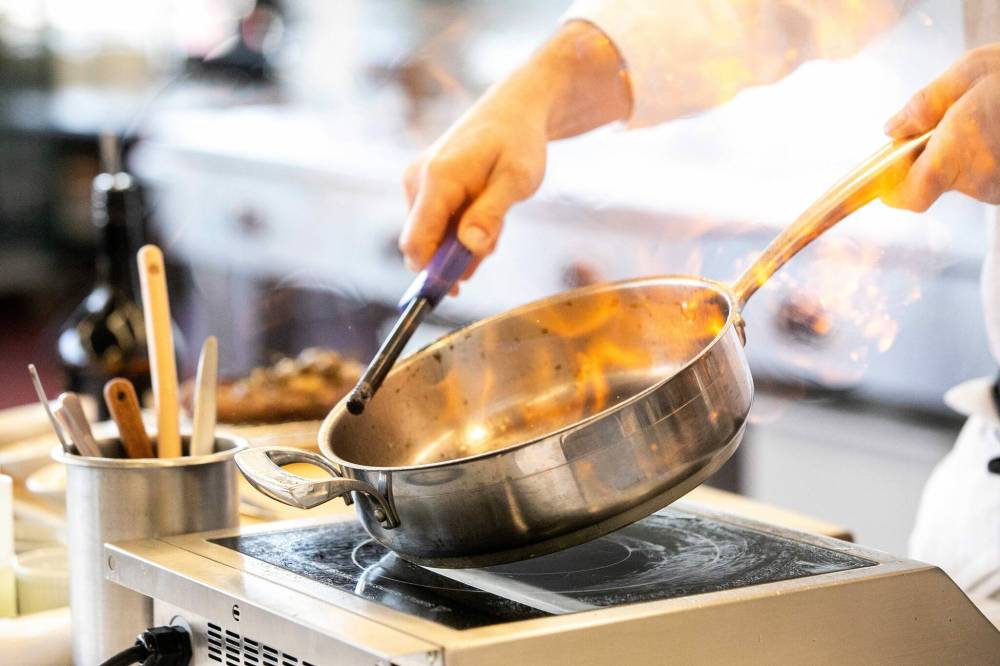
Stir in the espagnole sauce and green peppercorn.
Return the steaks to the pan and spoon sauce over them. Cook for 1 minute more to warm through.
Plate the steaks, spoon extra sauce on top, and sprinkle with chopped parsley.
Espagnole Sauce
- 275 ml (1 cup plus 2 tbsp) clarified butter, beef fat or oil
- 500 ml (2 cups) flour
- 300 g (10 oz) mirepoix (onions, carrots and celery), diced small
- 25 ml (1 1/2 tbsp) tomato paste
- 4 L (16 cups) stock, hot
- 2 bay leaves
- 5 ml (1 tsp) dried thyme
- Salt and black pepper, to taste
Heat the fat over moderately high heat and stir in the flour to make a roux. Do not brown the roux too quickly, as this can cause a bitter taste in the sauce.
Continue cooking until the roux turns the colour of milk chocolate; cautiously add the mirepoix. The mixture may sizzle and pop.
Cook for 3-4 minutes, but make sure not to brown the mirepoix. The roux should start to look like wet sand.
Stir in the tomato paste.
Add one third of the stock at a time and bring to a boil, stirring constantly until smooth. Repeat two more times.
Add all seasonings and simmer slowly for 45 minutes. Skim the fat and impurities while simmering.
Strain and adjust seasoning.
Degrease the sauce by skimming solidified fat as it cools. Excess sauce can be stored in an airtight container in the freezer.


Eva Wasney has been a reporter with the Free Press Arts & Life department since 2019. Read more about Eva.
Every piece of reporting Eva produces is reviewed by an editing team before it is posted online or published in print — part of the Free Press‘s tradition, since 1872, of producing reliable independent journalism. Read more about Free Press’s history and mandate, and learn how our newsroom operates.
Our newsroom depends on a growing audience of readers to power our journalism. If you are not a paid reader, please consider becoming a subscriber.
Our newsroom depends on its audience of readers to power our journalism. Thank you for your support.
Related Articles
Get some brownie points with these tasty treats










History
Updated on Wednesday, October 22, 2025 11:30 AM CDT: Updates common recommended cooking temperatures from Health Canada
Updated on Thursday, October 23, 2025 9:45 AM CDT: Corrects Health Canada recommendation for ground beef