State of the nation
Cuthbertson argues 1945 crucially shaped today's Canada
Advertisement
Read this article for free:
or
Already have an account? Log in here »
To continue reading, please subscribe:

Digital Subscription
One year of digital access for only $205*
- Enjoy unlimited reading on winnipegfreepress.com
- Read the E-Edition, our digital replica newspaper
- Access News Break, our award-winning app
- Play interactive puzzles
*First annual payment billed as $205.00 + GST for one year. This annual subscription will automatically renew at $233.00 + GST every 52 weeks (10% off the regular annual price of $259.35). Offer available to new and qualified returning subscribers only. Cancel any time.
To continue reading, please subscribe:
Add Free Press access to your Brandon Sun subscription for only an additional
$1 for the first 4 weeks*
- Enjoy unlimited reading on winnipegfreepress.com
- Read the E-Edition, our digital replica newspaper
- Access News Break, our award-winning app
- Play interactive puzzles
*Your next Brandon Sun subscription payment will increase by $1.00 and you will be charged $17.95 plus GST for four weeks. After four weeks, your payment will increase to $24.95 plus GST every four weeks.
Read unlimited articles for free today:
or
Already have an account? Log in here »
Hey there, time traveller!
This article was published 28/11/2020 (2119 days ago), so information in it may no longer be current.
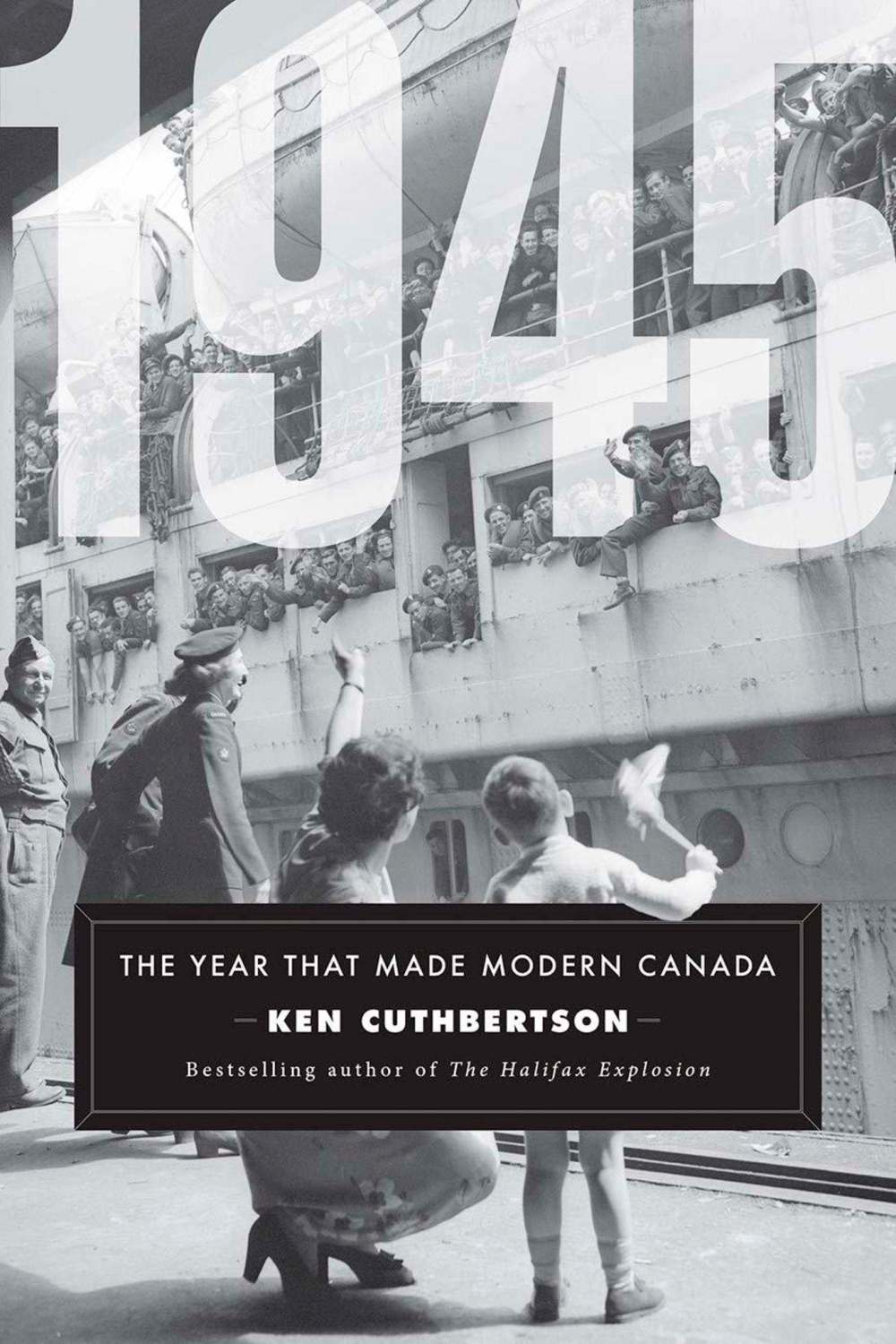
In his new book 1945, Kingston, Ont.-based Ken Cuthbertson, author of biographies of John Gunther, William Shirer and Emily Hahn and, most recently, of a well-received study of the disastrous Halifax munitions explosion of 1917, gives us a wide-ranging survey of a year which he sees as marking a “watershed” in Canada’s history.
The publisher’s description on the book’s back cover summarizes his argument. Canada’s many-sided involvement in the Second World War transformed it from the “sleepy economic and political backwater” of the pre-war era into “a modern, confident, truly independent nation.” As Cuthbertson’s sub-title puts it, 1945 was “the year that made modern Canada.”
In exploring the events of 1945, Cuthbertson avoids any traditional chronological survey. In his words, he has compiled a “family album of a sort, a collection of narrative snapshots of some of those people” who shaped the Canada of 1945 and thus shaped its future, giving us the Canada that we know today.
He begins with the story of Captain Hal MacDonald, a New Brunswick soldier who had been stationed in England since 1942 and who on New Year’s Day in 1945 was part of the Canadian army that was liberating the Netherlands from four years of Nazi occupation. He appears later in the book in the context of Cuthbertson’s examination of the Canadian government’s solution to the logistical and political problems of how, at the end of the war, to bring home the more than 350,000 Canadian military personnel, men and women, serving in Europe.
Cuthbertson then shifts the scene to Ottawa and gives us a portrait of then Canadian prime minister Mackenzie King and the problems he and his Liberal government faced as 1945 unfolded. We see King and his government wrestling with the conscription issue, with the demobilization of Canada’s wartime military, with participation in the creation of the United Nations and with steering the conversion of Canada’s economy from a wartime to a peacetime footing.
Following his analysis of the problems faced by King and his government, Cuthbertson describes Canada’s growing wartime prosperity as the country geared up to meet the economic imperatives of war and so shook off the miseries of the dirty thirties, while noting that this prosperity was not shared by all Canadians, and especially not by First Nations.
Cuthbertson then gives us chapter-length studies of Canadian military leaders Admiral Leonard W. Murray and General Harry Crerar, businessman E.P. Taylor, socialist politician Agnes Macphail, hockey star Rocket Richard and even the bank robber Budger Green and his Polka-Dot gang.
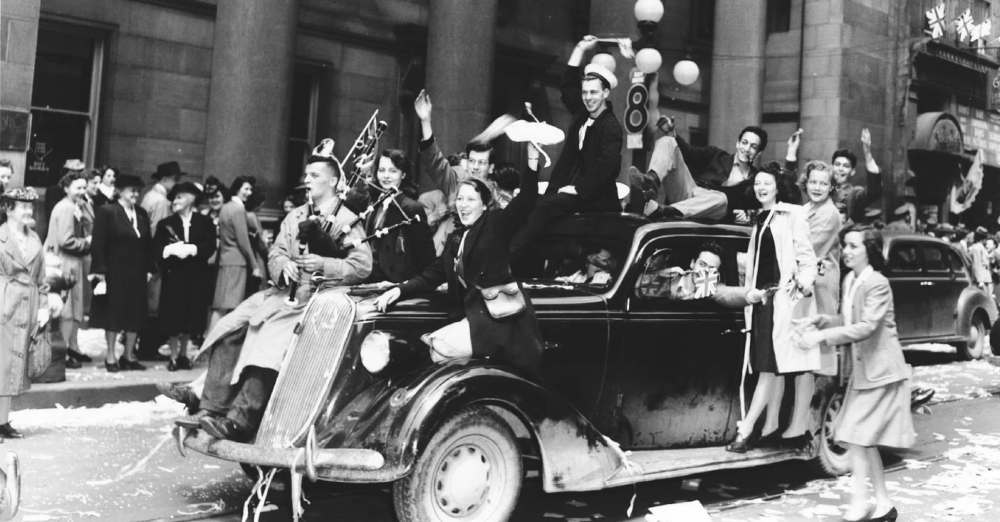
In addition, he examines the 1945 VE Day riots in Halifax, the Marsh report that laid the foundation for Canada’s welfare state, the war’s impact on women’s place in Canadian society, war brides, the Gouzenko affair and the atomic bombing of Hiroshima, in which, he tells us, the bomb was made from Canadian-mined and processed uranium.
Cuthbertson has an eye for this kind of detail and, although his depiction of Canada in 1945 is somewhat Ottawa-centric — with little on First Nations or such shapers of Canada as Tommy Douglas, Maurice Duplessis and other provincial movers and shakers — it is both informative and highly readable.
His contention that 1945 was the year that made modern Canada remains open to debate. After all, any single year is, at least in part, the creation of the years that preceded it, and at least some historians trace the origins of today’s Canada back to the First World War. But, as Cuthbertson shows us, 1945 was certainly an eventful and interesting year that left its mark on Canada.
Ken Osborne is professor emeritus in the Faculty of Education, University of Manitoba.