Soaring coffee prices rewrite some Americans’ daily routines

Advertisement

Advertise with us

NEW YORK (AP) — For years, it was a daily McDonald’s trip for a cup of coffee with 10 sugars and five creams. Later, it was Starbucks caramel macchiatos with almond milk and two pumps of syrup.

Read this article for free:


or

Already have an account? Log in here »

To continue reading, please subscribe:

Subscribe and receive a limited-edition Free Press branded hat or tote.

Digital Subscription

One year of digital access for only $205*

  • Enjoy unlimited reading on winnipegfreepress.com
  • Read the E-Edition, our digital replica newspaper
  • Access News Break, our award-winning app
  • Play interactive puzzles

*First annual payment billed as $205.00 + GST for one year. This annual subscription will automatically renew at $233.00 + GST every 52 weeks (10% off the regular annual price of $259.35). Offer available to new and qualified returning subscribers only. Cancel any time.

To continue reading, please subscribe:

Add Free Press access to your Brandon Sun subscription for only an additional

$1 for the first 4 weeks*

  • Enjoy unlimited reading on winnipegfreepress.com
  • Read the E-Edition, our digital replica newspaper
  • Access News Break, our award-winning app
  • Play interactive puzzles
Start now

*Your next Brandon Sun subscription payment will increase by $1.00 and you will be charged $17.95 plus GST for four weeks. After four weeks, your payment will increase to $24.95 plus GST every four weeks.

Hey there, time traveller!
This article was published 14/02/2026 (217 days ago), so information in it may no longer be current.

NEW YORK (AP) — For years, it was a daily McDonald’s trip for a cup of coffee with 10 sugars and five creams. Later, it was Starbucks caramel macchiatos with almond milk and two pumps of syrup.

Coffee has been a morning ritual for Chandra Donelson since she was old enough to drink it. But, dismayed by rising prices, the 35-year-old from Washington, D.C., did the unthinkable: She gave it up.

“I did that daily for years. I loved it. That was just my routine,” she says. “And now it’s not.”
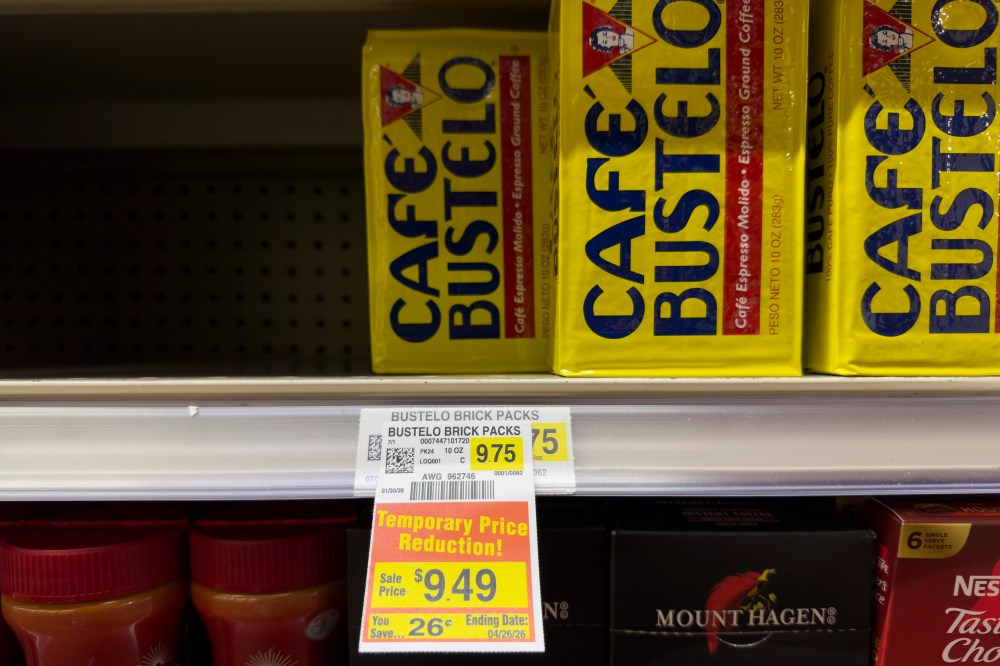
Coffee is for sale at a grocery store Monday, Feb. 9, 2026, in Chicago. (AP Photo/Erin Hooley)

Years of steadily climbing coffee prices have some in this country of coffee lovers upending their habits by nixing café visits, switching to cheaper brews or foregoing it altogether.

Coffee prices in the U.S. were up 18.3% in January from a year ago, according to the latest Consumer Price Index released on Friday. Over five years, the government reported, coffee prices rose 47%.

That extraordinary rise has brought some to take extraordinary measures.

“Before, I thought, ‘There’s no way I could make it through my day without coffee,’” says Liz Sweeney, 50, of Boise, Idaho, a former “coffee addict” who has cut her consumption. “Now my car’s not on automatic pilot.”

Sweeney used to have three cups of coffee at home each day and stop at a café whenever she left the house. As prices climbed last year, though, she nixed coffee shop visits and cut her intake to a cup a day at home. To make up for the caffeine, she pops open a can of Diet Coke at home or rolls through McDonald’s for one.

Dan DeBaun, 34, of Minnetonka, Minnesota, has likewise trimmed back on coffee shop visits, conscious of the increasing expense as he and his wife save up for a house.

“What used to be a $2 coffee, it’s now $5, $6,” says DeBaun, who now buys ground coffee at Trader Joe’s and fills up a travel mug to bring to the office.

Data from Toast, a payment platform used by more than 150,000 restaurants, found the median price of a regular hot coffee in the U.S. had climbed to $3.61 in December, with wide variation by location. The median price of cold brews was $5.55.

Virtually all coffee consumed in the U.S. is imported. Though tariffs affected some imports of coffee in 2025, they ultimately were removed. Climate issues — drought in Vietnam, heavy rain in Indonesia, and hot, dry weather in Brazil — are blamed for reducing yields of coffee crops and driving up global prices.

Two-thirds of Americans drink coffee daily, according to the National Coffee Association. For many, it is such an indispensable part of their routine, the soaring price has led to nothing more than grumbling.

The coffee association says its surveys show coffee consumption is broadly holding steady despite price hikes. But, squeezed by the cost of everything from rent to beef, others are shaking up their habit.

Sharon Cooksey, 55, of Greensboro, North Carolina, was visiting her local Starbucks most weekday mornings for a caramel latte until scaling back last year. First, she switched to brewing Starbucks at home. Then, she discovered Lavazza coffee was about 40% cheaper and switched to it.

“I can buy a bag of coffee for $6?” she said to herself. “It was like I had just discovered another world. The multiverse opened up to me in the coffee aisle of Publix.”

She has noticed her home-brewed costs tick upward, too, but it’s nothing compared to her café habit. A bag of beans that lasts weeks costs her about the same as one latte.

Cooksey misses the social aspect of visiting the café, where baristas greeted her by name. But she’s been surprised to find she actually prefers the way her homemade coffees taste.

“I’ll be damned if it didn’t taste so good,” she says.

Growing up, Donelson watched enviously as her mother made a daily coffee jaunt (also to McDonald’s, also 10 sugars and five creams), and she duplicated the habit. She went from college to the Air Force to a government job as a data and artificial intelligence strategist, but through it all, coffee was there.

She noticed the growing expense of her routine, but kept it up until a government shutdown halted her paychecks last fall and she needed to trim her spending. Looking for a morning substitute, she landed on a Republic of Tea blend with a healthy squeeze of honey.

“Twenty cents a cup compared to $7 or $8 a cup,” she says. “The math just makes sense.”

___

Matt Sedensky can be reached at msedensky@ap.org and https://x.com/sedensky
Report Error Submit a Tip

More Stories

Grieving child builds backyard rocket ship

Harriet Zaidman 4 minute read 2:01 AM CDT

I Built a Rocket Ship (Kids Can Press, 32 pages, hardcover, $22) by Winnipegger Anna Lazowski is a tender story for children ages 4-8 about a little girl trying to make sense of her mother’s death. The child engages in conversation with her late mom, agreeing and disagreeing about things said as she carries objects (and of course, the cat) to the backyard. There, she is building a rocket ship she will pilot into the skies to find her mom again.

Jennica Lounsbury’s varied perspectives show the range of emotions the little girl experiences.

● ● ●

Northwoods Lullaby by Mary Casanova (University of Minnesota Press, 32 pages, hardover, $25) is a bedtime book for readers up to age eight, perfect to bring a busy, happy day to a close. Just like children who are listening to adults reading the book, all the animal babies are being tucked into their nests and burrows by loving parents: “Thump and scamper,/nimble clover./ Soon it’s time to rest. Baby loon/ nestles in/as Papa floats along.”

A quick look at where provinces and territories stand on time changes

The Canadian Press 2 minute read Preview

A quick look at where provinces and territories stand on time changes

The Canadian Press 2 minute read Updated: Yesterday at 6:28 AM CDT

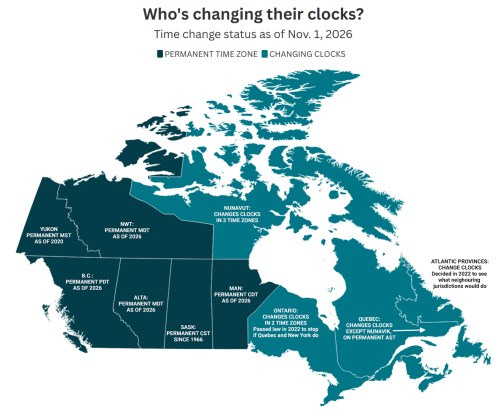
WINNIPEG - Manitoba's government said Thursday the province will be sticking with daylight time year-round, making it the latest jurisdiction to move away from twice-annual time changes. Here's a look at where things stand across Canada:

British Columbia said in March that it was moving to permanent Pacific daylight time. The change also means that parts of northeastern B.C., which have been on mountain standard time year round, are now in alignment with the rest of the province.

Alberta also switched to permanent daylight time this year in what it calls Alberta time. The change means it now has the same time as Saskatchewan year round.

Saskatchewan has been on permanent central standard time since 1966.

Read
Updated: Yesterday at 6:28 AM CDT

Canada must not accept another Iranian autocracy

David Matas 5 minute read 2:01 AM CDT

Iran is a state run by a radical government victimizing its citizens and its neighbours. How do we change that? Any regime change that repeats the mistakes of the past is not a solution.

What went wrong in the past which led to the current regime? One answer is the U.K. and American aided coup which led to the ouster in 1953 of a democratically elected government headed at the time by Mohammad Mossadegh and its replacement with an American friendly autocrat, the Shah of Iran, Mohammad Reza Pahlavi.

The Shah imposed his rule through the Iranian National Intelligence and Security Organization — SAVAK, the acronym of its Persian name. SAVAK systematically inflicted torture, arbitrary killings and extra-judicial killings on perceived opponents of the regime. It was only a matter of time before repression of a regime directed to serving foreign interests would be overthrown.

What replaced the regime of the Shah, in 1979, the current regime of the mullahs, is a regime as intolerant and violent as the regime of the Shah and then some. That was not inevitable. But neither was it surprising. The vicious nature of the current regime, following the example set by the Shah, and its hatred for the United States, reacting to the U.S. aided imposition of the Shah, both echoes and reacts to the past. In 1979, the U.S. reaped what it sowed in 1953.

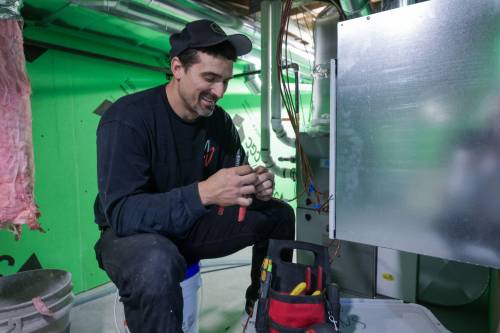
Former Bombers linebacker Gauthier enjoying career as electrician

Taylor Allen 6 minute read Preview

Former Bombers linebacker Gauthier enjoying career as electrician

Taylor Allen 6 minute read Yesterday at 12:44 PM CDT

Most professional football players don’t ride off into the sunset on their own terms.

Shayne Gauthier was well aware of that, but it didn’t make it sting any less when the Winnipeg Blue Bombers informed the veteran linebacker that they weren’t bringing him back for 2026.

“I was really hoping to play one more (season) because it would have been my 10th season, so, I’d say it didn’t really end the way I wanted,” Gauthier recently told the Free Press.

“It left a little sour taste in my mouth, but that’s part of pro sports. If everybody got the ending that they wanted, then it wouldn’t really work.”

Read
Yesterday at 12:44 PM CDT

American Hostage stars recall warmth of Winnipeggers during brutal winter

Randall King 7 minute read Preview

American Hostage stars recall warmth of Winnipeggers during brutal winter

Randall King 7 minute read Yesterday at 6:13 PM CDT

TORONTO — When you stream the eight-part series American Hostage, a sense of familiarity may strike.

That’s because the show was shot in Winnipeg — especially in the Exchange District — from November of last year to the beginning of February, with Winnipeg portraying Indianapolis circa 1977.

The whole world seemed to be watching that midwest American city that year as a hostage crisis unfolded involving one Tony Kiritsis, an angry man who goes ballistic when a mortgage brokerage was poised to foreclose on property he had dreamed of developing into a shopping centre.

Kiritsis kidnapped his mortgage broker, Richard Hall, wiring a shotgun to the back of his head, and demanded a public airing of his grievances, with the reluctant help of popular radio broadcaster Fred Heckman.

Read
Yesterday at 6:13 PM CDT

Cabernet Sauvignon star of wine festival

Ben Sigurdson 5 minute read Preview

Cabernet Sauvignon star of wine festival

Ben Sigurdson 5 minute read 3:00 AM CDT

The Winnipeg Wine Festival will celebrate the king of red wine grapes next weekend — the theme of this year’s festival, which takes place Sept. 25 and 26 at the RBC Convention Centre, is Cabernet Sauvignon.

Cab Sauv, as it’s also known, is the world’s most widely planted wine grape of any colour, first coming to prominence in the 1800s in France’s Bordeaux region, where the grape is still popular. Rather than single-variety wines, Bordeaux reds tend to be blends, with those coming from the left bank of the Gironde estuary being Cabernet-dominant, while right-bank wines are Merlot-dominant, with Cabernet Sauvignon playing a supporting role. Cabernet and Merlot work well together and many other countries have followed suit in blending the two.

A team at University of California Davis put Cabernet Sauvignon through a DNA test in 1996 and discovered its parent grapes are Cabernet Franc and Sauvignon Blanc — it’s likely that at some point the two varieties, planted next to each other in some vineyard, crossed and mutated and became the grape we know today. (Someone growing grapes in the 19th century must have had an inkling of what was up, as the grape has been called Cabernet Sauvignon since long before the DNA test.)

Flavour-wise, most Cabernet Sauvignon wines are big and bold, with a core of deep dark berry flavours, some graphite and spice notes and relatively bright acidity. It’s a grape that is well-suited to barrel aging, with most examples seeing at least some time in wood.

Read
3:00 AM CDT