Doctors use HIV in gene therapy to fix ‘bubble boy’ disease

Advertisement

Advertise with us

They were born without a working germ-fighting system, every infection a threat to their lives. Now eight babies with "bubble boy disease" have had it fixed by a gene therapy made from one of the immune system's worst enemies — HIV, the virus that causes AIDS.

Read this article for free:


or

Already have an account? Log in here »

To continue reading, please subscribe:

Subscribe and receive a limited-edition Free Press branded hat or tote.

Digital Subscription

One year of digital access for only $205*

  • Enjoy unlimited reading on winnipegfreepress.com
  • Read the E-Edition, our digital replica newspaper
  • Access News Break, our award-winning app
  • Play interactive puzzles

*First annual payment billed as $205.00 + GST for one year. This annual subscription will automatically renew at $233.00 + GST every 52 weeks (10% off the regular annual price of $259.35). Offer available to new and qualified returning subscribers only. Cancel any time.

To continue reading, please subscribe:

Add Free Press access to your Brandon Sun subscription for only an additional

$1 for the first 4 weeks*

  • Enjoy unlimited reading on winnipegfreepress.com
  • Read the E-Edition, our digital replica newspaper
  • Access News Break, our award-winning app
  • Play interactive puzzles
Start now

*Your next Brandon Sun subscription payment will increase by $1.00 and you will be charged $17.95 plus GST for four weeks. After four weeks, your payment will increase to $24.95 plus GST every four weeks.

Hey there, time traveller!
This article was published 17/04/2019 (2724 days ago), so information in it may no longer be current.

They were born without a working germ-fighting system, every infection a threat to their lives. Now eight babies with “bubble boy disease” have had it fixed by a gene therapy made from one of the immune system’s worst enemies — HIV, the virus that causes AIDS.

A study out Wednesday details how scientists turned this enemy virus into a saviour, altering it so it couldn’t cause disease and then using it to deliver a gene the boys lacked.

“This therapy has cured the patients,” although it will take more time to see if it’s a permanent fix, said Dr. Ewelina Mamcarz, one of the study leaders at St. Jude Children’s Research Hospital in Memphis.
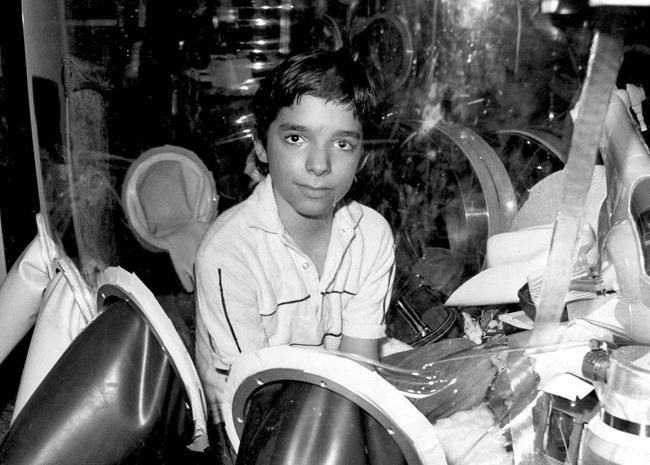
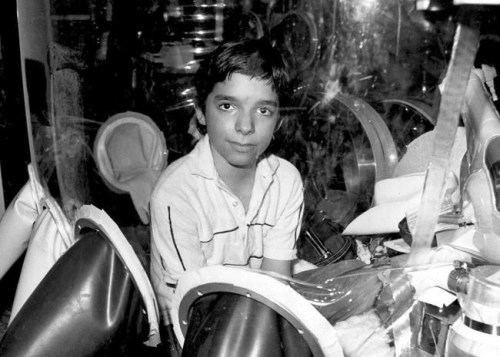
FILE - This Sept. 11, 1982 file photo shows David Vetter, born with an inherited disorder which leaves him no natural immunities against disease, in his protective enclosure in Texas. In 1984, Vetter died from complications from an experimental bone marrow transplant, thought to be his only chance at survival outside the
FILE - This Sept. 11, 1982 file photo shows David Vetter, born with an inherited disorder which leaves him no natural immunities against disease, in his protective enclosure in Texas. In 1984, Vetter died from complications from an experimental bone marrow transplant, thought to be his only chance at survival outside the "bubble." (AP Photo)

Omarion Jordan, who turns 1 later this month, had the therapy in December to treat severe combined immunodeficiency syndrome, or SCID.

“For a long time we didn’t know what was wrong with him. He just kept getting these infections,” said his mother, Kristin Simpson. Learning that he had SCID “was just heartbreaking … I didn’t know what was going to happen to him.”

Omarion now has a normal immune system. “He’s like a normal, healthy baby,” Simpson said. “I think it’s amazing.”

Study results were published by the New England Journal of Medicine. The treatment was pioneered by a St. Jude doctor who recently died, Brian Sorrentino.

SCID is caused by a genetic flaw that keeps the bone marrow from making effective versions of blood cells that comprise the immune system. It affects 1 in 200,000 newborns, almost exclusively males. Without treatment, it often kills in the first year or two of life.

“A simple infection like the common cold could be fatal,” Mamcarz said.

The nickname “bubble boy disease” comes from a famous case in the 1970s — a Texas boy who lived for 12 years in a protective plastic bubble to isolate him from germs. A bone marrow transplant from a genetically matched sibling can cure SCID, but most people lack a suitable donor. Transplants also are medically risky — the Texas boy died after one.

Doctors think gene therapy could be a solution. It involves removing some of a patient’s blood cells, using the modified HIV to insert the missing gene, and returning the cells through an IV. Before getting their cells back, patients are given a drug to destroy some of their marrow so the modified cells have more room to grow.

When doctors first tried it 20 years ago, the treatment had unintended effects on other genes, and some patients later developed leukemia. The new therapy has safeguards to lower that risk.

A small study of older children suggested it was safe. The new study tried it in infants, and doctors are reporting on the first eight who were treated at St. Jude and at UCSF Benioff Children’s Hospital San Francisco.

Within a few months, normal levels of healthy immune system cells developed in seven boys. The eighth needed a second dose of gene therapy but now is well, too. Six to 24 months after treatment, all eight are making all the cell types needed to fight infections, and some have successfully received vaccines to further boost their immunity to disease.
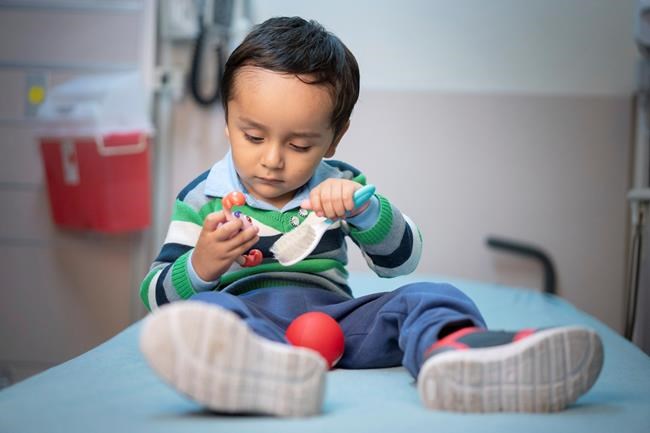
In this April 2019 photo provided by the St. Jude Children's Research Hospital, 2-year old Gael Jesus Pino Alva plays with toys at the hospital in Memphis. Gael was one of eight babies with
In this April 2019 photo provided by the St. Jude Children's Research Hospital, 2-year old Gael Jesus Pino Alva plays with toys at the hospital in Memphis. Gael was one of eight babies with "bubble boy disease" who have had it corrected by gene therapy that ironically was made from one of the immune system's worst enemies _ HIV, the virus that causes AIDS. (Peter Barta/St. Jude Children's Research Hospital via AP)

No serious or lasting side effects occurred.

Omarion is the 10th boy treated in the study, which is ongoing. It’s sponsored by the American Lebanese Syrian Associated Charities, the California Institute of Regenerative Medicine, the Assisi Foundation of Memphis and the federal government.

“So far it really looks good,” but patients will have to be studied to see if the results last, said Dr. Anthony Fauci, head of the National Institute of Allergy and Infectious Diseases, which helped develop the treatment. “To me, this looks promising.”

Rights to it have been licensed by St. Jude to Mustang Bio. Doctors say they have no estimate on what it might cost if it does become an approved treatment. They say they also hope to try it for more common problems such as sickle cell disease.

___

Marilynn Marchione can be followed at http://twitter.com/MMarchioneAP

___

The Associated Press Health and Science Department receives support from the Howard Hughes Medical Institute’s Department of Science Education. The AP is solely responsible for all content.
Report Error Submit a Tip

More Stories

Doctors use HIV in gene therapy to fix 'bubble boy' disease

Marilynn Marchione, The Associated Press 5 minute read Preview

Doctors use HIV in gene therapy to fix 'bubble boy' disease

Marilynn Marchione, The Associated Press 5 minute read Wednesday, Apr. 17, 2019

They were born without a working germ-fighting system, every infection a threat to their lives. Now eight babies with "bubble boy disease" have had it fixed by a gene therapy made from one of the immune system's worst enemies — HIV, the virus that causes AIDS.

A study out Wednesday details how scientists turned this enemy virus into a saviour, altering it so it couldn't cause disease and then using it to deliver a gene the boys lacked.

"This therapy has cured the patients," although it will take more time to see if it's a permanent fix, said Dr. Ewelina Mamcarz, one of the study leaders at St. Jude Children's Research Hospital in Memphis.

Omarion Jordan, who turns 1 later this month, had the therapy in December to treat severe combined immunodeficiency syndrome, or SCID.

Read
Wednesday, Apr. 17, 2019

Acquisition of former residential school grounds will help educate future generations: premier

Connor McDowell and Morgan Modjeski 6 minute read Preview

Acquisition of former residential school grounds will help educate future generations: premier

Connor McDowell and Morgan Modjeski 6 minute read Yesterday at 8:31 PM CDT

Premier Wab Kinew says a former Brandon-area campground acquired by the province will help educate future generations about the horrors of residential schools.

“We live in an era where people are trying to deny what happened in residential schools,” Kinew said during a Tuesday afternoon visit to Turtle Crossing Campground, near the former Brandon Indian Residential School. “It’s an important part of our national history, and keeping that truth alive.”

Kinew officially announced the province’s plan Tuesday, in partnership with the City of Brandon, to acquire and protect the site where the bodies of more than 50 Indigenous children are located.

The premier said the property has “huge national significance” for education about residential school history because it is one of the “most documented” in the country. He carried photographs, and some 20th century newspaper clippings from the Brandon Sun around the site Tuesday.

Read
Yesterday at 8:31 PM CDT

Retiree sues neighbour over alleged dog attack

Scott Billeck 2 minute read Yesterday at 2:00 AM CDT

A Winnipeg man is suing his neighbour over an alleged dog attack he says occurred while he was helping him with a lawnmower.

Arthur Cabel, a retiree who lives on Selkirk Avenue, is seeking unspecified damages from neighbour Saisamone Saegone, according to a statement of claim filed in the Manitoba Court of King’s Bench last week.

Cabel claims he went to Saegone’s home in the afternoon on Sept. 23, 2024, to help him with his lawnmower.

According to the lawsuit, Saegone’s large dog, initially in a fenced backyard, escaped, approaching Cabel and “mauling, attacking and biting him.”

Province to acquire campground near former residential school

Morgan Modjeski 3 minute read Preview

Province to acquire campground near former residential school

Morgan Modjeski 3 minute read Yesterday at 6:00 AM CDT

A burial site for dozens of children who died while attending the Brandon Indian Residential School will be acquired by the province, the Free Press has learned.

Premier Wab Kinew will announce the province’s plan to protect Turtle Crossing Campground at a news conference in Brandon Wednesday to mark National Day for Truth and Reconciliation. The move is in partnership with the City of Brandon.

The graves of at least 56 children are located at the campground, the Sioux Valley Dakota Nation has said, pointing to a geophysical study conducted by an archaeology firm in 2018.

There have been longstanding concerns from Indigenous leaders and community members that people were camping on the resting place of children victimized by colonialism.

Read
Yesterday at 6:00 AM CDT

Obsessed stalker who shot, killed young woman at bus stop in 1993 dies behind bars at age 74

Erik Pindera 3 minute read Preview

Obsessed stalker who shot, killed young woman at bus stop in 1993 dies behind bars at age 74

Erik Pindera 3 minute read Yesterday at 5:53 PM CDT

A Winnipeg man who stalked a woman for several years before shooting her dead in the street in 1993 has died in Stony Mountain prison.

On Monday, 74-year-old Ronald Edd Bell died of apparent natural causes at the federal prison just north of Winnipeg, the Correctional Service of Canada said.

Bell had been in prison since May 30, 1994, when he was given a life sentence with no chance of parole for 18 years for killing Terry-Lyn Babb, 25, on Jan. 21, 1993.

Bell walked up behind an unsuspecting Babb, who was waiting at a bus stop at Sherbrook Street and Wolseley Avenue, and shot her in the head with a pistol in front of horrified witnesses, says the Free Press report of his sentencing hearing.

Read
Yesterday at 5:53 PM CDT

Canada resorting to its tried and true playbook

Niigaan Sinclair 5 minute read Preview

Canada resorting to its tried and true playbook

Niigaan Sinclair 5 minute read Monday, Sep. 28, 2026

In 1846, Britain faced an emergency influenced by the Irish famine, so leaders repealed the country’s “Corn Laws” and restrictions on imported food and grain, transitioning to a system of free trade.

This created a crisis in the then Province of Canada, which had relied on British “preferential” status to prop up its agricultural and resource industries.

As a result, Canada looked south for new markets and eventually negotiated a free trade agreement with the United States.

This required land to be acquired and converted for industrial use quickly, so Canada quickly dispatched Commissioner William Robinson to negotiate with Indigenous communities along Lake Huron and Lake Superior for land.

Read
Monday, Sep. 28, 2026