Standing up against injustice is important

Advertisement

Advertise with us

In 1971, Daniel Ellsberg was working as a military analyst for the RAND corporation when he leaked the Pentagon Papers — the top-secret U.S. government history of the Vietnam War.

Read this article for free:


or

Already have an account? Log in here »

To continue reading, please subscribe:

Subscribe and receive a limited-edition Free Press branded hat or tote.

Digital Subscription

One year of digital access for only $205*

  • Enjoy unlimited reading on winnipegfreepress.com
  • Read the E-Edition, our digital replica newspaper
  • Access News Break, our award-winning app
  • Play interactive puzzles

*First annual payment billed as $205.00 + GST for one year. This annual subscription will automatically renew at $233.00 + GST every 52 weeks (10% off the regular annual price of $259.35). Offer available to new and qualified returning subscribers only. Cancel any time.

To continue reading, please subscribe:

Add Free Press access to your Brandon Sun subscription for only an additional

$1 for the first 4 weeks*

  • Enjoy unlimited reading on winnipegfreepress.com
  • Read the E-Edition, our digital replica newspaper
  • Access News Break, our award-winning app
  • Play interactive puzzles
Start now

*Your next Brandon Sun subscription payment will increase by $1.00 and you will be charged $17.95 plus GST for four weeks. After four weeks, your payment will increase to $24.95 plus GST every four weeks.

Opinion

Hey there, time traveller!
This article was published 24/06/2023 (1183 days ago), so information in it may no longer be current.

In 1971, Daniel Ellsberg was working as a military analyst for the RAND corporation when he leaked the Pentagon Papers — the top-secret U.S. government history of the Vietnam War.

The Papers showed the government had been lying to the American people about the progress of the war. Their publication helped turn the tide of public opinion against it.

The leak also resulted in a landmark Supreme Court ruling in favour of press freedom in that country and led, indirectly, to the downfall of then-president Richard Nixon.
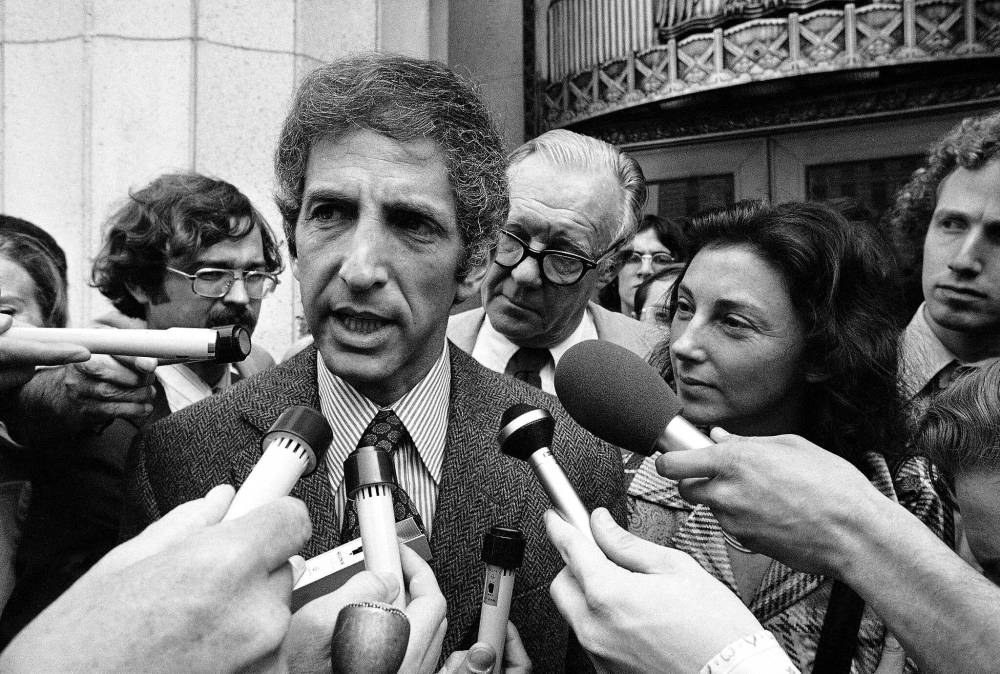
WALLY FONG / THE ASSOCIATED PRESS FILES
                                Daniel Ellsberg talks to media outside the Federal Building in Los Angeles, April 28, 1973. Ellsberg, who died June 14 at the age of 92, changed the course of history.

WALLY FONG / THE ASSOCIATED PRESS FILES

Daniel Ellsberg talks to media outside the Federal Building in Los Angeles, April 28, 1973. Ellsberg, who died June 14 at the age of 92, changed the course of history.

Ellsberg, who died June 14 at the age of 92, changed the course of history. But none of it might have happened without the influence of a young man named Randy Kehler — and therein lies a tale about standing up against injustice and having the courage of one’s convictions. And, also, an example of how small acts can lead to big consequences.

Kehler was a Harvard University graduate when, in 1969, he was drafted into the U.S. military, He refused to go. Because of that decision, he was sentenced to two years in prison.

Before beginning his prison term, Kehler spoke at a War Resisters League meeting at Haverford College near Philadelphia about his willingness to go to prison because of his opposition to the war.

That speech would have passed into obscurity except for who was in the audience that day: Daniel Ellsberg.

Ellsberg, who had been growing disillusioned with the government’s escalation of the war, had begun attending anti-war events like the one at the college. Kehler’s speech had a profound impact on him.

“It wasn’t what he said exactly that changed my worldview,” he recalled later. “It was the example he was setting with his life. How his words showed that he was a stellar American, and that he was going to jail as a very deliberate choice.”

After hearing Kehler speak, Ellsberg wrote that he “left the auditorium and found a deserted men’s room. I sat on the floor and cried for over an hour, just sobbing. The only time in my life I’ve reacted to something like that.”

The thought that went through his mind was: “We are eating our young.”

Hearing that speech prompted Ellsberg to leak the Pentagon Papers. “If I hadn’t met Randy Kehler, it wouldn’t have occurred to me to copy (the Pentagon Papers),” Ellsberg said. “His actions spoke to me as no mere words would have done. He put the right question in my mind at the right time.”

Kehler, ended up spending 22 months in jail. After his release, he went on to work for various anti-war groups. He also became a war tax resister, refusing to pay taxes to protest U.S. spending on the military. For that decision, he and his wife, Betsy Corner, had their house seized and sold by the IRS in 1991.

Looking back on his life, Kehler, now 79, said in a 2021 interview: “I don’t regret anything. I’ve had an amazing and blessed life.”

That included a 15-month stint teaching refugees who had escaped war in Africa. The experience of seeing how little most people in the world had to live on, and the impact of war on civilians, helped turn him against the Vietnam War.

“I had learned, in a very poor third-world country, what the effect of our weapons would be in such villages,” he said. From there, “it was just a series of steps to disconnect myself from the war, especially as a draft-age young man.”

For Kehler, it was all about standing up for his convictions.

“If we are silent, if we don’t speak out against what we don’t believe in, we are complicit,” he said. “Until we understand what our own complicity is, we can’t stop being complicit. Just raising your voice is one way. A letter to the editor is one way. It doesn’t mean you have to go to jail. Just stand up and be counted.”

While Kehler is not a religious person, his actions echo precepts from the world’s religions about standing up against injustice and for those suffering because of it. It reminds me, as a Christian, of the words of Jesus, who spoke about how a small mustard seed — or a speech at a long-forgotten War Resister’s League meeting — can grow into a large plant that changes the world.

It also speaks to the religious wisdom that God sometimes chooses small things and unknown or obscure people to make big things happen. Their words or actions are like ripples that radiate after a pebble is thrown into a pond; we never know where or how far they will go.

As for Kehler, he has a copy of Ellsberg’s book, titled Secrets: A Memoir of the Vietnam War and the Pentagon Papers. In it is a handwritten note by Ellsberg that says: “No Randy Kehler, no Pentagon Papers.”

faith@freepress.mb.ca

The Free Press is committed to covering faith in Manitoba through our Religion in the News project. This reporting continues because readers like you step forward to fund it.

Donate now to support our reporting on religion.

Your donation is eligible for a charitable tax receipt. BECOME A FAITH JOURNALISM SUPPORTER

John Longhurst

John Longhurst
Faith columnist & reporter

John Longhurst has been writing for Winnipeg's faith pages since 2003. He also writes for Religion News Service in the U.S., and blogs about the media, marketing and communications at Making the News.

Our newsroom depends on a growing audience of readers to power our journalism. If you are not a paid reader, please consider becoming a subscriber.

Our newsroom depends on its audience of readers to power our journalism. Thank you for your support.

Report Error Submit a Tip

The Free Press acknowledges the financial support it receives from members of the city’s faith community, which makes our coverage of religion possible.
More Stories

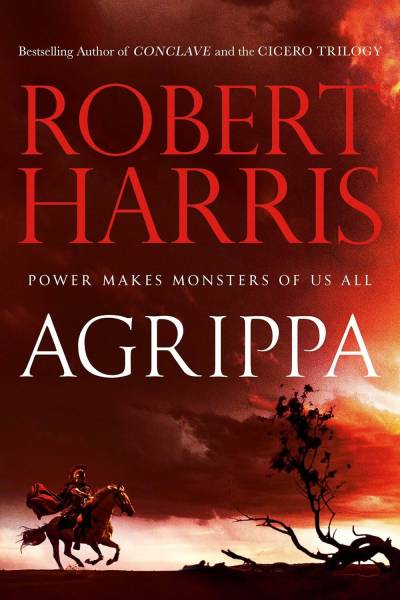
Give-and-take relationship of Roman leaders takes centre stage in Harris’s historical fiction

Reviewed by Kathryne Cardwell 4 minute read Preview

Give-and-take relationship of Roman leaders takes centre stage in Harris’s historical fiction

Reviewed by Kathryne Cardwell 4 minute read 2:01 AM CDT

British novelist Robert Harris’s latest work is a reflection on tyranny, corruption and betrayal among all-powerful political leaders.

You might be forgiven for thinking it’s a contemporary thriller — it’s actually historical fiction set in ancient Rome.

A former BBC journalist, Harris debuted as a novelist in 1992 with Fatherland, an alternative history where Nazi Germany won the Second World War.

Since then, the prolific author has become best-known for his works of historical fiction, especially his ancient Rome trilogy released from 2006-2015 and the novel Conclave, which was published in 2016 and was made into the film of the same name in 2024.

Read
2:01 AM CDT

Canada must not accept another Iranian autocracy

David Matas 5 minute read 2:01 AM CDT

Iran is a state run by a radical government victimizing its citizens and its neighbours. How do we change that? Any regime change that repeats the mistakes of the past is not a solution.

What went wrong in the past which led to the current regime? One answer is the U.K. and American aided coup which led to the ouster in 1953 of a democratically elected government headed at the time by Mohammad Mossadegh and its replacement with an American friendly autocrat, the Shah of Iran, Mohammad Reza Pahlavi.

The Shah imposed his rule through the Iranian National Intelligence and Security Organization — SAVAK, the acronym of its Persian name. SAVAK systematically inflicted torture, arbitrary killings and extra-judicial killings on perceived opponents of the regime. It was only a matter of time before repression of a regime directed to serving foreign interests would be overthrown.

What replaced the regime of the Shah, in 1979, the current regime of the mullahs, is a regime as intolerant and violent as the regime of the Shah and then some. That was not inevitable. But neither was it surprising. The vicious nature of the current regime, following the example set by the Shah, and its hatred for the United States, reacting to the U.S. aided imposition of the Shah, both echoes and reacts to the past. In 1979, the U.S. reaped what it sowed in 1953.

American Hostage stars recall warmth of Winnipeggers during brutal winter

Randall King 7 minute read Preview

American Hostage stars recall warmth of Winnipeggers during brutal winter

Randall King 7 minute read Yesterday at 6:13 PM CDT

TORONTO — When you stream the eight-part series American Hostage, a sense of familiarity may strike.

That’s because the show was shot in Winnipeg — especially in the Exchange District — from November of last year to the beginning of February, with Winnipeg portraying Indianapolis circa 1977.

The whole world seemed to be watching that midwest American city that year as a hostage crisis unfolded involving one Tony Kiritsis, an angry man who goes ballistic when a mortgage brokerage was poised to foreclose on property he had dreamed of developing into a shopping centre.

Kiritsis kidnapped his mortgage broker, Richard Hall, wiring a shotgun to the back of his head, and demanded a public airing of his grievances, with the reluctant help of popular radio broadcaster Fred Heckman.

Read
Yesterday at 6:13 PM CDT

Siloam Mission, WFPS discussing on-site paramedic to reduce staggering number of emergency calls

Scott Billeck 4 minute read Preview

Siloam Mission, WFPS discussing on-site paramedic to reduce staggering number of emergency calls

Scott Billeck 4 minute read Yesterday at 2:00 AM CDT

Winnipeg’s fire-paramedic service and its largest homeless-serving organization are discussing what it would look like to station at least one paramedic at Siloam Mission, as emergency calls to the downtown facility surge.

The ongoing discussions come as Winnipeg Fire Paramedic Service crews were dispatched 1,771 times during the first eight months of the year to the two adjacent Siloam properties at 303 Stanley St. and 300 Princess St.

WFPS said most of the calls were related to overdoses or other consequences of substance use, with the total nearly double the 854 calls recorded over the same period last year. By comparison, there were 831 calls during the same span in 2024, and 591 in 2023.

“The number of emergency calls isn’t sustainable for us as a service, but it’s certainly not sustainable for them as an agency trying to provide services,” WFPS chief Ryan Sneath told the Free Press. “And they recognize that they’re impacting emergency services, not them specifically, but the site in a significant way.”

Read
Yesterday at 2:00 AM CDT

Canada-U.S. trade relationship is broken, but the damage can — and will — be repaired

Tom Brodbeck 5 minute read Preview

Canada-U.S. trade relationship is broken, but the damage can — and will — be repaired

Tom Brodbeck 5 minute read Thursday, Sep. 17, 2026

Canada needs to get serious about diversifying its trade beyond the United States. But at the same time, Canadians should expect relations with the U.S. to normalize after Donald Trump is no longer in the White House.

For generations, Canada-U.S. trade was considered almost a fact of geography. The two countries share the world’s longest undefended border, deeply integrated supply chains and a century of commercial relationships.

Canadian manufacturers depend on American customers. American manufacturers depend on Canadian suppliers. Energy, agriculture, automotive production and countless other industries operate across the border as though it barely exists.

That isn’t going to change dramatically, even in the midst of a bitter trade war unleashed by the U.S. president.

Read
Thursday, Sep. 17, 2026

Family account spiced with magic realism, geopolitical intrigue and a ghost story

Reviewed by Zilla Jones 4 minute read Preview

Family account spiced with magic realism, geopolitical intrigue and a ghost story

Reviewed by Zilla Jones 4 minute read 2:01 AM CDT

Tom Lin’s second novel Babylon, South Dakota moves beyond a historical account of an immigrant family’s struggle, delightfully blending and bending genres.

Lin is a Chinese-born novelist whose family emigrated to the U.S. when he was four years old. His debut novel, The Thousand Crimes of Ming Tsu, won the 2022 Andrew Carnegie Medal for Excellence in Fiction, making him the youngest ever recipient of that award. He earned a PhD in English from the University of California Davis and is currently an assistant professor of English and creative writing at the University of Iowa.

Babylon, South Dakota takes place in an unspecified time period that can be understood to be during the Mao era — likely the 1950s or ’60s. A young Chinese couple, the Hsuis, immigrate to the rural community that gives the book its title. They take the names Saul and Mei and settle on a 160-acre homestead left to them by a distant relative.

Saul’s dream is to breed and sell chrysanthemums from seeds he brought from China, while Mei wants to raise livestock. They speak no English, know nothing of life in the United States, are unprepared for the harshness of winter and the isolation of the farm and bring nothing with them except some gold, which Mei hides around the house for emergencies. Their only link to the outside world is a discarded and marginally functioning TV set, which Saul rescues and rigs up.

Read
2:01 AM CDT