‘Talk is cheap’: How companies can act on diversity targets amid an economic crisis
Advertisement
Read this article for free:
or
Already have an account? Log in here »
To continue reading, please subscribe:

Digital Subscription
One year of digital access for only $205*
- Enjoy unlimited reading on winnipegfreepress.com
- Read the E-Edition, our digital replica newspaper
- Access News Break, our award-winning app
- Play interactive puzzles
*First annual payment billed as $205.00 + GST for one year. This annual subscription will automatically renew at $233.00 + GST every 52 weeks (10% off the regular annual price of $259.35). Offer available to new and qualified returning subscribers only. Cancel any time.
To continue reading, please subscribe:
Add Free Press access to your Brandon Sun subscription for only an additional
$1 for the first 4 weeks*
- Enjoy unlimited reading on winnipegfreepress.com
- Read the E-Edition, our digital replica newspaper
- Access News Break, our award-winning app
- Play interactive puzzles
*Your next Brandon Sun subscription payment will increase by $1.00 and you will be charged $17.95 plus GST for four weeks. After four weeks, your payment will increase to $24.95 plus GST every four weeks.
Read unlimited articles for free today:
or
Already have an account? Log in here »
Hey there, time traveller!
This article was published 17/12/2020 (2103 days ago), so information in it may no longer be current.
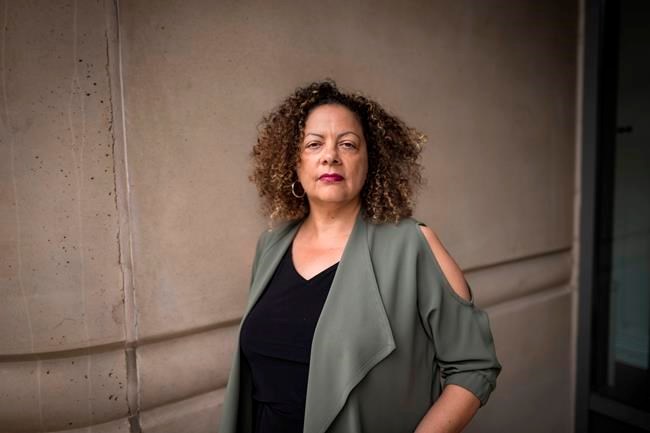
TORONTO – When Jaqui Parchment was climbing Canada’s corporate ladder, she noticed office cliques formed around members of the same hockey team and frequently overheard senior consultants chattering about their next round of golf with important clients.
“It just felt so foreign to me,” said Parchment, who emigrated from Jamaica at the age of 14 and has since become the chief executive at consulting company Mercer Canada.
“I’m sure to most people it would not have felt that way, but there were 100 little things … which combined to say to me, ‘Wow, you’re really different.’
“It didn’t feel great.”
For Parchment and other members of racialized communities, these kinds of incidents — small in themselves, but which add up over time — serve as a constant reminder that corporate Canada is failing to meet the bar on inclusivity.
But 2020 brought a push to improve workplace culture and attract and retain more diverse staff and customers after the death of George Floyd, a Black man who died in U.S. police custody in May.
Seven in 10 corporate leaders said their focus on diversity, equality and inclusion has increased since then, Mercer found in a November study that surveyed leaders from 54 Canadian companies. Some have published specific measures outlining how they plan to do better.
The pledges to change comes as COVID-19 is battering the economy and many companies are struggling to survive, but experts say it’s important to keep the momentum going.
“There is absolutely no shortage of things that companies can be doing,” said Tash Jefferies, the Nova Scotia-bred founder of Diversa, a startup helping people of colour and women pursue careers in the tech sector.
For companies unable to hire right now, Jefferies recommends businesses look to supplier contracts and consider shifting to work with companies that are committed to diverse workforces instead.
If you don’t work with suppliers, you can look at changes to workplace culture, she said.
As Parchment worked her way toward the top job at Mercer in 2018, she remembered the cliques from years earlier and moved to “peel back the onion of belonging” so that no one else would feel the same way.
The team said goodbye to golf tournaments at prestigious Glen Abbey. Jerk chicken, Chinese food and samosas started making the menu at company events and clients were entertained with treats that matched their interests instead of the traditional tickets to the game or round of golf.
At a broader level, Parchment urged hiring managers to consider a wider range of candidates and monitor gaps in raises and bonuses between genders and races.
For companies under a hiring freeze, Jefferies suggested looking at the board as director’s terms end, creating an opportunity to bring on a new member from an under-represented community. It’s also important to think about recruitment long before job postings go public, she said.
“The root issue occurs somewhere earlier in the system and so if I was a company, I’d started looking at all my recruiting practices … and try and create some alliances and relationships with different groups long before I have to start hiring,” added Rajesh Uttamchandani, the chief people officer at the MaRS innovation community in Toronto and a member of the newly formed Coalition of Innovation Leaders Against Racism.
That strategy is already coming to life at Toronto-based digital rewards company Drop Technologies Inc. It crunched its own numbers in June and discovered 44 per cent were white and 56 per cent were “ethnically diverse” but not one employee was Black.
Companies can be hesitant to publicly release such data but Drop felt it was the right thing to do, said Susan Feng, the company’s engineering manager and a member of its diversity, equity and inclusion committee.
“Unless you’re making an enormous effort right from the start, you’re going to be falling behind in some aspect of diversity in your hiring and it’s hard to move past that initial feeling of ‘This doesn’t look very good,'” she said.
“But if we don’t even acknowledge that there’s an issue here, then we’re not going to do anything to make it different.”
Drop worked with staff to find ways to better represent Canada’s population. It settled on ideas that touch every department, including ensuring at least 30 per cent of models used in the company’s emails, social media and advertising are Black, Indigenous or people of colour, hosting internal events on allyship and anti-racism and donating one per cent of the money redeemed on itsapp each month to Black-centric charities.
Drop’s chief of staff Esther Park said engagement around the changes has been “incredible” and she’s already seen positive discussions come from lunch-and-learns and movie nights. She hopes the efforts will move the needle.
Mercer managed to do just that after it began tracking gender diversity and rolled out other changes.
Women now make up 45 per cent of Mercer’s leadership team and 40 per cent of its partners, with a 50:50 gender ratio at the level just below partner.
Parchment said Mercer is “further behind” on racial diversity, but is working on tracking it this year.
“I’m not going to pretend that we’re perfect. We still have our issues,” she said. “There’s still very few CEOs of the largest corporations in Canada that are women. There’s still not enough board seats held by women.”
More than 200 companies, signed a pledge vowing to create and share strategic inclusion and diversity plans, implement or expand unconscious bias and anti-racism education and work with members of the Black community to increase their representation as part of the newly-formed Black North Initiative.
Signatories include Mercer, Air Canada, Maple Leaf Sports and Entertainment, Facebook Canada and Rogers Communications, and make up 30 per cent of the TSX 60.
The pledge was prompted in part by Floyd’s death, which ignited conversations around systemic racism and ways to address it.
Companies across the country released statements at the time vowing to closer examine their own operations, but Jefferies says she’s seen similar promises go unfulfilled before and doesn’t know what to expect at a time when companies are tightening spending during a pandemic.
“Unless you’re willing to take action and make (diversity) a policy within what you’re doing in your company, it’s just lip service because everybody can do that, and talk is cheap,” she said.
This time she hopes things will be different because conversations around diversity haven’t disappeared, and the attention is acting as a layer of accountability.
“Any companies that are showing that they’re not playing ball and they’re not having diversity be one of their key tenets … they’re going to get hit because ultimately the consumers are helping to shape what companies stay around,” Jefferies said.
“The market will dictate who comes out the winners.”
This report by The Canadian Press was first published Dec. 17, 2020.