UN: Ebola increasing in Congo due to ‘security challenges’
Advertisement
Read this article for free:
or
Already have an account? Log in here »
To continue reading, please subscribe:

Digital Subscription
One year of digital access for only $205*
- Enjoy unlimited reading on winnipegfreepress.com
- Read the E-Edition, our digital replica newspaper
- Access News Break, our award-winning app
- Play interactive puzzles
*First annual payment billed as $205.00 + GST for one year. This annual subscription will automatically renew at $233.00 + GST every 52 weeks (10% off the regular annual price of $259.35). Offer available to new and qualified returning subscribers only. Cancel any time.
To continue reading, please subscribe:
Add Free Press access to your Brandon Sun subscription for only an additional
$1 for the first 4 weeks*
- Enjoy unlimited reading on winnipegfreepress.com
- Read the E-Edition, our digital replica newspaper
- Access News Break, our award-winning app
- Play interactive puzzles
*Your next Brandon Sun subscription payment will increase by $1.00 and you will be charged $17.95 plus GST for four weeks. After four weeks, your payment will increase to $24.95 plus GST every four weeks.
Read unlimited articles for free today:
or
Already have an account? Log in here »
Hey there, time traveller!
This article was published 22/03/2019 (2685 days ago), so information in it may no longer be current.
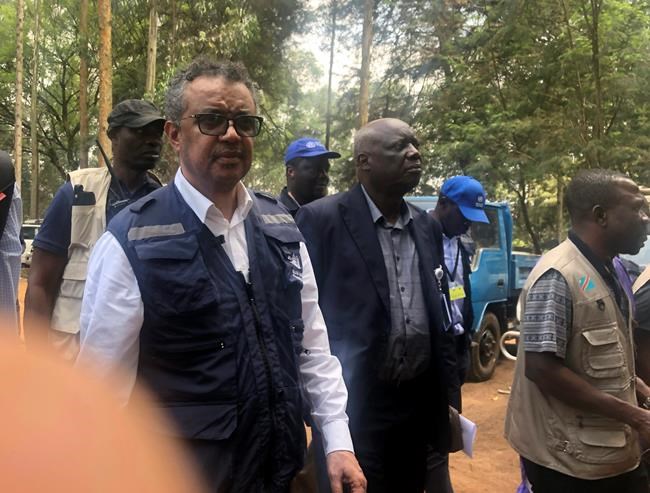
LONDON – The World Health Organization says Ebola has spiked in Congo in recent days because of “increased security challenges,” a week after its director-general predicted the outbreak might be contained within six months.
The U.N. health agency said in an update late Thursday the recent attacks on Ebola clinics slowed response efforts for days. Congolese officials reported dozens of new suspected and confirmed cases recently. Last week, WHO chief Tedros Adhanom Ghebreyesus declared the outbreak was “contracting” and praised the efforts to avert a larger crisis.
Tariq Riebl of the International Rescue Committee, who is currently working in Congo, had a starkly different perspective.
“I think all of us in the field are aware that we’re very far from being near the end of this outbreak,” he said. Riebl said the recent jump in cases also points to ongoing surveillance failures.
“The increase in cases also shows we are catching up with all the transmission that we haven’t previously been aware of,” he said.
In recent weeks, more than 40 per cent of new cases in the hotspot towns of Katwa and Butembo had no known links to other cases, meaning doctors have lost track of where the virus is spreading.
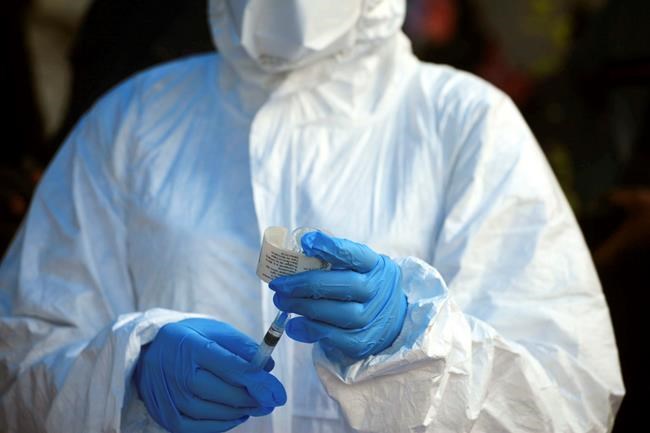
WHO reported this week that many people with Ebola are refusing to seek care in health clinics and are dying at home, further increasing the chances of transmission, since the bodies of victims are highly contagious.
Outbreak responders have also been targeted by rebel attacks; Doctors Without Borders was forced to shut down two of its Ebola clinics in Eastern Congo after repeated attacks and has called conditions at the epicenter “toxic.” Eastern Congo is home to numerous armed groups and the Ebola epidemic has deepened the political and economic grievances of many in the area.
WHO teams often visit communities with a police escort for security reasons, a move that some think could undermine community trust.
“We understand why some people might be scared of this and we believe that the use of force should be a last resort,” Riebl said, adding that IRC doesn’t use armed escorts.
He noted that the outbreak would soon hit 1,000 cases; it is already the second deadliest Ebola outbreak in history. To date, there have been 915 confirmed cases, including 610 deaths.
“It’s a sad threshold to reach, but it should also be a time of reflection,” Riebl said. “We will not be able to stop this outbreak without local support.”