Information Communication Technology
Please review each article prior to use: grade-level applicability and curricular alignment might not be obvious from the headline alone.

Solomon to meet OpenAI CEO Altman in wake of mass killings in Tumbler Ridge, B.C.
5 minute read Preview Saturday, Feb. 28, 2026
When the internet extortionist comes calling
4 minute read Preview Friday, Feb. 27, 2026AI in the classroom — approach with caution
5 minute read Friday, Feb. 27, 2026Teachers and administrators have always been quick to jump on the latest bandwagon because they think that makes them good educators.
Unfortunately, it doesn’t because they often adopt strategies that are quickly proven to be wrong or worse proven to be detrimental to their students. If anyone dares to point out the lack of evidence for the use of the latest gimmick — ChatGPT in the classroom — they are discredited and told that they are not open to new ideas.
I am always skeptical of people like Sinead Bovell who came to speak to educators at the invitation of the Manitoba government at an “AI in education” summit. Her directive was to provide her predications about the future of technology in education. I did not attend this conference but based on what Maggie Macintosh reported in her Free Press article (Future students will be wired differently, thanks to AI, Jan. 16) Bovell told educators that they have to prepare for a future that will include technology in the classroom. The classrooms of today already have more than enough technology in them, so it appears what she was in fact promoting was the use of ChatGPT and other similar AI programs.
Bovell stated that no one knows what the future will look like and in that she is correct.
Data centres and Manitoba: a cautionary tale
5 minute read Preview Friday, Feb. 27, 2026
Growing more complex by the day: How should journalists govern use of AI in their products?
7 minute read Preview Saturday, Feb. 28, 2026
Young woman says she was on social media ‘all day long’ as a child in landmark addiction trial
7 minute read Preview Friday, Apr. 24, 2026
Sens captain Brady Tkachuk unhappy with White House AI video that insulted Canadians
4 minute read Preview Friday, Feb. 27, 2026
Burger King to bring AI-based voice coach to Canada later this year
4 minute read Preview Friday, Mar. 20, 2026
AI chatbots and teens — a sometimes deadly combination
4 minute read Preview Wednesday, Feb. 25, 2026Generalizations and facts
4 minute read Wednesday, Feb. 25, 2026Recently, I ran across a social media post with 100,000 followers which stated that “the media is the communist arm of the government.”
At first blush, it is easy to write off an outlandish comment like this as a function of a neurodegenerative illness or a psychological disorder.
Certainly, as a middle-of-the-road regular contributor to articles on the Think Tank page, I have never thought of myself as a communist. Truth be told, the Free Press neither offers me direction about what I write, nor do they pay me for my op-ed pieces. A post like this also does a grave disservice to the many dedicated journalists who ply their trade according to strict ethical guidelines.
At the same time, however, I realize that there are people who don’t read the Free Press because they believe that the mainstream media (MSM) have been co-opted and corrupted by government subsidies.
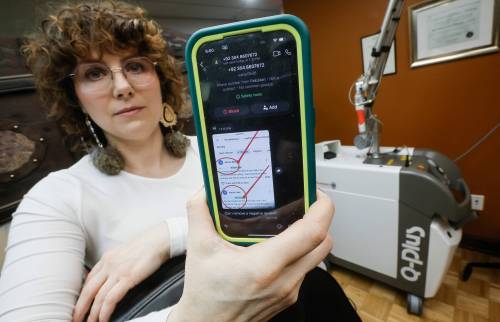
Tattoo removal business owners discover customers’ ink easier to erase than scammers’ damaging online reviews
6 minute read Preview Tuesday, Feb. 24, 2026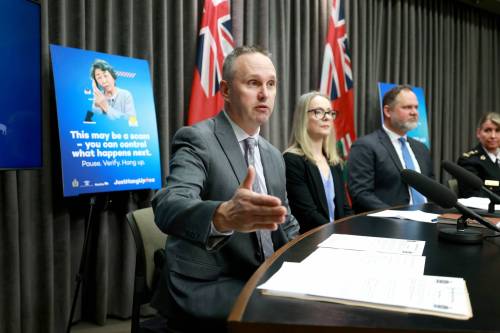
Police warn about AI use in sophisticated scam calls
4 minute read Preview Wednesday, Feb. 25, 2026
Waymo’s robotaxis now being dispatched in 10 major U.S. markets with expansion in Texas and Florida
2 minute read Preview Wednesday, Feb. 25, 2026
Children’s film festival showcases joy of shared experience
6 minute read Preview Tuesday, Feb. 24, 2026
Eby says it looks like OpenAI could have prevented ‘horrific’ Tumbler Ridge killings
5 minute read Preview Tuesday, Feb. 24, 2026
Social media can be addictive even for adults, but there are ways to cut back
7 minute read Preview Wednesday, Feb. 25, 2026
Schools’ internet use spikes as students, teachers pull for Canadian — and local — athletes
5 minute read Preview Friday, Feb. 20, 2026
OpenAI contacted RCMP about Tumbler Ridge shooter’s ChatGPT account after attack
4 minute read Preview Saturday, Feb. 21, 2026
Actor connects multiple storylines in RMTC’s telecommunications drama Rogers v. Rogers
5 minute read Preview Monday, Feb. 23, 2026
It’s the first tax season since the CRA revamped its services. Here’s what to expect
7 minute read Preview Thursday, Feb. 26, 2026
Data centres and infrastructure: an expensive pairing
4 minute read Preview Friday, Feb. 20, 2026
Social media companies face legal reckoning over mental health harms to children
8 minute read Preview Wednesday, Feb. 25, 2026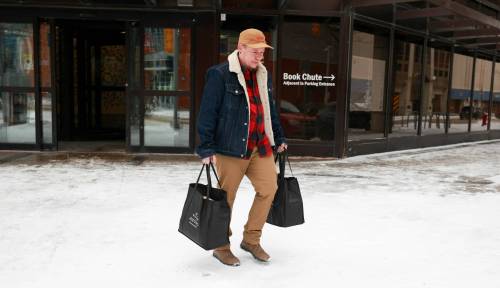
City library visits up 28 per cent from 2022
4 minute read Preview Thursday, Feb. 19, 2026