
Scientific Knowledge
Please review each article prior to use: grade-level applicability and curricular alignment might not be obvious from the headline alone.
Governments blasted for inaction as HIV rates rise
5 minute read Preview Friday, May. 8, 2026
Parade of ghostly icebergs brings joy and wonder to Newfoundland and Labrador
4 minute read Preview Saturday, May. 30, 2026You don’t have to be an animal rights activist to oppose black bear hunting in Manitoba. You also don’t have to trade in your ethics in order to understand biology. Most animal and nature-loving Canadians can do it all: understand science and care about animal suffering. Well, unless your paycheque requires otherwise.
Such is the case for the author of a recent article for the Free Press (Why claims of sentience can’t guide black bear policy, Think Tank, April 16), Mark Hall, who conservation-washes the killing of black bears in our province. The B.C.-based hunting advocate also conveniently failed to mention his vested interest in the issue, including that the organization he works for is funded by companies in the trophy hunting business. He also failed to follow the actual science.
The fact is, framing Manitoba’s spring black bear hunt as a conservation measure grounded in biology just doesn’t hold up. Especially since it is also marketed by local companies as trophy hunting. “During your bear hunt you will be placed over an active bear bait site (and) with a little patience and some determination you will be able to harvest a trophy of a lifetime,” states one company’s website.
Lesley Fox, executive director of Canadian wildlife protection charity The Fur Bearers, says “heralding the spring bear hunt as conservation is a public relations tactic that supports special interests, not wildlife.”
Conservation shouldn’t come at the cost of access
5 minute read Preview Tuesday, May. 5, 2026An 11-year-old boy is threatened with the distribution of nude images unless he pays an international extortionist who found him on TikTok. A 12-year-old girl is relentlessly pressured by someone she believed was a friend to expose herself on camera. A 14-year-old boy is unravelling — failing classes, withdrawing from life — because his friend is being exploited on Roblox and he feels powerless to help.
These are not outliers. In 2025 alone, Cybertip.ca processed more than 28,000 reports. These are just three.
Canada’s children are not stumbling into harm by accident. They are being systematically exposed to it — on platforms engineered to capture their attention, monetize their vulnerability and retain their engagement at all costs. The scale and severity of harm now demand more than incremental reform. They demand intervention.
For over 25 years, the Canadian Centre for Child Protection has documented a steep and accelerating rise in online harms against children. This trajectory is not coincidental. It reflects a digital environment that is fundamentally misaligned with the developmental realities of childhood.

Astronomers believe they’ve detected an atmosphere around a tiny, icy world beyond Pluto
3 minute read Preview Saturday, May. 16, 2026
A suspected outbreak of the rare hantavirus on a cruise ship in the Atlantic kills 3 people
4 minute read Preview Monday, May. 25, 2026
Seeding clock ticks loudly on Prairie fields
4 minute read Preview Saturday, May. 2, 2026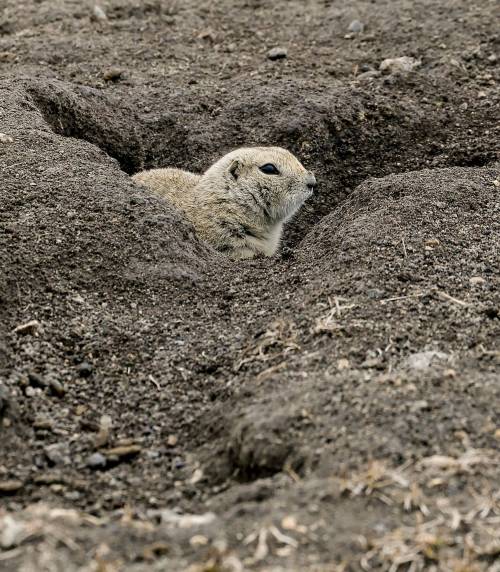
Innocuous critter or varmint to vanquish? Debating best approach to Richardson’s ground squirrel long a Prairie predicament
6 minute read Preview Friday, May. 1, 2026
The blunt — and massive — cost of forest fires
4 minute read Preview Friday, May. 1, 2026
Solar ranch in Tennessee aims to prove grazing cattle under the panels is a farmland win-win
5 minute read Preview Friday, May. 22, 2026Climate change’s threat to agriculture
5 minute read Monday, Apr. 27, 2026Spring has sprung and young mens’ thoughts turn to … agriculture. Well, at least let’s hope that the young men and women who comprise the government of Manitoba brain trust are turning their thoughts in that direction.

‘Desperation’ drives women to private menopause care
5 minute read Preview Saturday, Apr. 25, 2026
St. Vital Park duck pond to get new design before $3-M rehabilitation in 2027
3 minute read Preview Thursday, Apr. 23, 2026
Family donates 636 acres of peatlands near Elma to nature conservancy
3 minute read Preview Thursday, Apr. 23, 2026
Nurse practitioners fill void as menopause clinic to open in 2027
5 minute read Preview Thursday, Apr. 23, 2026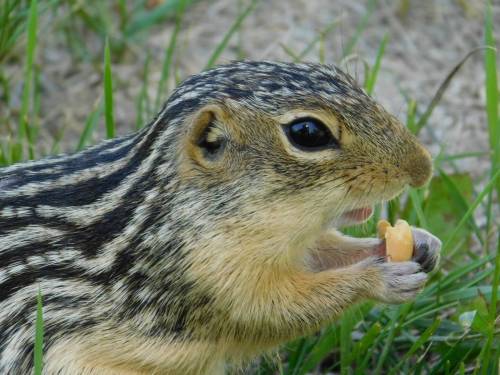
What to do with inconvenient wildlife
5 minute read Preview Tuesday, Apr. 21, 2026
Former chief psychiatrist legally challenges Manitoba’s detox detention laws
4 minute read Preview Sunday, Apr. 19, 2026
Former minister Catherine McKenna blasts the heads of Canadian oil companies
5 minute read Preview Monday, May. 11, 2026
Manitoba puts up $4 million to protect Seal River watershed
5 minute read Preview Friday, Apr. 17, 2026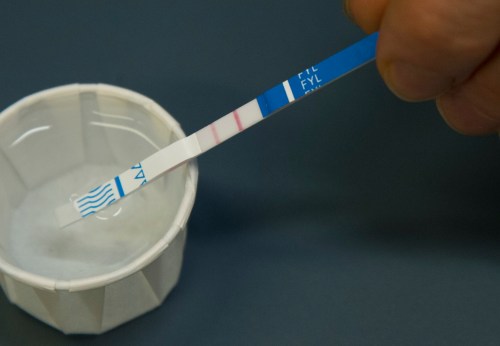
B.C. ‘chemical fingerprint’ scheme to track illicit drugs is likened to DNA tests
4 minute read Preview Saturday, May. 9, 2026
‘Extraordinary’: Back on Earth, Jeremy Hansen describes his long journey in space
5 minute read Preview Monday, May. 4, 2026
Why claims of sentience can’t guide black bear policy
5 minute read Preview Thursday, Apr. 16, 2026