
Global Interdependence
Please review each article prior to use: grade-level applicability and curricular alignment might not be obvious from the headline alone.
The devilish details that make no sense
4 minute read Preview Friday, Sep. 26, 2025The simplest way to raise living standards? Build a better business climate.
Manitoba is a small, open economy. That should be freeing. It should mean we focus on what we do best, and trust the market to send signals about where investment belongs. But more often, government takes the wheel.
The record on that isn’t good. Governments like to believe they can allocate capital more efficiently than markets. History says otherwise. The “winners” chosen often reflect politics more than economics.
Tariffs are the clearest example. Drop a tariff, and one industry will feel the pain of new competition. But the benefits are spread out: lower prices for consumers, lower costs for businesses, higher productivity overall. Raise a tariff, and the reverse happens.
Big Tobacco and Big Oil are eerily similar. One knowingly produces a product that slowly but surely kills its consumers. The other knowingly produces a product that surely but not slowly kills the planet.

Message to the U.S. ambassador: we’re disappointed, too
4 minute read Preview Wednesday, Sep. 24, 2025
Increase in number of doctors is only a start
4 minute read Preview Tuesday, Sep. 23, 2025
TikTok’s algorithm to be licensed to US joint venture led by Oracle and Silver Lake
6 minute read Preview Thursday, Dec. 4, 2025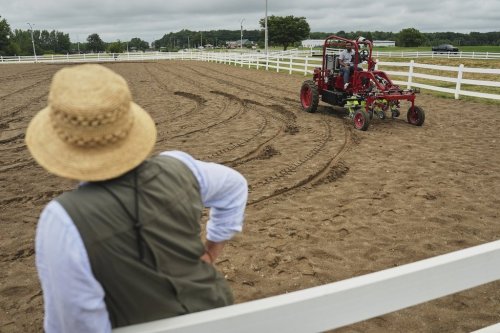
Will electric tractors gain traction? At a pilot event for farmers, researchers see possibilities
7 minute read Preview Friday, Oct. 10, 2025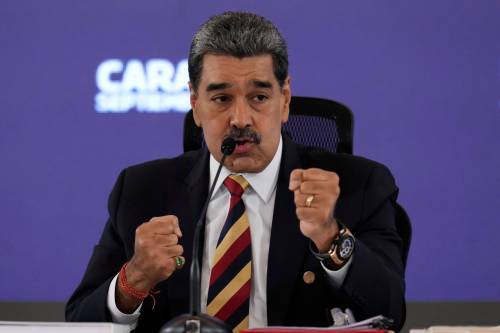
Donald Trump and his Venezuelan gambit
5 minute read Preview Friday, Sep. 19, 2025North Korea comes in from the cold
5 minute read Thursday, Sep. 18, 2025Earlier this month, North Korea’s Kim Jong-Un flanked China’s President Xi Jinping on the red carpet at an epic military parade in Beijing. The supreme leader was feted as a guest of honour along with Vladimir Putin. Behind them in the pecking order were nearly two dozen heads of state — the leaders of regional powers Indonesia and Vietnam among them.
It was Kim’s first time at a major diplomatic event in his 14 years as leader. And it won’t be the last. Indeed, North Korea has asserted itself as a useful cog in the autocratic faction within the new multipolar global order.
Beijing for a long time was the sole ally propping up the Kim dynasty’s totalitarian dictatorship — if only because its collapse would burden China with millions of unwanted refugees. China thus provides its heavily sanctioned neighbour with vital energy and food supplies. Plus, China’s lone mutual defence treaty is with North Korea, signed in 1961.
The relationship has nonetheless been strained over the decades. Mainly, by Pyongyang’s habit of doling out rash threats of nuclear annihilation against the United States and its allies. This irritates Chinese leaders by bringing unwanted attention to what Beijing perceives as its geographic sphere of influence.

Winnipeg vigil for Kirk draws 2,000 mourners
3 minute read Preview Tuesday, Sep. 16, 2025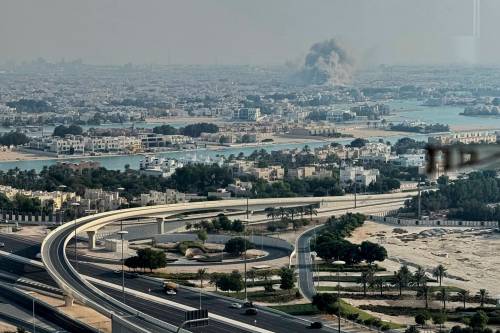
Qatar and Poland — one is the bigger story
5 minute read Preview Monday, Sep. 15, 2025
Blame game after acts of political violence can lead to further attacks, experts warn
7 minute read Preview Friday, Oct. 10, 2025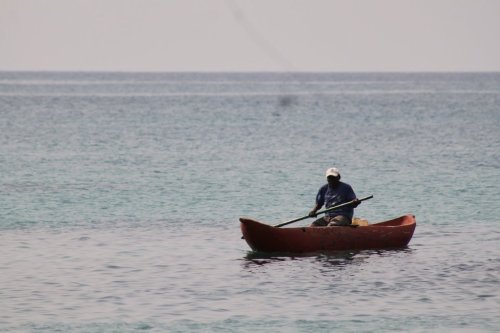
Equatorial Guinea enforces yearlong internet outage for island that protested construction company
6 minute read Preview Thursday, Oct. 16, 2025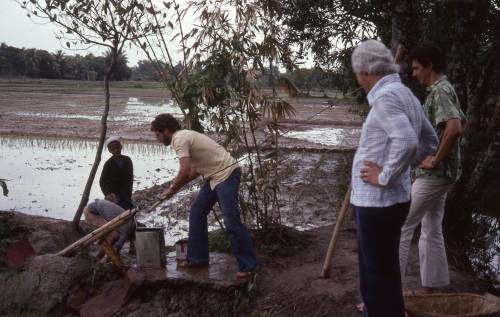
Local engineer was a real game changer
5 minute read Preview Saturday, Sep. 13, 2025Canadian farmers facing harvest cash-flow crunch, talking support
4 minute read Saturday, Sep. 13, 2025Canadian farmers are understandably disappointed the federal government’s response to China’s punishing import tariffs on canola, pork, peas and seafood hasn’t so far included direct compensation.
After all, the duties are widely seen as retaliation for Canadian tariffs effectively locking Chinese electric cars out of the local market — a policy decision that had nothing to do with agriculture. This is the second time in recent memory China has targeted Canadian farmers to score points on unrelated issues. It’s unlikely to be the last.
While the full impact remains unclear, when Canada’s second-largest canola customer imposes tariffs of 75.8 per cent on seed and 100 per cent on oil and meal, it’s a safe bet demand will be curbed and prices will be lower than they would have been otherwise. Industry estimates place the eventual costs in the range of $2 billion.
However, commodity prices this year are depressed across the board — for a host of reasons. Much of the new-crop canola has yet to be harvested and very little has been sold.

A Lebanese dancer defies extremist threats and social norms with his sold-out performances
6 minute read Preview Friday, Oct. 10, 2025
Widespread availability of graphic Charlie Kirk shooting video shows content moderation challenges
6 minute read Preview Thursday, Dec. 4, 2025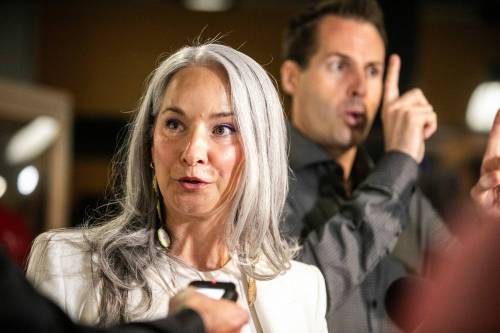
Kinew stands by cabinet minister dogged by controversy
5 minute read Preview Friday, Sep. 12, 2025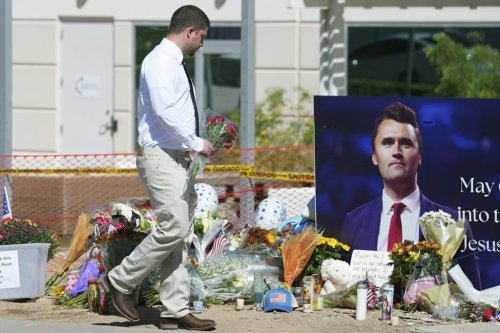
Bewildered and ‘in horror,’ Toronto man fights fake news that he shot U.S. influencer Charlie Kirk
4 minute read Preview Friday, Sep. 19, 2025
Amazon’s Zoox launches its robotaxi service in Las Vegas
3 minute read Preview Wednesday, Oct. 15, 2025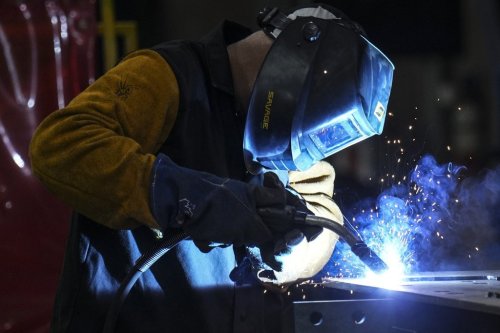
AI could help manufacturers offset tariff costs, depending on implementation: experts
4 minute read Preview Monday, Sep. 22, 2025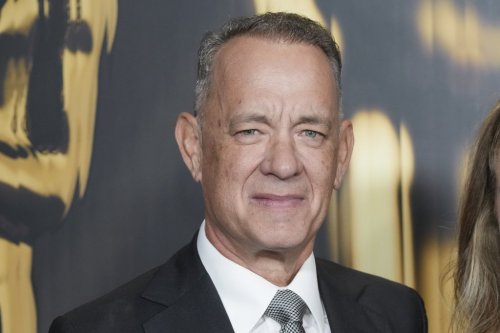
Trump celebrates West Point alumni group canceling award ceremony to honor Tom Hanks
5 minute read Preview Monday, Sep. 15, 2025
Australian woman sentenced to life in prison for mushroom poisonings
5 minute read Preview Friday, Oct. 3, 2025Churchill and LNG would mix like oil and water
5 minute read Tuesday, Sep. 9, 2025Churchill has always been a place of connection and of change. However, last week’s remarks from Prime Minister Mark Carney that Churchill could become a year-round export terminal for liquefied natural gas (LNG) suggest a risky vision for the future that could imperil the balance and diversity that has allowed this unusual community on Hudson Bay to endure.
At its founding, Churchill connected Inuit, Dene and Cree communities with the Hudson Bay Company’s vast trading network. In the waning days of the fur trade, Churchill re-emerged as an important cold war base, housing thousands of troops.
When North America’s defence needs changed, Churchill again reinvented itself as a research hub for aerospace and a broad array of scientific enquiry. Through the second half of the 20th century, Churchill also became a critical social service centre for much of Hudson Bay and the central Arctic. Now it has emerged as one of Canada’s great ecotourism destinations. Few places better capture the adaptability and resilience of the North.
The prime minister and Premier Wab Kinew have both described Churchill LNG exports as a “nation-building” project. Investment in the transportation corridor that connects the Arctic to southern Canada through the port and railroad is indeed overdue. The Port of Churchill is a national asset with enormous potential and diverse strengths.