Natural resources

Please review each article prior to use: grade-level applicability and curricular alignment might not be obvious from the headline alone.
No Subscription Required

Damage estimates spiral as Pimicikamak tries to recover from power outage, deep freeze

Melissa Martin and Scott Billeck 7 minute read Preview
No Subscription Required

Damage estimates spiral as Pimicikamak tries to recover from power outage, deep freeze

Melissa Martin and Scott Billeck 7 minute read Sunday, Jan. 4, 2026

The power is back on, but the damage has been done. Water leaks. Burst pipes. Burned houses. And still, more than 4,000 residents of Pimicikamak Cree Nation are forced out of their homes, with no clear timeline of when they’ll be able to return.

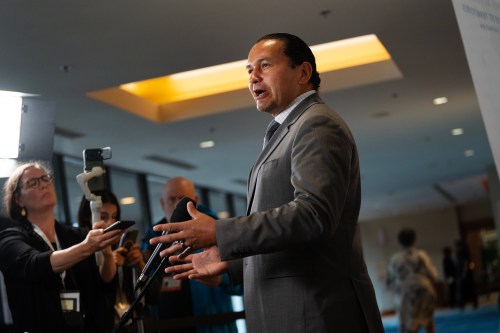
On Saturday, six days after a downed power line left the remote Northern First Nation without electricity for over four days, Pimicikamak Chief David Monias spoke to reporters by Zoom to give an update on the crisis — and emphasize the expertise and supports the community still needs to recover.

Although power has been restored to the community, which is located roughly 100 km south of Thompson, over four days without electricity caused major damage, Monias said. The water treatment plant is “pretty much ready to explode” due to leaks and is unable to draw water into its reservoir, leaving the community without potable water.

Houses too suffered in the deep freeze, including damage to pipes and cracked floors. So far, of the 1,335 houses on the community, which is also known as Cross Lake, at least 200 are severely compromised and not yet safe for residents to return. That number may grow as officials continue their inspections.

Read
Sunday, Jan. 4, 2026
No Subscription Required

Northwest Territories facing a hard-as-diamonds reality as pivotal industry wanes

Lauren Krugel, The Canadian Press 7 minute read Preview
No Subscription Required

Northwest Territories facing a hard-as-diamonds reality as pivotal industry wanes

Lauren Krugel, The Canadian Press 7 minute read Friday, Jan. 2, 2026

It’s said that pressure makes diamonds, but a diamond mining downturn is what's putting pressure on the Northwest Territories economy these days.

Diamond mines have long been a vital source of well paying local jobs, with spinoffs in hospitality, construction and other areas. It’s been estimated that the region's three operating mines directly and indirectly employ more than 1,500 residents — a significant chunk of the territory's population of almost 46,000 — and account for about one-fifth of the N.W.T.'s gross domestic product.

“Diamond mining in the Northwest Territories has been incredibly pivotal to our economy over the last 25 years,” said Caitlin Cleveland, the N.W.T.'s minister of industry, tourism and investment.

“It's put over $30 billion into the Canadian economy, $20 billion of which has stayed here in the Northwest Territories.”

Read
Friday, Jan. 2, 2026
No Subscription Required

First Nations sue over oil-rich land

Tyler Searle 4 minute read Preview
No Subscription Required

First Nations sue over oil-rich land

Tyler Searle 4 minute read Saturday, Nov. 22, 2025

A pair of First Nations are suing the provincial and federal governments, claiming land and mineral rights to a swath of land in southwestern Manitoba that generates more than $1.3 billion annually from oil and gas production.

Canupawakpa Dakota First Nation and Dakota Tipi First Nation filed a statement of claim in Court of King’s Bench on Thursday calling for a declaration of title and subsurface rights over Manitoba’s portion of the Williston Basin.

The oil-rich basin stretches from southwestern Manitoba into southern Saskatchewan and over the U.S. border. The Manitoba portion hosts at least 14 identified oil fields and is home to all the current oil production in the province, the lawsuit states.

The plaintiffs are claiming rights over the entirety of the basin in Manitoba, including the “right to economically participate in the extraction, development and production of subsurface minerals.”

Read
Saturday, Nov. 22, 2025
No Subscription Required

First Nations accuse Hydro, province, feds of profiting from land

Erik Pindera 3 minute read Thursday, Oct. 30, 2025

Two First Nations are suing Manitoba Hydro and the provincial and federal governments, claiming the institutions have made billions of dollars through hydroelectric operations on land the communities never agreed to cede.

In a statement of claim filed last week in the Court of King’s Bench, Canupawakpa Dakota Nation and Dakota Tipi First Nation in southern Manitoba are seeking damages for alleged infringement on their rights.

The court filing accuses the public utility, the province and the federal government of breaching duties owed to the Dakota nations and of unjustly enriching themselves at the expense of the communities, without consultation.

“The yearly revenue Manitoba Hydro produces from the land and particularly, the activities, is substantial,” reads the lawsuit.

No Subscription Required

Prairie harvest a mixed bag as tariff strife casts shadow over healthy crop

Lauren Krugel, The Canadian Press 6 minute read Preview
No Subscription Required

Prairie harvest a mixed bag as tariff strife casts shadow over healthy crop

Lauren Krugel, The Canadian Press 6 minute read Wednesday, Oct. 15, 2025

CALGARY - Gunter Jochum can easily tell which parts of his farm got rain and which parts the clouds passed over this year.

He and his brother-in-law grow wheat, canola, oats and soybeans on 2,500 hectares west of Winnipeg, much of that on long tracts hugging the Assiniboine River.

"Some showers that came through this summer during the growing season when things were really, really dry didn't even cover the whole field," said Jochum, president of the Wheat Growers Association.

The quality of the crop Jochum has harvested so far this year has been excellent, but yields for his oats and wheat have varied field to field.

Read
Wednesday, Oct. 15, 2025
No Subscription Required

Livestock producers mull support amid dry spell

Gabrielle Piché 4 minute read Preview
No Subscription Required

Livestock producers mull support amid dry spell

Gabrielle Piché 4 minute read Monday, Aug. 11, 2025

Though rain has fallen, pockets of livestock producers continue to struggle for feed and water — and future government support is being considered.

“With climate change, it’s more than likely that this will not go away,” said Richard Chartrand, reeve of the RM of St. Laurent. “We have to look at being proactive.”

St. Laurent declared a state of agricultural emergency in July. Interlake municipalities including Armstrong, Coldwell and Woodlands enacted similar statuses as drought hit local farmers.

A group of municipal leaders met Manitoba government officials to discuss short- and long-term solutions last month. Agriculture Minister Ron Kostyshyn attended.

Read
Monday, Aug. 11, 2025
No Subscription Required

Province’s mine assessment ‘shoddy,’ environmental group says

Carol Sanders 4 minute read Preview
No Subscription Required

Province’s mine assessment ‘shoddy,’ environmental group says

Carol Sanders 4 minute read Tuesday, Apr. 22, 2025

A group that opposed a sand mine ultimately nixed by the NDP government says the environmental assessment of an open pit mine that has been approved near Hollow Water First Nation is “shoddy.”

Read
Tuesday, Apr. 22, 2025
No Subscription Required

Locally produced renewable energy is the right call

Jessica Kelly 5 minute read Preview
No Subscription Required

Locally produced renewable energy is the right call

Jessica Kelly 5 minute read Tuesday, Mar. 25, 2025

At the start of Premier Wab Kinew’s government’s mandate, it signalled it would work to get Manitoba to a net-zero electricity grid by 2035. With 99 per cent of the province’s electricity already emissions-free, it is a small, but important gap to bridge.

Read
Tuesday, Mar. 25, 2025
No Subscription Required

‘Historic day’ as MMF signs royalty agreement with first potash mine

Gabrielle Piché 4 minute read Friday, Feb. 28, 2025

Promises of potash money and partnership led the Manitoba Métis Federation to declare Friday a “historical day.”

No Subscription Required

Shoal Lake 40 toasts clean water

Melissa Martin 6 minute read Preview
No Subscription Required

Shoal Lake 40 toasts clean water

Melissa Martin 6 minute read Wednesday, Sep. 15, 2021

SHOAL LAKE 40 FIRST NATION – As he raised his glass, Chief Vernon Redsky looked at the water and a memory came rushing back. It reminded him of when he was a kid, he said, and the water in Shoal Lake was crystal-clear like that, back when he and his friends would splash along the shore, drinking from the lake when they got thirsty.

So he thought about that as he clinked his glass against two others, and took a sip. A toast, to the first officially safe tap drinking water in Shoal Lake 40: on Wednesday, after 24 years, the Treaty Three First Nation’s boil water advisory officially ended.

“It’s surreal to be at this moment,” Redsky said at a ceremony to celebrate the achievement, as well as the opening of the community’s new school.

One day earlier, a government official in Kenora, Ont., had officially approved the latest test results from Shoal Lake 40’s new water treatment plant, which started pumping this summer. That night, Redsky couldn’t sleep; he called a former chief to talk about the long road they had travelled to get to this point.

Read
Wednesday, Sep. 15, 2021
No Subscription Required

Protesters gather at corner to oppose funding of pipeline

Cody Sellar 4 minute read Preview
No Subscription Required

Protesters gather at corner to oppose funding of pipeline

Cody Sellar 4 minute read Monday, Aug. 23, 2021

About 50 people from Winnipeg’s Mennonite community gathered Sunday at a TD Bank at the corner of Notre Dame Avenue and Sherbrook Street to protest the bank’s funding of the Line 3 pipeline replacement.

As rain pelted down on a canopy of umbrellas, one man cut his TD Bank card into pieces while the crowd cheered. After some minutes of song and prayer, the group took non-permanent markers and wrote messages over the windows of the bank.

“Stop fossil fuel funding,” one man wrote on the door. The red ink ran in long streaks from the rain down over the bank’s hours.

Organizer Steve Heinrichs said he drew inspiration from Indigenous communities leading protests in Minnesota.

Read
Monday, Aug. 23, 2021

MMF warns prospectors, developers to consult — or else

Gabrielle Piché 4 minute read Monday, Jun. 1, 2026

In a room filled with government and prospecting industry leads, a Manitoba Métis Federation rep delivered a sharp message: work with us or prepare for legal action.

The Métis government has been having cabinet discussions about litigation, Lorne Pelletier, a MMF senior economic adviser, told the crowd.

“It’s not the path we want to go down, but it’s the path we’ll have to go down based on the actions of industry and the actions of government,” he said.

Pelletier spoke at a Manitoba Prospectors and Developers Association event Monday in Winnipeg. Roughly 50 government, Indigenous and industry officials gathered at the Manitoba Legislative Building, liaising and providing work updates.

Key construction at new Lynn Lake gold mine begins after fire-driven delay

Gabrielle Piché 4 minute read Monday, Jun. 1, 2026

Last summer’s wildfire season has delayed development of Manitoba’s new gold mine by nearly a year.

Protected areas and thriving lodges can co-exist

Corey Myers 5 minute read Saturday, May. 30, 2026

Spring is crunch-time when you work at a remote fishing or hunting lodge. Crews are busy updating cabins, repairing generators, getting boats in the water, and preparing to welcome clients. These same activities are unfolding across the Seal River Watershed in northern Manitoba. And this year, they come with an added sense of opportunity.

A new proposal to protect the Seal River Watershed was recently released for public comment on the EngageMB website.

Designed by the Sayisi Dene, Northlands Denesuline, Barren Lands, and O-Pipon-Na-Piwin Cree First Nations, the Manitoba government, and the government of Canada, with input from stakeholders and the public, the plan calls for creating a network of protected areas across 50,000 sq. kilometres of healthy lands and waters.

These new designations — a combination of Indigenous Protected and Conserved Area, provincial parks, and a national park reserve — would honour Dene and Cree cultures and sustain caribou, grizzlies, and polar bears.

Wilderness committee draws up plan to restore Nopiming after 2025 wildfire

Julia-Simone Rutgers 5 minute read Preview

Wilderness committee draws up plan to restore Nopiming after 2025 wildfire

Julia-Simone Rutgers 5 minute read Thursday, May. 28, 2026

One year ago, wildfires severely damaged cottage communities, backcountry campgrounds and popular canoe routes in Nopiming Provincial Park in eastern Manitoba.

Manitoba Wilderness Committee campaigner Eric Reder says as the park and its boreal ecosystem recover, which will take decades, the province should embrace the opportunity to curtail industrial activity in the park and establish more robust protection for its natural and recreational assets.

“The Nopiming Provincial Park that existed prior to 2025 is gone,” a Wilderness Committee report released Thursday said. “Only an all-of-society recovery solution can bring back what we’ve lost.”

The wilderness committee says that solution involves a moratorium on new industrial activity, a commitment to conserve habitat for caribou herds, increased engagement with First Nations whose land overlaps with the park and investment in recreational infrastructure, including backcountry trails and canoe routes.

Read
Thursday, May. 28, 2026

Some brands say their jeans are eco-friendly. Here’s how to find a pair that’s actually sustainable

Kiki Sideris, The Associated Press 6 minute read Preview

Some brands say their jeans are eco-friendly. Here’s how to find a pair that’s actually sustainable

Kiki Sideris, The Associated Press 6 minute read Thursday, May. 28, 2026

NEW YORK (AP) — Your favorite pair of jeans may have traveled around the world through cotton farms, dye houses, wash facilities and factories before ending up in your closet. The denim may have never been worn but it is stonewashed, sanded, chemically faded or laser-treated to look like it.

Those processes can require significant amounts of water, energy and chemicals — part of the reason denim has become a growing target for sustainability efforts across the fashion industry, which is among the world’s biggest producers of greenhouse gas emissions.

Brands are responding to wider awareness by marketing their jeans as “sustainable,” touting regenerative cotton, recycled fibers and low-water manufacturing techniques. But figuring out if that's true is far more complicated. For one, sustainability is difficult to define — and there isn't a universal set of standards.

Last week, Chinese fast-fashion giant Shein acquired Everlane, a brand known for transparency and sustainability efforts, highlighting broader tensions over scale and affordability. Improvements in sustainable processes typically cost more, making it difficult for companies with fast production cycles and low prices to adopt them widely. Consumers are left to navigate a complicated web of tradeoffs involving farming practices, chemical processes, labor ethics and a wide range of prices.

Read
Thursday, May. 28, 2026

Reported Germany-Canada LNG deal would bolster investment case for Ksi Lisims: Eby

Lauren Krugel, The Canadian Press 4 minute read Preview

Reported Germany-Canada LNG deal would bolster investment case for Ksi Lisims: Eby

Lauren Krugel, The Canadian Press 4 minute read Wednesday, May. 27, 2026

A deal to supply Canadian liquefied natural gas to Germany would be a key step toward the partners behind the Ksi Lisims project deciding to go ahead with their $10-billion West Coast plant and export terminal, British Columbia Premier David Eby said Tuesday.

Eby made his remarks after multiple outlets reported German firm SEFE is poised to buy gas shipped from Ksi Lisims and a day before federal Natural Resources Minister Tim Hodgson is scheduled to make an announcement about international energy exports in Vancouver.

The B.C. premier said his government has long been supportive of the project being pursued by the Nisga'a Nation alongside Houston-based Western LNG and Rockies LNG, a group of Canadian natural gas producers. The companies and the First Nation declined to comment on Tuesday.

"We look forward to celebrating the formal announcement of this with the Nisga'a, with the federal government. It's an example of the work we're doing together and we're super proud of it," Eby told reporters after a meeting with western premiers in Kananaskis, Alta.

Read
Wednesday, May. 27, 2026

Brazilian government commits $617.5M to Amazon ecological investment

Gabriela Sá Pessoa, The Associated Press 4 minute read Preview

Brazilian government commits $617.5M to Amazon ecological investment

Gabriela Sá Pessoa, The Associated Press 4 minute read Tuesday, May. 26, 2026

SAO PAULO (AP) — The Brazilian government said Monday it has committed 3.1 billion reais ($617.5 million) to foster ecological investment in the Amazon region, as part of a plan to expand a federal program known as Eco Invest that was announced during last year’s COP30 — the annual United Nations climate summit it hosted last year.

The resources are expected to go toward businesses that support sustainable tourism, improve infrastructure in the Amazon and expand the “bioeconomy” — the so-called economic activity based on natural resources that preserves the forest.

The model uses a blended finance approach in which the National Treasury lends funds to banks at an annual rate of 1%. In return, banks must mobilize at least four times that amount in private investment, with foreign investors accounting for at least 60%. So far, the program has committed 140 billion reais ($28 billion) in combined public and private resources.

The National Treasury allocated 3.1 billion reais ($617.5 million) Monday and eight banks committed another 10.1 billion reais ($2 billion) in the latest auction of the Eco Invest program, the Ministry of Environment said.

Read
Tuesday, May. 26, 2026

Proponents of solar power push for provincial infrastructure investment to boost grid resilience

Julia-Simone Rutgers 15 minute read Preview

Proponents of solar power push for provincial infrastructure investment to boost grid resilience

Julia-Simone Rutgers 15 minute read Saturday, May. 23, 2026

In the early 1970s, licence plates were stamped with the slogan “Sunny Manitoba” — a nod to long summer days, crisp blue winter skies and frequent sun dogs reflecting off of blinding white snow. While the slogan later changed, Manitoba’s ranking as Canada’s second-sunniest province has not.

Despite that sunlit reputation, solar power — one of the most-developed renewable energy sources — makes up just a small fraction of the province’s electricity grid.

“It’s extremely marginal, especially when you compare to other jurisdictions like Alberta and Saskatchewan,” said James Wilt, policy development manager at Climate Action Team Manitoba.

Manitoba boasts a predominantly emissions-free grid, with 97 per cent of its power generated by a network of hydroelectric dams. But the provincial utility, Manitoba Hydro, has forecasted that its once-abundant renewable energy source will soon fall short. There is growing demand for power amid the electrification of sectors like transportation and heating, and the rapidly growing interest in developing electricity-hungry data centres. Combined with more unpredictable water levels owing to climate factors like extreme drought, it’s all prompted the utility to warn that capacity could run out as soon as 2030.

Read
Saturday, May. 23, 2026

A Seal River proposal for all Manitoba’s needs

Steven Fletcher 5 minute read Saturday, May. 23, 2026

On Nov. 9, 2017, I stood in the Manitoba legislature and made a proposal whose time had not yet arrived.

I asked the chamber to protect the entire Seal River Watershed, roughly 50,000 square kilometres of intact boreal forest and tundra in northern Manitoba, a complete hydrological system running unbroken from its headwaters to Hudson Bay. No roads. No mines. No power corridors.

One of the last large watersheds left on Earth is still doing what watersheds are meant to do.

It was not a partisan proposal. It was not, that day, a particularly prominent one. The chamber was nearly empty. The proposal did not pass; it did not fail; it simply sat there. Within weeks, The Northern Miner picked it up and brought the idea to the national mining industry. Almost nobody else did.

Vast marine conservation reserve, bigger than P.E.I., to protect B.C. central coast

Marissa Birnie, The Canadian Press 4 minute read Preview

Vast marine conservation reserve, bigger than P.E.I., to protect B.C. central coast

Marissa Birnie, The Canadian Press 4 minute read Saturday, May. 23, 2026

An enormous national marine conservation reserve is being established on British Columbia's central coast, spanning an area larger than Prince Edward Island.

The protected area, named Mia-yaltwa Ha’lidzogm hoon, is the result of an agreement between six coastal First Nations and the provincial and federal governments.

An official says the area is around 6700 sq. km and will be operated by Parks Canada along with its Indigenous and federal partners.

The reserve is within the Great Bear Sea, a diverse marine ecosystem that covers more than half of B.C.'s coast and includes glass sponge reefs, salmon, killer whales and migrating humpbacks.

Read
Saturday, May. 23, 2026

Planning for an electric future — now

Norman Brandson 5 minute read Friday, May. 22, 2026

The shift away from fossil fuels to an electrified economy will advantage those who strongly invest in renewables.

As permafrost thaws, some headwaters in Canada’s North turn orange and toxic: study

Jordan Omstead, The Canadian Press 7 minute read Preview

As permafrost thaws, some headwaters in Canada’s North turn orange and toxic: study

Jordan Omstead, The Canadian Press 7 minute read Friday, May. 22, 2026

Ancient bedrock exposed by disappearing permafrost is releasing toxic metals into Canada's northern rivers, a new study says, with once-pristine subarctic streams now comparable in some cases to highly acidic, contaminated mining sites.

The findings out of Yukon point to an "unfolding environmental disaster," one co-author said, and adds to alarm over the rapid climate-fuelled changes in the North.

"We don't know the end point, but there's nothing about this that gives me any feeling of like, 'oh, we're going to be OK'," said co-author Sean Carey, a professor at McMaster University.

"I'm not even a gloomy person. This looks pretty gloomy."

Read
Friday, May. 22, 2026

Hydro advisory circle brings ‘wealth of Indigenous perspectives’

Carol Sanders 5 minute read Preview

Hydro advisory circle brings ‘wealth of Indigenous perspectives’

Carol Sanders 5 minute read Tuesday, May. 19, 2026

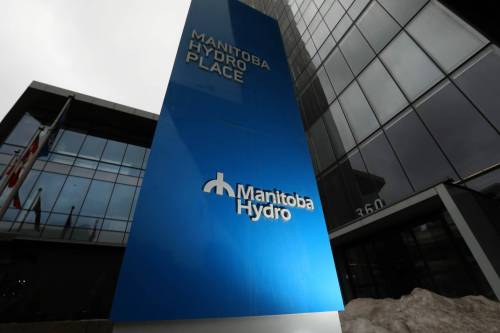
The board of Manitoba Hydro has appointed an Indigenous advisory circle as part of the Crown corporation’s reconciliation efforts.

Former Fox Lake Cree Nation chief and Keeyask Hydropower Limited Partnership board chair Robert Wavey will co-chair the group with Manitoba Hydro board chairman Jamie Wilson. The provincial government ordered the creation of the advisory circle in its 2023 mandate letter to Hydro’s board.

“I think we wanted to get everything right on this one,” Wilson said when asked why it has taken more than two years to appoint Indigenous advisers.

“This is a pretty fantastic group of people from a diverse background, including communities that are directly impacted by Hydro development in the past,” the first Indigenous chairman of the Manitoba Hydro board said in an interview Tuesday.

Read
Tuesday, May. 19, 2026