Skip to content

July 22, 2026

Winnipeg
13° C, Clear

Full Forecast

    • Media Literacy and Learning Contact
    • Contact Us
    • Advertising Contact
    • Send a Letter to the Editor
    • Staff biographies
    • Submit a News Tip
    • Subscribe to Newsletters
    • Notifications
    • My Account
    • Log Out
    • Log in
    • Create Account
    • Grid View
    • List View
    • Compact View
    • Text Size
    • Translate
    • Dark Mode
    • Light Mode
    • System Default
Manage Subscription
Log in Create Account
E-Edition
  • Home
  • About
  • The Student Press
  • PressKid
  • Free Press 101
  • Events
  • Newsstand
  • Browse news by subject
  • Contact Us

© 2026 Winnipeg Free Press

Close
  • Quick Links

    • Free Press 101: How we practise journalism
    • Reader Bridge
    • Home
    • Local
    • Canada
    • World
    • Community Connect
    • Classifieds
    • Newsletters
    • Obituaries
    • Photo and Book Store
    • Copyright and Licensing Requests
    • Archives
    • Contests
    • Publications
    • Sponsored Content
    • Privacy Policy
    • Employee Code of Conduct Policy
    • Supplier Code of Conduct Policy
    • Report on Forced Labour and Child Labour in Supply Chains

    Ways to support us

    • Become a Patron
    • Pay it Forward program
    • Subscribe
    • Support Faith coverage
    • Support Arts coverage
  • Replica E-Edition

    • About the E-Edition
    • Winnipeg Free Press
    • Community Review East
    • Community Review West

    Business

    • All Business
    • Agriculture
    • Personal Finance
  • Arts & Life

    • All Arts & Life
    • The Arts
    • Autos
    • Books
    • Cannabis
    • Celebrities
    • Diversions
    • Puzzles
    • Environment
    • Events
    • Faith
    • Food & Drink
    • Health
    • Life & Style
    • Movies
    • Music
    • Science & Technology
    • TV
    • Travel
  • Sports

    • All Sports
    • Amateur
    • Auto Racing
    • Blue Bombers
    • Curling
    • Football
    • Goldeyes
    • Golf
    • Grey Cup
    • High School
    • Hockey
    • Horse Racing
    • Winnipeg Jets
    • Manitoba Moose
    • Manitoba Open
    • MLB
    • NBA
    • Olympics
    • Soccer
  • Opinion

    • All Opinion
    • Analysis
    • Columnists
    • Editorials
    • Editorial Cartoon
    • Letters to the Editor
    • Send a Letter to the Editor

    Media

    • All Media
    • Photo Galleries
    • Video

    Homes

    • Property Listings
    • Featured News
    • Renovation and design
    • New homes
    • Resale homes
  • Canstar Community news

    • All Free Press Community Review News
    • East Edition
    • West Edition
    • Sports
    • Events
    • Contact Us
    • E-Editions
  • About Us

    • About Us
    • Media Kit
    • Contact Us
    • Carrier Positions & Retailer Requests
    • FP Newspapers Inc.
    • History
    • Internships
    • Job Opportunities
    • Privacy Policy
    • Retail Locations
    • Staff Biographies
    • Terms and Conditions
Manage Subscription
Log in Create Account
E-Edition
Winnipeg Free Press Logo Media Literacy & Learning
    • Media Literacy and Learning Contact
    • Contact Us
    • Advertising Contact
    • Send a Letter to the Editor
    • Staff biographies
    • Submit a News Tip
    • Subscribe to Newsletters
    • Notifications
    • My Account
    • Log Out
    • Log in
    • Create Account
    • Grid View
    • List View
    • Compact View
    • Text Size
    • Translate
    • Dark Mode
    • Light Mode
    • System Default
  • Menu
  • Home
  • About
  • The Student Press
  • PressKid
  • Free Press 101
  • Events
  • Newsstand
  • Browse news by subject
  • Contact Us
    • My Account
    • Log Out
    • Log in
    • Create Account
    • Grid View
    • List View
    • Compact View
    • Text Size
    • Translate
    • Dark Mode
    • Light Mode
    • System Default
The Free Press Social Studies Grade 10: Geographic Issues of the 21st Century Education Subject Natural resources

Advanced Search

Education Subjects
Media Literacy Topics
Clear filters

Natural resources

Please review each article prior to use: grade-level applicability and curricular alignment might not be obvious from the headline alone.
THE CANADIAN PRESS FILES
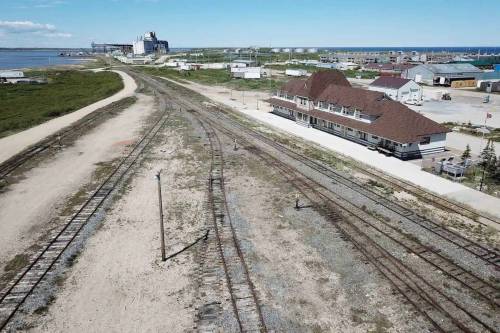
                                Negotiations are underway on legislation to create the Manitoba Crown-Indigenous Corp., which will work with Ottawa’s Major Projects Office and Arctic Gateway Group on the proposed expansion of the Port of Churchill.
No Subscription Required

Legislation to create Manitoba-Indigenous Crown corporation pending as some First Nations express concerns

Gabrielle Piché 5 minute read Preview
No Subscription Required

Legislation to create Manitoba-Indigenous Crown corporation pending as some First Nations express concerns

Gabrielle Piché 5 minute read Sunday, Jun. 7, 2026

Legislation to create a new Crown corporation is hung up, in part, on First Nations’ concerns the entity would override the government’s duty to consult individual nations before launching projects.

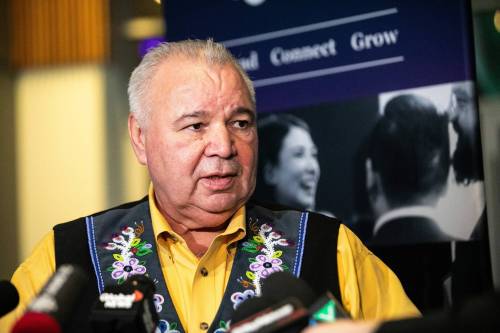
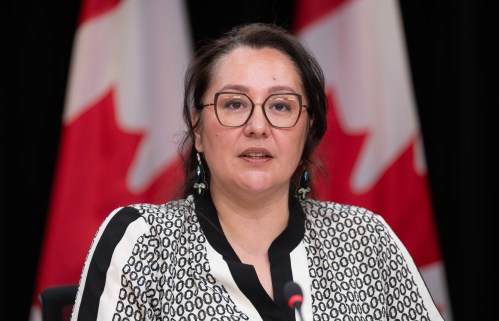
“We’re having challenges, I think, creating an endorsement or support for… the draft legislation,” said Grand Chief Jerry Daniels of the Southern Chiefs’ Organization that represents 33 First Nations.

Negotiations are underway on legislation to create the Manitoba Crown-Indigenous Corp., which will work with Ottawa’s Major Projects Office and Arctic Gateway Group on the proposed expansion of the Port of Churchill.

The southern chiefs group is part of a board that meets regularly with the provincial government; Indigenous Futures Minister Ian Bushie deemed the group the interim Manitoba Crown-Indigenous Corp.

Read
Sunday, Jun. 7, 2026
No Subscription Required

Ethically meeting electrical demand

Jan Simonson 4 minute read Saturday, Jun. 6, 2026

Fifty years ago this June, Manitoba Hydro destroyed one of the province’s finest lakes, its fourth-largest, when it began operating a newly constructed control structure at Missi Falls, the outlet where Southern Indian Lake flows into the lower Churchill River.

This raised the water level of the lake, creating a reservoir and diverting the flow southward via the Rat and Burntwood River systems to increase power output at its hydroelectric generating stations along the Nelson River.

More than 3,500 km of shorelines on the lake alone were permanently inundated, and along with its adjacent waterways, an area of 840 square kilometres was flooded. The entire Indigenous community of South Indian Lake had to be moved to higher ground to avoid the flooding, and the island community of Nelson House was irreparably harmed.

The Churchill River diversion project had a disastrous effect on the natural environment and the Indigenous people whose subsistence and way of life depended on the lake.

Manitoba Premier Wab Kinew speaks at the Assembly of First Nations Annual General Assembly in Winnipeg on Wednesday, Sept. 3, 2025. THE CANADIAN PRESS/John Woods

Saying ‘no’ to AI data centre a huge win for Manitoba — and Kinew

Niigaan Sinclair 5 minute read Preview

Saying ‘no’ to AI data centre a huge win for Manitoba — and Kinew

Niigaan Sinclair 5 minute read Friday, Jun. 5, 2026

It’s a tale of two provinces — and two artificial intelligence data centre mega-projects.

Read
Friday, Jun. 5, 2026
Ruth Bonneville Free Press LOCAL - tree maintenance City crews plant trees in Andrew Currie Park Thursday. Story on City crews planting trees at the park for story about the role of tree maintenance in ensuring the city’s newly planted trees reach maturity and deliver the full scope of economic benefits. Story by Julia-Simone Rutgers June 4th,, 2026
No Subscription Required

Efforts underway to determine ecological, economic benefits of Winnipeg’s trees

Julia-Simone Rutgers 8 minute read Preview
No Subscription Required

Efforts underway to determine ecological, economic benefits of Winnipeg’s trees

Julia-Simone Rutgers 8 minute read Friday, Jun. 5, 2026

How a municipality cares for its trees — especially under increasing climate pressures — is just as critical to forest health as planting.

Read
Friday, Jun. 5, 2026
FILE - The Kaktovik Lagoon and the Brooks Range mountains of the Arctic National Wildlife Refuge are seen in Kaktovik, Alaska, Oct. 15, 2024. (AP Photo/Lindsey Wasson, File)

Limited interest in latest oil and gas lease sale for Alaska’s Arctic National Wildlife Refuge

Becky Bohrer, The Associated Press 5 minute read Preview

Limited interest in latest oil and gas lease sale for Alaska’s Arctic National Wildlife Refuge

Becky Bohrer, The Associated Press 5 minute read Sunday, Jun. 7, 2026

JUNEAU, Alaska (AP) — Two corporations bid on a handful of leases during the latest oil and gas lease sale in Alaska's Arctic National Wildlife Refuge on Friday, a showing critics described as tepid but one that further opens the door to possible development in the pristine region.

The Alaska Industrial Development and Export Authority, a state corporation that already has leases in the refuge's coastal plain, had the winning bid on three tracts and Hex Energy LLC on two, the U.S. Bureau of Land Management announced. The tracts cover about 72,000 acres. Nearly 690,000 acres had been offered. Winning bids totaled $3.7 million.

The federal agency's state director, Kevin Pendergast, said a “new era of active leasing and exploration is just beginning to unfold.”

While there is no active drilling underway, the Alaska Industrial Development and Export Authority’s board last month authorized additional spending for efforts including a seismic survey program aimed at locating oil formations, as well as lease purchases in this latest sale. A message seeking comment from Hex Energy was not immediately returned.

Read
Sunday, Jun. 7, 2026
Prime Minister Mark Carney speaks as Minister of Housing and Infrastructure Gregor Robertson, left, and CEO of the Major Projects Office Dawn Farrell, right, listen during an announcement at Skeena Substation in Terrace, B.C., on Thursday, Nov. 13, 2025. THE CANADIAN PRESS/Ethan Cairns

Ottawa pumps the brakes on proposed changes to major project environmental reviews

Nick Murray, The Canadian Press 4 minute read Preview

Ottawa pumps the brakes on proposed changes to major project environmental reviews

Nick Murray, The Canadian Press 4 minute read Saturday, Jun. 6, 2026

OTTAWA - The federal government is pumping the brakes on its proposed changes to how major projects are reviewed, and says it won't table legislation on the changes until the fall.

Last month Ottawa released two discussion papers which proposed, among other things, approving major projects before they’re reviewed and exempting certain projects from laws meant to protect species at risk.

It also proposed taking the responsibility for reviewing pipelines, transmission lines and offshore renewable energy projects away from the Impact Assessment Agency and handing it to the Canada Energy Regulator.

The federal government has said it has been told by industry that the level of expertise on energy projects that lived at the Canada Energy Regulator couldn’t be found at the Impact Assessment Agency.

Read
Saturday, Jun. 6, 2026

MMF warns prospectors, developers to consult — or else

Gabrielle Piché 4 minute read Monday, Jun. 1, 2026

In a room filled with government and prospecting industry leads, a Manitoba Métis Federation rep delivered a sharp message: work with us or prepare for legal action.

The Métis government has been having cabinet discussions about litigation, Lorne Pelletier, a MMF senior economic adviser, told the crowd.

“It’s not the path we want to go down, but it’s the path we’ll have to go down based on the actions of industry and the actions of government,” he said.

Pelletier spoke at a Manitoba Prospectors and Developers Association event Monday in Winnipeg. Roughly 50 government, Indigenous and industry officials gathered at the Manitoba Legislative Building, liaising and providing work updates.

No Subscription Required

Key construction at new Lynn Lake gold mine begins after fire-driven delay

Gabrielle Piché 4 minute read Monday, Jun. 1, 2026

Last summer’s wildfire season has delayed development of Manitoba’s new gold mine by nearly a year.

Protected areas and thriving lodges can co-exist

Corey Myers 5 minute read Saturday, May. 30, 2026

Spring is crunch-time when you work at a remote fishing or hunting lodge. Crews are busy updating cabins, repairing generators, getting boats in the water, and preparing to welcome clients. These same activities are unfolding across the Seal River Watershed in northern Manitoba. And this year, they come with an added sense of opportunity.

A new proposal to protect the Seal River Watershed was recently released for public comment on the EngageMB website.

Designed by the Sayisi Dene, Northlands Denesuline, Barren Lands, and O-Pipon-Na-Piwin Cree First Nations, the Manitoba government, and the government of Canada, with input from stakeholders and the public, the plan calls for creating a network of protected areas across 50,000 sq. kilometres of healthy lands and waters.

These new designations — a combination of Indigenous Protected and Conserved Area, provincial parks, and a national park reserve — would honour Dene and Cree cultures and sustain caribou, grizzlies, and polar bears.

MANITOBA GOVERNMENT
                                Nopiming Park residents were evacuated for several weeks owing to wildfires last spring.
No Subscription Required

Wilderness committee draws up plan to restore Nopiming after 2025 wildfire

Julia-Simone Rutgers 5 minute read Preview
No Subscription Required

Wilderness committee draws up plan to restore Nopiming after 2025 wildfire

Julia-Simone Rutgers 5 minute read Thursday, May. 28, 2026

One year ago, wildfires severely damaged cottage communities, backcountry campgrounds and popular canoe routes in Nopiming Provincial Park in eastern Manitoba.

Manitoba Wilderness Committee campaigner Eric Reder says as the park and its boreal ecosystem recover, which will take decades, the province should embrace the opportunity to curtail industrial activity in the park and establish more robust protection for its natural and recreational assets.

“The Nopiming Provincial Park that existed prior to 2025 is gone,” a Wilderness Committee report released Thursday said. “Only an all-of-society recovery solution can bring back what we’ve lost.”

The wilderness committee says that solution involves a moratorium on new industrial activity, a commitment to conserve habitat for caribou herds, increased engagement with First Nations whose land overlaps with the park and investment in recreational infrastructure, including backcountry trails and canoe routes.

Read
Thursday, May. 28, 2026
Patterns and distressing, made by a laser, are displayed at the BPD Washhouse, a denim processing facility, in Jersey City, N.J., Tuesday, May 5, 2026. (AP Photo/Seth Wenig)
No Subscription Required

Some brands say their jeans are eco-friendly. Here’s how to find a pair that’s actually sustainable

Kiki Sideris, The Associated Press 6 minute read Preview
No Subscription Required

Some brands say their jeans are eco-friendly. Here’s how to find a pair that’s actually sustainable

Kiki Sideris, The Associated Press 6 minute read Thursday, Jun. 18, 2026

NEW YORK (AP) — Your favorite pair of jeans may have traveled around the world through cotton farms, dye houses, wash facilities and factories before ending up in your closet. The denim may have never been worn but it is stonewashed, sanded, chemically faded or laser-treated to look like it.

Those processes can require significant amounts of water, energy and chemicals — part of the reason denim has become a growing target for sustainability efforts across the fashion industry, which is among the world’s biggest producers of greenhouse gas emissions.

Brands are responding to wider awareness by marketing their jeans as “sustainable,” touting regenerative cotton, recycled fibers and low-water manufacturing techniques. But figuring out if that's true is far more complicated. For one, sustainability is difficult to define — and there isn't a universal set of standards.

Last week, Chinese fast-fashion giant Shein acquired Everlane, a brand known for transparency and sustainability efforts, highlighting broader tensions over scale and affordability. Improvements in sustainable processes typically cost more, making it difficult for companies with fast production cycles and low prices to adopt them widely. Consumers are left to navigate a complicated web of tradeoffs involving farming practices, chemical processes, labor ethics and a wide range of prices.

Read
Thursday, Jun. 18, 2026
Minister of Energy and Natural Resources Tim Hodgson speaks at the annual First Nations Major Projects Coalition conference in Toronto on Thursday, April 30, 2026. THE CANADIAN PRESS/Sammy Kogan

Reported Germany-Canada LNG deal would bolster investment case for Ksi Lisims: Eby

Lauren Krugel, The Canadian Press 4 minute read Preview

Reported Germany-Canada LNG deal would bolster investment case for Ksi Lisims: Eby

Lauren Krugel, The Canadian Press 4 minute read Wednesday, May. 27, 2026

A deal to supply Canadian liquefied natural gas to Germany would be a key step toward the partners behind the Ksi Lisims project deciding to go ahead with their $10-billion West Coast plant and export terminal, British Columbia Premier David Eby said Tuesday.

Eby made his remarks after multiple outlets reported German firm SEFE is poised to buy gas shipped from Ksi Lisims and a day before federal Natural Resources Minister Tim Hodgson is scheduled to make an announcement about international energy exports in Vancouver.

The B.C. premier said his government has long been supportive of the project being pursued by the Nisga'a Nation alongside Houston-based Western LNG and Rockies LNG, a group of Canadian natural gas producers. The companies and the First Nation declined to comment on Tuesday.

"We look forward to celebrating the formal announcement of this with the Nisga'a, with the federal government. It's an example of the work we're doing together and we're super proud of it," Eby told reporters after a meeting with western premiers in Kananaskis, Alta.

Read
Wednesday, May. 27, 2026
FILE - A fishing boat sails at the mouth of the Uaca River, in the Uaca Indigenous Territory region, near the mangrove and biodiversity conservation area of Cabo Orange, in Oiapoque, Amapa state, Brazil, March 12, 2026. (AP Photo/Eraldo Peres, File)
No Subscription Required

Brazilian government commits $617.5M to Amazon ecological investment

Gabriela Sá Pessoa, The Associated Press 4 minute read Preview
No Subscription Required

Brazilian government commits $617.5M to Amazon ecological investment

Gabriela Sá Pessoa, The Associated Press 4 minute read Tuesday, Jun. 16, 2026

SAO PAULO (AP) — The Brazilian government said Monday it has committed 3.1 billion reais ($617.5 million) to foster ecological investment in the Amazon region, as part of a plan to expand a federal program known as Eco Invest that was announced during last year’s COP30 — the annual United Nations climate summit it hosted last year.

The resources are expected to go toward businesses that support sustainable tourism, improve infrastructure in the Amazon and expand the “bioeconomy” — the so-called economic activity based on natural resources that preserves the forest.

The model uses a blended finance approach in which the National Treasury lends funds to banks at an annual rate of 1%. In return, banks must mobilize at least four times that amount in private investment, with foreign investors accounting for at least 60%. So far, the program has committed 140 billion reais ($28 billion) in combined public and private resources.

The National Treasury allocated 3.1 billion reais ($617.5 million) Monday and eight banks committed another 10.1 billion reais ($2 billion) in the latest auction of the Eco Invest program, the Ministry of Environment said.

Read
Tuesday, Jun. 16, 2026
MIKAELA MACKENZIE / FREE PRESS
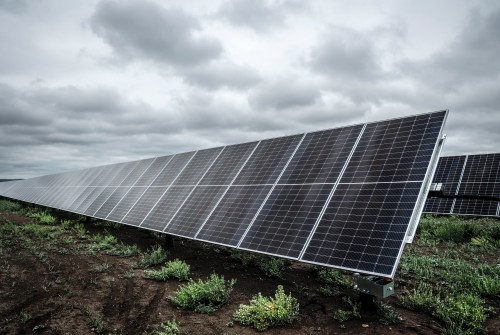
                                Solar power — from homes, businesses and farms — makes up a fraction of Manitoba’s energy mix
No Subscription Required

Proponents of solar power push for provincial infrastructure investment to boost grid resilience

Julia-Simone Rutgers 15 minute read Preview
No Subscription Required

Proponents of solar power push for provincial infrastructure investment to boost grid resilience

Julia-Simone Rutgers 15 minute read Saturday, May. 23, 2026

In the early 1970s, licence plates were stamped with the slogan “Sunny Manitoba” — a nod to long summer days, crisp blue winter skies and frequent sun dogs reflecting off of blinding white snow. While the slogan later changed, Manitoba’s ranking as Canada’s second-sunniest province has not.

Despite that sunlit reputation, solar power — one of the most-developed renewable energy sources — makes up just a small fraction of the province’s electricity grid.

“It’s extremely marginal, especially when you compare to other jurisdictions like Alberta and Saskatchewan,” said James Wilt, policy development manager at Climate Action Team Manitoba.

Manitoba boasts a predominantly emissions-free grid, with 97 per cent of its power generated by a network of hydroelectric dams. But the provincial utility, Manitoba Hydro, has forecasted that its once-abundant renewable energy source will soon fall short. There is growing demand for power amid the electrification of sectors like transportation and heating, and the rapidly growing interest in developing electricity-hungry data centres. Combined with more unpredictable water levels owing to climate factors like extreme drought, it’s all prompted the utility to warn that capacity could run out as soon as 2030.

Read
Saturday, May. 23, 2026

A Seal River proposal for all Manitoba’s needs

Steven Fletcher 5 minute read Saturday, May. 23, 2026

On Nov. 9, 2017, I stood in the Manitoba legislature and made a proposal whose time had not yet arrived.

I asked the chamber to protect the entire Seal River Watershed, roughly 50,000 square kilometres of intact boreal forest and tundra in northern Manitoba, a complete hydrological system running unbroken from its headwaters to Hudson Bay. No roads. No mines. No power corridors.

One of the last large watersheds left on Earth is still doing what watersheds are meant to do.

It was not a partisan proposal. It was not, that day, a particularly prominent one. The chamber was nearly empty. The proposal did not pass; it did not fail; it simply sat there. Within weeks, The Northern Miner picked it up and brought the idea to the national mining industry. Almost nobody else did.

The Mia-yaltwa Halidzogm hoon national marine conservation area reserve on B.C.'s central coast pictured in this undated photo. It spans from Gil Island in the north to just south of Calvert Island, in the south. THE CANADIAN PRESS/Handout — Markus Thompson Thalassia (Mandatory Credit)

Vast marine conservation reserve, bigger than P.E.I., to protect B.C. central coast

Marissa Birnie, The Canadian Press 4 minute read Preview

Vast marine conservation reserve, bigger than P.E.I., to protect B.C. central coast

Marissa Birnie, The Canadian Press 4 minute read Saturday, May. 23, 2026

An enormous national marine conservation reserve is being established on British Columbia's central coast, spanning an area larger than Prince Edward Island.

The protected area, named Mia-yaltwa Ha’lidzogm hoon, is the result of an agreement between six coastal First Nations and the provincial and federal governments.

An official says the area is around 6700 sq. km and will be operated by Parks Canada along with its Indigenous and federal partners.

The reserve is within the Great Bear Sea, a diverse marine ecosystem that covers more than half of B.C.'s coast and includes glass sponge reefs, salmon, killer whales and migrating humpbacks.

Read
Saturday, May. 23, 2026

Planning for an electric future — now

Norman Brandson 5 minute read Friday, May. 22, 2026

The shift away from fossil fuels to an electrified economy will advantage those who strongly invest in renewables.

Acidic seepages linked to permafrost thaw are releasing toxic metals and turning streams in Yukon a rusty orange as shown in this undated handout photo.THE CANADIAN PRESS/Handout-McMaster University-Andras Szeitz(Mandatory Credit)
No Subscription Required

As permafrost thaws, some headwaters in Canada’s North turn orange and toxic: study

Jordan Omstead, The Canadian Press 7 minute read Preview
No Subscription Required

As permafrost thaws, some headwaters in Canada’s North turn orange and toxic: study

Jordan Omstead, The Canadian Press 7 minute read Friday, Jun. 12, 2026

Ancient bedrock exposed by disappearing permafrost is releasing toxic metals into Canada's northern rivers, a new study says, with once-pristine subarctic streams now comparable in some cases to highly acidic, contaminated mining sites.

The findings out of Yukon point to an "unfolding environmental disaster," one co-author said, and adds to alarm over the rapid climate-fuelled changes in the North.

"We don't know the end point, but there's nothing about this that gives me any feeling of like, 'oh, we're going to be OK'," said co-author Sean Carey, a professor at McMaster University.

"I'm not even a gloomy person. This looks pretty gloomy."

Read
Friday, Jun. 12, 2026
PHIL HOSSACK / FREE PRESS FILES
                                Robert Wavey will co-chair the advisory group.

Hydro advisory circle brings ‘wealth of Indigenous perspectives’

Carol Sanders 5 minute read Preview

Hydro advisory circle brings ‘wealth of Indigenous perspectives’

Carol Sanders 5 minute read Tuesday, May. 19, 2026

The board of Manitoba Hydro has appointed an Indigenous advisory circle as part of the Crown corporation’s reconciliation efforts.

Former Fox Lake Cree Nation chief and Keeyask Hydropower Limited Partnership board chair Robert Wavey will co-chair the group with Manitoba Hydro board chairman Jamie Wilson. The provincial government ordered the creation of the advisory circle in its 2023 mandate letter to Hydro’s board.

“I think we wanted to get everything right on this one,” Wilson said when asked why it has taken more than two years to appoint Indigenous advisers.

“This is a pretty fantastic group of people from a diverse background, including communities that are directly impacted by Hydro development in the past,” the first Indigenous chairman of the Manitoba Hydro board said in an interview Tuesday.

Read
Tuesday, May. 19, 2026
Prime Minister Mark Carney participates in a signing ceremony with Alberta Premier Danielle Smith in Calgary on Friday, May 15, 2026. THE CANADIAN PRESS/Jeff McIntosh

Alberta’s timing targets for West Coast pipeline ‘best-case scenario’: CIBC analysts

Lauren Krugel, The Canadian Press 4 minute read Preview

Alberta’s timing targets for West Coast pipeline ‘best-case scenario’: CIBC analysts

Lauren Krugel, The Canadian Press 4 minute read Wednesday, May. 20, 2026

CALGARY - The targeted timeline the Alberta government set out for construction to begin on a potential new West Coast oil pipeline is ambitious, with many obstacles yet to clear, analysts at CIBC World Markets wrote in a recent report.

The province aims to submit a proposal to the federal major projects office by July 1, have it designated a project of national interest by Oct. 1 and get shovels in the ground as early as Sept. 1, 2027. Oil could begin to flow around 2033 or 2034, a provincial official told a media background briefing last week.

"While we are encouraged by the continued sense of urgency, we would characterize these timelines as optimistic and reflective of a best-case scenario," analysts Robert Catellier and Rogan Anantharajah wrote in a Monday industry update.

The Alberta government laid out those targets Friday after it and Ottawa finalized one of the last outstanding elements of the energy accord they signed late last year: an agreement on how the market price on carbon is to gradually increase to $130 a tonne by 2040.

Read
Wednesday, May. 20, 2026
Assembly of First Nations National Chief Cindy Woodhouse Nepinak speaks at the annual First Nations Major Projects Coalition conference in Toronto on Thursday, April 30, 2026. THE CANADIAN PRESS/Sammy Kogan
No Subscription Required

AFN chief warns against changes to major projects development rules, calls for debate

Alessia Passafiume, The Canadian Press 4 minute read Preview
No Subscription Required

AFN chief warns against changes to major projects development rules, calls for debate

Alessia Passafiume, The Canadian Press 4 minute read Monday, Jun. 8, 2026

OTTAWA - The national chief of the Assembly of First Nations says proposed changes to major project development rules are "not acceptable" and risk trampling on the rights of First Nations.

The federal government is proposing to grant authority to review interprovincial pipelines and transmission lines, and offshore renewable energy projects, to the Canada Energy Regulator instead of the Impact Assessment Agency of Canada.

The proposal, which will undergo a 30-day consultation process, would undo the move the Liberals made eight years ago to create the Impact Assessment Agency as a one-stop shop for all national project reviews.

National Chief Cindy Woodhouse Nepinak told The Canadian Press the proposed changes "demonstrate a pattern of exclusion" and she rejects the compressed timeline to submit feedback.

Read
Monday, Jun. 8, 2026
Workers lay pipe during construction of the Trans Mountain pipeline expansion on farmland, in Abbotsford, B.C., on Wednesday, May 3, 2023. THE CANADIAN PRESS/Darryl Dyck

Economic growth now tops environment as priority in energy policy, poll suggests

David Baxter, The Canadian Press 5 minute read Preview

Economic growth now tops environment as priority in energy policy, poll suggests

David Baxter, The Canadian Press 5 minute read Tuesday, May. 12, 2026

OTTAWA - More Canadians now say economic growth should be a bigger priority in Canada's energy policy than protecting the environment, a new Angus Reid Institute report suggests.

The pollster released a report Monday indicating 61 per cent of Canadians now see economic growth as the biggest priority in energy policy. The question offered two options on the top priority shaping federal energy policy: economic growth or environmental protection.

That's a shift in public opinion since seven years ago, when the same question had 55 per cent of Canadians saying the environment should be the top priority in energy policy.

Shachi Kurl, Angus Reid Institute president, said climate change was a top issue for voters in both the 2019 and 2021 elections, but opinion research shows the sense of urgency surrounding it has been declining in recent years.

Read
Tuesday, May. 12, 2026
(Tim Smith for The Narwhal)
No Subscription Required

Nature is a big part of the Canadian economy — but how big? We crunched the numbers.

Julia-Simone Rutgers 8 minute read Preview
No Subscription Required

Nature is a big part of the Canadian economy — but how big? We crunched the numbers.

Julia-Simone Rutgers 8 minute read Friday, May. 8, 2026

Canada’s vast landscape, which boasts 20 per cent of the world’s freshwater, a quarter of global wetlands and 28 per cent of its boreal forests, is critical to its economy. Natural resource industries — forests, farms, fisheries, mining and oil and gas — together make up approximately seven per cent of Canada’s gross domestic product.

Tension exists between expanding these industrialized sectors and protecting the ecosystems on which they depend.

In Manitoba, some worry protecting the Seal River Watershed, which spans more than 50,000 square kilometres in the province’s north, will hinder opportunities in mineral resources and hydro; to the east, critical mineral mining ambitions in Ontario’s Ring of Fire clash with the protection of the Hudson and James Bay Lowlands, the second-largest carbon sink on earth; and in B.C., Coastal First Nations have protested that lifting the large tanker ban through their waters will endanger the protected Great Bear Rainforest.

These tensions make it easy to frame nature as the antithesis of economic activity, if it’s always put in opposition to projects that are described as growing Canada’s wealth, sovereignty and security.

Read
Friday, May. 8, 2026
Josh Pearlman Photo, File
                                There are disagreements about how northern Manitoba’s pristine Seal River watershed should be formally protected.
No Subscription Required

Conservation shouldn’t come at the cost of access

Carly Deacon 5 minute read Preview
No Subscription Required

Conservation shouldn’t come at the cost of access

Carly Deacon 5 minute read Tuesday, May. 5, 2026

The Seal River Watershed in northern Manitoba is one of the last great intact ecosystems in North America.

Read
Tuesday, May. 5, 2026
  • First
  • Previous
  • 1
  • 2
  • 3
  • 4
  • 5
  • 6
  • Next
  • Last
Winnipeg Free Press Logo
Links
Replica E-Edition Front Page Arts & Life Business Canada Local Opinion Sports World Reader Bridge
WFP Events Free Press 101: How we practise journalism Media Kit About Us Archives Free Press Community Review Community Connect Classifieds Contests
FP Features Homes Newsletters Obituaries Podcasts Puzzles Photo and Book Store Become a Free Press Patron Privacy Policy
    • Media Literacy and Learning Contact
    • Contact Us
    • Advertising Contact
    • Send a Letter to the Editor
    • Staff biographies
    • Submit a News Tip
    • Subscribe to Newsletters
    • Notifications
    • My Account
    • Log Out
    • Log in
    • Create Account
    • Grid View
    • List View
    • Compact View
    • Text Size
    • Translate
    • Dark Mode
    • Light Mode
    • System Default
©2026 Winnipeg Free Press