Diversity and pluralism in Canada

Please review each article prior to use: grade-level applicability and curricular alignment might not be obvious from the headline alone.
No Subscription Required

Listening after decades of hearing

Melissa Martin 7 minute read Preview
No Subscription Required

Listening after decades of hearing

Melissa Martin 7 minute read Friday, Oct. 1, 2021

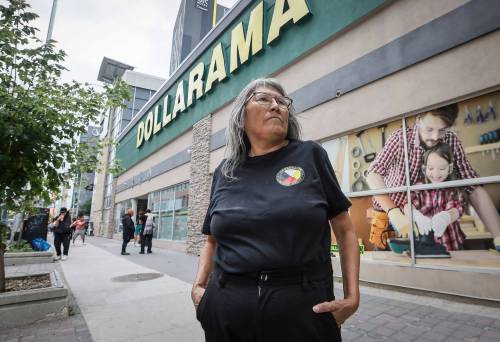
It seemed that all of Canada glowed orange, in act or in mind. On the streets of Winnipeg, a sea of people marched in orange shirts, carrying orange signs. On social media, people shared text posts on orange backgrounds, urging more attention to the Truth and Reconciliation Commission's 94 calls to action.

Even city buses — though not orange — marked the day on their digital signs.

If you'd come to me 10 years ago and told me this week would happen, I wouldn't have believed you. If you'd told me that on the last day of September 2021, everything from a cocktail bar to a Botox clinic would close to remember the children and survivors of residential schools, I would have said you were telling me about a dream.

Not the kind we seek to create, but the kind that disintegrates upon waking.

Read
Friday, Oct. 1, 2021
No Subscription Required

Poverty greatest threat to children

John R. Wiens 5 minute read Saturday, Sep. 25, 2021

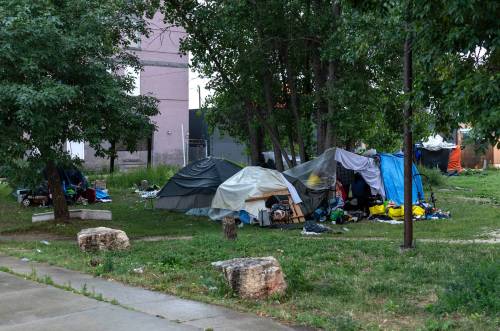
ON Sept. 12, 1977, the Carnegie Council on Children concluded that “The single greatest harm to children is poverty.” I believe this to be an apt description of the greatest threat to the education of a large number of children in Manitoba.

It remains worrisome that, even with the demise of Bill 64 (the Education Modernization Act), the most serious matters facing education are still off the table, and particularly so when it comes to the issue of child poverty, which presents probably the biggest challenge to any government wanting to achieve meaningful and lasting school change.

It’s the end of September. Children and young people are back at school for another year. This includes the children of the poor. The schools know who they are by now. They know they’ll have to pay special attention to these young people because they face challenges most of their other students do not.

Teachers will lie awake at night trying to think of new ways to mitigate the educational consequences for these children. They need help with this formidable task.

No Subscription Required

Legendary wheelchair basketball player embraces new role with Manitoba Wheelchair Sport Association

Taylor Allen 6 minute read Preview
No Subscription Required

Legendary wheelchair basketball player embraces new role with Manitoba Wheelchair Sport Association

Taylor Allen 6 minute read Wednesday, Sep. 22, 2021

When Joey Johnson tells his story, he describes it as the most devastating part of his life. He was eight years old when he sat in the doctor's office and found out that he had a degenerative hip disease.

"I remember sitting there and being like 'OK, what does that mean? When can I get back on the rink? I want to go play with my buddies.' And the doctor said 'No, there will be no more hockey for you,'" Johnson told the Free Press Wednesday.

"I literally sat in his office crying on my mom's lap for an hour before we got out of there."

Johnson, now 46, was an active child who grew up wanting to play in the NHL and represent Canada on the biggest stage. The diagnosis ruined his dream of one day hoisting the Stanley Cup over his head, but it did, however, open up a path for him to wear the red and white and be a trailblazer along the way.

Read
Wednesday, Sep. 22, 2021
No Subscription Required

Flags of Treaty One, the Dakota and Métis fly at city hall

Gabrielle Piché 3 minute read Preview
No Subscription Required

Flags of Treaty One, the Dakota and Métis fly at city hall

Gabrielle Piché 3 minute read Wednesday, Sep. 15, 2021

Drumbeats reverberated as four Indigenous leaders rode horseback past the brick-walled restaurants on King Street: it was the beginning of a ceremony to recognize the place of Indigenous people in Winnipeg.

On Wednesday morning, the flags of Treaty One First Nations, the Dakota and the Métis were hoisted at city hall. They'll be there permanently, alongside the flags of Canada, Manitoba and Winnipeg.

"It'll make our people proud that their flag will be flying at city hall," said Sagkeeng First Nation Chief Derrick Henderson. "That is so significant."

Chiefs, representatives of various Indigenous groups and Winnipeg Mayor Brian Bowman spoke at the flag-raising event. Ribbon skirts, headdresses and face masks were abundant among the crowd.

Read
Wednesday, Sep. 15, 2021
No Subscription Required

Immigrant, newcomer communities seek to get out the vote

Julia-Simone Rutgers 4 minute read Preview
No Subscription Required

Immigrant, newcomer communities seek to get out the vote

Julia-Simone Rutgers 4 minute read Thursday, Sep. 9, 2021

When Roselyn Advincula pictures an election, she pictures a party.

In her home country of the Philippines, candidates bring in celebrity endorsements and crowd-rousing chants to inspire the electorate. Living near a polling station, she remembers sharing hellos and leaflets with the jubilant crowds walking past her door to vote.

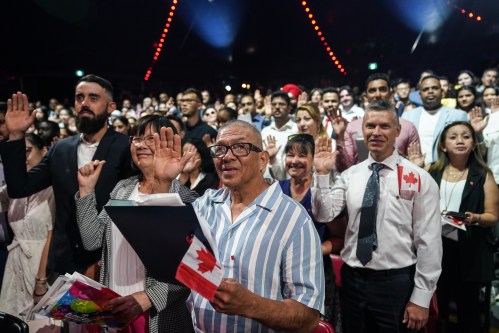
Advincula, 39, and her husband moved to Canada 13 years ago, but just got their citizenship in March. The couple will vote for the first time in the 2021 federal election, and are looking forward to bringing the familiar atmosphere to their "second home."

"It's a mixed emotion for me, it brought back memories and excitement," Advincula said at a voting campaign event Thursday in Winnipeg's Central Park.

Read
Thursday, Sep. 9, 2021
No Subscription Required

Japanese garden an enduring cultural experience

Colleen Zacharias 7 minute read Preview
No Subscription Required

Japanese garden an enduring cultural experience

Colleen Zacharias 7 minute read Saturday, Aug. 28, 2021

The Japanese Cultural Association of Manitoba, 180 McPhillips St., opened to the public in 1987. The centre offers a wide range of programs which are designed to promote and enhance the understanding of Japanese culture. The centre also serves as the site for a beautiful Japanese garden. Built by Yoshimaru Abe who was born in Japan in 1914 and came to Canada with his family in 1927, the garden is an enduring cultural experience.

Prior to building the garden at the centre, visitors to the Japanese Folklorama exhibit in 1971 and in the years following had the opportunity to see a Japanese garden recreated by Abe. Using moss, rocks, and pieces of wood, Abe recreated an authentic Japanese garden on a concrete arena floor.

A gardener is called niwashi in Japanese. Abe was the distinguished niwashi at the Japanese cultural centre’s garden into his 90’s and was followed by Sam Matsuo, who maintained the garden for 10 years. Both Abe and Matsuo were assisted by dedicated volunteers. Today the niwashi is Raymond Normandeau, who has been involved with the centre for several years as well as in the building of the garden at the Japanese Pavilion at Folklorama. Normandeau will oversee an expansion of the garden at the Japanese Cultural Association — which is slated to begin this fall.

Currently, there are two different areas to the garden. The front garden is a long narrow strip on the outside of the building that faces into a concrete parking lot. The inner garden is an enclosed garden accessed by a short bridge and tall wooden gate. “It is not a pure Japanese garden,” says Normandeau. “It is representative of a Japanese garden. We don’t have the stalwarts of Japanese gardens — bamboo, clipped azaleas, and the black pine which is one of the most popular pine species in a Japanese garden.” But many fine elements of Japanese garden design can indeed be found here.

Read
Saturday, Aug. 28, 2021
No Subscription Required

Black History Manitoba's block party opportunity for chefs to share their passion

Melissa Martin 6 minute read Preview
No Subscription Required

Black History Manitoba's block party opportunity for chefs to share their passion

Melissa Martin 6 minute read Monday, Aug. 23, 2021

As a little girl growing up in Jamaica, Patrice Gilman dreamed that one day, she would cook just like Gladys, her grandmother. Everyone around downtown Kingston knew Gladys, and the little restaurant she owned in the area called Southside. Her dish of tripe and beans was famous, and fed famous athletes and hungry kids alike.

Gilman was fascinated by watching her grandmother manage the little kitchen, cooking all on her own, darting between pots of goat or chicken or fish bubbling on any of a dozen wood-fired stoves. Every morning, Gladys rose before the sun to start making lunch, and every day she was sold out of food not long after noon.

Still, she always had a little something for the kids who hung around, the ones who didn’t have enough.

“She was a one-woman show,” Gilman says. “She would feed the whole community. She had nine children, and raised many more children that weren’t her own. She passed away about 13 years ago, but her spirit lives on so strongly in our family’s heart.”

Read
Monday, Aug. 23, 2021
No Subscription Required

Oh, Canada! We have a racism problem

Ruby Latif - Contributing Columnist, Toronto Star 4 minute read Preview
No Subscription Required

Oh, Canada! We have a racism problem

Ruby Latif - Contributing Columnist, Toronto Star 4 minute read Wednesday, Oct. 15, 2025

Sorry, Canada — as much as we like to believe we’re a multicultural country, we’re not as tolerant as we think we are.

Read
Wednesday, Oct. 15, 2025
No Subscription Required

Muslim Canadians’ Eid celebrations reflect diversity

Michelle Gazze 5 minute read Preview
No Subscription Required

Muslim Canadians’ Eid celebrations reflect diversity

Michelle Gazze 5 minute read Friday, May. 14, 2021

My earliest Eid memory is of my grandma cooking fresh, hot Sirnee — a soft, sweet, spiced, cooked dough made of flour and butter. That divine smell alone would make anyone excited to celebrate Eid.

Eid-al-Fitr (also called the “Festival of Breaking Fast” or just Eid) marks the end of Ramadan, the holy month in which Muslims fast daily from dawn until sundown. It is an opportunity to foster gratitude, discipline and deepen our connection with God, so we can live from a place of higher consciousness. Not for a single month, but for our entire lives.

Coming from a Guyanese family, I grew up with Hindu and Muslim family members. It wasn’t until my paternal grandparents immigrated to Winnipeg we started to celebrate Eid. After Ramadan, we would gather at their house to feast and enjoy West Indian sweets. We also spent more time in the community donating food hampers and strengthening our faith through acts of charity.

As Eid quickly approaches this week, most Muslims celebrate in the same religious sense, but cultural traditions differ from one country to another. A common assumption is being of Muslim faith is synonymous with Middle Eastern countries, but my Muslim friends and I represent the diversity in Islam.

Read
Friday, May. 14, 2021
No Subscription Required

Preserving stories of Muslim history in Manitoba

John Longhurst  3 minute read Preview
No Subscription Required

Preserving stories of Muslim history in Manitoba

John Longhurst  3 minute read Friday, Feb. 5, 2021

It was in the early 1900s when one of the first Muslims to live in Manitoba arrived in the province.

His name was Ahmed Awid, and he came from what is now Lebanon — one of perhaps fewer than 1,000 Muslims in Canada at the time.

Awid settled in Brandon, where he married a local woman and established two successful businesses before moving to Edmonton in 1928.

Awid’s story is one of many told in a new book: Muslims in Manitoba: a History of Resilience and Growth.

Read
Friday, Feb. 5, 2021
No Subscription Required

Association hopes library donation expands understanding of Islam

John Longhurst  3 minute read Saturday, Nov. 14, 2020

The Winnipeg Public Library will soon have new books about the Prophet Muhammad, thanks to a donation from the Manitoba Islamic Association.

“We want to provide factual information about Islam,” said Philip Bravo, who is responsible for adult non-fiction for the library.

The offer of free books will “help us fulfil our mission of enriching the lives of all Winnipeggers,” he said, adding the books will be made available in all of the city’s branches.

The idea for donating books about Islam grew out the recent attacks in France following depictions of the prophet, said Idris Elbakri, MIA’s board chairman.

No Subscription Required

Canadian demographics impact cultural shifts

Reviewed by Scott MacKay 3 minute read Preview
No Subscription Required

Canadian demographics impact cultural shifts

Reviewed by Scott MacKay 3 minute read Saturday, May. 2, 2020

‘Here we go again” was the first thought while unsealing Darrell Bricker’s newest study from the envelope the Winnipeg Free Press had sent to my isolated home. Surely this new work — Next: Where to Live, What to Buy and Who Will Lead Canada’s Future — would suffer the same cruel invalidation that every other pre-pandemic prognostication must experience in these strange times.

But in a sense, Bricker has dodged a COVID-19 bullet, as his focus throughout this volume is on Canadian demographics, complete with its recurrent reminder of how these mighty, slow-moving and mostly irreversible forces affect society today and tomorrow. Take that, pandemic.

Bricker is CEO of Ipsos Public Affairs, a global marketing research company. This is Bricker’s third book on population trends and follows Empty Planet and The Big Shift, both of which he co-authored with the Globe and Mail’s former chief political writer John Ibbitson. (Disclosure: This reviewer crossed paths with Bricker in the early ’90s while working at what was then the Angus Reid Group.)

Much of the focus of Bricker’s new solo work is on generational groups, particularly on what he maintains are the miscalculated “Perennials” (basically anyone over 55). It is these comfortable silver-haired boomers who continue to dominate and shape our social values and consumer trends, mostly by the sheer potency of their numbers and their relative prosperity.

Read
Saturday, May. 2, 2020
No Subscription Required

Indigenous, Muslim youth event seeks to build friendships

John Longhurst 2 minute read Preview
No Subscription Required

Indigenous, Muslim youth event seeks to build friendships

John Longhurst 2 minute read Saturday, Feb. 15, 2020

Indigenous and Muslim youth in Winnipeg are invited to get to know each other at a special gathering Sunday.

Longing for Belonging — sponsored by the Ma Mawi Wi Chi Itata Centre and the Islamic Social Services Association, with financial support from the Winnipeg Foundation — is a free event for youth ages 14 to 20. It’s happening at the United Way (580 Main St.) from 11 a.m. to 3 p.m.

Space is limited to 60 participants, but there is still room for a few more, event co-organizer Sarah Parkar of the Islamic association said.

The goal is to “provide a safe space where Indigenous and Muslim youth can learn about each other and break down stereotypes,” Parkar said.

Read
Saturday, Feb. 15, 2020
No Subscription Required

Event aims to share what it means to be Muslim and Canadian

Brenda Suderman  4 minute read Preview
No Subscription Required

Event aims to share what it means to be Muslim and Canadian

Brenda Suderman  4 minute read Friday, Jun. 30, 2017

ALTHOUGH she’s still in high school, Maryam Islam already knows what it is like to face discrimination because she wears a head scarf as part of her Muslim beliefs.


“Whenever it’s a group activity or a class discussion, people may question before putting me in a group,” the Grade 10 student at Fort Richmond Collegiate says.

“Whenever I get into a group I try to be nice and kind and to show I’m not an alien.”

Read
Friday, Jun. 30, 2017
No Subscription Required

Prophet Muhammad a unique historical figure

By Ismael Mukhtar 4 minute read Saturday, Feb. 4, 2012

The prophet Muhammad is certainly one of the most influential figures in history. Michael H. Hart, in his book, The 100: A Ranking of the Most Influential Persons in History, puts Muhammad at the top of the 100 most influential personalities.

More than a billion people across the world follow Muhammad and take him as their guide, mentor and leader. Muslims' respect, love and reverence for Muhammad are deep and genuine. Out of regard, Muslims always say "Peace be upon him" every time they invoke his name. Muhammad's legacy is far-reaching and permeates every aspect of Muslim life.

Today, Saturday, coincides with the birthday of Prophet Muhammad. Interestingly, this day isn't celebrated as a religious day. In some Muslim countries it is an official holiday; in others it isn't. The birthday of Muhammad doesn't have the same religious significance as the birthdays of other religious figures. This is partly due to the teachings of Prophet Muhammad himself, who taught his disciples not to glorify him and only refer to him as the "servant of God."

Prophet Muhammad is unique among historical figures. Many aspects of his private and public life have been recorded by his disciples. Things as simple as the number of grey hairs in his head, how he smiled, how he walked, what type of foods he liked, etc., have been recorded with great detail. His rulings, sayings and precedents are the foundations of Islamic jurisprudence.

Uniform decision takes military out of Pride march

Nicole Buffie 5 minute read Preview

Uniform decision takes military out of Pride march

Nicole Buffie 5 minute read Yesterday at 5:06 PM CDT

Pride Winnipeg’s president says 17 Wing Winnipeg’s decision not to send a military contingent to this year’s pride parade because of a ban on uniforms shows the military’s true colours.

Ahead of Sunday’s annual parade, Pride Winnipeg said it had banned military personnel in uniform based on community consultations and feedback. President Barry Karlenzig said the ban was supposed to apply only for this year’s march, and military members were welcome to come wearing everyday clothes, including branded T-shirts or golf shirts.

In response, 17 Wing Winnipeg pulled out of its participation in the parade.

“It has me sit back and say, ‘Is the military in the parade for the right reasons?’ Same as what we ask with police, same as what we ask with corporate partners, is you should be there for the community and to support the community. Are you there to support the community or are you there for the photo ops?” Karlenzig said Wednesday.

Read
Yesterday at 5:06 PM CDT
No Subscription Required

Indigenous speakers, politicians watching audit of languages office closely

The Canadian Press staff, The Canadian Press 6 minute read Preview
No Subscription Required

Indigenous speakers, politicians watching audit of languages office closely

The Canadian Press staff, The Canadian Press 6 minute read Updated: Yesterday at 1:45 PM CDT

OTTAWA - Indigenous language speakers and political leaders say they were disappointed to learn a landmark Indigenous languages office is under investigation after the federal government received anonymous complaints.

The Canadian Heritage department has ordered a financial audit of transactions and activities at the Office of the Commissioner of Indigenous Languages, The Canadian Press reported earlier this week.

The department has not elaborated on the specific allegations made against the office, an arm's-length body that was set up five years ago in response to a recommendation by the Truth and Reconciliation Commission. The department has said it has contracted an independent third-party firm to conduct the audit and has notified Commissioner Ronald Ignace.

One Indigenous language speaker said part of the problem with organizations like the commissioner's office is that they're accountable to the federal government, not to Indigenous people.

Read
Updated: Yesterday at 1:45 PM CDT

NDP sport bill risks marginalized communities

Glen Wintrup 5 minute read Tuesday, Jun. 2, 2026

At a time when, culturally, one of the most popular TV shows is made in Canada, about gay professional hockey players who hide their sexual orientation out of fear of being harmed, the Manitoba NDP government has introduced Bill 41 for underrepresented communities in sport.

It’s admirable that the Manitoba government wants to tackle white heteronormative masculine sport, to make sport safer for under-represented communities at a time when the level of intolerance and hate towards some under-represented groups, notably the LGBTTQ+ community, has increased.

Under the auspices of promoting inclusivity of under-represented groups in sport, the Manitoba government’s Bill 41 — The Promoting Inclusion in Amateur Sport Act — is anti-gay, anti-trans, and anti-hidden marginalization.

Should Bill 41 come into force, it will require all children, youth and adults from under- represented groups, most of whom are recognized as equity-deserving marginalized communities, such as gay and trans, to self-identify; they will be required to come out to provincial sport organizations (PSOs) if they want to participate in organized sport in Manitoba.

Manitoba makes strides on poverty, but EIA rates must increase: report

Nicole Buffie 5 minute read Preview

Manitoba makes strides on poverty, but EIA rates must increase: report

Nicole Buffie 5 minute read Tuesday, Jun. 2, 2026

When Jayline Bursey gets her monthly Employment and Income Assistance cheque, it’s gone almost immediately.

Read
Tuesday, Jun. 2, 2026

Federal poll finds nearly half of Canadians think country takes ‘too many immigrants’

David Baxter, The Canadian Press 3 minute read Preview

Federal poll finds nearly half of Canadians think country takes ‘too many immigrants’

David Baxter, The Canadian Press 3 minute read Updated: Yesterday at 12:05 PM CDT

OTTAWA - A survey commissioned by the federal government late last year suggests nearly half of Canadians believe the country is admitting too many immigrants — but the share of respondents who think so has dropped since last year's polling.

The survey found 47 per cent of respondents believe "too many" immigrants are coming to Canada, while 38 per cent say "about the right amount" are coming.

A similar government poll conducted in late 2024 reported 54 per cent of respondents saying that "too many" immigrants were coming to Canada.

The report on the latest poll says the numbers saw little to no movement after respondents were told the government plans to admit 380,000 permanent residents this year.

Read
Updated: Yesterday at 12:05 PM CDT

Peace, justice and bringing this country together

Niigaan Sinclair 5 minute read Preview

Peace, justice and bringing this country together

Niigaan Sinclair 5 minute read Monday, Jun. 1, 2026

From the War of 1812 to today, no one has stood up for this country and worked for unity in this place more than Indigenous Peoples.

Read
Monday, Jun. 1, 2026

Doors Open to Winnipeg’s mystery, history

Aaron Epp 5 minute read Preview

Doors Open to Winnipeg’s mystery, history

Aaron Epp 5 minute read Monday, Jun. 1, 2026

It’s easy to travel past the Manitoba Buddhist Temple and not even notice it.

Read
Monday, Jun. 1, 2026
No Subscription Required

Quebec moves ahead with AI cultural databank project

Frédéric Lacroix-Couture, The Canadian Press 4 minute read Preview
No Subscription Required

Quebec moves ahead with AI cultural databank project

Frédéric Lacroix-Couture, The Canadian Press 4 minute read Tuesday, Jun. 2, 2026

MONTREAL - Quebec's national library is moving ahead with plans to create a database of cultural and government content that could be used to train artificial intelligence systems and improve their understanding of Quebec society, culture and Indigenous languages.

BibliothÚque et Archives nationales du Québec, or BAnQ, the province's national library and archives institution, has launched the experimental phase of its proposed government and cultural databank in French and Indigenous languages after completing a feasibility study earlier this year.

The project aims to address concerns that major generative AI systems often struggle to provide reliable information about Quebec society, economy and culture because of the limited amount of Quebec-related data available to them.

"All scenarios are a little bit on the table right now," Valérie D'Amour, who led the feasibility study, said in an interview. "We have a lot of ideas and we want to validate the possibilities with cultural stakeholders, as well as with data owners and providers, who will be involved in the discussions."

Read
Tuesday, Jun. 2, 2026

North End puts its best foot forward with Culture Fest

Malak Abas 3 minute read Preview

North End puts its best foot forward with Culture Fest

Malak Abas 3 minute read Saturday, May. 30, 2026

Fostering friendship is one of the most important parts of Melanie McKay’s day.

At the Winnipeg Indigenous Friendship Centre, she serves as a program co-ordinator, where she organizes bingo nights, drop-ins for elders and craft sessions. She spent Saturday afternoon at the third annual North End Neighbours Culture Fest, where a dozen organizations serving the neighbourhood gathered at the Ukrainian Labour Temple to share food, watch performances and celebrate each other.

“These are the people that we represent, and these are the people that we want to help out,” McKay said Saturday. “I think being here shows that we’re out there in the community, and we’re willing to help any way we can.”

The Indigenous Friendship Centre began operating out of 410 McGregor St., May 1, while they renovate their former home at 45 Robinson St. They’re holding an open house June 5 in hopes of letting more people know their resources are available to the North End, regardless of their cultural background.

Read
Saturday, May. 30, 2026