WEATHER ALERT

The Land: Places and People

Please review each article prior to use: grade-level applicability and curricular alignment might not be obvious from the headline alone.

No Subscription Required

Craig Block link to city’s Black history

Cody Sellar 4 minute read Preview
No Subscription Required

Craig Block link to city’s Black history

Cody Sellar 4 minute read Thursday, Aug. 26, 2021

Above a fruit seller in a small brick building on Main Street, a group of Black railway porters made history.

The Order of Sleeping Car Porters, formed in Winnipeg in 1917, was North America’s first Black labour union. Five years later, they established offices and a meeting hall on the second storey of the building, the Craig Block, at 795 Main St.

Now, the building has hit the market, without any historical status protections or a bronze plaque to commemorate its history.

History writer Christian Cassidy said he’s seen the building, which recently housed retail store Ma’s Fishing, go up for sale once or twice in the past. Each time, he worries someone will buy it and knock it down. It’s one of last buildings that links Winnipeg to the history of its Black communities.

Read
Thursday, Aug. 26, 2021
No Subscription Required

The show must go on as Selkirk buys theatre

Cody Sellar 3 minute read Preview
No Subscription Required

The show must go on as Selkirk buys theatre

Cody Sellar 3 minute read Thursday, Aug. 26, 2021

Many in Selkirk thought the credits had rolled for the Garry Theatre, but it appears there’s a sequel.

Landmark Cinemas decided to close it in May and on Wednesday, the City of Selkirk announced it had purchased the theatre for $350,000, plus closing costs.

“What we’ve heard so far is people are very excited and very happy that the city has been able to secure the property,” said Selkirk CAO Duane Nicol.

Nicol said the city will reach out to the community to determine how best to use the building. The city hopes it will become a centre for arts and culture, he said.

Read
Thursday, Aug. 26, 2021
No Subscription Required

Selkirk art crawl centres on city's thriving mural scene

Ben Waldman  6 minute read Preview
No Subscription Required

Selkirk art crawl centres on city's thriving mural scene

Ben Waldman  6 minute read Wednesday, Aug. 25, 2021

Sometimes a wall is more than just a wall.

It’s a blank canvas. And in recent years, artists in Selkirk have turned several into works of art, highlighting local figures and traditions, using paint to transform bricks and plaster in the downtown into a growing visual history of the city.

Since 2018, nearly 20 murals have emerged, depicting everything from the traditional community round dance to Indigenous and settler women thriving on the Prairie landscape to a grandmother passing on her teachings. Others bring needed attention to the ongoing crisis of Missing and Murdered Indigenous Women and Girls, and to everyone affected, in the past and present, by the Indian Residential School System, those who came home and those who never did, artist Jordan Stranger says.

All these murals will serve as the backdrop for a free public art crawl Sept. 4 and 5, with local vendors and artisans posting up next to them and getting a long-awaited opportunity to share their work with the community, including handmade goods, paintings, crafts, sewing and woodworking pieces, and much more.

Read
Wednesday, Aug. 25, 2021
No Subscription Required

Iconic Churchill Tundra Buggy goes electric

Martin Cash 5 minute read Preview
No Subscription Required

Iconic Churchill Tundra Buggy goes electric

Martin Cash 5 minute read Wednesday, Aug. 25, 2021

The Churchill travel company, Frontiers North Adventure, has been operating its fleet of iconic Tundra Buggies for decades but for various reasons John Gunter, CEO of the company, knew the fleet needed to be upgraded.

A chance encounter between Gunter and Red River College’s former head of research and partnerships three years ago put Gunter on the path towards electrifying the Tundra Buggies.

On Tuesday, the fruits of that labour were revealed at Red River College’s Vehicle Technology and Energy Centre (VTEC) — the first EV (electric vehicle) Tundra Buggy.

It was a collaborative effort between Frontiers North, RRC’s VTEC, New Flyer and the non-profit Vehicle Technology Centre that pooled a growing expertise in heavy vehicle electrification that has been developing over the past decade in Winnipeg.

Read
Wednesday, Aug. 25, 2021
No Subscription Required

Protesters gather at corner to oppose funding of pipeline

Cody Sellar 4 minute read Preview
No Subscription Required

Protesters gather at corner to oppose funding of pipeline

Cody Sellar 4 minute read Monday, Aug. 23, 2021

About 50 people from Winnipeg’s Mennonite community gathered Sunday at a TD Bank at the corner of Notre Dame Avenue and Sherbrook Street to protest the bank’s funding of the Line 3 pipeline replacement.

As rain pelted down on a canopy of umbrellas, one man cut his TD Bank card into pieces while the crowd cheered. After some minutes of song and prayer, the group took non-permanent markers and wrote messages over the windows of the bank.

“Stop fossil fuel funding,” one man wrote on the door. The red ink ran in long streaks from the rain down over the bank’s hours.

Organizer Steve Heinrichs said he drew inspiration from Indigenous communities leading protests in Minnesota.

Read
Monday, Aug. 23, 2021
No Subscription Required

City considering new name for park near former residential school to honour Indigenous leader

Joyanne Pursaga 4 minute read Preview
No Subscription Required

City considering new name for park near former residential school to honour Indigenous leader

Joyanne Pursaga 4 minute read Thursday, Aug. 19, 2021

AS a residential high school student, the site now known as Wellington Park offered him rare moments of joy.

As an adult survivor of that system, it helped trigger both positive memories and quiet, disturbing flashbacks.

Theodore Fontaine, who died in May, found more than a chance to play hockey and baseball at the Assiniboia Indian Residential School, according to his wife Morgan Fontaine.

“These fields, this was just for him a time of that little taste of freedom that he longed for.… It was just before his seventh birthday (that) he lost his freedom,” she said.

Read
Thursday, Aug. 19, 2021
No Subscription Required

Preserving stories of Muslim history in Manitoba

John Longhurst  3 minute read Preview
No Subscription Required

Preserving stories of Muslim history in Manitoba

John Longhurst  3 minute read Friday, Feb. 5, 2021

It was in the early 1900s when one of the first Muslims to live in Manitoba arrived in the province.

His name was Ahmed Awid, and he came from what is now Lebanon — one of perhaps fewer than 1,000 Muslims in Canada at the time.

Awid settled in Brandon, where he married a local woman and established two successful businesses before moving to Edmonton in 1928.

Awid’s story is one of many told in a new book: Muslims in Manitoba: a History of Resilience and Growth.

Read
Friday, Feb. 5, 2021
No Subscription Required

Chasser, pour avoir la conscience tranquille

Daniel Bahuaud de La Liberté pour le Winnipeg Free Press 4 minute read Preview
No Subscription Required

Chasser, pour avoir la conscience tranquille

Daniel Bahuaud de La Liberté pour le Winnipeg Free Press 4 minute read Saturday, Dec. 2, 2017

Vanessa Ahing a été végétarienne pendant plus de quatre années. Par refus de l’industrie de la viande qui, à son avis, est cruelle et nuit à l’environnement. Pourtant, un bon steak lui manquait. Pour réconcilier conscience et palais, un choix nouveau s’imposait...

Un soir de septembre, 2013, Vanessa Ahing rentrait de la campagne, où elle avait abattu son premier chevreuil. Souvenir de l’enseignante de 31ans: “J’étais toute seule. J’avais suivi une formation de chasse pour femmes, organisée par la Manitoba Wildlife Foundation. Mon chevreuil, coupé en quarts, était dans un sac de hockey dans le coffre de ma Honda Civic. C’était mon premier animal. Je voulais vivre l’expérience complète de la chasse. Donc pas question pour moi d’aller chez un boucher. D’ailleurs, j’étais étudiante. Je n’avais pas le fric pour me payer un tel service.

“Je me demandais comment j’allais faire pour préparer cette viande. Je n’ai pas été élevée dans une famille de chasseurs, ou même de jardiniers. Mes parents n’étaient pas prêts à avoir un chevreuil chez eux. Et moi, je vivais dans un petit appartement pour célibataires au centre-ville de Winnipeg.

“Il était tard. Trop tard pour dépecer l’animal tout de suite. Alors, j’ai ouvert les fenêtres de mon appartement. Je me suis endormie dans mon sac de couchage. Le lendemain, j’ai tapé ‘Comment couper de la viande de chevreuil’ sur YouTube. Et je me suis mise à l’œuvre.”

Read
Saturday, Dec. 2, 2017
No Subscription Required

Riel, le lien entre les francos d’Amérique

Daniel Bahuaud de La Liberté pour le Winnipeg Free Press  5 minute read Preview
No Subscription Required

Riel, le lien entre les francos d’Amérique

Daniel Bahuaud de La Liberté pour le Winnipeg Free Press  5 minute read Saturday, Nov. 18, 2017

Pour Jocelyn Jalette, bédéiste de Joliette, au Québec, pas besoin d’être métis, ou manitobain, ou encore francophone en milieu minoritaire pour apprécier le combat, le triomphe et la tragédie de Louis Riel. Et voici pourquoi.

Dans La République assassinée des Métis, la bande dessinée de Jocelyn Jalette qui vient tout juste d’être publiée aux Éditions du Phoenix (www.editionsduphoenix.com), des personnages fictifs côtoient Louis Riel et Gabriel Dumont, mais aussi les politiciens Louis-Hippolyte Lafontaine, Louis-Joseph Papineau et Honoré Mercier.

Une palette de personnages pour mieux placer la résistance des Métis dans un contexte francophone plus large, comme le souligne l’auteur de 47 ans :

“Les liens sont étroits entre la résistance des Métis, Louis Riel et les francophones du Québec. Surtout quand on se rappelle que la lutte pour assurer un statut d’égalité entre le français, l’anglais, et les cultures francophone et anglophone, c’est l’affaire de tous les francophones.”

Read
Saturday, Nov. 18, 2017
No Subscription Required

Map-based history of Canada a marvel

Reviewed by Douglas J. Johnston 3 minute read Preview
No Subscription Required

Map-based history of Canada a marvel

Reviewed by Douglas J. Johnston 3 minute read Saturday, Oct. 28, 2017

If you like maps, you’ll like this book; if you like both maps and crisply recounted Canadian history, you’ll love it.

Adam Shoalts is the author of a previous Canadian bestseller, 2015’s Alone Against the North, which recounted his exploration of the muskeg and river wilderness that is the Hudson Bay Lowlands.

The maps of his second book are springboards for his accounts of how this country’s vast expanses were charted.

Shoalts believes maps have been fundamental in shaping our view of Canada. He supports this belief by offering up pivotal moments in our country’s history via stories built around 10 specific maps, most of which, in turn, are the product of specific explorations.

Read
Saturday, Oct. 28, 2017
No Subscription Required

Book details 1953 Cold War experiments on Winnipeg

Carol Sanders 5 minute read Preview
No Subscription Required

Book details 1953 Cold War experiments on Winnipeg

Carol Sanders 5 minute read Friday, Oct. 13, 2017

Winnipeg was duped into being a “guinea pig” for American chemical warfare experiments in 1953, but no one knows what effect it had on city residents, a University of Manitoba pharmacology professor emeritus says.

“It’s too late now to do anything about it or to know what health effects it had on people,” Frank LaBella said Thursday of the aerosol cloud of zinc cadmium sulphide that was sprayed in Winnipeg to test ways of distributing chemical and biological warfare agents.

The deceitful operation by the United States army came to light in 1980 and is back in the spotlight with the publication of a book by an American researcher that includes declassified information. Behind the Fog: How the U.S. Cold War Radiological Weapons Program Exposed Innocent Americans, by Lisa Martino-Taylor, details the testing carried out in cities in the U.S. and Winnipeg (which resembled target sites in the Soviet Union).

“Nobody knew what was going on,” LaBella said. In 1953, Winnipeg city council was told civil defence authorities were testing the effects of smoke over the city using “harmless fluorescent powder.”

Read
Friday, Oct. 13, 2017
No Subscription Required

Traversant le Canada en 20 chansons

Manella Vila Nova 4 minute read Preview
No Subscription Required

Traversant le Canada en 20 chansons

Manella Vila Nova 4 minute read Saturday, Jul. 8, 2017

De La Rochelle à la Colombie-Britannique en passant par l’Acadie, le Québec, l’Ontario et les Prairies, voici le voyage que proposera la chorale québécoise En Supplément’Air dans la Cathédrale de Saint-Boniface à l’occasion du 150e anniversaire de la Confédération canadienne, le 11 juillet.

Le Chœur En Supplément’Air a été fondé en 2015 par Carole Bellavance, la directrice artistique de la chorale. “Cette année, le chœur compte 300 choristes de toute la province du Québec. Tous les étés, nous organisons une tournée avec une quarantaine d’entre eux. Nous sommes partis le 3 juillet pour un premier concert à Ottawa, puis nous nous rendrons à North Bay, Sault Sainte-Marie, Thunder Bay. Nous terminerons à Winnipeg le 11 juillet,” Bellavance a dit.

C’est la première fois que le chœur se déplace aussi loin à l’ouest du Canada. “Avec notre spectacle Le périple de la chanson francophone en Haute-Amérique, nous voulons faire valoir l’histoire de la chanson francophone au Canada à travers le temps. Nous avons choisi des chansons de partout pour mettre en valeur les régions. Le propos se prête bien à la grande aventure de la francophonie canadienne. J’ai profité du 150e anniversaire de la Confédération pour faire vivre aux choristes les chansons francophones canadiennes, et pas seulement québécoises.”

Harmonisé et orchestré par François Couture, le spectacle met la culture francophone au premier plan. “La culture francophone a été apportée de l’Europe. Pour illustrer cela, notre première chanson s’intitule Je pars à l’autre bout du monde. Au début du spectacle, on se sent vraiment à La Rochelle. Ensuite, on arrive dans les Maritimes avec des chansons qui reflètent l’histoire de l’Acadie, puis du Québec, et le développement de l’Ontario. Nous suivons le trajet de la chanson francophone, d’est en ouest.”

Read
Saturday, Jul. 8, 2017
No Subscription Required

‘Cette terre n’a fait aucun mal’

Gavin Boutroy de La Liberté pour le Winnipeg Free Press 5 minute read Preview
No Subscription Required

‘Cette terre n’a fait aucun mal’

Gavin Boutroy de La Liberté pour le Winnipeg Free Press 5 minute read Saturday, May. 13, 2017

Le 3 mai, une caravane d’étudiants en architecture paysagiste de l’Université du Manitoba a été accueillie devant le bâtiment d’autogouvernement de la Nation Dakota de Sioux Valley. Ils ont présenté à un comité du conseil de bande leurs plans pour l’aménagement d’un centre de guérison sur les lieux de l’École industrielle indienne de Brandon.

L’École industrielle indienne de Brandon était un pensionnat autochtone où, de 1895 à 1972, des enfants autochtones étaient éduqués par divers ordres religieux selon la politique d’assimilation du gouvernement canadien. Le chef de la Nation Dakota de Sioux Valley, Vincent Tacan, indique qu’il y a grand nombre de survivants de l’ancien pensionnat dans sa Nation.

“Nous avons besoin de guérir. Nous sentons les effets intergénérationnels des pensionnats autochtones. Essayer d’aller de l’avant avant de guérir serait inutile.”

Le Sud-ouest du Manitoba n’a aucun centre de guérison avec un environnement approprié aux cultures autochtones. Le chef Tacan note que les membres de sa Nation en besoin de traitement doivent se rendre à Regina, ou encore en Alberta.

Read
Saturday, May. 13, 2017
No Subscription Required

Gripping drama Elle brings outdoor hardship to PTE's indoor stage

Randall King 2 minute read Preview
No Subscription Required

Gripping drama Elle brings outdoor hardship to PTE's indoor stage

Randall King 2 minute read Friday, Feb. 24, 2017

The medium of theatre doesn't necessarily lend itself to a story of survival in the wilderness.

There's a reason The Revenant was a movie and not a Broadway play.

And yet the historical drama Elle, an adaptation of the Governor General’s Award-winning novel by Douglas Glover of the same name by Toronto actress Severn Thompson, manages to be an engaging, gripping piece of work... even in the civilized Prairie Theatre Exchange environs in Portage Place.

Over the course of 90 minutes (without intermission), Thompson connects us to an extraordinary character, based on Marguerite de la Rocque de Roberval, a headstrong young Frenchwoman tantalized to a trip to Canada in 1542 by exotic tales of naked natives and strange customs.

Read
Friday, Feb. 24, 2017
No Subscription Required

Uncovering Canada’s Arctic sea battle

By Alexandra Paul 4 minute read Preview
No Subscription Required

Uncovering Canada’s Arctic sea battle

By Alexandra Paul 4 minute read Tuesday, Aug. 6, 2013

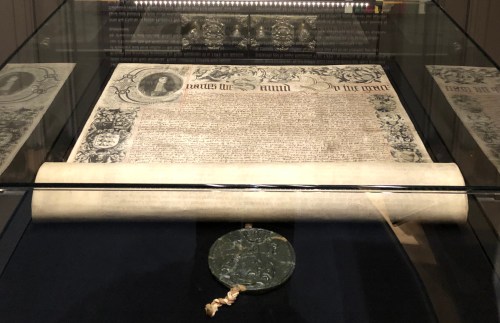
In 1697, a single French ship sank a British warship, captured a second ship and chased off a third ship.

It was an audacious act of war that nearly turned into a suicide mission, but the Battle of Hudson Bay is a forgotten chapter in Canada's history.

That could change with an intrepid group's plan to film an educational video in Churchill this summer for a curriculum kit aimed at high school students. And if they can find the ship that sank, it would be a bonus.

Three hundred years ago, an imperious colonial aristocrat pointed his sails north from New France (modern Quebec), departing with a fleet of wooden sailing ships.

Read
Tuesday, Aug. 6, 2013
No Subscription Required

Hardship, history live in rock of ancient fort

By Bill Redekop 5 minute read Preview
No Subscription Required

Hardship, history live in rock of ancient fort

By Bill Redekop 5 minute read Saturday, Jul. 13, 2013

CHURCHILL -- Samuel Hearne, English explorer and governor of Fort Prince of Wales in the late 1700s, claimed the beavers he let waddle around the stone fort made better pets than some cats and dogs.

"I kept several," he wrote in his journal, "... til they became so domesticated as to answer to their names...and follow as a dog would do; and they were as pleased at being fondled as any animal I ever saw."

You had to do something, after all, stuck in a fort made out of quartzite rock, on a desolate point overlooking Hudson Bay, buffeted by northern gales and frequent blizzards and surrounded by sea ice two-thirds of the year.

Fort Prince of Wales, built in the mid-1700s, is testament to the extraordinary mettle of those first immigrants, mostly Scots from the Orkney Islands, who plied the fur trade for the Hudson's Bay Co., and the First Nations people who traded with them.

Read
Saturday, Jul. 13, 2013

Ethically meeting electrical demand

Jan Simonson 4 minute read Yesterday at 2:01 AM CDT

Fifty years ago this June, Manitoba Hydro destroyed one of the province’s finest lakes, its fourth-largest, when it began operating a newly constructed control structure at Missi Falls, the outlet where Southern Indian Lake flows into the lower Churchill River.

This raised the water level of the lake, creating a reservoir and diverting the flow southward via the Rat and Burntwood River systems to increase power output at its hydroelectric generating stations along the Nelson River.

More than 3,500 km of shorelines on the lake alone were permanently inundated, and along with its adjacent waterways, an area of 840 square kilometres was flooded. The entire Indigenous community of South Indian Lake had to be moved to higher ground to avoid the flooding, and the island community of Nelson House was irreparably harmed.

The Churchill River diversion project had a disastrous effect on the natural environment and the Indigenous people whose subsistence and way of life depended on the lake.

Saying ‘no’ to AI data centre a huge win for Manitoba — and Kinew

Niigaan Sinclair 5 minute read Preview

Saying ‘no’ to AI data centre a huge win for Manitoba — and Kinew

Niigaan Sinclair 5 minute read Friday, Jun. 5, 2026

It’s a tale of two provinces — and two artificial intelligence data centre mega-projects.

Reporters at Canada’s National Observer broke the story in April that the Alberta government had quietly exempted a 700-acre AI data centre mega-project, led by celebrity investor Kevin O’Leary, from provincial environmental assessments.

By most accounts, the Wonder Valley project 40 kilometres south of Grande Prairie, is a looming environmental disaster.

AI data centres require vast amounts of water to prevent overheating.

Read
Friday, Jun. 5, 2026

Habibiz Café marks First Friday launch of new Exchange District location

Aaron Epp 4 minute read Preview

Habibiz Café marks First Friday launch of new Exchange District location

Aaron Epp 4 minute read Thursday, Jun. 4, 2026

If you’re looking for fresh flavours on First Fridays, you’re in luck.

The owners of Winnipeg hookah lounge and restaurant Habibiz Café are celebrating the grand opening of their second location today. Situated at the corner of McDermot Avenue and Albert Street, the eatery is opening just in time for the monthly Exchange District celebration that sees shops and galleries stay open later than usual.

“Ever since our third or fourth year in, we’ve been looking for a new spot,” said Ali Zeid, who owns the restaurants with his brother, Sammy Zeid. “The Exchange District is a core hub of Winnipeg.”

The brothers signed the lease for 225 McDermot Ave., formerly the home of Shawarma Khan, on April 1.

Read
Thursday, Jun. 4, 2026

Premier pulls plug on proposed AI data centre

Aaron Epp 4 minute read Preview

Premier pulls plug on proposed AI data centre

Aaron Epp 4 minute read Thursday, Jun. 4, 2026

Premier Wab Kinew says a massive artificial intelligence data centre southeast of Winnipeg will not go ahead.

“The very limited economic benefits for this project do not outweigh the serious environmental concerns and the unique rural way of life that people in the region enjoy,” Kinew told reporters at the Manitoba legislature on Thursday.

The public should be skeptical about “hyperscale” data centres that are being proposed in many jurisdictions, he added.

“It’s very clear AI is transforming our economy and our society,” Kinew said. “But I think Manitobans want that to happen in a way where AI serves us and we’re not servants of AI.”

Read
Thursday, Jun. 4, 2026

Far-flung buddies celebrate four decades of annual golf trips in the city their friendships were forged

Zoe Pierce 5 minute read Preview

Far-flung buddies celebrate four decades of annual golf trips in the city their friendships were forged

Zoe Pierce 5 minute read Thursday, Jun. 4, 2026

A group of lifelong friends from Winnipeg are reuniting for their 40th annual golf trip.

Read
Thursday, Jun. 4, 2026
No Subscription Required

Indigenous speakers, politicians watching audit of languages office closely

The Canadian Press staff, The Canadian Press 6 minute read Preview
No Subscription Required

Indigenous speakers, politicians watching audit of languages office closely

The Canadian Press staff, The Canadian Press 6 minute read Wednesday, Jun. 3, 2026

OTTAWA - Indigenous language speakers and political leaders say they were disappointed to learn a landmark Indigenous languages office is under investigation after the federal government received anonymous complaints.

The Canadian Heritage department has ordered a financial audit of transactions and activities at the Office of the Commissioner of Indigenous Languages, The Canadian Press reported earlier this week.

The department has not elaborated on the specific allegations made against the office, an arm's-length body that was set up five years ago in response to a recommendation by the Truth and Reconciliation Commission. The department has said it has contracted an independent third-party firm to conduct the audit and has notified Commissioner Ronald Ignace.

One Indigenous language speaker said part of the problem with organizations like the commissioner's office is that they're accountable to the federal government, not to Indigenous people.

Read
Wednesday, Jun. 3, 2026

MMF warns prospectors, developers to consult — or else

Gabrielle Piché 4 minute read Monday, Jun. 1, 2026

In a room filled with government and prospecting industry leads, a Manitoba Métis Federation rep delivered a sharp message: work with us or prepare for legal action.

The Métis government has been having cabinet discussions about litigation, Lorne Pelletier, a MMF senior economic adviser, told the crowd.

“It’s not the path we want to go down, but it’s the path we’ll have to go down based on the actions of industry and the actions of government,” he said.

Pelletier spoke at a Manitoba Prospectors and Developers Association event Monday in Winnipeg. Roughly 50 government, Indigenous and industry officials gathered at the Manitoba Legislative Building, liaising and providing work updates.

Federal poll finds nearly half of Canadians think country takes ‘too many immigrants’

David Baxter, The Canadian Press 3 minute read Preview

Federal poll finds nearly half of Canadians think country takes ‘too many immigrants’

David Baxter, The Canadian Press 3 minute read Wednesday, Jun. 3, 2026

OTTAWA - A survey commissioned by the federal government late last year suggests nearly half of Canadians believe the country is admitting too many immigrants — but the share of respondents who think so has dropped since last year's polling.

The survey found 47 per cent of respondents believe "too many" immigrants are coming to Canada, while 38 per cent say "about the right amount" are coming.

A similar government poll conducted in late 2024 reported 54 per cent of respondents saying that "too many" immigrants were coming to Canada.

The report on the latest poll says the numbers saw little to no movement after respondents were told the government plans to admit 380,000 permanent residents this year.

Read
Wednesday, Jun. 3, 2026