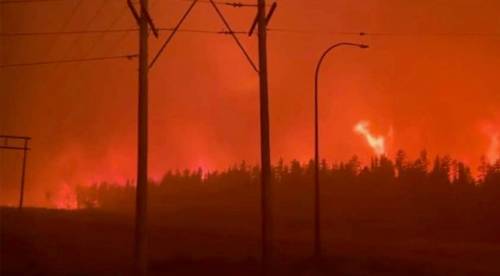
WEATHER ALERT

The Land: Places and People

Please review each article prior to use: grade-level applicability and curricular alignment might not be obvious from the headline alone.
Kerry-Lynne Findlay won B.C. Conservative race as most authentic populist: expert

Wolfgang Depner, The Canadian Press 5 minute read Preview

Kerry-Lynne Findlay won B.C. Conservative race as most authentic populist: expert

Wolfgang Depner, The Canadian Press 5 minute read Tuesday, Jun. 2, 2026

VANCOUVER - Kerry-Lynne Findlay won the B.C. Conservative leadership race because she is an "authentic champion" of populism within the broader conservative movement, says an analyst who studies modern conservatism in western countries.

David Black, who teaches political theory at Royal Roads University in Greater Victoria, said Findlay's victory over Caroline Elliott confirms the party's turn toward populism.

"(Findlay) sought to apply purity tests during the debates, as part of her campaign strategy for the leadership, and she won that purity test," Black said. "She was the purest candidate with respect to populist bona fides."

He added that Findlay, unlike Elliott, did not have to perform populism because of her credentials while serving under former Conservative prime minister Stephen Harper and later Pierre Poilievre, the current federal Conservative leader.

Read
Tuesday, Jun. 2, 2026
No Subscription Required

Quebec moves ahead with AI cultural databank project

Frédéric Lacroix-Couture, The Canadian Press 4 minute read Preview
No Subscription Required

Quebec moves ahead with AI cultural databank project

Frédéric Lacroix-Couture, The Canadian Press 4 minute read Tuesday, Jun. 2, 2026

MONTREAL - Quebec's national library is moving ahead with plans to create a database of cultural and government content that could be used to train artificial intelligence systems and improve their understanding of Quebec society, culture and Indigenous languages.

Bibliothèque et Archives nationales du Québec, or BAnQ, the province's national library and archives institution, has launched the experimental phase of its proposed government and cultural databank in French and Indigenous languages after completing a feasibility study earlier this year.

The project aims to address concerns that major generative AI systems often struggle to provide reliable information about Quebec society, economy and culture because of the limited amount of Quebec-related data available to them.

"All scenarios are a little bit on the table right now," Valérie D'Amour, who led the feasibility study, said in an interview. "We have a lot of ideas and we want to validate the possibilities with cultural stakeholders, as well as with data owners and providers, who will be involved in the discussions."

Read
Tuesday, Jun. 2, 2026

Even residential school couldn’t erase who Christina Henderson was

Marsha McLeod 7 minute read Preview

Even residential school couldn’t erase who Christina Henderson was

Marsha McLeod 7 minute read Saturday, May. 30, 2026

Over her life, Christina Gladys Henderson was known by a few names.

She was born Aug. 6, 1948, as Teenie Cook, to Adam Cook and Violet Quill, and lived her early years in Sapotaweyak Cree Nation, on the shore of Lake Winnipegosis, about 600 kilometres northwest of Winnipeg.

She would later adopt the name Tina, which most people called her, and later, Christina. In marriage, she would trade the surname Cook for Henderson.

Over her 77 years, however, one part of her identity did not change: Henderson would hold fast to her first language, Swampy Cree, despite more than a decade spent in residential schools — institutions that routinely punished and humiliated First Nations children for speaking their own languages.

Read
Saturday, May. 30, 2026

Protected areas and thriving lodges can co-exist

Corey Myers 5 minute read Saturday, May. 30, 2026

Spring is crunch-time when you work at a remote fishing or hunting lodge. Crews are busy updating cabins, repairing generators, getting boats in the water, and preparing to welcome clients. These same activities are unfolding across the Seal River Watershed in northern Manitoba. And this year, they come with an added sense of opportunity.

A new proposal to protect the Seal River Watershed was recently released for public comment on the EngageMB website.

Designed by the Sayisi Dene, Northlands Denesuline, Barren Lands, and O-Pipon-Na-Piwin Cree First Nations, the Manitoba government, and the government of Canada, with input from stakeholders and the public, the plan calls for creating a network of protected areas across 50,000 sq. kilometres of healthy lands and waters.

These new designations — a combination of Indigenous Protected and Conserved Area, provincial parks, and a national park reserve — would honour Dene and Cree cultures and sustain caribou, grizzlies, and polar bears.

No Subscription Required

Religion on census needs a rework, group says

John Longhurst 5 minute read Preview
No Subscription Required

Religion on census needs a rework, group says

John Longhurst 5 minute read Saturday, May. 30, 2026

Did you get the long form of the census? If you did, then you are among the 25 per cent of Canadians who had a chance to tell the government about your religious identity.

The federal government has been collecting information about religion in Canada since 1871; it’s one of the oldest efforts to track religion in the world.

Since that time, the religious landscape in Canada has changed a lot. Up until the 1960s, the country was mainly Christian, with small numbers of Jewish, Muslim, Hindu, Sikh and Buddhist Canadians.

The 2026 census lists over 200 religious groups, just over half of them Protestant and Catholic. The rest are from a wide variety of other religious traditions, including six streams of Buddhism, 10 different Jewish groups, seven kinds of Islam and five different forms of Indigenous spirituality. People can also choose from Wiccan, Satanist, Rastafarian and New Age groups, among others.

Read
Saturday, May. 30, 2026

Gov. Gen. Simon launches mental health project for North, Indigenous communities

Sarah Ritchie, The Canadian Press 2 minute read Preview

Gov. Gen. Simon launches mental health project for North, Indigenous communities

Sarah Ritchie, The Canadian Press 2 minute read Saturday, May. 30, 2026

OTTAWA - Outgoing Gov. Gen. Mary Simon has launched a project to fund community-based mental health services in Northern and Indigenous communities.

The legacy project will be run with support from the Rideau Hall Foundation.

It is called Ajuinnata, an Inuktitut word that means "never give up." The project will begin in Inuit Nunangat.

Simon launched a mental health learning and listening tour in 2024 as one of her priorities in the viceregal office. She said the people she met made it clear the shortage of stable services in the North is an acute problem.

Read
Saturday, May. 30, 2026

Wilderness committee draws up plan to restore Nopiming after 2025 wildfire

Julia-Simone Rutgers 5 minute read Preview

Wilderness committee draws up plan to restore Nopiming after 2025 wildfire

Julia-Simone Rutgers 5 minute read Thursday, May. 28, 2026

One year ago, wildfires severely damaged cottage communities, backcountry campgrounds and popular canoe routes in Nopiming Provincial Park in eastern Manitoba.

Manitoba Wilderness Committee campaigner Eric Reder says as the park and its boreal ecosystem recover, which will take decades, the province should embrace the opportunity to curtail industrial activity in the park and establish more robust protection for its natural and recreational assets.

“The Nopiming Provincial Park that existed prior to 2025 is gone,” a Wilderness Committee report released Thursday said. “Only an all-of-society recovery solution can bring back what we’ve lost.”

The wilderness committee says that solution involves a moratorium on new industrial activity, a commitment to conserve habitat for caribou herds, increased engagement with First Nations whose land overlaps with the park and investment in recreational infrastructure, including backcountry trails and canoe routes.

Read
Thursday, May. 28, 2026

Ruling against Aboriginal title on private land is allowed to stand by high court

Wolfgang Depner and Nono Shen, The Canadian Press 6 minute read Preview

Ruling against Aboriginal title on private land is allowed to stand by high court

Wolfgang Depner and Nono Shen, The Canadian Press 6 minute read Friday, May. 29, 2026

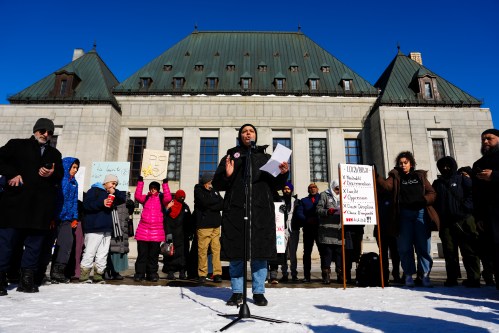
A New Brunswick ruling that Aboriginal title cannot be declared over private land has been allowed to stand by the Supreme Court of Canada, giving British Columbia an avenue to win its appeal in the landmark Cowichan Tribes case, B.C.'s attorney general said Thursday.

Niki Sharma said the high court's refusal to hear an appeal by the Wolastoqey First Nation in the case involving Aboriginal title in New Brunswick gives B.C. a "clear path" for an appeal in the Cowichan case, which has cast doubt on the primacy of private property rights.

"When it's the same legal issues that we are dealing with here, I think that bodes well for our arguments, and the appeals that we are seeking in B.C.," she said.

The mayor of Richmond, B.C., meanwhile said private property owners in the Cowichan Tribes title area should "breathe a little easier" in light of the Supreme Court of Canada's ruling.

Read
Friday, May. 29, 2026
No Subscription Required

The quiet power — and necessity — of Oseredok

Stephen Borys 6 minute read Preview
No Subscription Required

The quiet power — and necessity — of Oseredok

Stephen Borys 6 minute read Thursday, May. 28, 2026

At a moment when Ukraine sits at the centre of global political attention, one of North America’s most important Ukrainian cultural institutions continues to operate quietly in Winnipeg’s Exchange District.

For many Winnipeggers, Oseredok remains one of the city’s hidden treasures — preserving an extraordinary collection of Ukrainian and Ukrainian-Canadian art, artifacts and archives within its five-storey building on Alexander Avenue.

Originally constructed in 1912 as the British and Foreign Bible Society Building and designed by Winnipeg architect William Bruce, the structure itself reflects layers of immigration, faith and history embedded within the city.

Yet few people fully understand its scale and significance.

Read
Thursday, May. 28, 2026

Attorney General Sharma says B.C. supports company’s request to reopen Cowichan case

Wolfgang Depner, The Canadian Press 2 minute read Preview

Attorney General Sharma says B.C. supports company’s request to reopen Cowichan case

Wolfgang Depner, The Canadian Press 2 minute read Wednesday, May. 27, 2026

VICTORIA - British Columbia's attorney general says it is rare to reopen a court case as significant as the landmark Cowichan Tribes title decision, but the government supports an effort to do so by the largest private property owner in the title area.

Niki Sharma says Montrose Properties will be able to bring forward details about how it has been affected by the ruling that Aboriginal title is a "senior interest" compared to fee-simple title.

Montrose owns about 120 hectares in the overall title area of 300 hectares granted by the judge, but the court didn't hear from private landowners during the initial case, so the company is asking a B.C. Supreme Court judge in Victoria to reopen the case.

The same judge hearing Montrose's arguments through to Wednesday ruled in August that the Cowichan First Nation has Aboriginal title over the land, that the granting of private titles by government unjustifiably infringed on the nation's title, and that Crown and city titles on the site are defective and invalid.

Read
Wednesday, May. 27, 2026

Reported Germany-Canada LNG deal would bolster investment case for Ksi Lisims: Eby

Lauren Krugel, The Canadian Press 4 minute read Preview

Reported Germany-Canada LNG deal would bolster investment case for Ksi Lisims: Eby

Lauren Krugel, The Canadian Press 4 minute read Wednesday, May. 27, 2026

A deal to supply Canadian liquefied natural gas to Germany would be a key step toward the partners behind the Ksi Lisims project deciding to go ahead with their $10-billion West Coast plant and export terminal, British Columbia Premier David Eby said Tuesday.

Eby made his remarks after multiple outlets reported German firm SEFE is poised to buy gas shipped from Ksi Lisims and a day before federal Natural Resources Minister Tim Hodgson is scheduled to make an announcement about international energy exports in Vancouver.

The B.C. premier said his government has long been supportive of the project being pursued by the Nisga'a Nation alongside Houston-based Western LNG and Rockies LNG, a group of Canadian natural gas producers. The companies and the First Nation declined to comment on Tuesday.

"We look forward to celebrating the formal announcement of this with the Nisga'a, with the federal government. It's an example of the work we're doing together and we're super proud of it," Eby told reporters after a meeting with western premiers in Kananaskis, Alta.

Read
Wednesday, May. 27, 2026

Brazilian government commits $617.5M to Amazon ecological investment

Gabriela Sá Pessoa, The Associated Press 4 minute read Preview

Brazilian government commits $617.5M to Amazon ecological investment

Gabriela Sá Pessoa, The Associated Press 4 minute read Tuesday, May. 26, 2026

SAO PAULO (AP) — The Brazilian government said Monday it has committed 3.1 billion reais ($617.5 million) to foster ecological investment in the Amazon region, as part of a plan to expand a federal program known as Eco Invest that was announced during last year’s COP30 — the annual United Nations climate summit it hosted last year.

The resources are expected to go toward businesses that support sustainable tourism, improve infrastructure in the Amazon and expand the “bioeconomy” — the so-called economic activity based on natural resources that preserves the forest.

The model uses a blended finance approach in which the National Treasury lends funds to banks at an annual rate of 1%. In return, banks must mobilize at least four times that amount in private investment, with foreign investors accounting for at least 60%. So far, the program has committed 140 billion reais ($28 billion) in combined public and private resources.

The National Treasury allocated 3.1 billion reais ($617.5 million) Monday and eight banks committed another 10.1 billion reais ($2 billion) in the latest auction of the Eco Invest program, the Ministry of Environment said.

Read
Tuesday, May. 26, 2026

Anand says Israel’s ‘mistreatment’ of Canadians in flotilla violated UN treaty

Catherine Morrison, The Canadian Press 5 minute read Preview

Anand says Israel’s ‘mistreatment’ of Canadians in flotilla violated UN treaty

Catherine Morrison, The Canadian Press 5 minute read Tuesday, May. 26, 2026

OTTAWA - Israel’s mistreatment of Canadians participating in a flotilla trying to reach Gaza violated the Vienna Convention, Foreign Affairs Minister Anita Anand said Monday.

In a social media post, Anand said she spoke with Israeli Foreign Minister Gideon Sa'ar about the issue on Monday morning.

"I raised that denying Canadian citizens access to consular services while they were detained violates the Vienna Convention and must never happen again," she said. "Canada is providing Israeli authorities with evidence of this mistreatment. We have asked for and expect an independent investigation and those responsible to be held to account."

Twelve Canadians were among 420 people on 41 boats intercepted by Israel on May 18 and 19 as they attempted to bring a symbolic amount of aid to Gaza in the midst of Israeli restrictions.

Read
Tuesday, May. 26, 2026

Carney points to Brexit, warns Alberta separation push could be ‘dangerous bluff’

David Baxter and Nick Murray, The Canadian Press 6 minute read Preview

Carney points to Brexit, warns Alberta separation push could be ‘dangerous bluff’

David Baxter and Nick Murray, The Canadian Press 6 minute read Tuesday, May. 26, 2026

OTTAWA - Prime Minister Mark Carney said Monday the Alberta referendum on separation could be a "dangerous bluff," while Alberta Premier Danielle Smith cautioned it's a decision for Albertans to make, not the federal government.

Carney, who was the governor of the Bank of England during and immediately after the Brexit referendum campaign, warned that people in the United Kingdom are still trying to undo the damage caused by that decision a decade later.

"In these separation issues, it is often advanced that, 'Vote for this and it's a free option. Vote for this and we will strengthen our hand in a future negotiation.' That is a very dangerous bluff," Carney told a news conference in Ottawa on Monday.

Smith said last week her government will pose a question in the referendum planned for October asking Albertans if they think the province should remain part of Canada or should begin the legal process for a separation referendum.

Read
Tuesday, May. 26, 2026

Experts explain how Indigenous rights are a major hurdle for Alberta secession

Fakiha Baig, The Canadian Press 5 minute read Preview

Experts explain how Indigenous rights are a major hurdle for Alberta secession

Fakiha Baig, The Canadian Press 5 minute read Monday, May. 25, 2026

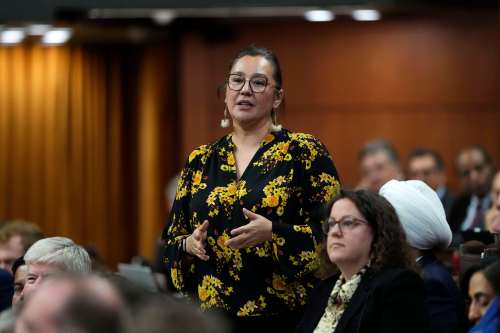
EDMONTON - Political scientists say Indigenous treaty rights represent a significant legal hurdle for separatists in Alberta, and have brought the debate on secession in Canada into unchartered territory.

"This is a new dynamic ... It's creating a lot of uncertainty," said Andrew McDougall, a lawyer and professor in the University of Toronto's political science department, in an interview Saturday.

"There needs to be consultation with Indigenous peoples, the extent to which is unclear," said Andre Lecours, a University of Ottawa professor.

Premier Danielle Smith announced in a televised address on Thursday that an Oct. 19 referendum question will ask Albertans if they want to remain in Canada or start the process to hold a binding referendum on separation.

Read
Monday, May. 25, 2026

A Seal River proposal for all Manitoba’s needs

Steven Fletcher 5 minute read Saturday, May. 23, 2026

On Nov. 9, 2017, I stood in the Manitoba legislature and made a proposal whose time had not yet arrived.

I asked the chamber to protect the entire Seal River Watershed, roughly 50,000 square kilometres of intact boreal forest and tundra in northern Manitoba, a complete hydrological system running unbroken from its headwaters to Hudson Bay. No roads. No mines. No power corridors.

One of the last large watersheds left on Earth is still doing what watersheds are meant to do.

It was not a partisan proposal. It was not, that day, a particularly prominent one. The chamber was nearly empty. The proposal did not pass; it did not fail; it simply sat there. Within weeks, The Northern Miner picked it up and brought the idea to the national mining industry. Almost nobody else did.

Vast marine conservation reserve, bigger than P.E.I., to protect B.C. central coast

Marissa Birnie, The Canadian Press 4 minute read Preview

Vast marine conservation reserve, bigger than P.E.I., to protect B.C. central coast

Marissa Birnie, The Canadian Press 4 minute read Saturday, May. 23, 2026

An enormous national marine conservation reserve is being established on British Columbia's central coast, spanning an area larger than Prince Edward Island.

The protected area, named Mia-yaltwa Ha’lidzogm hoon, is the result of an agreement between six coastal First Nations and the provincial and federal governments.

An official says the area is around 6700 sq. km and will be operated by Parks Canada along with its Indigenous and federal partners.

The reserve is within the Great Bear Sea, a diverse marine ecosystem that covers more than half of B.C.'s coast and includes glass sponge reefs, salmon, killer whales and migrating humpbacks.

Read
Saturday, May. 23, 2026

Alberta is to vote on whether to hold a separation referendum. Here’s how we got here

Dayne Patterson, The Canadian Press 3 minute read Preview

Alberta is to vote on whether to hold a separation referendum. Here’s how we got here

Dayne Patterson, The Canadian Press 3 minute read Friday, May. 22, 2026

Premier Danielle Smith announced Thursday that Albertans will be going to the polls Oct. 19 to vote on whether there should be a future binding referendum on the province quitting Canada.

Here's a timeline of pivotal moments in Alberta's separatism debate:

Oct. 28, 1980 — The federal government ignites widespread alienation in Alberta with the National Energy Program, which seeks to cushion the shock of high oil prices through a system that artificially depresses prices for the oil-dependent province. Albertans view it as a federal money grab.

Feb. 17, 1982 — Gordon Kesler of the Western Canada Concept Party of Alberta wins a provincial byelection in the riding of Olds-Didsbury on a platform of Alberta separating from Canada. Later that year, he loses his seat in the general election, even though the party receives nearly 12 per cent of the popular vote.

Read
Friday, May. 22, 2026

Adverse weather slows pace of seeding to below 5-year average

Gabrielle Piché 3 minute read Preview

Adverse weather slows pace of seeding to below 5-year average

Gabrielle Piché 3 minute read Thursday, May. 21, 2026

High winds and a cool spring have caused a lag in Manitoba’s crop-planting season.

At this time last year, more than half of crops — at least 57 per cent — had been seeded, according to reports. By Tuesday, just 37 per cent of 2026 seeding was complete.

The pace falls behind the five-year average: 43 per cent of seeding is usually done by May 19.

A crop report from the Manitoba government points to “extremely high winds” and rainfall slowing progress.

Read
Thursday, May. 21, 2026

As permafrost thaws, some headwaters in Canada’s North turn orange and toxic: study

Jordan Omstead, The Canadian Press 7 minute read Preview

As permafrost thaws, some headwaters in Canada’s North turn orange and toxic: study

Jordan Omstead, The Canadian Press 7 minute read Friday, May. 22, 2026

Ancient bedrock exposed by disappearing permafrost is releasing toxic metals into Canada's northern rivers, a new study says, with once-pristine subarctic streams now comparable in some cases to highly acidic, contaminated mining sites.

The findings out of Yukon point to an "unfolding environmental disaster," one co-author said, and adds to alarm over the rapid climate-fuelled changes in the North.

"We don't know the end point, but there's nothing about this that gives me any feeling of like, 'oh, we're going to be OK'," said co-author Sean Carey, a professor at McMaster University.

"I'm not even a gloomy person. This looks pretty gloomy."

Read
Friday, May. 22, 2026

Alberta legislature committee eyes separation vote as meeting hits bizarre roadblock

Jack Farrell, The Canadian Press 6 minute read Preview

Alberta legislature committee eyes separation vote as meeting hits bizarre roadblock

Jack Farrell, The Canadian Press 6 minute read Thursday, May. 21, 2026

EDMONTON, ALBERTA, CANADA - Alberta’s journey toward holding a fall referendum on separation took a bizarre turn Wednesday — straight into another roadblock.

It occurred when the governing United Conservative members on a bipartisan legislature committee introduced a motion to formally ask Premier Danielle Smith and her cabinet to initiate a provincewide vote on Alberta's status in Confederation this October.

The motion was expected to pass, given the UCP members on the committee outnumber the Opposition NDP members on it three to two.

But while the motion was still being debated, the UCP caucus published a news release announcing the vote had taken place and that the motion had passed.

Read
Thursday, May. 21, 2026

This not just in: treaty rights carry legal force and are protected in the Constitution

Tom Brodbeck 5 minute read Preview

This not just in: treaty rights carry legal force and are protected in the Constitution

Tom Brodbeck 5 minute read Tuesday, May. 19, 2026

More than a century after the numbered treaties were signed across Western Canada, the courts delivered a blunt reminder last week that those agreements are not ancient historical footnotes.

They still carry legal force and governments cannot ignore them.

Two major court rulings — one in Manitoba and one in Alberta — reinforced a reality many Canadians still do not fully understand: treaties between First Nations and the Crown remain constitutionally protected agreements that continue to shape Canadian law, public policy and governments’ obligations today.

The decisions also underscored something else: Canadians would benefit greatly from learning more about treaties, why they were negotiated as Canada expanded westward and why courts continue to uphold Indigenous and treaty rights.

Read
Tuesday, May. 19, 2026

$61-M investment in high-speed Internet planned for northern First Nations

Carol Sanders 4 minute read Preview

$61-M investment in high-speed Internet planned for northern First Nations

Carol Sanders 4 minute read Friday, May. 15, 2026

More homes on remote Manitoba First Nations will have access to high-speed Internet that most Canadians take for granted thanks to $61 million in new federal funding.

“Your communities have been living way too long without internet,” federal Northern and Arctic Affairs Minister Rebecca Chartrand told a gathering at Wasagamack Anisininew Nation Thursday. The MP for northern Manitoba said the four projects will deliver modern, reliable internet to 2,309 households.

“This really is a public safety issue and an equity issue,” Chartrand said in the community 600 kilometres north of Winnipeg that’s accessible by air, water and winter road.

“The lack of broadband has been a public safety failure. When families can’t call for help or nurses can’t access files or lives are at risk when you’re travelling roads without phone service, without internet,” she said.

Read
Friday, May. 15, 2026

AFN chief warns against changes to major projects development rules, calls for debate

Alessia Passafiume, The Canadian Press 4 minute read Preview

AFN chief warns against changes to major projects development rules, calls for debate

Alessia Passafiume, The Canadian Press 4 minute read Saturday, May. 16, 2026

OTTAWA - The national chief of the Assembly of First Nations says proposed changes to major project development rules are "not acceptable" and risk trampling on the rights of First Nations.

The federal government is proposing to grant authority to review interprovincial pipelines and transmission lines, and offshore renewable energy projects, to the Canada Energy Regulator instead of the Impact Assessment Agency of Canada.

The proposal, which will undergo a 30-day consultation process, would undo the move the Liberals made eight years ago to create the Impact Assessment Agency as a one-stop shop for all national project reviews.

National Chief Cindy Woodhouse Nepinak told The Canadian Press the proposed changes "demonstrate a pattern of exclusion" and she rejects the compressed timeline to submit feedback.

Read
Saturday, May. 16, 2026