
Power and Authority
Please review each article prior to use: grade-level applicability and curricular alignment might not be obvious from the headline alone.
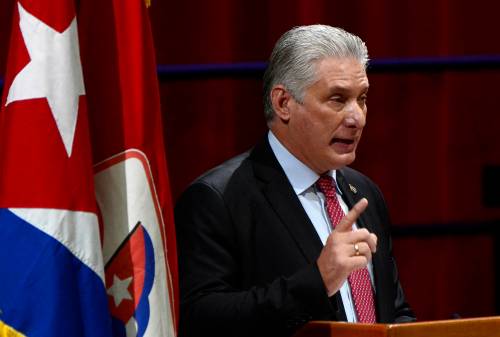
Canada being side-swiped by Trump’s Cuba policy
5 minute read Preview Saturday, Jun. 27, 2026
Protesters denounce controversial exhibition at rights museum
5 minute read Preview Friday, Jun. 26, 2026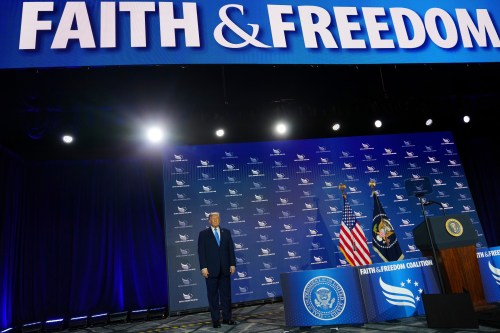
A Trump commission urges ‘bridges’ between church and state in sweeping draft report
7 minute read Preview Saturday, Jun. 27, 2026
OpenAI and Anthropic limit new AI models to Trump-approved customers during cybersecurity review
6 minute read Preview Saturday, Jun. 27, 2026
Michael J. Fox and father of Nickelodeon slime among Order of Canada appointments
7 minute read Preview Saturday, Jun. 27, 2026
Bruce Oake Recovery Centre staff lead participants from darkness, despair of addiction
23 minute read Preview Friday, Jun. 26, 2026
PM Carney says 24 Sussex to be restored with fundraising campaign, design competition
6 minute read Preview Friday, Jun. 26, 2026
Australia plans to strengthen laws banning children from social media
4 minute read Preview Saturday, Jun. 27, 2026Manitoba misses mark in creating inclusive classrooms
4 minute read Friday, Jun. 26, 2026THE United Nations Convention on the Rights of the Child recognizes that all children have the right to an education that helps them reach their full potential. It should develop their personalities, talents and mental and physical abilities. Actualizing these rights in the classroom, however, is not as easy in practice.
Every classroom includes learners with different strengths, challenges, identities and experiences. Some students are especially gifted while others have medical needs, require accommodations or manage complex issues that require additional, individualized support.
Under Manitoba’s appropriate educational programming legislation, students are entitled to educational programming that meaningfully supports both their academic and social lives. However, the number of students in Manitoba who require complex support in the classroom surpasses the number of resources teachers currently have available.
The Manitoba Teachers’ Society recently surveyed 3,400 Manitoba teachers about these gaps. Seventy-eight per cent said students are not getting needed support and 63 per cent reported fewer educational assistants. Eighty-one per cent identified class size, complexity and lack of support as top issues — citing an increase in students with complex needs within the last five years. Today, nearly half of teachers have six or more students with complex needs, a sharp rise from previous years.
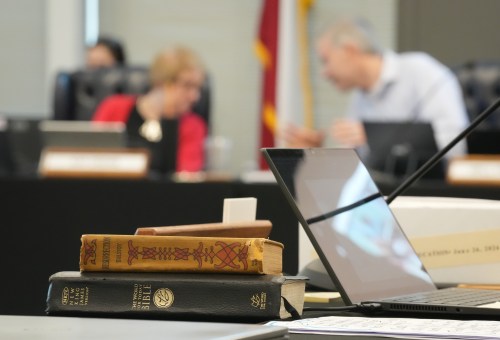
Bible stories are approved as required reading in Texas public schools
5 minute read Preview Monday, Jun. 29, 2026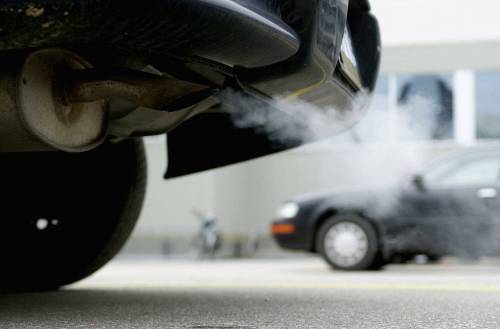
City’s greenhouse emissions rise, councillor says net-zero still within reach
3 minute read Preview Thursday, Jun. 25, 2026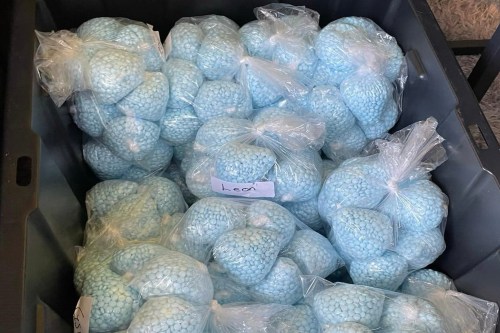
DEA asks watchdog to investigate claims that agents permitted fentanyl to hit the streets
4 minute read Preview Thursday, Jun. 25, 2026
Judge rules against effort to create majority-Black DeSoto County districts
3 minute read Preview Thursday, Jun. 25, 2026
Data centres top Ottawa’s big power requests, placing pressure on local utility
3 minute read Preview Thursday, Jun. 25, 2026$17 Million In Court Settlements Is Coming To Red Hill Families
4 minute read Thursday, Jun. 25, 2026Nearly 630 of the plaintiffs affected by Navy water contamination in Central Oʻahu will receive a combined payment of $17 million in the latest batch of Red Hill court settlements announced by the U.S. Department of Justice on Wednesday.
DOJ leaders touted the move as a good-faith step toward resolving the matter, in which scores of military personnel, their families and civilian workers were sickened by tens of thousands of gallons of jet fuel spilled in 2021. Some victims, however, called the deals “a slap in the face” that don’t go nearly far enough to compensate all the damage done.
The settlements apply to family members who were sickened — not the service members themselves — and they stem from two lawsuits brought against the Navy in recent years over Red Hill contamination under the Federal Tort Claims Act, or FTCA.
Together, those suits — Feindt v. United States and Hughes v. United States — represent more than 6,500 claims.
Public support is strong for two per cent inflation target, Bank of Canada says
3 minute read Preview Thursday, Jun. 25, 2026Time for city to get handle on e-bike, e-scooter regulations
5 minute read Thursday, Jun. 25, 2026Ever been out for a walk, a jog or a casual bike ride only to be startled by an e-bike, battery-powered scooter or some other personal electric vehicle flying past you at high speed? If so, you probably know how urgent it is for lawmakers to bring in regulations to respond to this growing phenomenon.
Winnipeg is facing a transportation challenge that barely existed a few years ago. Battery-powered bikes, scooters, electric unicycles and other similar vehicles have become common sights on city streets, cycling routes and multi-use pathways.
Their popularity is growing faster than the rules governing them. And that should be a concern for city hall.
There’s no question personal electric vehicles offer people significant advantages. They’re cheaper to operate than cars, produce no direct emissions, reduce traffic congestion and provide people with another option for getting around the city.

Montreal shooting leads to national security investigation on ideological violence
4 minute read Preview Tuesday, Jul. 21, 2026
Carney coming to Calgary Stampede, carrying message that separation is no magic wand
3 minute read Preview Friday, Jun. 26, 2026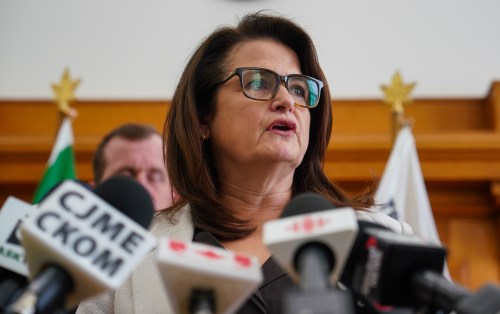
Saskatchewan NDP urges province to repeal pronoun law affecting LGBTQ+ youth
4 minute read Preview Tuesday, Jul. 21, 2026
Carney says B.C. condo buyout proposal is about affordability, not bailouts
6 minute read Preview Friday, Jun. 26, 2026
Reflecting Pool liner was cut with a sharp knife or razor, National Park Service says
6 minute read Preview Tuesday, Jun. 30, 2026
Carney says he and Trump discussed defence priorities, Arctic ahead of NATO summit
5 minute read Preview Friday, Jun. 26, 2026