Technical Vocational Education
Please review each article prior to use: grade-level applicability and curricular alignment might not be obvious from the headline alone.
It takes a village to raise AI responsibly
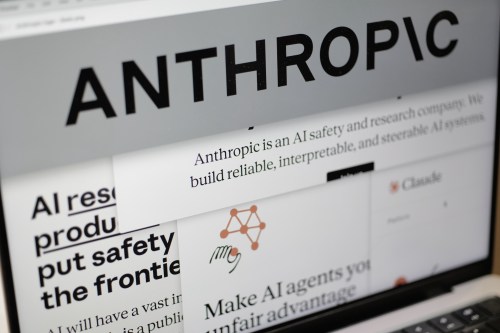
5 minute read Saturday, Mar. 7, 2026Anthropic, maker of the popular Claude artificial intelligence model, has been facing heat from the U.S. government over the ethics of military AI. Due to its safety-first approach, its AI was considered the best and was approved for use on classified military networks. It signed a lucrative contract with the Pentagon and was integrated into military systems. Sounds ominous, for sure.
But the contract specified that the AI could not be used for fully autonomous weapons systems that can kill targets without involving human judgment, and for mass domestic surveillance of Americans. The Pentagon fought back against these restrictions, even though it signed the contract as such, insisting that the AI could be used for “all lawful purposes” and quickly sought to punish Anthropic for not capitulating to its demands.
Anthropic stood by its guardrails, both on principle and contract, standing up against the dangerous use of AI, risking the loss of government contracts and punishment from the autocratic regime. In solidarity, Sam Altman from OpenAI, Google’s AI division (Gemini AI) and others have supported the stand that these guardrails are necessary in a safe and democratic society. It is good news that there are red lines that AI should not cross and that the companies themselves are standing up against them.
But what struck me about this battle was a statement from an Anthropic executive in response to the Pentagon’s demands which read: “Some uses are also simply outside the bounds of what today’s technology can safely and reliably do.” This defence is a clear definition of the limits of their AI model based on a deep understanding of its abilities as the creator of their technology. This becomes apparent when you look at how their model was developed.
Religious diversity, perspectives being studied in Manitoba schools
5 minute read Saturday, Mar. 7, 2026In January, the provincial government announced a new resource for schools to address Islamophobia. Two years ago, it announced the creation of a new curriculum about the Holocaust.
Those are good things. They will help students know more about Islam and Judaism, and the challenges facing members of those groups. But I wondered: What resources are available to help students develop an even broader sense of religious literacy?
As it turns out, the province has an optional grade 12 course titled “World of Religions: A Canadian Perspective.” It’s designed to help students build interfaith and intercultural understanding as they explore the diversity of religions and religious perspectives within Manitoba and Canada.
That’s also good. Knowing more about other religions is important. But my next question was: How many schools are using it? The answer, it turns out, is not many.
Never too early to start planning a new backyard hub
4 minute read Preview Saturday, Mar. 7, 2026Five examples of representation in recognition of International Women’s Day
10 minute read Preview Friday, Mar. 6, 2026Students build confidence, businesses at JA Manitoba trade fair
3 minute read Preview Friday, Mar. 6, 2026Children’s book on Ramadan put back on school shelves
2 minute read Preview Friday, Mar. 6, 2026Pentagon’s chief tech officer says he clashed with AI company Anthropic over autonomous warfare
5 minute read Preview Saturday, Mar. 7, 2026Wounded wombs: Indigenous women who were involuntarily sterilized still grieving their losses
9 minute read Preview Friday, Mar. 6, 2026Supreme Court says asylum seekers entitled to subsidized Quebec daycare
4 minute read Preview Saturday, Mar. 7, 2026Temporary supervised drug consumption site could open within weeks, addictions minister says
5 minute read Preview Thursday, Mar. 5, 2026Eby says OpenAI’s Altman will apologize to Tumbler Ridge, B.C., in wake of shootings
4 minute read Preview Friday, Mar. 6, 2026VistaVision, a vintage format left for dead, is revived in ‘One Battle After Another’ and more
5 minute read Preview Saturday, Mar. 7, 2026Spin Master sees loss, lower revenue in holiday quarter
3 minute read Preview Friday, Mar. 6, 2026Making infant sleep environments as safe as possible
4 minute read Thursday, Mar. 5, 2026Every year in Canada and around the world, families are devastated by the loss of an infant sleeping peacefully yet never waking. These heartbreaking tragedies, known as sleep-related infant deaths, encompass SIDS (sudden infant death syndrome), accidental suffocation, and other unexplained causes.
In 2024, the Manitoba Advocate for Children and Youth (MACY) released Shifting the Lens, reporting that between 2019 and 2021, Manitoba experienced 48 such deaths — each one a life cut short, a dream shattered, and a family and community forever changed. Although overall rates initially declined over previous decades, progress has stalled, and inequities persist. As we approach Safe Sleep Week 2026, let’s reimagine our collective approach — from policy to public messaging — to make infant sleep environments as safe as possible for all.
Families facing poverty, housing instability, histories of colonization and systemic inequities are disproportionately affected by sleep-related infant deaths. Addressing these deaths requires shifting the focus from blame and fear to structural solutions and opportunity.
Sleep-related infant deaths are often framed as matters of parental choice or individual behaviours, yet social determinants of health play a decisive role in shaping the conditions in which families care for infants. Factors such as income, housing stability, education, access to culturally safe health care, and systemic inequities influence whether families can consistently follow safe sleep recommendations. For example, overcrowded or unstable housing may limit access to a separate, safe sleep surface. Financial strain can make it difficult to obtain cribs or bassinets. Colonialism, racism and geographic isolation further compound risk. Experiences of racism create barriers to accessing prenatal and postnatal care as well as reduce opportunities for culturally relevant guidance about safe sleep. Systemic racism also takes the form of unfairly judging parents as being unable to properly care for their children, resulting in families being involved with the child welfare system and children being apprehended.
OpenAI agrees to strengthen safeguards following B.C. mass shooting: minister
3 minute read Preview Updated: Yesterday at 10:54 AM CDTManitoba small businesses losing faith in U.S. as a trade partner, poll shows
4 minute read Preview Wednesday, Mar. 4, 2026Google settles with Epic Games with offer to lower its app store commissions
4 minute read Preview Thursday, Mar. 5, 2026Province asks public to weigh in on rules for AI
2 minute read Preview Wednesday, Mar. 4, 2026Moms describe being trapped in a cycle of anguish when a loved one faces mental health crises
11 minute read Preview Monday, Mar. 9, 2026Portage la Prairie School Division holds firm to religious exemption refusal
4 minute read Wednesday, Mar. 4, 2026The Portage la Prairie School Division is upholding a decision to reject a family’s request for a religious exemption from activities related to Indigenous spirituality.
Sharon Sanders Zettler and Vince Zettler have spent the better part of the academic year seeking accommodations for their children at Yellowquill School.
“I have raised my kids in the Catholic faith from Day 1 and I am just looking for respect for that,” said Sanders Zettler, a mother of students enrolled in Grades 5 and 7 in Portage la Prairie.
Her husband echoed those comments while noting they are not interested in policing what other children learn.
Reflecting on February’s ‘I Love to Read’ Month
4 minute read Wednesday, Mar. 4, 2026In schools, February is widely known as “I Love to Read Month,” a dedicated celebration aimed at cultivating a love of reading.