Whose story is being told? How perspectives shape our understanding

Please review each article prior to use: grade-level applicability and curricular alignment might not be obvious from the headline alone.

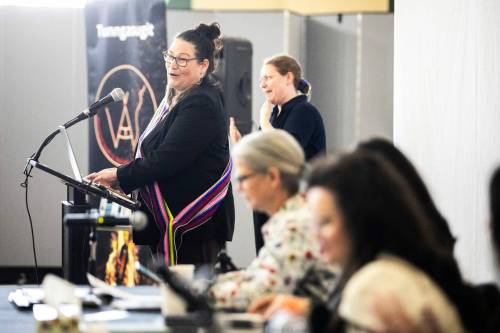
Supervised drug consumption site will be grounded in culture, compassion: facility’s leader

Scott Billeck 7 minute read Preview

Supervised drug consumption site will be grounded in culture, compassion: facility’s leader

Scott Billeck 7 minute read Friday, Apr. 17, 2026

Winnipeg’s first supervised consumption site is being designed as a culturally grounded health space where people struggling with addiction will be met with familiarity, dignity and support from the moment they enter.

Read
Friday, Apr. 17, 2026

Indigenous Winnipeggers undercounted, underserved: report

Scott Billeck 5 minute read Preview

Indigenous Winnipeggers undercounted, underserved: report

Scott Billeck 5 minute read Friday, Apr. 17, 2026

Winnipeg’s First Nations and Métis population may be vastly undercounted, raising questions about how governments fund services for Indigenous communities, a new report says.

The new estimate, contained in the “Our Health Counts First Nations & Métis Winnipeg” report, says the population could be four times larger than what was recorded by the 2021 census. The report pegs the population of First Nations and Métis people in Winnipeg at between 248,000 and 379,000 people based on its survey of 1,090 adults and 306 children, most of whom identified as First Nations or Métis.

In contrast, the 2021 census recorded 90,000 Indigenous people in the city.

The study was produced by a partnership of the Aboriginal Health and Wellness Centre of Winnipeg, the Well Living House Action Research Centre, and Indigenous health organizations.

Read
Friday, Apr. 17, 2026

‘Extraordinary’: Back on Earth, Jeremy Hansen describes his long journey in space

Kelly Geraldine Malone, The Canadian Press 5 minute read Preview

‘Extraordinary’: Back on Earth, Jeremy Hansen describes his long journey in space

Kelly Geraldine Malone, The Canadian Press 5 minute read Monday, May. 4, 2026

HOUSTON - When Canadian astronaut Jeremy Hansen first floated to the window after the Orion capsule's bone-rattling launch into space early this month, what he saw and felt left him grasping for words.

He saw the sweep of the ocean first, and then, drifting into view, the rich, dusty red of Australia. And behind it all was the vastness of space, with the edge of Earth's atmosphere shining like a bubble of blue glass in the black.

"It was pretty extraordinary," Hansen told The Canadian Press at NASA's Johnson Space Center in Houston Thursday.

The enormity of what Hansen and his Artemis II crewmates experienced is still settling in a week after they returned to Earth, splashing into the Pacific Ocean following a 10-day lunar fly-around.

Read
Monday, May. 4, 2026
No Subscription Required

AI-driven app like a grain market ‘analyst in your pocket’

Aaron Epp 4 minute read Preview
No Subscription Required

AI-driven app like a grain market ‘analyst in your pocket’

Aaron Epp 4 minute read Thursday, Apr. 16, 2026

Mark Lepp grew up on a 5,000-acre grain farm near Elm Creek, but he never took to farming the way his father and two younger brothers did.

“I probably frustrated everyone around me,” he said. “The real art of farming — I was not that artist.”

That hasn’t stopped the entrepreneur from making a name for himself in agriculture. In 2004, he co-founded FarmLink Marketing Solutions, which pioneered the business of providing personalized marketing recommendations for Western Canadian farmers.

“I always liked the economics part (of farming),” Lepp said. “I liked the business part.”

Read
Thursday, Apr. 16, 2026
No Subscription Required

False information, misleading images rife in Manitoba-based AI-driven 'news' service

Eva Wasney 19 minute read Preview
No Subscription Required

False information, misleading images rife in Manitoba-based AI-driven 'news' service

Eva Wasney 19 minute read Friday, May. 1, 2026

In a rapidly evolving media landscape, the rise of Boring News, an AI-generated news outlet, highlights the growing tension between technology and journalism. While it aims to fill local news gaps across Canada, the outlet is plagued by inaccuracies and ethical concerns, prompting debate on the future of credible reporting.

Read
Friday, May. 1, 2026
No Subscription Required

First Nations chiefs call for inquiry into RCMP after CBC report on surveillance

Alessia Passafiume, The Canadian Press 5 minute read Preview
No Subscription Required

First Nations chiefs call for inquiry into RCMP after CBC report on surveillance

Alessia Passafiume, The Canadian Press 5 minute read Saturday, May. 9, 2026

OTTAWA - First Nations leaders called on the RCMP to apologize and demanded a federal inquiry Thursday after CBC reported the police service spied on Indigenous political leaders in the 1960s and beyond.

CBC Indigenous uncovered some 6,000 pages of internal RCMP documents that indicate the RCMP was monitoring Indigenous political activity as early as 1968.

The CBC report said police targeted future national chiefs Noel Starblanket, David Ahenakew, Georges Erasmus and Phil Fontaine. CBC Indigenous reported that Ovide Mercredi, who also went on to serve as national chief, was mentioned in the files.

Assembly of Manitoba Chiefs Grand Chief Kyra Wilson said the RCMP should apologize directly to community members, on their own territories, by the end of the year for the "Native extremism" program.

Read
Saturday, May. 9, 2026
No Subscription Required

Gatorade, inventor of the sports drink, is getting a rebrand targeting non-athletes

Dee-ann Durbin, The Associated Press 5 minute read Preview
No Subscription Required

Gatorade, inventor of the sports drink, is getting a rebrand targeting non-athletes

Dee-ann Durbin, The Associated Press 5 minute read Thursday, May. 7, 2026

Sixty years after it invented sports drinks, Gatorade is making a surprising pivot: It’s no longer focusing primarily on athletes.

PepsiCo, Gatorade’s parent company, said Thursday that the brand wants to broaden its reach to non-athletes who are looking for ways to hydrate, whether they’re on a long flight, going for a walk or nursing a hangover. New packaging highlights the specific ways Gatorade’s various drinks and powders work and the research behind them.

The change reflects U.S. consumers’ booming interest in beverages with perceived health benefits. Jack Doggett, a food and drink analyst with the consulting firm Mintel, said his research indicates 60% of consumers who buy sports drinks aren’t athletes but want the functional ingredients those drinks provide, like electrolytes for hydration and carbohydrates for energy.

“People are using these drinks more for wellness and daily maintenance,” Doggett said. “It’s easy to say that the wellness consumer is the young consumer, but older generations are also drinking these drinks for hydration.”

Read
Thursday, May. 7, 2026
No Subscription Required

Why claims of sentience can’t guide black bear policy

Mark Hall 5 minute read Preview
No Subscription Required

Why claims of sentience can’t guide black bear policy

Mark Hall 5 minute read Thursday, Apr. 16, 2026

The modern debate over sustainable-use bear hunting often hinges on a few claims including bears are sentient, therefore humans have no moral right to hunt them.

It’s a powerful emotional argument, but it collapses under scientific scrutiny and ecological reality. Sentience is real. Bears and other animals do feel.

But the leap from “animals feel” to “humans must never hunt” is not supported by biology, ethics or conservation science. If we want wildlife policy that protects species and ecosystems, we need to separate what sentience is from what animal rights activists want it to mean.

In scientific terms, sentience refers to the capacity to feel or perceive, not the ability to make moral judgments.

Read
Thursday, Apr. 16, 2026
No Subscription Required

EPA may ease regulation of chemical plastic recycling, and environmentalists worry

Jennifer Mcdermott, The Associated Press 6 minute read Preview
No Subscription Required

EPA may ease regulation of chemical plastic recycling, and environmentalists worry

Jennifer Mcdermott, The Associated Press 6 minute read Saturday, May. 9, 2026

The Environmental Protection Agency is reconsidering whether facilities that recycle plastic chemically should be held to the same strict air pollution standards as incinerators.

The possible change is alarming environmental advocates who say it would lead to more dangerous pollution spewing into communities, with fewer or no checks at the federal level. The plastics industry disputes that, saying it would clear up confusion while still controlling emissions.

The world is pumping millions of tons of plastic pollution into the environment every year. While dozens of countries and many environmental groups have urged caps on production, industry and several big oil-producing countries have resisted, arguing instead for improvements in reuse and recycling.

Chemical recycling uses heat or chemicals to break down plastics. The main method, a process known as pyrolysis, has long been regulated as incineration by the Clean Air Act. The EPA limits emissions from incinerators of nine air pollutants, including toxic particulates, heavy metals and dioxins.

Read
Saturday, May. 9, 2026
No Subscription Required

Couple fights city to retain 11-foot-plus fence

Nicole Buffie 4 minute read Tuesday, Apr. 14, 2026

A notable Winnipeg couple are fighting a city order to reduce the size of their more than 11-foot fence — which is much higher than allowed under city regulations.

Lynne Skromeda and Jason Smith built a fence in 2023 as part of renovations to their McMillan neighbourhood backyard. A neighbour filed a complaint and city bylaw inspectors ruled the fence was too high. The city later approved a variance application to allow for a seven-foot, five-inch fence.

“In 2023, the applicant worked with urban planning to arrive at a compromised height of 7.5 feet and the applicant advised they would reduce the fence height accordingly. Further inspections at the site reveal that the applicant did not complete the necessary reduction to the fence height to meet the supported and approved height of 7.5 feet,” says a report prepared for an April 20 appeal hearing.

The city’s limit on fence height is six-feet, six inches for rear and side yards, and four feet in front yards. The fence in dispute is more than 11 feet high along a portion of the west side yard and more than eight feet along the rear yard.