
Role of news media
Please review each article prior to use: grade-level applicability and curricular alignment might not be obvious from the headline alone.
Designated encampments are a poor solution
5 minute read Wednesday, May. 20, 2026The overall shrinking of public space and degradation of the policy environment on use of public space is contributing to people experiencing homelessness being less safe — and contributing to interest in ideas like designated encampments. Unfortunately, this direction fails to centre the interests of people living unhoused. Further, we forget too easily that any consideration of land use on Treaty 1 land needs to start with historic claims and ancestral rights.
Among people experiencing homelessness, Indigenous people are overrepresented. Many people are living unsheltered on their own ancestral territories. Having endured intergenerational theft that started with land (transferred to settlers whose descendants now enjoy generational wealth), and continued with limits on movement, ability to make money, access to education and more, they are now actively surviving homelessness. Yet, the limits on their person continue.
Recent years have seen the closure and limits on use of public space throughout the downtown and broader city. These include Portage Place mall, the Millennium Library and Winnipeg Transit, and previously through the closure of downtown single-room occupancy hotels and their barrooms.
For some time, the city has been telegraphing an intention to limit access to outdoor public space according to housing status. At every opportunity, those cautioning against this move have raised the problem of limiting those with ancestral rights, and further limiting free movement of citizens on public land. The latter has been decided through B.C. legal process, and suggests the City of Winnipeg’s exposure to risk as it moves forward.

Hands-on workshop guides process of making unique, custom silver jewellery
7 minute read Preview Tuesday, May. 19, 2026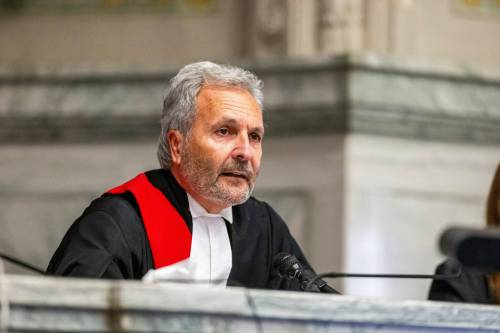
This not just in: treaty rights carry legal force and are protected in the Constitution
5 minute read Preview Tuesday, May. 19, 2026It takes a village to raise — and educate — a child
6 minute read Tuesday, May. 19, 2026The oft-quoted saying, “it takes a village to raise a child,” resembles an African proverb. In the Yoruba language, the saying goes “two eyes birth a child, but 200 eyes raise it.”
Over the past several decades, that saying has come to mean something entirely different from what villagers meant, in Africa and in the small town where I grew up. The saying meant two, equally important things. It meant the community has a stake in ensuring that children are properly cared for, but the saying also meant that children must be taught and understand their obligations to the community at large.
The 200 eyes raising the child in the village did not look away when the parents or a child failed to observe community standards. When a child disrespected someone in the community, they were corrected. The village had a clear code of conduct that governed what was expected behaviour. These mores, or societal expectations, were understood and enforced by both parents and community members.
Everyone needs to understand their society’s written and unwritten rules. It is our obligation to teach our children the expectations we have of each other.

U.S. says it’s pausing long-standing military board with Canada
5 minute read Preview Tuesday, Jun. 9, 2026
Niverville Nighthawks defeat Summerside Western Capitals 4-1 to take Centennial Cup
5 minute read Preview Sunday, May. 17, 2026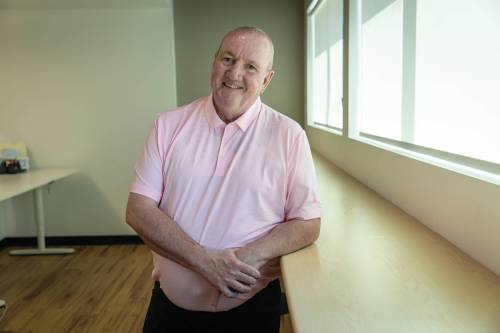
Alain Boucher: insuffler l’espoir au coeur du traitement
4 minute read Preview Saturday, May. 16, 2026Solidarity Dialogues workshops counter polarization
5 minute read Saturday, May. 16, 2026Amal Elsana Alhjooj is not a person to sit idly by when she encounters a challenge, conflict or situation that needs correcting. Over the years, that attitude and activism have led her to establish several innovative social justice and civil society initiatives that, among other achievements, have enhanced the livelihood and independence of Bedouin women in Israel, where Alhjooj was raised, and the relationship between Jews and Arabs both in Israel, Palestine and in Canada, where Alhjooj now lives.
Alhjooj’s most recent venture is a series of workshops called Solidarity Dialogues.
Solidarity Dialogues is an offshoot of PLEDJ, a social change non-profit that Alhjooj, who is Muslim, co-established in 2021 with Brian Bronfman, the Jewish president of the Peace Network for Social Harmony, to empower and organize marginalized communities to address systematic injustices that impede their lives.
Solidarity Dialogues is more narrow in scope, as it is designed specifically to address the deep seated polarization currently permeating Canadian workplaces, schools and society in general. Solidarity Dialogues’ series of workshops provide participants with the tools to navigate that polarization and the heated, intolerant and uncomfortable exchanges that tend to characterize that polarization. By differentiating between dialogue and debate, and hurt and harm, the workshops provide participants with safe spaces in which to step out of their comfort zones, listen empathetically and openly to others’ lived experiences, and develop mutual understanding and an ability to respond to conflict.

Fort Richmond elementary school shedding racist lord’s name
4 minute read Preview Friday, May. 15, 2026