A curator’s dilemma: art, power, and the limits of neutrality

Advertisement
Read this article for free:
or
Already have an account? Log in here »
To continue reading, please subscribe:

Digital Subscription
One year of digital access for only $205*
- Enjoy unlimited reading on winnipegfreepress.com
- Read the E-Edition, our digital replica newspaper
- Access News Break, our award-winning app
- Play interactive puzzles
*First annual payment billed as $205.00 + GST for one year. This annual subscription will automatically renew at $233.00 + GST every 52 weeks (10% off the regular annual price of $259.35). Offer available to new and qualified returning subscribers only. Cancel any time.
To continue reading, please subscribe:
Add Free Press access to your Brandon Sun subscription for only an additional
$1 for the first 4 weeks*
- Enjoy unlimited reading on winnipegfreepress.com
- Read the E-Edition, our digital replica newspaper
- Access News Break, our award-winning app
- Play interactive puzzles
*Your next Brandon Sun subscription payment will increase by $1.00 and you will be charged $17.95 plus GST for four weeks. After four weeks, your payment will increase to $24.95 plus GST every four weeks.
Read unlimited articles for free today:
or
Already have an account? Log in here »
Hey there, time traveller!
This article was published 05/02/2026 (237 days ago), so information in it may no longer be current.
In recent weeks, a major Canadian art museum found itself at the centre of international attention — not over an exhibition on the wall, but over whether a recently produced artwork should enter its collection at all.
While the work itself — a video work entitled Stendhal Syndrome by Jewish-American artist Nan Goldin — was new, the debate it sparked at the Art Gallery of Ontario was not. Discussion quickly focused on the political views and activism of the artist, and on how — or whether — those views should shape institutional decision-making. Controversy erupted at the gallery over allegations that the artist’s views on Israel were antisemitic.
The story has been widely reported, including in several recent articles in The Globe and Mail, underscoring how quickly what might once have been an internal museum question can become a national conversation. What unfolded was not simply a debate about a single acquisition. Questions that are usually navigated internally — around curatorial judgment, governance, and institutional responsibility — became part of a broader public discourse. In the process, long-standing assumptions about artistic freedom, accountability, and decision-making authority came into sharper focus.
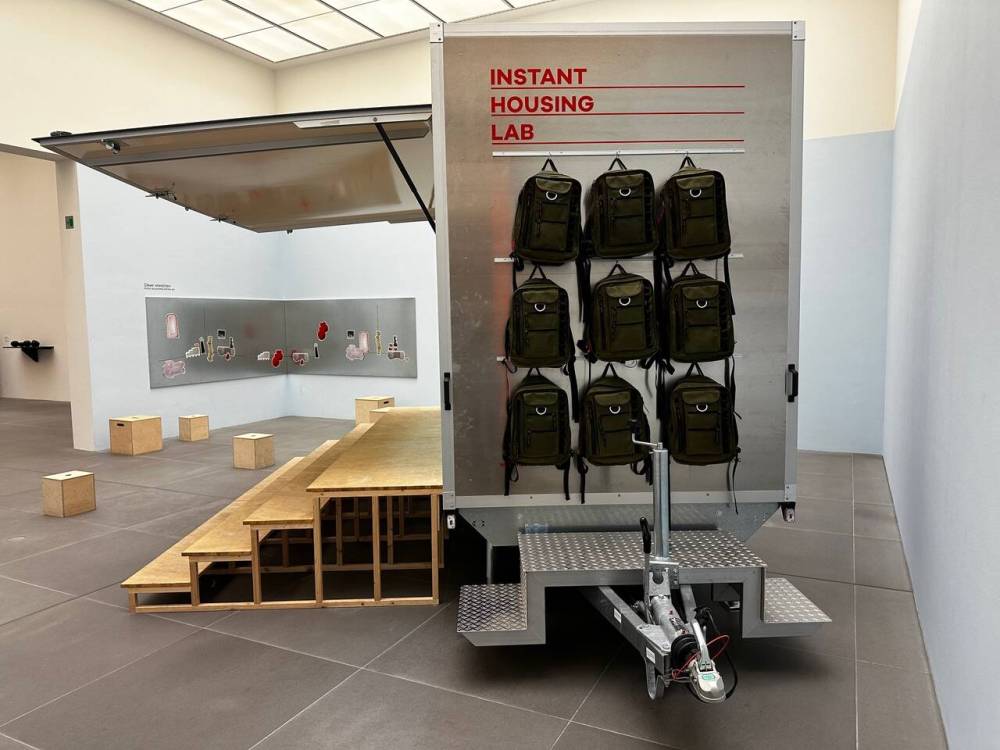
What has been striking is less the particulars of any one case than how quickly such moments can expand beyond the artwork itself. Decisions that might once have remained contained within established museum processes now unfold under intense public scrutiny, revealing how cultural institutions are increasingly asked to operate as civic actors as much as custodians of collections. None of this is entirely new — but it does feel newly visible.
The impulse to treat this as a new crisis is understandable — but misleading. Art and politics have always been intertwined. Museums have long collected and exhibited works shaped by religion, colonialism, nationalism, war, labour movements, civil rights struggles, and resistance of every kind. Politics did not suddenly arrive at the museum’s door.
What has changed is the environment in which decisions are made. Museums now operate under relentless scrutiny, accelerated media cycles, internal polarization, and sustained pressure from multiple — and often opposing — constituencies. Decisions that once unfolded over weeks or months are now expected to be justified in real time. Silence is interpreted as complicity; nuance as weakness.
Increasingly, museums function as civic pressure points. People come not only to encounter art, but to express grief, anger, solidarity, and dissent. We have seen this around Black Lives Matter, Indigenous sovereignty, Ukraine, Israel/Gaza, climate activism, housing insecurity, and many other global and local crises. In one sense, this confirms the museum’s relevance. These institutions matter because they are still trusted as spaces where society wrestles with its hardest questions.
But relevance cuts both ways.
One of the most volatile challenges museums now face emerges when the artwork itself is not overtly political, but the artist holds strong — and often public — political views. Should the artist and the artwork be separated? Can they be? And who decides when separation becomes impossible?
Here, precision matters more than ever. There is a critical distinction between an artist holding political views that are controversial, uncomfortable, or unpopular, and an artist whose work or public statements actively promote racism, antisemitism, or other forms of dehumanization. Political disagreement is not a curatorial failure. Discomfort is not institutional harm. Activism is not, by definition, hate.
At the same time, museums are not neutral bystanders. They are accountable public institutions. As stewards of collections held in trust for the public, museums must consider whether what they acquire, exhibit, or platform aligns with their mandate and ethical responsibilities. When expression crosses into hate speech or undermines the dignity and safety of others, it is not censorship to pause — it is governance.
The danger lies elsewhere.
Too often, institutions can slide from principled assessment into reactive decision-making. “Politics” becomes a vague catch-all rather than a clearly defined concern. Fear of backlash replaces policy. Optics displace process. And decisions that should be anchored in curatorial judgment and institutional mandate are shaped instead by speed, pressure, and risk aversion.
This is where governance structures matter — not abstractly, but urgently.
Museums operate through carefully designed systems: collections policies, curatorial research, acquisition strategies, committees, and boards. These frameworks exist to ensure consistency, transparency, and accountability — especially when decisions are difficult.
Problems arise when roles blur. Oversight drifts into ideological adjudication. Curatorial expertise is second-guessed without clear criteria. Internal trust can fray, with consequences for external confidence.
During my years working within public art museums, controversy was not the exception — it was part of the work. Artists challenged audiences. Exhibitions unsettled donors. Internal debates were sometimes sharp. What strengthened institutions was not avoiding these moments, but meeting them with clarity: strong curatorial rationale, well-articulated policy, and open internal dialogue.

There is another reality museums can no longer sidestep: they are workplaces. Staff, artists, volunteers, and visitors deserve safety and respect. Civic engagement can enrich institutions; it can also become coercive. Museums must be prepared to protect people while still defending freedom of expression — a balance that is neither comfortable nor optional.
So what does restraint look like now?
It means resisting the temptation to govern by headline. It means distinguishing clearly between political expression, ethical breach, and curatorial relevance. It means documenting decisions and standing behind them. And it means remembering that precedent matters. If museums allow acquisition and exhibition decisions to hinge primarily on short-term political alignment or reactive pressure — rather than on clearly articulated policy, curatorial rationale, and institutional mandate — the long-term consequences are profound.
Art will always be political. It always has been. The challenge before museums is not to cleanse their walls of politics — but to engage politics with care, courage, and discipline. In a moment defined by outrage and absolutism, cultural institutions must model something increasingly rare: the capacity to hold complexity without collapsing into certainty.
Stephen Borys is president and CEO of Civic Muse, and former director and CEO of the Winnipeg Art Gallery–Qaumajuq.
Our newsroom depends on a growing audience of readers to power our journalism. If you are not a paid reader, please consider becoming a subscriber.
Our newsroom depends on its audience of readers to power our journalism. Thank you for your support.
Our newsroom depends on a growing audience of readers to power our journalism. If you are not a paid reader, please consider becoming a subscriber.
Our newsroom depends on its audience of readers to power our journalism. Thank you for your support.
Advertisement Advertise With Us
Advertisement Advertise With Us
History
Updated on Thursday, February 5, 2026 2:06 PM CST: Updates photo cutline