Niverville residents take sides in cannabis store plebiscite

Canna Cabana location was approved by provincial government, later denied by town council

Advertisement

Advertise with us

Niverville residents will soon vote to determine whether the town's motto, "Where You Belong," applies to a cannabis store.

Read this article for free:


or

Already have an account? Log in here »

To continue reading, please subscribe:

Subscribe and receive a limited-edition Free Press branded hat or tote.

Digital Subscription

One year of digital access for only $205*

  • Enjoy unlimited reading on winnipegfreepress.com
  • Read the E-Edition, our digital replica newspaper
  • Access News Break, our award-winning app
  • Play interactive puzzles

*First annual payment billed as $205.00 + GST for one year. This annual subscription will automatically renew at $233.00 + GST every 52 weeks (10% off the regular annual price of $259.35). Offer available to new and qualified returning subscribers only. Cancel any time.

To continue reading, please subscribe:

Add Free Press access to your Brandon Sun subscription for only an additional

$1 for the first 4 weeks*

  • Enjoy unlimited reading on winnipegfreepress.com
  • Read the E-Edition, our digital replica newspaper
  • Access News Break, our award-winning app
  • Play interactive puzzles
Start now

*Your next Brandon Sun subscription payment will increase by $1.00 and you will be charged $17.95 plus GST for four weeks. After four weeks, your payment will increase to $24.95 plus GST every four weeks.

Hey there, time traveller!
This article was published 20/11/2019 (2495 days ago), so information in it may no longer be current.

Niverville residents will soon vote to determine whether the town’s motto, “Where You Belong,” applies to a cannabis store.

Some Manitoba municipalities opted out of legal cannabis stores shortly after legalization in 2018, however, Niverville wasn’t one of them. Canna Cabana won the opportunity to open an outlet in the town some 30 kilometres south of Winnipeg in May, following a provincial government draw for store licences in seven rural communities.

But at a July 23 meeting, Niverville town council voted 3-2 to deny Canna Cabana’s conditional use application. Minutes show the hearing drew vocal opposition to the store, with attendees raising questions about whether it might harm the community. 
MIKE DEAL / WINNIPEG FREE PRESS
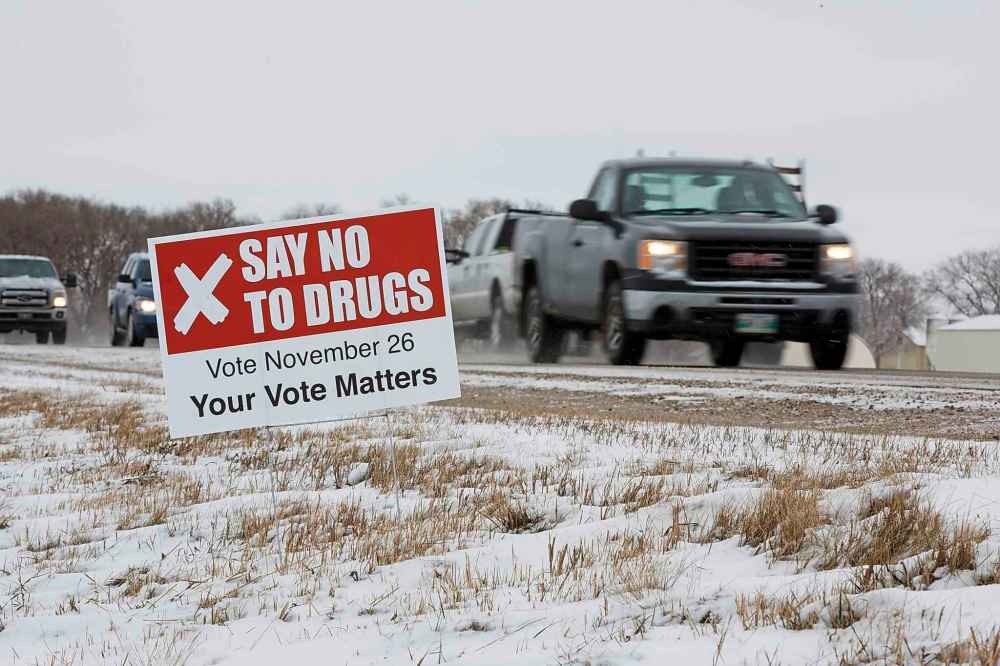
An anti-cannabis sign placed along Hwy 311 east of Niverville.
MIKE DEAL / WINNIPEG FREE PRESS An anti-cannabis sign placed along Hwy 311 east of Niverville.

Mayor Myron Dyck cast the deciding “no” vote, and council later decided to put the question directly to residents in a plebiscite.

Dyck was unavailable for an interview, but Coun. Nathan Dueck said the Nov. 26 vote will be binding and can only be reversed by another plebiscite. Advance voting numbers suggest a strong turnout next week, he said.

Canna Cabana was surprised when Niverville council voted to block the store, said Nick Kuzyk, chief strategy officer with the retailer’s Calgary-based parent company, High Tide Inc.

High Tide still plans to go ahead with the Canna Cabana location, if the plebiscite permits it. Kuzyk said it could be open about two months after approval.

“We fully respect Niverville’s values and the cultural fabric of the town, and we’re not going to do anything that doesn’t fit with the cultural fabric of Niverville,” said Kuzyk.

Meanwhile, the “yes” and “no” sides are rallying.

Citizens Who Support a Progressive Niverville campaign spokesperson Billie Fontaine said she and other cannabis store proponents didn’t pay much attention to the July public hearing and were thus outnumbered by opponents.

“Everybody was kind of under the impression that this was a conditional use meeting, meaning that Canna Cabana was already approved and they were just going over the conditions,” said Fontaine, arguing it is a legal business and has a right to be open. 

MIKE DEAL / WINNIPEG FREE PRESS
A pro-cannabis sign placed along Hwy 311 east of Niverville.
MIKE DEAL / WINNIPEG FREE PRESS A pro-cannabis sign placed along Hwy 311 east of Niverville.

A cancer survivor who uses cannabis for medical purposes, Fontaine also believes a local recreational cannabis store could improve access for people who might want to try it for therapeutic reasons, but don’t want to “go through the hoopla of getting a prescription.”

Cannabis store opponent Ewald Kasdorf lives outside Niverville and isn’t eligible to vote in the plebiscite, but it hasn’t stopped him from spending about $2,000 on highway and lawn signs urging a “no” vote. (Fontaine and like-minded supporters have in turn put up their own “yes” signs.)

Kasdorf said he’s fighting in order to protect the next generation in the community he considers his hometown.

“We believe it does not promote a healthy community,” he said. “Out in the country, it’s a very common saying: ‘It takes a village to raise a child’… And cannabis and other drugs have created more division in families, crisis in marriages, and just struggles in family relationships than any other product that I’m aware of.”

He also rejects the argument a legal cannabis store could help displace the illicit market, a key goal of the provincial government’s policy. “It does not undercut the black market, it just comes right alongside it.”

In an emailed statement, a spokesperson for Economic Development and Training said the Manitoba government “honours municipalities’ wishes to prohibit retail cannabis stores.”

“If a plebiscite to prohibit the local sale of cannabis is approved by voters, the Liquor, Gaming and Cannabis Authority will not issue a retail cannabis store licence in the municipality.”

Tijana Martin / Canadian Press files
High Tide Inc. plans to go ahead with the Canna Cabana location in Niverville, if the community's plebiscite permits it.
Tijana Martin / Canadian Press files High Tide Inc. plans to go ahead with the Canna Cabana location in Niverville, if the community's plebiscite permits it.

Census data from 2016 puts Niverville’s population at more than 4,000, but Dueck believes it now has more than 5,000 residents and is growing quickly. Dueck, who voted in favour of allowing Canna Cabana to open its doors, said there’s more at stake for Niverville than just a cannabis store.

“The individual store — and no disrespect to the store or the brand — probably doesn’t mean much to the community. It’s the overall concept of creating Niverville as an economic, viable hub for southern Manitoba that is the bigger question.”

solomon.israel@freepress.mb.ca  

Twitter: @sol_israel

History

Updated on Wednesday, November 20, 2019 2:13 PM CST: Updates missing image

Updated on Friday, November 22, 2019 10:26 AM CST: Adds photos
Report Error Submit a Tip

More Stories

Canada must not accept another Iranian autocracy

David Matas 5 minute read 2:01 AM CDT

Iran is a state run by a radical government victimizing its citizens and its neighbours. How do we change that? Any regime change that repeats the mistakes of the past is not a solution.

What went wrong in the past which led to the current regime? One answer is the U.K. and American aided coup which led to the ouster in 1953 of a democratically elected government headed at the time by Mohammad Mossadegh and its replacement with an American friendly autocrat, the Shah of Iran, Mohammad Reza Pahlavi.

The Shah imposed his rule through the Iranian National Intelligence and Security Organization — SAVAK, the acronym of its Persian name. SAVAK systematically inflicted torture, arbitrary killings and extra-judicial killings on perceived opponents of the regime. It was only a matter of time before repression of a regime directed to serving foreign interests would be overthrown.

What replaced the regime of the Shah, in 1979, the current regime of the mullahs, is a regime as intolerant and violent as the regime of the Shah and then some. That was not inevitable. But neither was it surprising. The vicious nature of the current regime, following the example set by the Shah, and its hatred for the United States, reacting to the U.S. aided imposition of the Shah, both echoes and reacts to the past. In 1979, the U.S. reaped what it sowed in 1953.

Manitoba abandoning spring, fall clock changes

Carol Sanders 8 minute read Preview

Manitoba abandoning spring, fall clock changes

Carol Sanders 8 minute read Updated: Yesterday at 8:48 AM CDT

Time’s up for the time change in Manitoba.

Manitobans won’t be setting their clocks back an hour in November. The province has decided to permanently stay on daylight time after surveying residents on the twice annual clock adjustment.

“We heard from Manitobans loud and clear — no more changing the clocks in Manitoba,” Premier Wab Kinew said in a news release Thursday.

Most of the 72,000 votes submitted in an online EngageMB survey — 92 per cent — said they would like to see the practice end. The survey asked if they preferred earlier sunrises in winter with standard time or the later sunsets in summer with daylight time. More than half of survey participants (58 per cent) indicated a preference to stay on permanent daylight time; 34 per cent voted to eliminate the time change but stay on standard time.

Read
Updated: Yesterday at 8:48 AM CDT

A life’s story: activist, educator, organizer knew the true meaning of community

Janine LeGal 7 minute read Preview

A life’s story: activist, educator, organizer knew the true meaning of community

Janine LeGal 7 minute read 3:00 AM CDT

Somewhere between a love for sharing stories and a love of community connections, Michael (Mike) Maunder lived his life. Giving voice to people and neighbourhoods was a passion for the natural-born community organizer.

An author, teacher and principal, Maunder lived in a one-bedroom apartment in West Broadway and devoted himself to community development, education and neighbourhood renewal.

He maintained a connection with Augustine United Church, whose commitment to social justice he appreciated, volunteered at the Sandy-Saulteaux Spiritual Centre, and found comfort in a Buddhist prayer community.

Maunder died on July 15 at the age of 80.

Read
3:00 AM CDT

American Hostage stars recall warmth of Winnipeggers during brutal winter

Randall King 7 minute read Preview

American Hostage stars recall warmth of Winnipeggers during brutal winter

Randall King 7 minute read Yesterday at 6:13 PM CDT

TORONTO — When you stream the eight-part series American Hostage, a sense of familiarity may strike.

That’s because the show was shot in Winnipeg — especially in the Exchange District — from November of last year to the beginning of February, with Winnipeg portraying Indianapolis circa 1977.

The whole world seemed to be watching that midwest American city that year as a hostage crisis unfolded involving one Tony Kiritsis, an angry man who goes ballistic when a mortgage brokerage was poised to foreclose on property he had dreamed of developing into a shopping centre.

Kiritsis kidnapped his mortgage broker, Richard Hall, wiring a shotgun to the back of his head, and demanded a public airing of his grievances, with the reluctant help of popular radio broadcaster Fred Heckman.

Read
Yesterday at 6:13 PM CDT

A quick look at where provinces and territories stand on time changes

The Canadian Press 2 minute read Preview

A quick look at where provinces and territories stand on time changes

The Canadian Press 2 minute read Updated: Yesterday at 6:28 AM CDT

WINNIPEG - Manitoba's government said Thursday the province will be sticking with daylight time year-round, making it the latest jurisdiction to move away from twice-annual time changes. Here's a look at where things stand across Canada:

British Columbia said in March that it was moving to permanent Pacific daylight time. The change also means that parts of northeastern B.C., which have been on mountain standard time year round, are now in alignment with the rest of the province.

Alberta also switched to permanent daylight time this year in what it calls Alberta time. The change means it now has the same time as Saskatchewan year round.

Saskatchewan has been on permanent central standard time since 1966.

Read
Updated: Yesterday at 6:28 AM CDT

Give-and-take relationship of Roman leaders takes centre stage in Harris’s historical fiction

Reviewed by Kathryne Cardwell 4 minute read Preview

Give-and-take relationship of Roman leaders takes centre stage in Harris’s historical fiction

Reviewed by Kathryne Cardwell 4 minute read 2:01 AM CDT

British novelist Robert Harris’s latest work is a reflection on tyranny, corruption and betrayal among all-powerful political leaders.

You might be forgiven for thinking it’s a contemporary thriller — it’s actually historical fiction set in ancient Rome.

A former BBC journalist, Harris debuted as a novelist in 1992 with Fatherland, an alternative history where Nazi Germany won the Second World War.

Since then, the prolific author has become best-known for his works of historical fiction, especially his ancient Rome trilogy released from 2006-2015 and the novel Conclave, which was published in 2016 and was made into the film of the same name in 2024.

Read
2:01 AM CDT