Manitoba one of worst places for First Nations to live: federal documents
Advertisement
Read this article for free:
or
Already have an account? Log in here »
To continue reading, please subscribe:

Digital Subscription
One year of digital access for only $205*
- Enjoy unlimited reading on winnipegfreepress.com
- Read the E-Edition, our digital replica newspaper
- Access News Break, our award-winning app
- Play interactive puzzles
*First annual payment billed as $205.00 + GST for one year. This annual subscription will automatically renew at $233.00 + GST every 52 weeks (10% off the regular annual price of $259.35). Offer available to new and qualified returning subscribers only. Cancel any time.
To continue reading, please subscribe:
Add Free Press access to your Brandon Sun subscription for only an additional
$1 for the first 4 weeks*
- Enjoy unlimited reading on winnipegfreepress.com
- Read the E-Edition, our digital replica newspaper
- Access News Break, our award-winning app
- Play interactive puzzles
*Your next Brandon Sun subscription payment will increase by $1.00 and you will be charged $17.95 plus GST for four weeks. After four weeks, your payment will increase to $24.95 plus GST every four weeks.
Read unlimited articles for free today:
or
Already have an account? Log in here »
Hey there, time traveller!
This article was published 29/01/2015 (4267 days ago), so information in it may no longer be current.
WINNIPEG – Federal government documents show Manitoba is one of the worst places for First Nations people to live in Canada.
Internal reports from Aboriginal Affairs and Northern Development show Manitoba natives are more likely to grow up in poverty, drop out of school, live off social assistance in dilapidated housing and suffer family violence.
Their life expectancy is also eight years shorter than that of other Manitobans.
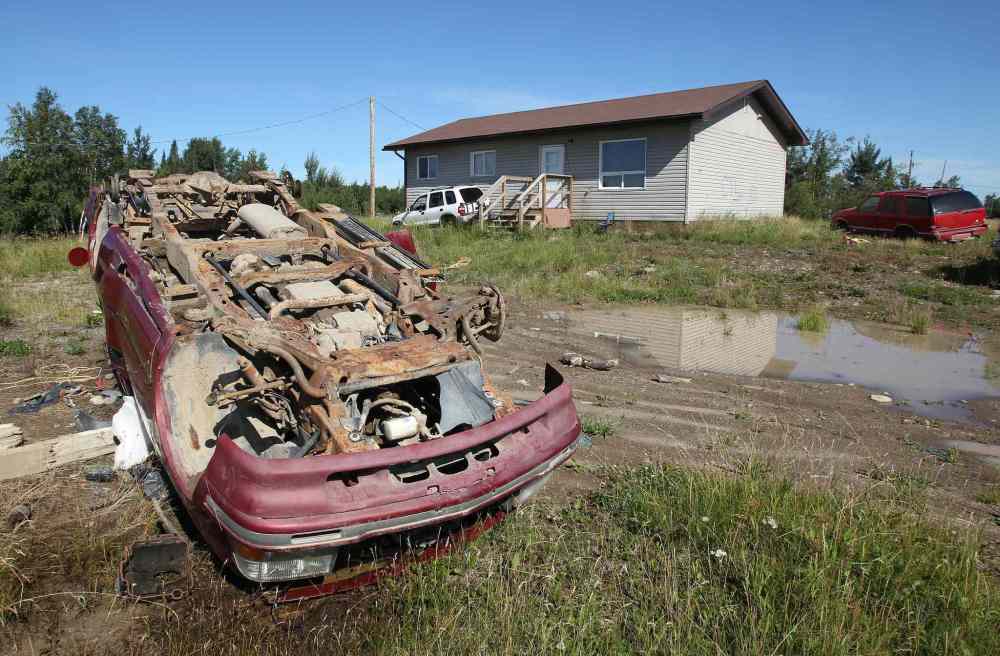
The 10 regional updates spanning 2012 to 2014 lay out the poor living conditions on Manitoba reserves, but offer little concrete action on the part of the government.
They were obtained by The Canadian Press through access-to-information legislation.
“Based on the UN Human Development Index, quality of life on Manitoba First Nations ranks the lowest in Canada,” said an update dated July 2014.
Another update dated from September 2013 notes that 25 per cent of First Nations children live in poverty across Canada. In Manitoba, it said, 62 per cent of aboriginal children live below the poverty line.
The 2014 report also noted that, at 28 per cent, the province has the lowest high-school graduation rate for First Nations in the country.
Manitoba First Nations also have the highest social assistance rates in Canada, the documents show. In some communities, 80 per cent of the population is on welfare. Just under two per cent of the population has come off social assistance and moved on to education or employment.
“High levels of poverty, unemployment, domestic violence and family dysfunction are prominent adverse social conditions faced by many members of First Nations, particularly those living in remote or isolated communities,” reads the September 2013 update.
“Significant gaps between the on-reserve population and the Canadian population in general continue to exist.”
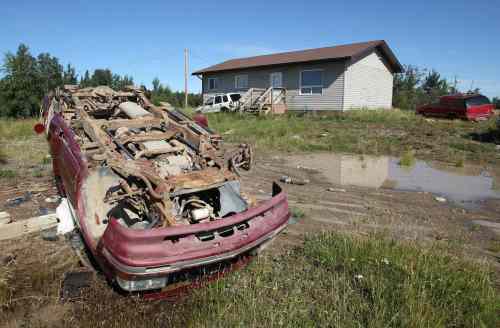
The 2014 report said there is less money for reserve infrastructure, because the federal government has shifted resources to education and social programs. Almost one-third of Manitoba First Nations live in reserve homes “in need of major repair” — the second-highest percentage in the country.
“The housing backlog, overcrowding issues, mould and inadequate condition of many of the on-reserve housing units remains a significant First Nation concern,” the update said. “Key challenges continue to include affordability, low income and high social assistance rates.”
The health of Manitoba First Nations is also suffering, the documents suggest. Residents have a “higher mortality, higher incidence and prevalence of chronic diabetes,” notes the 2013 update. First Nations also experience higher family violence and suicide rates, as well as higher rates of alcohol, drug and solvent abuse, it said.
“First Nations in Manitoba live eight years less than other Manitobans (the second-lowest life expectancy amongst provinces),” the update said. “First Nations in the Prairies continue to have the lowest community well-being scores, as well as the largest gaps relative to non-aboriginal communities.”
None of this comes as a surprise to Chief David McDougall from the remote St. Theresa Point First Nation in northern Manitoba.
McDougall listens in amazement to radio ads appealing for help for African children who are living in dilapidated homes with no running water. He shakes his head reading Canadian studies on the psychological effect of the lack of adequate housing on refugee children in the Middle East.
“How come they don’t come and study the situation as is in First Nations? I know the answer to that,” he said. “They’re turning a blind eye.”
The government’s regional updates estimate McDougall’s community needed 379 new homes in 2010 and project that will grow to 949 by 2020. It’s not uncommon to have up to 18 people sharing a three-bedroom bungalow on the reserve, McDougall said.
“Significant gaps between the on-reserve population and the Canadian population in general continue to exist.”
The government response, flagged as “behind plan” in several updates, was to direct a steering committee to create a “sub-committee to address housing backlog.” In the meantime, McDougall said, his community and three other area reserves with a combined need for just over 1,000 homes got 12 new houses this year.
“I wouldn’t even call it a drop in the bucket.”
Despair grows among young aboriginals on the fly-in reserve as they see luxuries on satellite television they can only dream of, McDougall said. No one is expecting a blank cheque, he added, just some sign of interest on the part of Ottawa to work with reserves to improve the situation.
“We’re trying to contribute to our own well-being. We’re not just sitting here twiddling our thumbs. They’re not really working with us.”
A spokeswoman for Aboriginal Affairs Minister Bernard Valcourt said he was unavailable to discuss the updates or what the federal government is doing to improve living conditions for Manitoba’s reserve aboriginals. Emily Hillstrom sent an emailed statement that didn’t address the poor living conditions.
“Our government believes that aboriginal peoples should have the same quality of life, the same opportunities and the same choices as all other Canadians,” she wrote before outlining legislation the government has passed such as a law that requires reserves to post their financial statements online.
Grand Chief Derek Nepinak, head of the Assembly of Manitoba Chiefs, said the Prime Minister Stephen Harper’s Conservatives have set the clock back 30 years on aboriginal relations. The government refuses to work with First Nations to address chronic lack of safe drinking water, proper housing and basic infrastructure, he said.

There are solutions out there, but First Nations can’t even get federal authorities to the table, Nepinak said.
“We’ve seen indifference. We’ve seen omission. We’ve seen wilful blindness to the issue of missing and murdered indigenous women and girls from our communities,” he said. “We’re really looking for a new government to help address some of these very significant outstanding issues.”
Grand Chief David Harper, head of the organization that represents northern Manitoba First Nations, said the internal reports echo what his people have been saying for years. It feels like they are either being punished or wilfully neglected by the Conservative government, he said.
“We need drastic measures. We need a plan of action of when and how we’re going to get out of this situation we’re in.
“We haven’t heard that at all. Period.”
WINNIPEG – Documents from Aboriginal Affairs and Northern Development show Manitoba is one of the worst places for First Nations people to live in Canada.
A look at conditions by the numbers:
8: Decreased number of years members of Manitoba First Nations can expect to live compared with other Manitobans.
28 per cent: Graduation rate for Manitoba First Nations children —the lowest in Canada.
29 per cent: Percentage of Manitoba’s First Nations population living in homes in need of major repairs — the second-highest in the country.
33 per cent: Average welfare rate on Canadian reserves.
47 per cent: Average welfare rate on Manitoba reserves. The rate is 80 per cent on some reserves.
25 per cent: Percentage of First Nations children across Canada living in poverty.
62 per cent: Percentage of First Nations children in Manitoba living in poverty.
(Source: AANDC Manitoba updates 2012-2014)
Related Articles
Handing out messages on bottles of water

Advertisement Advertise With Us
Advertisement Advertise With Us