Skip to content

September 7, 2026

Winnipeg
19° C, Cloudy

Full Forecast

    • Media Literacy and Learning Contact
    • Contact Us
    • Advertising Contact
    • Send a Letter to the Editor
    • Staff biographies
    • Submit a News Tip
    • Subscribe to Newsletters
    • Notifications
    • My Account
    • Log Out
    • Log in
    • Create Account
    • Grid View
    • List View
    • Compact View
    • Text Size
    • Translate
    • Dark Mode
    • Light Mode
    • System Default
Manage Subscription
Log in Create Account
E-Edition
  • Home
  • About
  • The Student Press
  • PressKid
  • Free Press 101
  • Events
  • Newsstand
  • Browse news by subject
  • Contact Us

© 2026 Winnipeg Free Press

Close
  • Quick Links

    • Free Press 101: How we practise journalism
    • Reader Bridge
    • Home
    • Local
    • Canada
    • World
    • Community Connect
    • Classifieds
    • Newsletters
    • Obituaries
    • Photo and Book Store
    • Copyright and Licensing Requests
    • Archives
    • Contests
    • Publications
    • Sponsored Content
    • Privacy Policy
    • Employee Code of Conduct Policy
    • Supplier Code of Conduct Policy
    • Report on Forced Labour and Child Labour in Supply Chains

    Ways to support us

    • Become a Patron
    • Pay it Forward program
    • Subscribe
    • Support Faith coverage
    • Support Arts coverage
  • Replica E-Edition

    • About the E-Edition
    • Winnipeg Free Press
    • Community Review East
    • Community Review West

    Business

    • All Business
    • Agriculture
    • Personal Finance
  • Arts & Life

    • All Arts & Life
    • The Arts
    • Autos
    • Books
    • Cannabis
    • Celebrities
    • Diversions
    • Puzzles
    • Environment
    • Events
    • Faith
    • Food & Drink
    • Health
    • Life & Style
    • Movies
    • Music
    • Science & Technology
    • TV
    • Travel
  • Sports

    • All Sports
    • Amateur
    • Auto Racing
    • Blue Bombers
    • Curling
    • Football
    • Goldeyes
    • Golf
    • Grey Cup
    • High School
    • Hockey
    • Horse Racing
    • Winnipeg Jets
    • Manitoba Moose
    • Manitoba Open
    • MLB
    • NBA
    • Olympics
    • Soccer
  • Opinion

    • All Opinion
    • Analysis
    • Columnists
    • Editorials
    • Editorial Cartoon
    • Letters to the Editor
    • Send a Letter to the Editor

    Media

    • All Media
    • Photo Galleries
    • Video

    Homes

    • Property Listings
    • Featured News
    • Renovation and design
    • New homes
    • Resale homes
  • Canstar Community news

    • All Free Press Community Review News
    • East Edition
    • West Edition
    • Sports
    • Events
    • Contact Us
    • E-Editions
  • About Us

    • About Us
    • Media Kit
    • Contact Us
    • Carrier Positions & Retailer Requests
    • FP Newspapers Inc.
    • History
    • Internships
    • Job Opportunities
    • Privacy Policy
    • Retail Locations
    • Staff Biographies
    • Terms and Conditions
Manage Subscription
Log in Create Account
E-Edition
Winnipeg Free Press Logo Media Literacy & Learning
    • Media Literacy and Learning Contact
    • Contact Us
    • Advertising Contact
    • Send a Letter to the Editor
    • Staff biographies
    • Submit a News Tip
    • Subscribe to Newsletters
    • Notifications
    • My Account
    • Log Out
    • Log in
    • Create Account
    • Grid View
    • List View
    • Compact View
    • Text Size
    • Translate
    • Dark Mode
    • Light Mode
    • System Default
  • Menu
  • Home
  • About
  • The Student Press
  • PressKid
  • Free Press 101
  • Events
  • Newsstand
  • Browse news by subject
  • Contact Us
    • My Account
    • Log Out
    • Log in
    • Create Account
    • Grid View
    • List View
    • Compact View
    • Text Size
    • Translate
    • Dark Mode
    • Light Mode
    • System Default
The Free Press Biology Education Subject Grade 12

Advanced Search

Education Subjects
Media Literacy Topics
Clear filters

Grade 12

Please review each article prior to use: grade-level applicability and curricular alignment might not be obvious from the headline alone.

No Subscription Required

Nation building needs research — not just infrastructure

Mario Pinto 4 minute read Saturday, Sep. 13, 2025

Living through the second Trump administration as a Canadian has been likened, by one commentator, to a teenager being kicked out of the house. We must grow up fast and deal with the fact that we can now only rely on ourselves. So, the federal government is moving fast on files related to security, sovereignty and connectivity. The Liberals passed Bill C-5 to expedite projects that will help Canadians live on our own. Wonderful.

But.

In our rush forward, we cannot overlook the power of nation-building research, which must go hand-in-glove with these infrastructure projects. Research and infrastructure are not competing priorities: they are essential partners in nation-building.

Bill C-5, the Building Canada Act, grants the federal government sweeping powers to quickly build large projects that help goods move faster and more easily. This act intends to strengthen our security, autonomy, resilience and advance the interests of Indigenous Peoples. But there can be no nation-building without nation-building research.
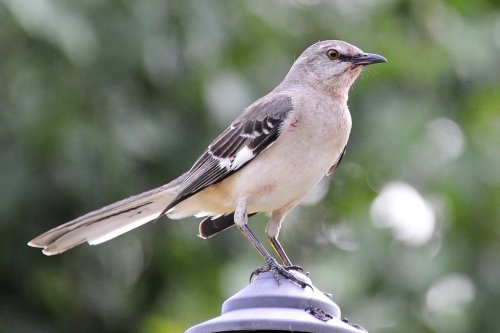
FILE - A northern mockingbird appears on April 28, 2015, in Houston. (AP Photo/Pat Sullivan, File)
No Subscription Required

One Tech Tip: Ditch the chatbots and take your AI nature apps on a birdwatching hike

Matt O'brien, The Associated Press 5 minute read Preview
No Subscription Required

One Tech Tip: Ditch the chatbots and take your AI nature apps on a birdwatching hike

Matt O'brien, The Associated Press 5 minute read Friday, Oct. 10, 2025

I didn't notice the scarlet tanager until the alert appeared on my phone: “Merlin heard a new bird!”

Despite its brilliant plumage — jet-black wings on a crimson body — the songbird can be a hard one to spot in a forest because it prefers to stay high in the canopy. It sounds a little like a robin to an untrained ear.

But the free Merlin Bird ID app detected a scarlet tanager was likely nearby by using artificial intelligence to analyze my phone’s live sound recording. I paused my hike, quietly scanned the treetops, saw the bird as it kept singing and clicked a button to add the species to my growing "life list" of bird sightings. Digital confetti burst on my screen.

Like a real-world version of Pokémon Go, a gotta-catch-'em-all drive to add to my Merlin list has helped me find a great kiskadee in Mexico and a rusty-cheeked scimitar-babbler in the Himalayas. But sometimes the greatest revelations are close to home, as more AI nature app users are starting to discover.

Read
Friday, Oct. 10, 2025
Alicia Régnier photo
                                Bénévole Lucille Dufresne-Labossière
No Subscription Required

Le centre d’interprétation Saint-Léon: là où souffle l’esprit de la nature et de l’innovation

Camille Harper 6 minute read Preview
No Subscription Required

Le centre d’interprétation Saint-Léon: là où souffle l’esprit de la nature et de l’innovation

Camille Harper 6 minute read Saturday, Jul. 19, 2025

Avec ses galeries interactives, ses sentiers en pleine nature et son riche contenu éducatif, le Centre d’interprétation Saint-Léon est bien plus qu’un simple musée rural. En 2025, la communauté célèbre les 20 ans du premier parc éolien du Manitoba — une réalisation marquante racontée au cœur du Centre. Entre salamandres mystérieuses, énergies vertes et oiseaux migrateurs, les visiteurs y découvrent un territoire où science, nature et fierté locale se rencontrent.

Situé près du lac Saint-Léon, le Centre d’interprétation Saint-Léon a toujours eu pour vocation d’éduquer les curieux, qu’ils soient touristes ou de la région, mais aussi de rassurer. Lorraine Mabon, la présidente, raconte:

“Le but original, c’était de parler des salamandres et de leur rôle, parce qu’il y en avait énormément dans la région et les gens en avaient un peu peur. Mais les salamandres, qu’on trouve sur les terres humides, sont une bonne chose: elles sont indicatrices de la bonne santé de l’environnement.

“Un autre fait intéressant, c’est que si elles perdent un membre, elles peuvent le régénérer! Beaucoup de scientifiques étudient cette faculté exceptionnelle.”

Read
Saturday, Jul. 19, 2025
Associated Press files
                                Despite the book’s title, Alex Hutchinson’s latest is about much more than investigating far-flung and remote corners of our planet.
No Subscription Required

From science experiments to ordering dinner, trying new things can pay valuable dividends

Reviewed by Bob Armstrong 4 minute read Preview
No Subscription Required

From science experiments to ordering dinner, trying new things can pay valuable dividends

Reviewed by Bob Armstrong 4 minute read Saturday, Jul. 5, 2025

Among the many technical terms from fields such as neuroscience, artificial intelligence, applied mathematics and genetics found in this fascinating new book by bestselling Canadian science writer/distance runner/physicist Alex Hutchinson, the reader discovers “prediction error.”

It’s a term that comes from studies of how the brain makes sense of the impressions presented to it by the senses. The brain doesn’t simply receive sensory data; rather, it continually makes predictions based on partial sense data and feeds these back to the senses. When we get lost, the predictions we make tend to be errors.

We also carry a variant of the gene DRD4 that gives us a happy endorphin boost when our rate of prediction error declines. That genetic variant, Hutchinson writes, emerged 40-50,000 years ago, “right around the time when our ancestors began their long, multi-pronged march to the farthest corners of the globe. It was a march, the findings hinted, spurred in part by dopamine.”

Appropriately enough, The Explorer’s Gene will be picked up by many readers as a result of a prediction error. Judging by the title and the historic mountaineering photo on the cover, readers may assume the book is a story of outdoor adventure.

Read
Saturday, Jul. 5, 2025
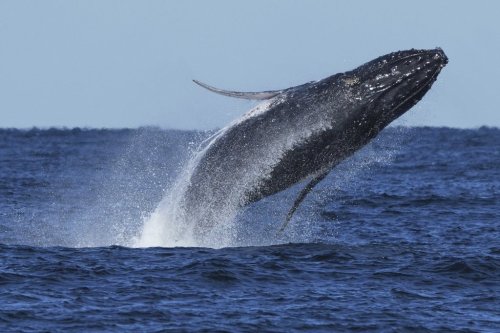
FILE - A humpback whale breaches off the coast of Port Stephens, north of Sydney, Australia, on June 18, 2025. (AP Photo/Mark Baker, File)

Commuter traffic stops for whales on Australia’s humpback highway

Charlotte Graham-mclay And Mark Baker, The Associated Press 4 minute read Preview

Commuter traffic stops for whales on Australia’s humpback highway

Charlotte Graham-mclay And Mark Baker, The Associated Press 4 minute read Friday, Oct. 3, 2025

PORT STEPHENS, Australia (AP) — The ferry was late, but not because of the usual traffic. Sydney commuters watched from an idling boat this month as humpback whales the size of buses surfaced nearby, halting the vessel’s passage across the harbor. The curious mammals seemed to be watching them back.

In June and July, it’s not uncommon for whales to stop water traffic in Sydney. Winter heralds the opening of the so-called humpback highway, a migratory corridor along Australia's east coast used by about 40,000 of the massive creatures as they travel from feeding grounds in freezing Antarctica to tropical breeding areas off Queensland state.

“It’s blubber to blubber,” said Dr. Vanessa Pirotta, a wildlife scientist at Macquarie University in Sydney and author of the book “Humpback Highway.” During peak traffic periods the bustling coastal city of 5.5 million people becomes one of the world’s few urban centers where you might see a breaching whale on your morning walk, while buying a coffee, or waiting at a bus stop – anyplace you can see the ocean.

Whales cruise close to shore

Read
Friday, Oct. 3, 2025
BROOK JONES/FREE PRESS
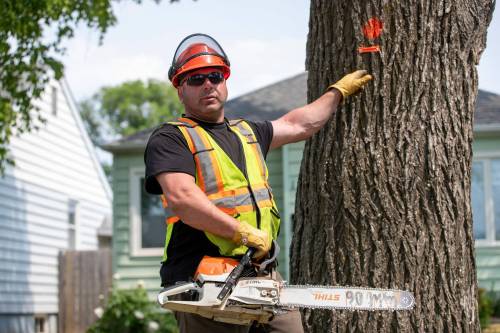
                                Urban Foresty worker Trevor Viznaugh, 42, points to an elm tree that has been tagged for removal, as the City of Winnipeg’s Urban Forestry Branch removes American elm trees along Downing Street in an effort to fight Dutch elm disease.
No Subscription Required

More than 7,000 elms felled in Winnipeg last year due to disease

Massimo De Luca-Taronno 4 minute read Preview
No Subscription Required

More than 7,000 elms felled in Winnipeg last year due to disease

Massimo De Luca-Taronno 4 minute read Thursday, Jun. 12, 2025

A city report reveals elm trees were chopped down more than expected last year due to Dutch elm disease.

Read
Thursday, Jun. 12, 2025
Algeria's Imane Khelif poses after defeating China's Yang Liu to win gold in their women's 66 kg final boxing match at the 2024 Summer Olympics, Friday, Aug. 9, 2024, in Paris, France. (AP Photo/Ariana Cubillos, File)

Olympic boxing champ Imane Khelif must undergo genetic sex screening to fight for new governing body

Greg Beacham, The Associated Press 4 minute read Preview

Olympic boxing champ Imane Khelif must undergo genetic sex screening to fight for new governing body

Greg Beacham, The Associated Press 4 minute read Friday, Oct. 3, 2025

Olympic boxing champion Imane Khelif must undergo genetic sex screening to participate in upcoming events with the sport's new governing body.

World Boxing announced mandatory sex testing for all athletes Friday. The governing body specifically mentioned Khelif when announcing the policy, saying the Algerian gold medal winner must be screened before she will be approved to fight at any upcoming events, including the Eindhoven Box Cup next month in the Netherlands.

“The introduction of mandatory testing will be part of a new policy on ‘Sex, Age and Weight’ to ensure the safety of all participants and deliver a competitive level playing field for men and women,” World Boxing wrote in a statement. The fighters' national federations will be responsible for administering the tests and providing the results to World Boxing.

Khelif won a gold medal at the Paris Olympics last summer amid international scrutiny on her and Taiwan's Lin Yu-ting, another gold medal winner. The previous governing body for Olympic boxing, the Russian-dominated International Boxing Association, disqualified both fighters from its 2023 world championships after claiming they had failed an unspecified eligibility test.

Read
Friday, Oct. 3, 2025
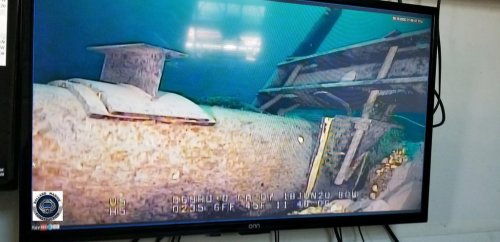
FILE - In this photo shot from a television screen provided by the Michigan Department of Environment, Great Lakes, and Energy in June 2020, shows damage to anchor support EP-17-1 on the east leg of the Enbridge Line 5 pipeline within the Straits of Mackinac in Mich. (Michigan Department of Environment, Great Lakes, and Energy via AP, File)

Army Corps analysis finds Great Lakes pipeline tunnel would have sweeping environmental impacts

Todd Richmond, The Associated Press 5 minute read Preview

Army Corps analysis finds Great Lakes pipeline tunnel would have sweeping environmental impacts

Todd Richmond, The Associated Press 5 minute read Friday, Oct. 3, 2025

Building an underground tunnel for an aging Enbridge oil pipeline that stretches across a Great Lakes channel could destroy wetlands and harm bat habitats but would eliminate the chances of a boat anchor rupturing the line and causing a catastrophic spill, the U.S. Army Corps of Engineers said Friday in a long-awaited draft analysis of the proposed project's environmental impacts.

The analysis moves the corps a step closer to approving the tunnel for Line 5 in the Straits of Mackinac. The tunnel was proposed in 2018 at a cost of $500 million but has been bogged down by legal challenges. The corps fast-tracked the project in April after President Donald Trump ordered federal agencies in January to identify energy projects for expedited emergency permitting.

A final environmental assessment is expected by autumn, with a permitting decision to follow later this year. The agency initially planned to issue a permitting decision in early 2026.

With that permit in hand, Enbridge would only need permission from the Michigan Department of Environment, Great Lakes and Energy before it could begin constructing the tunnel. That's far from a given, though.

Read
Friday, Oct. 3, 2025
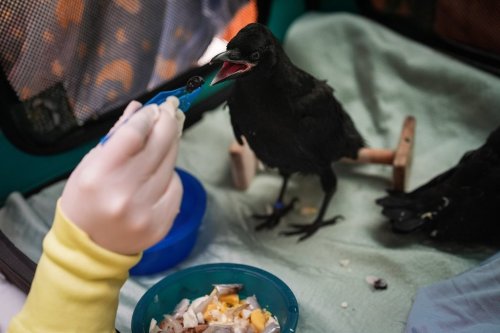
Celina Slaght, a medical volunteer, feeds a fledgling crow at the Wildlife Rescue Association of B.C., in Burnaby, B.C., on Thursday, May 29, 2025. THE CANADIAN PRESS/Darryl Dyck
No Subscription Required

Dive-bombed or not, Vancouverites are still pro-crow, researchers say

Nono Shen, The Canadian Press 6 minute read Preview
No Subscription Required

Dive-bombed or not, Vancouverites are still pro-crow, researchers say

Nono Shen, The Canadian Press 6 minute read Friday, Oct. 10, 2025

VANCOUVER - Along her journey towards understanding Vancouver's crows, psychology professor Suzanne MacDonald says she made a friend.

It's a crow that brings her gifts after she set up a bird feeder at her home in the neighbourhood of Kitsilano.

Once, it was a barnacle-covered shell, which MacDonald treasures. Other times, it was "bits of garbage" that MacDonald doesn't fancy much, though she "appreciates the sentiment."

"I think he definitely recognizes me. When other people go out on my patio, he doesn't come to them. He knows me," said MacDonald.

Read
Friday, Oct. 10, 2025
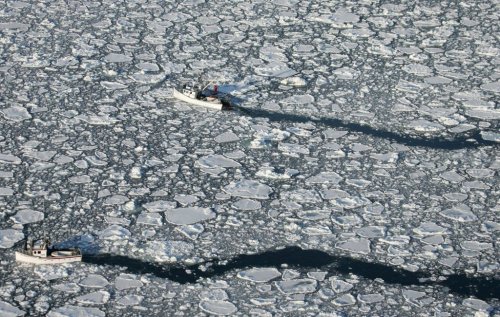
Boats make their way through the ice in the Gulf of St. Lawrence, March 25, 2006. THE CANADIAN PRESS/Jonathan Hayward

2024 sees record warm temperatures, less sea ice cover in Gulf of St. Lawrence

The Canadian Press 4 minute read Preview

2024 sees record warm temperatures, less sea ice cover in Gulf of St. Lawrence

The Canadian Press 4 minute read Friday, Oct. 3, 2025

MONT-JOLI - Last year, the Gulf of St. Lawrence recorded its highest maximum surface temperature and lowest seasonal volume of ice cover in decades, say researchers with the federal Fisheries Department.

Surface temperatures and ice cover are directly related to air temperature, said Peter Galbraith, a research scientist in physical oceanography at the agency's Maurice Lamontagne Institute in Mont-Joli, Que., northeast of Quebec City.

Last July, the surface temperature hit 16.7 C, a record since data started being recorded in 1981, and 2.4 C warmer than average. Between May and November, the warmest surface temperature was 11.6 C, also a record, and 1.6 C higher than average.

“So it was the warmest air temperature, which gave us the warmest sea surface temperature,” Galbraith said.

Read
Friday, Oct. 3, 2025
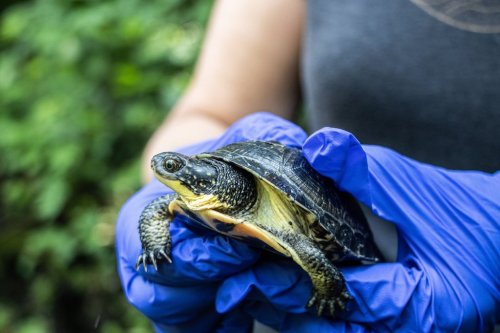
A Blanding's turtle is shown in this undated handout photo provided by the Toronto Zoo. THE CANADIAN PRESS/HO-Toronto Zoo
*MANDATORY CREDIT*
No Subscription Required

Toronto Zoo warns of extinctions if Ontario mining bill becomes law

Liam Casey, The Canadian Press 5 minute read Preview
No Subscription Required

Toronto Zoo warns of extinctions if Ontario mining bill becomes law

Liam Casey, The Canadian Press 5 minute read Friday, Oct. 10, 2025

TORONTO - Species could go extinct if Ontario passes a controversial mining bill that is set to transform its approach to endangered species and the environment, the Toronto Zoo warned the province.

Bill 5, the Protect Ontario by Unleashing our Economy Act, would strike a blow to the recovery of several species the institution has been trying to save, said Dolf DeJong, the zoo's CEO, at a committee hearing at Queen's Park on Thursday.

If and when the bill becomes law, DeJong wants the province to step up with funding so it can dramatically increase its biobank with Ontario species that could die off as a result of the legislation.

"We're concerned this act will result in the erosion of biodiversity and the loss of species at risk," DeJong said.

Read
Friday, Oct. 10, 2025
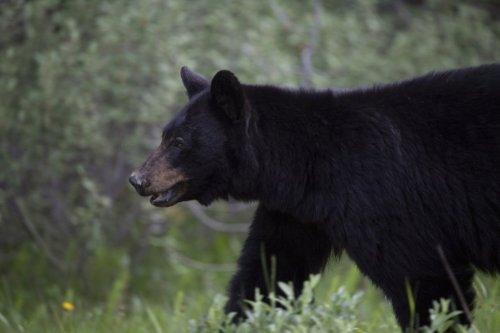
A black bear is seen near Lake Louise, Alta., in June, 2020. THE CANADIAN PRESS/Jonathan Hayward

Picking buffaloberries and electric fences: how wildlife is being managed ahead of G7

Nick Murray, The Canadian Press 3 minute read Preview

Picking buffaloberries and electric fences: how wildlife is being managed ahead of G7

Nick Murray, The Canadian Press 3 minute read Friday, Oct. 3, 2025

OTTAWA - There surely won't be lions or tigers at the G7 summit in Kananaskis, Alta., next month, and officials are doing their best to keep bears away, too.

As many as 5,000 participants are set to descend on the area in a few weeks, and officials are already working to install security barriers and clear out the area of anything that might attract bears to keep both people, and the animals, safe.

Earlier this week more than 200 local kids began plucking buffaloberry bushes around Kananaskis in an effort to detract bears from venturing into the area.

The bright red berries are quite popular with bears.

Read
Friday, Oct. 3, 2025
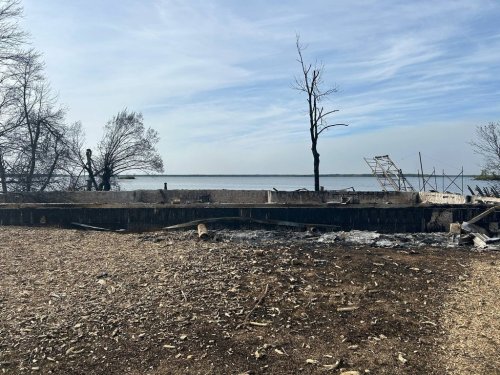
This handout photo from Lianne Ross-Martin shows what was left of her cottage in the Rural Municipality of Lac du Bonnet, Man., on Wednesday, May 21, 2025, after a wildfire destroyed homes on Wendigo Road, including Ross-Martin's. THE CANADIAN PRESS/HO-Lianne Ross-Martin **MANDATORY CREDIT**

‘Under a microscope’: Cottagers call for wildfire management plans after fatal fires

Brittany Hobson, The Canadian Press 4 minute read Preview

‘Under a microscope’: Cottagers call for wildfire management plans after fatal fires

Brittany Hobson, The Canadian Press 4 minute read Friday, Oct. 3, 2025

WINNIPEG - Cottage owners and disaster prevention experts in Manitoba are urging governments to develop comprehensive wildfire management plans after a pair of devastating wildfires.

Close to 1,000 people were forced from their homes last week as a wildfire near the Rural Municipality of Lac du Bonnet, spurred by dry, hot and windy conditions, burned nearby.

The quick-moving fire, which is currently being held, destroyed 28 homes and cottages and left two people dead.

"The whole emergency plan for every municipality should be under a microscope review right now," said Brad Wood, a Winnipeg firefighter whose cottage was destroyed.

Read
Friday, Oct. 3, 2025
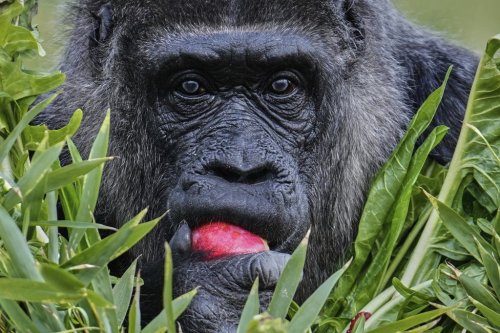
Female gorilla Fatou, the oldest of Berlin's zoo and also believed to be the world's oldest gorilla, enjoys her birthday basket with a

Fatou, the world’s oldest gorilla in a zoo, is celebrating her 68th birthday in Berlin

The Associated Press 1 minute read Preview

Fatou, the world’s oldest gorilla in a zoo, is celebrating her 68th birthday in Berlin

The Associated Press 1 minute read Monday, May. 4, 2026

BERLIN (AP) — Fatou, the oldest gorilla living in captivity worldwide, is getting ready for her 68th birthday in style.

The Berlin zoo on Friday presented Fatou with a basket of fruit and vegetables ahead of her official birthday, which falls on Sunday.

Fatou was born in 1957 and came to the zoo in what was then West Berlin in 1959.

Since she no longer has teeth, keepers ensure that her food is soft and easy to eat. Vet André Schüle said that “Fatou gets the best possible care here.”

Read
Monday, May. 4, 2026
Marta Guerrero photo
                                Rayna Porter, responsable du développement communautaire pour la SCS ici, à Winnipeg
No Subscription Required

Quand le froid gèle la collecte de sang

Hugo Beaucamp 5 minute read Preview
No Subscription Required

Quand le froid gèle la collecte de sang

Hugo Beaucamp 5 minute read Saturday, Mar. 8, 2025

Les intempéries hivernales ont parfois des impacts insoupçonnés. Alors que les déplacements ont été rendus difficiles à travers le pays, la Société canadienne du sang doit combler les pertes causées pour répondre à un besoin toujours plus important.

Le temps hivernal s’est montré quelque peu extrême le mois dernier. S’il n’est pas nécessairement évident de faire le lien entre les deux, et bien les aléas météorologiques ont un impact direct sur la collecte de sang au Manitoba et plus largement dans tout le pays.

Aujourd’hui, il faut savoir que, la branche manitobaine de la Société canadienne du sang (SCS), ne compte pas moins de 30 cliniques mobiles. Ces dernières se déplacent trois fois par semaine dans les communautés rurales de la province. Entre autres, Brandon, Portage la Prairie ou bien Selkirk.

Or les intempéries ont provoqué l’annulation de plusieurs centaines de rendez-vous, comme l’explique Rayna Porter, responsable du développement communautaire pour la SCS ici, à Winnipeg.

Read
Saturday, Mar. 8, 2025
Mosquito Watch

How many mosquitos are buzzing around Winnipeg? Check our interactive map.

Map by Andrew Burton and Eric Bailey 2 minute read Preview

How many mosquitos are buzzing around Winnipeg? Check our interactive map.

Map by Andrew Burton and Eric Bailey 2 minute read Thursday, May. 14, 2026

Heading outdoors? Need repellent? Find out with our interactive map showing the number mosquitoes caught in traps around the city.

Read
Thursday, May. 14, 2026
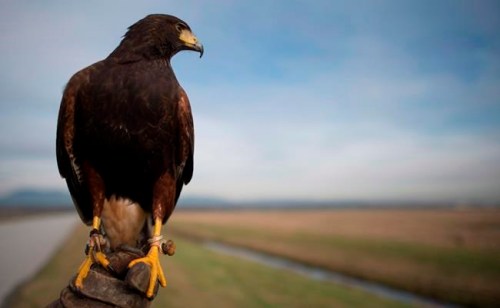
Golly, a Harris Hawk, looks over the airfield at Vancouver International Airport as part of a program that uses predatory birds to scare off other birds from nesting and flying around the airport in Richmond, B.C., on Wednesday, Jan. 21, 2015. THE CANADIAN PRESS/Jonathan Hayward
No Subscription Required

Roads quieted by COVID fill with birdsong: study

Bob Weber, The Canadian Press 3 minute read Preview
No Subscription Required

Roads quieted by COVID fill with birdsong: study

Bob Weber, The Canadian Press 3 minute read Saturday, May. 16, 2026

The Conservative party has locked its MPs and candidates out of its central voter database in a move that critics say is an attempt by Erin O’Toole to protect his leadership.

Read
Saturday, May. 16, 2026
Dreamstime/TNS
No Subscription Required

Me, hate cute little squirrels? You must be nuts

Doug Speirs  4 minute read Preview
No Subscription Required

Me, hate cute little squirrels? You must be nuts

Doug Speirs  4 minute read Saturday, Sep. 18, 2021

I was standing in the backyard next to a very tall tree, sipping the first coffee of the day, trying to think of a topic for today’s column, when suddenly it hit me.

No, I was not struck by a sudden inspiration. I was bonked on the top of my head by a pine cone the size of a regulation volleyball.

In quick succession, several more potentially lethal pine cones plummeted from the sky and thudded into the ground near my feet.

“I can see you up there!” I shrieked, waving my fist at the sky. “You are not going to get away with this!”

Read
Saturday, Sep. 18, 2021
No Subscription Required

Beasts a-blurtin’

Doug Speirs  11 minute read Saturday, Sep. 11, 2021

If it walks like a duck and talks like a human, chances are it’s getting scientists very excited and making headlines around the world.

For the record, we’re not talking about Donald or Daffy or some other cartoon duck. No, we’re talking about recordings of an Australian musk duck named “Ripper” repeatedly saying what sounds like “you bloody fool.”

The 34-year-old recording, recently made public, appears to be the first documented evidence of the species being able to mimic sounds and has researchers reviewing the evolution of vocal language learning in birds.

According to news reports, Ripper, a male musk duck reared in captivity at Tidbinbilla Nature Reserve, southwest of Canberra, was recorded vocalizing the sound of doors slamming shut as well as the words “you bloody fool,” a phrase he likely learned from his caretaker.

No Subscription Required

City eyes bird-friendly buildings

Gabrielle Piché 3 minute read Thursday, Sep. 9, 2021

GLAZED windows and limits on lighting are options the City of Winnipeg is considering to save birds from flying into buildings.

Approximately 25 million birds die in Canada annually by colliding with windows, according to a study used as part of the city’s research into the problem.

“We’re losing our birds, especially our migratory birds, at a really fast rate,” said Kevin Fraser, a University of Manitoba associate professor who studies the species. “Light and windows are huge threats.”

Winnipeg is part of the Mississippi flyway, a major migration route for birds.
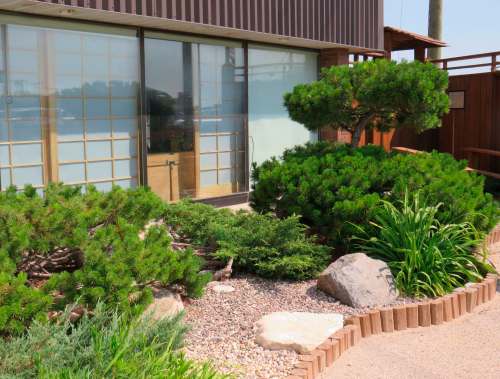
Cloud pruning is a technique used to train mugo pines into a shape resembling a cloud.
No Subscription Required

Japanese garden an enduring cultural experience

Colleen Zacharias 7 minute read Preview
No Subscription Required

Japanese garden an enduring cultural experience

Colleen Zacharias 7 minute read Saturday, Aug. 28, 2021

The Japanese Cultural Association of Manitoba, 180 McPhillips St., opened to the public in 1987. The centre offers a wide range of programs which are designed to promote and enhance the understanding of Japanese culture. The centre also serves as the site for a beautiful Japanese garden. Built by Yoshimaru Abe who was born in Japan in 1914 and came to Canada with his family in 1927, the garden is an enduring cultural experience.

Prior to building the garden at the centre, visitors to the Japanese Folklorama exhibit in 1971 and in the years following had the opportunity to see a Japanese garden recreated by Abe. Using moss, rocks, and pieces of wood, Abe recreated an authentic Japanese garden on a concrete arena floor.

A gardener is called niwashi in Japanese. Abe was the distinguished niwashi at the Japanese cultural centre’s garden into his 90’s and was followed by Sam Matsuo, who maintained the garden for 10 years. Both Abe and Matsuo were assisted by dedicated volunteers. Today the niwashi is Raymond Normandeau, who has been involved with the centre for several years as well as in the building of the garden at the Japanese Pavilion at Folklorama. Normandeau will oversee an expansion of the garden at the Japanese Cultural Association — which is slated to begin this fall.

Currently, there are two different areas to the garden. The front garden is a long narrow strip on the outside of the building that faces into a concrete parking lot. The inner garden is an enclosed garden accessed by a short bridge and tall wooden gate. “It is not a pure Japanese garden,” says Normandeau. “It is representative of a Japanese garden. We don’t have the stalwarts of Japanese gardens — bamboo, clipped azaleas, and the black pine which is one of the most popular pine species in a Japanese garden.” But many fine elements of Japanese garden design can indeed be found here.

Read
Saturday, Aug. 28, 2021
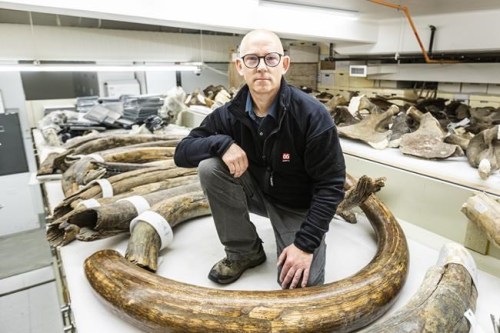
Mat Wooller, director of the Alaska Stable Isotope Facility, kneels among a collection of some of the mammoth tusks at the University of Alaska Museum of the North. THE CANADIAN PRESS/HO-JR Ancheta, University of Alaska Fairbanks MANDATORY CREDIT
No Subscription Required

'Cheering for the mammoth': Scientists retrace the steps of 17,000 year-old animal

Emma Tranter, The Canadian Press 4 minute read Preview
No Subscription Required

'Cheering for the mammoth': Scientists retrace the steps of 17,000 year-old animal

Emma Tranter, The Canadian Press 4 minute read Wednesday, Feb. 18, 2026

More than 17,000 years ago, a woolly mammoth roamed enough of the Alaskan landscape to circle the Earth twice.

That's according to a new paper from an international team of researchers who retraced the lifetime of one of the extinct ancient Arctic creatures.

The mammoth's story is written in its tusk through tiny isotopes, which are tiny atoms, said Mat Wooller, a paleoecologist at the University of Alaska.

"Isotopes are like a little chemical GPS (global positioning system) recorder," Wooller said.

Read
Wednesday, Feb. 18, 2026
Daniel Bahuaud photo
Vanessa Ahing: ‘Je mange du chevreuil, de la bernache et du canard. C’est la viande la plus naturelle qui soit.’
No Subscription Required

Chasser, pour avoir la conscience tranquille

Daniel Bahuaud de La Liberté pour le Winnipeg Free Press 4 minute read Preview
No Subscription Required

Chasser, pour avoir la conscience tranquille

Daniel Bahuaud de La Liberté pour le Winnipeg Free Press 4 minute read Saturday, Dec. 2, 2017

Vanessa Ahing a été végétarienne pendant plus de quatre années. Par refus de l’industrie de la viande qui, à son avis, est cruelle et nuit à l’environnement. Pourtant, un bon steak lui manquait. Pour réconcilier conscience et palais, un choix nouveau s’imposait...

Un soir de septembre, 2013, Vanessa Ahing rentrait de la campagne, où elle avait abattu son premier chevreuil. Souvenir de l’enseignante de 31ans: “J’étais toute seule. J’avais suivi une formation de chasse pour femmes, organisée par la Manitoba Wildlife Foundation. Mon chevreuil, coupé en quarts, était dans un sac de hockey dans le coffre de ma Honda Civic. C’était mon premier animal. Je voulais vivre l’expérience complète de la chasse. Donc pas question pour moi d’aller chez un boucher. D’ailleurs, j’étais étudiante. Je n’avais pas le fric pour me payer un tel service.

“Je me demandais comment j’allais faire pour préparer cette viande. Je n’ai pas été élevée dans une famille de chasseurs, ou même de jardiniers. Mes parents n’étaient pas prêts à avoir un chevreuil chez eux. Et moi, je vivais dans un petit appartement pour célibataires au centre-ville de Winnipeg.

“Il était tard. Trop tard pour dépecer l’animal tout de suite. Alors, j’ai ouvert les fenêtres de mon appartement. Je me suis endormie dans mon sac de couchage. Le lendemain, j’ai tapé ‘Comment couper de la viande de chevreuil’ sur YouTube. Et je me suis mise à l’œuvre.”

Read
Saturday, Dec. 2, 2017
  • First
  • Previous
  • 1
  • 2
  • …
  • 5
  • 6
  • 7
  • 8
Winnipeg Free Press Logo
Links
Replica E-Edition Front Page Arts & Life Business Canada Local Opinion Sports World Reader Bridge
WFP Events Free Press 101: How we practise journalism Media Kit About Us Archives Free Press Community Review Community Connect Classifieds Contests
FP Features Homes Newsletters Obituaries Podcasts Puzzles Photo and Book Store Become a Free Press Patron Privacy Policy
    • Media Literacy and Learning Contact
    • Contact Us
    • Advertising Contact
    • Send a Letter to the Editor
    • Staff biographies
    • Submit a News Tip
    • Subscribe to Newsletters
    • Notifications
    • My Account
    • Log Out
    • Log in
    • Create Account
    • Grid View
    • List View
    • Compact View
    • Text Size
    • Translate
    • Dark Mode
    • Light Mode
    • System Default
©2026 Winnipeg Free Press