Skip to content

September 8, 2026

Winnipeg
20° C, Cloudy with wind

Full Forecast

    • Media Literacy and Learning Contact
    • Contact Us
    • Advertising Contact
    • Send a Letter to the Editor
    • Staff biographies
    • Submit a News Tip
    • Subscribe to Newsletters
    • Notifications
    • My Account
    • Log Out
    • Log in
    • Create Account
    • Grid View
    • List View
    • Compact View
    • Text Size
    • Translate
    • Dark Mode
    • Light Mode
    • System Default
Manage Subscription
Log in Create Account
E-Edition
  • Home
  • About
  • The Student Press
  • PressKid
  • Free Press 101
  • Events
  • Newsstand
  • Browse news by subject
  • Contact Us

© 2026 Winnipeg Free Press

Close
  • Quick Links

    • Free Press 101: How we practise journalism
    • Reader Bridge
    • Home
    • Local
    • Canada
    • World
    • Community Connect
    • Classifieds
    • Newsletters
    • Obituaries
    • Photo and Book Store
    • Copyright and Licensing Requests
    • Archives
    • Contests
    • Publications
    • Sponsored Content
    • Privacy Policy
    • Employee Code of Conduct Policy
    • Supplier Code of Conduct Policy
    • Report on Forced Labour and Child Labour in Supply Chains

    Ways to support us

    • Become a Patron
    • Pay it Forward program
    • Subscribe
    • Support Faith coverage
    • Support Arts coverage
  • Replica E-Edition

    • About the E-Edition
    • Winnipeg Free Press
    • Community Review East
    • Community Review West

    Business

    • All Business
    • Agriculture
    • Personal Finance
  • Arts & Life

    • All Arts & Life
    • The Arts
    • Autos
    • Books
    • Cannabis
    • Celebrities
    • Diversions
    • Puzzles
    • Environment
    • Events
    • Faith
    • Food & Drink
    • Health
    • Life & Style
    • Movies
    • Music
    • Science & Technology
    • TV
    • Travel
  • Sports

    • All Sports
    • Amateur
    • Auto Racing
    • Blue Bombers
    • Curling
    • Football
    • Goldeyes
    • Golf
    • Grey Cup
    • High School
    • Hockey
    • Horse Racing
    • Winnipeg Jets
    • Manitoba Moose
    • Manitoba Open
    • MLB
    • NBA
    • Olympics
    • Soccer
  • Opinion

    • All Opinion
    • Analysis
    • Columnists
    • Editorials
    • Editorial Cartoon
    • Letters to the Editor
    • Send a Letter to the Editor

    Media

    • All Media
    • Photo Galleries
    • Video

    Homes

    • Property Listings
    • Featured News
    • Renovation and design
    • New homes
    • Resale homes
  • Canstar Community news

    • All Free Press Community Review News
    • East Edition
    • West Edition
    • Sports
    • Events
    • Contact Us
    • E-Editions
  • About Us

    • About Us
    • Media Kit
    • Contact Us
    • Carrier Positions & Retailer Requests
    • FP Newspapers Inc.
    • History
    • Internships
    • Job Opportunities
    • Privacy Policy
    • Retail Locations
    • Staff Biographies
    • Terms and Conditions
Manage Subscription
Log in Create Account
E-Edition
Winnipeg Free Press Logo Media Literacy & Learning
    • Media Literacy and Learning Contact
    • Contact Us
    • Advertising Contact
    • Send a Letter to the Editor
    • Staff biographies
    • Submit a News Tip
    • Subscribe to Newsletters
    • Notifications
    • My Account
    • Log Out
    • Log in
    • Create Account
    • Grid View
    • List View
    • Compact View
    • Text Size
    • Translate
    • Dark Mode
    • Light Mode
    • System Default
  • Menu
  • Home
  • About
  • The Student Press
  • PressKid
  • Free Press 101
  • Events
  • Newsstand
  • Browse news by subject
  • Contact Us
    • My Account
    • Log Out
    • Log in
    • Create Account
    • Grid View
    • List View
    • Compact View
    • Text Size
    • Translate
    • Dark Mode
    • Light Mode
    • System Default
The Free Press Biology Education Subject Grade 12

Advanced Search

Education Subjects
Media Literacy Topics
Clear filters

Grade 12

Please review each article prior to use: grade-level applicability and curricular alignment might not be obvious from the headline alone.

The Mia-yaltwa Halidzogm hoon national marine conservation area reserve on B.C.'s central coast pictured in this undated photo. It spans from Gil Island in the north to just south of Calvert Island, in the south. THE CANADIAN PRESS/Handout — Markus Thompson Thalassia (Mandatory Credit)

Vast marine conservation reserve, bigger than P.E.I., to protect B.C. central coast

Marissa Birnie, The Canadian Press 4 minute read Preview

Vast marine conservation reserve, bigger than P.E.I., to protect B.C. central coast

Marissa Birnie, The Canadian Press 4 minute read Saturday, May. 23, 2026

An enormous national marine conservation reserve is being established on British Columbia's central coast, spanning an area larger than Prince Edward Island.

The protected area, named Mia-yaltwa Ha’lidzogm hoon, is the result of an agreement between six coastal First Nations and the provincial and federal governments.

An official says the area is around 6700 sq. km and will be operated by Parks Canada along with its Indigenous and federal partners.

The reserve is within the Great Bear Sea, a diverse marine ecosystem that covers more than half of B.C.'s coast and includes glass sponge reefs, salmon, killer whales and migrating humpbacks.

Read
Saturday, May. 23, 2026
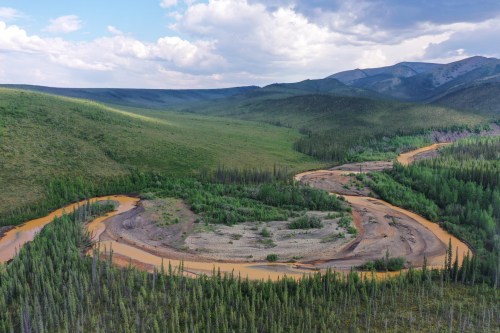
Acidic seepages linked to permafrost thaw are releasing toxic metals and turning streams in Yukon a rusty orange as shown in this undated handout photo.THE CANADIAN PRESS/Handout-McMaster University-Andras Szeitz(Mandatory Credit)
No Subscription Required

As permafrost thaws, some headwaters in Canada’s North turn orange and toxic: study

Jordan Omstead, The Canadian Press 7 minute read Preview
No Subscription Required

As permafrost thaws, some headwaters in Canada’s North turn orange and toxic: study

Jordan Omstead, The Canadian Press 7 minute read Friday, Jun. 12, 2026

Ancient bedrock exposed by disappearing permafrost is releasing toxic metals into Canada's northern rivers, a new study says, with once-pristine subarctic streams now comparable in some cases to highly acidic, contaminated mining sites.

The findings out of Yukon point to an "unfolding environmental disaster," one co-author said, and adds to alarm over the rapid climate-fuelled changes in the North.

"We don't know the end point, but there's nothing about this that gives me any feeling of like, 'oh, we're going to be OK'," said co-author Sean Carey, a professor at McMaster University.

"I'm not even a gloomy person. This looks pretty gloomy."

Read
Friday, Jun. 12, 2026
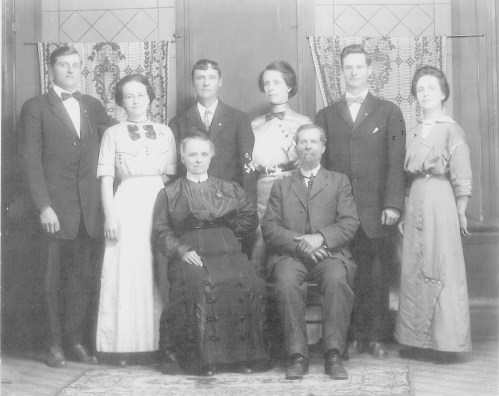
Jeffrey Lensman's Quebec-born great-great-grandfather Odilon Marceau and great-great-grandmother Mathilde Goyette are seen with their adult children in a 1910 handout photo. Lensman, from Salt Lake City, Utah, is seeking Canadian citizenship on the basis of Marceau's birth in Quebec in 1838. THE CANADIAN PRESS/Handout - Jeffrey Lensman (Mandatory Credit)
No Subscription Required

Americans are looking back centuries to find Canadian ancestors — and citizenship

Nono Shen, The Canadian Press 10 minute read Preview
No Subscription Required

Americans are looking back centuries to find Canadian ancestors — and citizenship

Nono Shen, The Canadian Press 10 minute read Thursday, Jun. 11, 2026

Cody Sibley was born and raised in Louisiana, but he always felt his family shared strong ties to Canada thanks to his Acadian ancestors from Nova Scotia.

Sibley said that as an eighth-generation descendant of Acadians, his family's roots could be traced back to "generation zero," Agathe Doucet, who was baptized on Jan. 19, 1710, in Nova Scotia.

He said Doucet married to Pierre Pitre in 1727, but the couple's lives were turned upside down in 1755 when British soldiers arrived at their doors and ordered their expulsion; like many Acadians, they ended up in Louisiana, where the community went on to become known as Cajuns.

Sibley is now among a surge of Americans combing through genealogical records in the hopes of finding a Canadian ancestor — some, like Sibley's, dating back hundreds of years, long before Canada officially existed. They plan to use the information to claim Canadian citizenship, under recently introduced legal changes that remove the so-called "first-generation limit" on citizenship for people born or adopted outside Canada to a Canadian citizen.

Read
Thursday, Jun. 11, 2026
Feathery facts
No Subscription Required

Pair of bird books offer fascinating insight into the avian world

Reviewed by Gene Walz 5 minute read Preview
No Subscription Required

Pair of bird books offer fascinating insight into the avian world

Reviewed by Gene Walz 5 minute read Saturday, May. 16, 2026

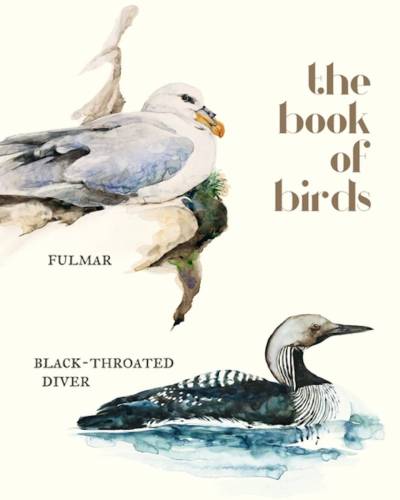
These two newly-released bird books couldn’t be more different. Jackie Morris and Robert Macfarlane’s The Book of Birds is artful and poetic; Louis Lefebvre’s A Bird’s IQ is analytical and academic. Each would make an attractive addition to the libraries of people interested in birds — but not without certain provisos.

The subtitle of The Book of Birds is deceptive — it’s not really a “Field Guide” in the usual sense, too substantial and beautiful to carry along on a bird outing. In hardback with a blue cloth spine and a blue-ribbon page-holder, it’s more like a church song missal than toteable identification helper. It’s best kept inside, protected from wind and weather and damp fingerprints.

The Book of Birds is a follow-up to Morris and Macfarlane’s previous collaboration The Lost Words. When the Oxford Junior Dictionary dropped a bunch of words connected to the natural world (such as acorn, otter, fern, newt and wren), the renowned artist and celebrated author created a “spell book” to conjure back 20 of those words and bring increased awareness of the things the words describe. It proved to be immensely popular.

Here they focus on 49 birds, presented alphabetically from avocet to kestrel to sparrow to yellowhammer, that are in danger of disappearing completely from the natural (European) world. Morris provides the spectacular bird illustrations, and Macfarlane waxes poetic on each of them in the hopes readers will not just identify birds, but “identify with them.”

Read
Saturday, May. 16, 2026
FILE - Young people use their phones to view social media in Sydney, Nov. 8, 2024. (AP Photo/Rick Rycroft, File)
No Subscription Required

Health advice is all over social media. Here’s how to vet claims

Devi Shastri, The Associated Press 6 minute read Preview
No Subscription Required

Health advice is all over social media. Here’s how to vet claims

Devi Shastri, The Associated Press 6 minute read Wednesday, Jun. 3, 2026

Health and wellness advice is available in abundance on social media — from trendy to informative to straight-up disinformation — and you're far from alone in seeing it.

A new survey by the Pew Research Center finds that about 4 in 10 U.S. adults — and around half of those under 50 — get health information from social media or podcasts.

Researchers also looked at the social media profiles of 6,828 health and wellness influencers with at least 100,000 followers. Only about 4 in 10 list a background as a health professional. About one-third called themselves coaches, about 3 in 10 described themselves as entrepreneurs and about 1 in 10 cited their own life experience, like being a parent.

Despite the wide range of expertise, about half of people who get health and wellness information from influencers said the influencers help them better understand their own health, while about one-third said it hasn't made much difference. About 1 in 10 said it made them more confused.

Read
Wednesday, Jun. 3, 2026
(Tim Smith for The Narwhal)
No Subscription Required

Nature is a big part of the Canadian economy — but how big? We crunched the numbers.

Julia-Simone Rutgers 8 minute read Preview
No Subscription Required

Nature is a big part of the Canadian economy — but how big? We crunched the numbers.

Julia-Simone Rutgers 8 minute read Friday, May. 8, 2026

Canada’s vast landscape, which boasts 20 per cent of the world’s freshwater, a quarter of global wetlands and 28 per cent of its boreal forests, is critical to its economy. Natural resource industries — forests, farms, fisheries, mining and oil and gas — together make up approximately seven per cent of Canada’s gross domestic product.

Tension exists between expanding these industrialized sectors and protecting the ecosystems on which they depend.

In Manitoba, some worry protecting the Seal River Watershed, which spans more than 50,000 square kilometres in the province’s north, will hinder opportunities in mineral resources and hydro; to the east, critical mineral mining ambitions in Ontario’s Ring of Fire clash with the protection of the Hudson and James Bay Lowlands, the second-largest carbon sink on earth; and in B.C., Coastal First Nations have protested that lifting the large tanker ban through their waters will endanger the protected Great Bear Rainforest.

These tensions make it easy to frame nature as the antithesis of economic activity, if it’s always put in opposition to projects that are described as growing Canada’s wealth, sovereignty and security.

Read
Friday, May. 8, 2026
No Subscription Required

Bear hunting and conservation questions

Jessica Scott-Reid 4 minute read Friday, May. 8, 2026

You don’t have to be an animal rights activist to oppose black bear hunting in Manitoba. You also don’t have to trade in your ethics in order to understand biology. Most animal and nature-loving Canadians can do it all: understand science and care about animal suffering. Well, unless your paycheque requires otherwise.

Such is the case for the author of a recent article for the Free Press (Why claims of sentience can’t guide black bear policy, Think Tank, April 16), Mark Hall, who conservation-washes the killing of black bears in our province. The B.C.-based hunting advocate also conveniently failed to mention his vested interest in the issue, including that the organization he works for is funded by companies in the trophy hunting business. He also failed to follow the actual science.

The fact is, framing Manitoba’s spring black bear hunt as a conservation measure grounded in biology just doesn’t hold up. Especially since it is also marketed by local companies as trophy hunting. “During your bear hunt you will be placed over an active bear bait site (and) with a little patience and some determination you will be able to harvest a trophy of a lifetime,” states one company’s website.

Lesley Fox, executive director of Canadian wildlife protection charity The Fur Bearers, says “heralding the spring bear hunt as conservation is a public relations tactic that supports special interests, not wildlife.”
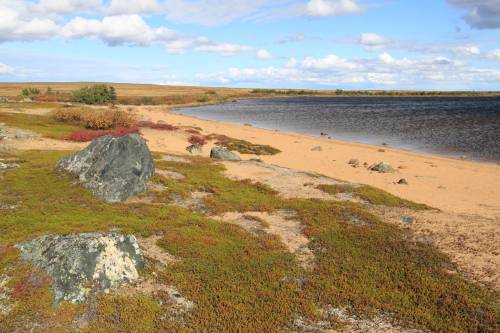
Josh Pearlman Photo, File
                                There are disagreements about how northern Manitoba’s pristine Seal River watershed should be formally protected.
No Subscription Required

Conservation shouldn’t come at the cost of access

Carly Deacon 5 minute read Preview
No Subscription Required

Conservation shouldn’t come at the cost of access

Carly Deacon 5 minute read Tuesday, May. 5, 2026

The Seal River Watershed in northern Manitoba is one of the last great intact ecosystems in North America.

Read
Tuesday, May. 5, 2026
Seeding clock ticks loudly on Prairie fields

Seeding clock ticks loudly on Prairie fields

Laura Rance-Unger 4 minute read Preview

Seeding clock ticks loudly on Prairie fields

Laura Rance-Unger 4 minute read Saturday, May. 2, 2026

If the forecast holds, Manitoba fields will be crawling with equipment this week, as the race to seed this year’s crop begins.

An early-May start to seeding is right on track by historical standards, but still feels late this year, partly because it’s been so cold. Seeding dates have been edging earlier over time, especially for crops such as wheat, as farmers discover they can get away with super-early seeding under the right circumstances.

Due to the compressed growing season characteristic to this part of the world, it’s well-documented the later the crop is seeded, the lower it yields. However, seed too early and there’s a risk that a late-spring frost will force farmers to reseed some fields.

For most, it’s a gamble worth taking.

Read
Saturday, May. 2, 2026
Polonia’s mileage sign points to Poland, Slovakia and Hungary.

Memorable panoramas and paths await in Rosedale

Gord Mackintosh 5 minute read Preview

Memorable panoramas and paths await in Rosedale

Gord Mackintosh 5 minute read Saturday, May. 2, 2026

Margie and I ventured into Manitoba’s compelling but little-known municipality of Rosedale. We’re back on speaking terms.

Provincial Road 265 north of Neepawa gradually rises over eight kilometres up to Riding Mountain. Our destination: Rosedale Farm. Before a final incline, this road tricks you into believing you’re not climbing high above Manitoba’s prairies. As I’ve heard, don’t trust gentle slopes — they’re always up to something.

Although some land remains cultivated to fund the Whitemud Watershed District that maintains this landscape, a government-funded project bought hillside farms here in the 1960s to stop massive erosion. Folks planted about 200,000 trees — for purely sedimental reasons.

Almost five kilometres of two mowed, circular paths now usher visitors through a wonderland of caragana, roses and ferns under tamarack, red, jack and even ponderosa pines. Ahh, forest fragrance. Margie exclaimed, “Smell that!” I romanticized, “Is that a candle? Shampoo? Your deodorant?”

Read
Saturday, May. 2, 2026
MIKAELA MACKENZIE / FREE PRESS
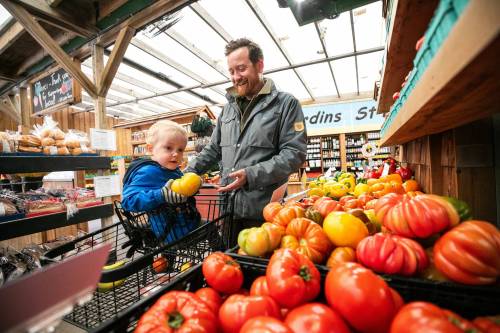
                                Nicolas Audette and Pascal Fournier-Audette, 3, pick out local and Ontario-grown tomatoes Thursday at Jardins St-Léon Gardens, which opened this week for the gardening season.

Local garden centres rev up even as cold temperatures delay outdoor planting season

Malak Abas 5 minute read Preview

Local garden centres rev up even as cold temperatures delay outdoor planting season

Malak Abas 5 minute read Friday, May. 1, 2026

Colin Rémillard is obsessed with the weather.

When he and his family opened Winnipeg gardener’s staple Jardins St-Léon Gardens for the 2026 season on Wednesday, it came after weeks of chilly weather. But with staff itching to go — and customers waiting — they decided to open the doors after a “mad dash” to bring in produce and tag every product in the store one day earlier.

“Everything seemed to roll fairly well. We’re in good shape. It’s going to be a colder spring, that’s just reality,” Rémillard said from the garden centre Friday.

“We’ve had really nice springs for the past one or two years. We always remember only one year in the past, so we think this is unusual, but it is pretty normal to have this amount of cold.”

Read
Friday, May. 1, 2026
SUPPLIED
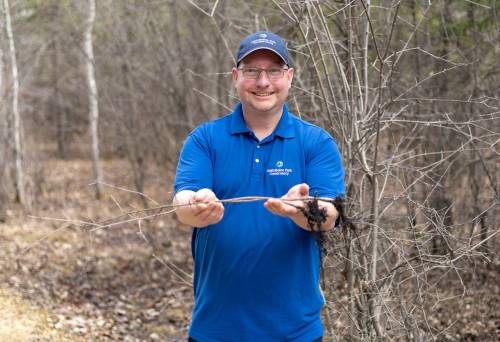
                                Barret Miller, manager of education and programming at Assiniboine Park Conservancy, holds up a piece of European buckthorn, an invasive species plaguing the park and the city. On Saturday May 2, members of the public are invited to help fight the invasion at the park by removing the plant, a first for the APC.

Thorn in their side: Assiniboine Park asks for help to remove invasive plant

Morgan Modjeski 2 minute read Preview

Thorn in their side: Assiniboine Park asks for help to remove invasive plant

Morgan Modjeski 2 minute read Friday, May. 1, 2026

Assiniboine Park Conservancy is rallying the troops to stop the invasion.

Saturday will be a bad day for European buckthorn at the park, as forestry staff are hoping 100 volunteers will show up to help clear the problematic plant.

“It’s a big issue and there’s a lot of it,” said Barret Miller, the park’s manager of education and programming.

This is the first time the conservancy is asking for help from the public to remove the invasive weed from the Winnipeg green space. The section being targeted is in the heart of the park, just south of the cricket fields.

Read
Friday, May. 1, 2026
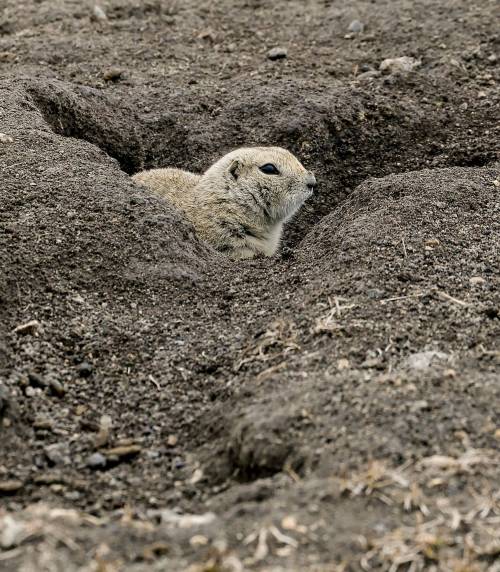
JOHN WOODS / FREE PRESS A squirrel is seen on a baseball field at Fairgrove Park as the city has announced that it will start a ground squirrel management program involving the use of Rozol RTU Field Rodent Bait and RoCon Concentrate Rodenticide at several city parks Tuesday, April 7, 2026. reporter: ?
                                JOHN WOODS / FREE PRESS

Innocuous critter or varmint to vanquish? Debating best approach to Richardson’s ground squirrel long a Prairie predicament

Conrad Sweatman 6 minute read Preview

Innocuous critter or varmint to vanquish? Debating best approach to Richardson’s ground squirrel long a Prairie predicament

Conrad Sweatman 6 minute read Friday, May. 1, 2026

A peculiar debate brewed in the pages of Saskatchewan’s newspapers in 2001.

It did not concern post-9/11 security or squabbles over federal gun and environmental policies, though it did evoke other perennial Canadian political tensions.

It had to do with gophers.

Saskatchewan’s NDP government was choosing an animal to symbolize the province, and the suggestion of a gopher was driving some squirrelly.

Read
Friday, May. 1, 2026
Russ Popp and three conversation officers work to rescue a moose stranded in the ice in the Nopiming Provincial Park on Tuesday. (Supplied)
No Subscription Required

Bird Lake man says freeing moose from ice a ‘rush’

Morgan Modjeski 3 minute read Preview
No Subscription Required

Bird Lake man says freeing moose from ice a ‘rush’

Morgan Modjeski 3 minute read Thursday, Apr. 23, 2026

A Manitoba man says he’s honoured to have been able to help rescue a moose stranded in the ice in Nopiming Provincial Park.

Read
Thursday, Apr. 23, 2026
Ruth Bonneville / Free Press Files
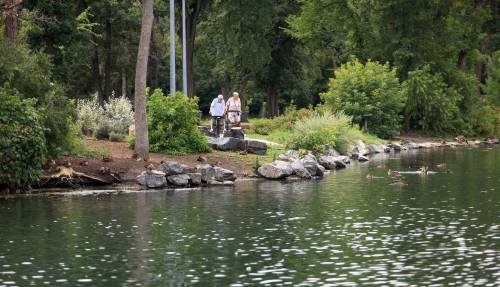
                                The St. Vital Park duck pond is set to get an update, with a new design scheduled to be completed this year and construction expected in 2027.
No Subscription Required

St. Vital Park duck pond to get new design before $3-M rehabilitation in 2027

Joyanne Pursaga 3 minute read Preview
No Subscription Required

St. Vital Park duck pond to get new design before $3-M rehabilitation in 2027

Joyanne Pursaga 3 minute read Thursday, Apr. 23, 2026

A new design is set to spruce up the duck pond at St. Vital Park, making it deeper, more naturalized and less prone to algae.

Read
Thursday, Apr. 23, 2026
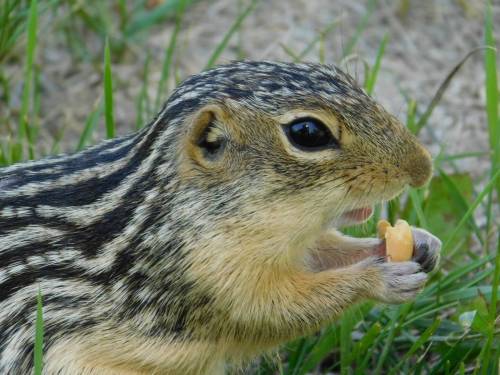
Submitted / Scott Forbes
                                A 13-lined ground squirrel that shares Scott Forbes’ property.
No Subscription Required

What to do with inconvenient wildlife

Scott Forbes 5 minute read Preview
No Subscription Required

What to do with inconvenient wildlife

Scott Forbes 5 minute read Tuesday, Apr. 21, 2026

Their flocks darkened the skies, over a mile wide and hundreds of miles long. It would take hours or even days for them to pass over a fixed spot. They were a common Manitoba resident, nesting as far north as York Factory. In the 1860s, one hunter trapped 80 dozen in a net near St. Andrews.

Read
Tuesday, Apr. 21, 2026
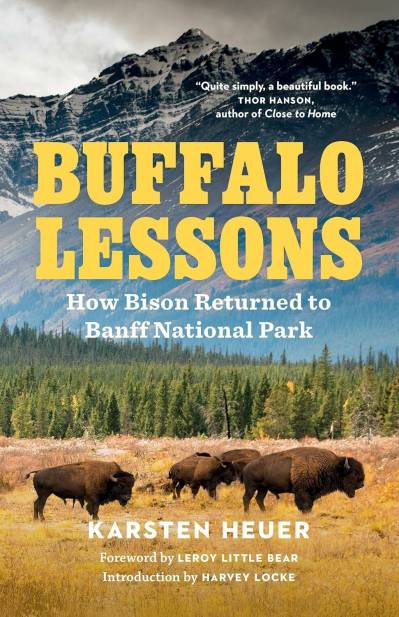
Buffalo Lessons
No Subscription Required

Banff bison brought back from the brink of extinction

Reviewed by Barry Craig 3 minute read Preview
No Subscription Required

Banff bison brought back from the brink of extinction

Reviewed by Barry Craig 3 minute read Saturday, Apr. 18, 2026

There were some in Winnipeg who swear they saw buffalo roaming their city streets during the memorable 1966 blizzard in March that smothered both cars and commuters and brought everything to a snow-filled standstill.

Read
Saturday, Apr. 18, 2026
JORDAN MELOGRANA PHOTO
                                On Friday, the Seal River Watershed Alliance and the provincial and federal governments released a joint proposal to designate the 50,000-square-kilometre ecosystem — one of the world’s largest intact watersheds — as an Indigenous Protected and Conserved Area.

Manitoba puts up $4 million to protect Seal River watershed

Julia-Simone Rutgers 5 minute read Preview

Manitoba puts up $4 million to protect Seal River watershed

Julia-Simone Rutgers 5 minute read Friday, Apr. 17, 2026

Six years after a coalition of four northern Manitoba First Nations banded together to conserve the province’s last major undammed river, the Seal River watershed is “on the cusp” of permanent protection.

On Friday, the Seal River Watershed Alliance and the provincial and federal governments released a joint proposal to designate the 50,000-square-kilometre ecosystem — one of the world’s largest intact watersheds — as an Indigenous Protected and Conserved Area.

“This announcement is an absolutely historic moment in time where we have all different levels of government (and) … the nations coming together to preserve some of the most beautiful areas in the world,” Manitoba Environment Minister Mike Moyes said Friday.

“I am so proud to be part of a government that is moving forward on this historic agreement that is going to protect seven per cent of Manitoba.”

Read
Friday, Apr. 17, 2026
Tim Smith/The Brandon Sun
                                A black bear mother and two cubs forage for food in the rain in Riding Mountain National Park.
No Subscription Required

Why claims of sentience can’t guide black bear policy

Mark Hall 5 minute read Preview
No Subscription Required

Why claims of sentience can’t guide black bear policy

Mark Hall 5 minute read Thursday, Apr. 16, 2026

The modern debate over sustainable-use bear hunting often hinges on a few claims including bears are sentient, therefore humans have no moral right to hunt them.

It’s a powerful emotional argument, but it collapses under scientific scrutiny and ecological reality. Sentience is real. Bears and other animals do feel.

But the leap from “animals feel” to “humans must never hunt” is not supported by biology, ethics or conservation science. If we want wildlife policy that protects species and ecosystems, we need to separate what sentience is from what animal rights activists want it to mean.

In scientific terms, sentience refers to the capacity to feel or perceive, not the ability to make moral judgments.

Read
Thursday, Apr. 16, 2026
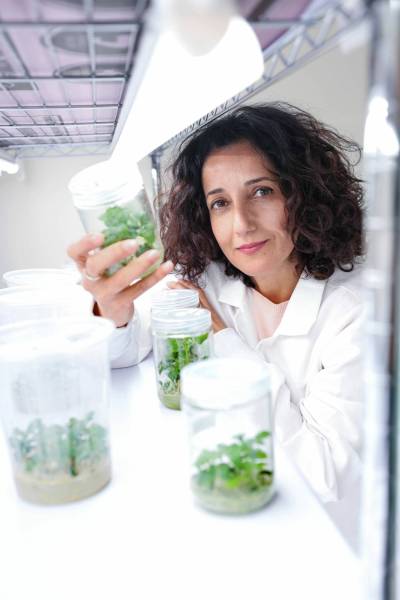
Ruth Bonneville Free Press BIZ - GeneNeer Photo of Kinneret Shefer CEO of GeneNeer Canada, in lab at Albrechtsen Research Centre. This is for a biz article by Aaron April 8th, 2026
No Subscription Required

Crop-enhancement firm eyes potato prosperity

Aaron Epp 5 minute read Preview
No Subscription Required

Crop-enhancement firm eyes potato prosperity

Aaron Epp 5 minute read Tuesday, Apr. 14, 2026

Of all the research labs in all the cities in all the world, Kinneret Shefer walks into St. Boniface Hospital’s.

The researcher and entrepreneur is the co-founder of GeneNeer Ltd., an agricultural biotechnology company from Israel. Earlier this year, the company established its North American operations at the Albrechtsen Research Centre in the central Winnipeg hospital.

“We moved to Canada because our technology developed, we are moving to implementation and we have some business agreements in negotiation,” said Shefer, who holds a PhD in genetic counselling from the Hebrew University of Jerusalem.

GeneNeer launched its Canadian operations in January. The company converted laboratory facilities at the research centre and had them operating within two weeks, allowing research activities to begin almost immediately.

Read
Tuesday, Apr. 14, 2026
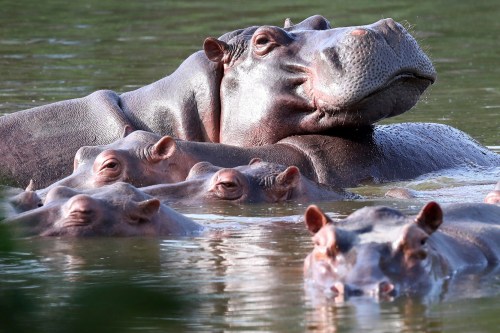
FILE - Hippos float in the lagoon at Hacienda Napoles Park, once the private estate of drug kingpin Pablo Escobar who imported three female hippos and one male decades ago in Puerto Triunfo, Colombia, Thursday, Feb. 4, 2021. (AP Photo/Fernando Vergara, File)
No Subscription Required

Colombia approves plan to cull roaming hippos linked to Pablo Escobar

Manuel Rueda, The Associated Press 3 minute read Preview
No Subscription Required

Colombia approves plan to cull roaming hippos linked to Pablo Escobar

Manuel Rueda, The Associated Press 3 minute read Tuesday, May. 5, 2026

BOGOTA, Colombia (AP) — Colombian officials on Monday authorized a plan to cull dozens of hippos roaming freely through a region in the center of the country, where they threaten villagers and displace native species years after notorious drug lord Pablo Escobar brought in the first ones.

Environment Minister Irene Vélez said previous methods to control their population have been expensive and unsuccessful, including neutering some of the animals or moving them to zoos. Vélez said up to 80 hippos would be affected by the measure. She did not say when hunting would begin.

“If we don’t do this we will not be able to control the population,” Vélez said. “We have to take this action to preserve our ecosystems.”

Colombia is the only country outside of Africa with a wild hippo population. The hippos are the descendants of four brought to the country in the 1980s by Escobar as he built a private zoo in Hacienda Nápoles, a gigantic ranch in the Magdalena River valley with a private landing strip that served as his rural abode.

Read
Tuesday, May. 5, 2026
No Subscription Required

Few food innovations as polarizing as genetic modification

Laura Rance 4 minute read Saturday, Apr. 11, 2026

Most of us have been eating foods derived from genetically modified crops for a generation or so, and so far, none of the ills attributed to modern food systems have been traced back to their use.

Except, perhaps our propensity towards overeating.

Since their introduction in the mid-1990s, genetically modified crops have taken over nearly half of the global area sown to soybeans, canola and corn.

The foods from these varieties, which are most often genetically modified to allow farmers to use herbicides that kill weeds but not the crop, are the same as traditional varieties in every measurable way.

Chief Dwayne Sonny Blackbird of Keeseekoowenin Ojibway First Nation has claimed responsibility for a legal threat that caused boats to be banned from Clear Lake this year. Blackbird said the action came from his deep interest in the health of the lake, which has served as a place of healing for his family for generations. (Connor McDowell/The Brandon Sun)
No Subscription Required

Not consulted on Clear Lake motorboating: Chief

Connor McDowell 5 minute read Preview
No Subscription Required

Not consulted on Clear Lake motorboating: Chief

Connor McDowell 5 minute read Saturday, Apr. 11, 2026

The chief of Keeseekoowenin Ojibway First Nation says he did not consent to the return of motorboats at Clear Lake.

Read
Saturday, Apr. 11, 2026
Nik Friesen-Hughes photo
                                Looking for an echinacea you count on? Magnus coneflower keeps coming back if you plant it in lean soil.
No Subscription Required

Pragmatic plots

Colleen Zacharias 7 minute read Preview
No Subscription Required

Pragmatic plots

Colleen Zacharias 7 minute read Saturday, Apr. 11, 2026

Our climate is changing rapidly, and our garden plans need to adapt accordingly.

“We need a planting design that functions as a resilient, self-sustaining ecosystem suited to our climate,” says Nik Friesen-Hughes, landscape designer and owner of Dogwood Landscape Design Build. “We’re already seeing warmer temperatures overall in winter and summer and a longer growing season. In a climate such as Winnipeg’s, plants must handle extreme cold, heavy spring moisture and drought. So, we want to design a garden that’s resilient to all these things.”

Managing landscape water efficiently is a good starting point.

“Resilient landscapes don’t just use less water, they manage the water where it is,” says Friesen-Hughes. What if you could charge up your soil profile in spring with the extra moisture in the snow to help plants withstand hot, dry conditions that occur later on?

Read
Saturday, Apr. 11, 2026
  • First
  • Previous
  • 1
  • 2
  • 3
  • 4
  • 5
  • 6
  • 7
  • 8
  • 9
  • Next
  • Last
Winnipeg Free Press Logo
Links
Replica E-Edition Front Page Arts & Life Business Canada Local Opinion Sports World Reader Bridge
WFP Events Free Press 101: How we practise journalism Media Kit About Us Archives Free Press Community Review Community Connect Classifieds Contests
FP Features Homes Newsletters Obituaries Podcasts Puzzles Photo and Book Store Become a Free Press Patron Privacy Policy
    • Media Literacy and Learning Contact
    • Contact Us
    • Advertising Contact
    • Send a Letter to the Editor
    • Staff biographies
    • Submit a News Tip
    • Subscribe to Newsletters
    • Notifications
    • My Account
    • Log Out
    • Log in
    • Create Account
    • Grid View
    • List View
    • Compact View
    • Text Size
    • Translate
    • Dark Mode
    • Light Mode
    • System Default
©2026 Winnipeg Free Press