Science Identity

Please review each article prior to use: grade-level applicability and curricular alignment might not be obvious from the headline alone.
No Subscription Required

Winnipeg pair look to launch EyeMirage device for sale in Canada in fall, with eyes to follow on international markets

Gabrielle Piché 5 minute read Preview
No Subscription Required

Winnipeg pair look to launch EyeMirage device for sale in Canada in fall, with eyes to follow on international markets

Gabrielle Piché 5 minute read Wednesday, May. 27, 2026

By winter, a pair of Winnipeg entrepreneurs aim to have portable vision and concussion-screening products circulating Canada.

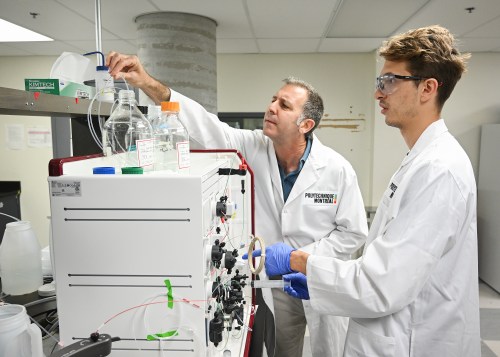
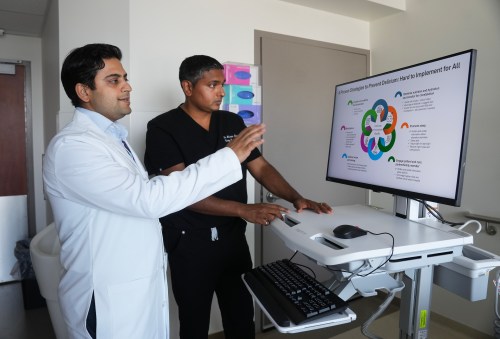
“Designing a device that is portable, affordable and AI-based and smartphone-based is a puzzle,” Dr. Behzad Mansouri said, a prototype of the device on the desk in front of him at the Brain, Vision and Concussion Clinic off St. Anne’s Road on Monday.

He’s a neuro-ophthalmologist at the clinic. He’s also the co-founder of Neuroptek, the medical technology company behind headsets meant to help diagnose concussions and other vision and neurological injuries and disorders.

The products look like virtual reality headsets. Instead of games, users take visual tests they’d find at a doctor’s office. They might try to read letters or identify colours.

Read
Wednesday, May. 27, 2026
No Subscription Required

As permafrost thaws, some headwaters in Canada’s North turn orange and toxic: study

Jordan Omstead, The Canadian Press 7 minute read Preview
No Subscription Required

As permafrost thaws, some headwaters in Canada’s North turn orange and toxic: study

Jordan Omstead, The Canadian Press 7 minute read Friday, Jun. 12, 2026

Ancient bedrock exposed by disappearing permafrost is releasing toxic metals into Canada's northern rivers, a new study says, with once-pristine subarctic streams now comparable in some cases to highly acidic, contaminated mining sites.

The findings out of Yukon point to an "unfolding environmental disaster," one co-author said, and adds to alarm over the rapid climate-fuelled changes in the North.

"We don't know the end point, but there's nothing about this that gives me any feeling of like, 'oh, we're going to be OK'," said co-author Sean Carey, a professor at McMaster University.

"I'm not even a gloomy person. This looks pretty gloomy."

Read
Friday, Jun. 12, 2026
No Subscription Required

Parade of ghostly icebergs brings joy and wonder to Newfoundland and Labrador

Sarah Smellie, The Canadian Press 4 minute read Preview
No Subscription Required

Parade of ghostly icebergs brings joy and wonder to Newfoundland and Labrador

Sarah Smellie, The Canadian Press 4 minute read Saturday, May. 30, 2026

ST. JOHN'S -

At the top of Signal Hill in St. John's, N.L., on Tuesday afternoon, a steady stream of people walked around a rocky cliff and gasped.

Some cheered, some took out their phones to capture the moment — a rush of awe as an iceberg floated in the ocean below, cleaved off from a Greenland glacier and delivered by the Labrador current on a cloudless spring day.

It's a banner year for icebergs in Newfoundland and Labrador, where tourists and residents alike are gathering on shores across the province to welcome the ancient visitors.

Read
Saturday, May. 30, 2026
No Subscription Required

What to do with inconvenient wildlife

Scott Forbes 5 minute read Preview
No Subscription Required

What to do with inconvenient wildlife

Scott Forbes 5 minute read Tuesday, Apr. 21, 2026

Their flocks darkened the skies, over a mile wide and hundreds of miles long. It would take hours or even days for them to pass over a fixed spot. They were a common Manitoba resident, nesting as far north as York Factory. In the 1860s, one hunter trapped 80 dozen in a net near St. Andrews.

Read
Tuesday, Apr. 21, 2026
No Subscription Required

B.C. ‘chemical fingerprint’ scheme to track illicit drugs is likened to DNA tests

Marissa Birnie, The Canadian Press 4 minute read Preview
No Subscription Required

B.C. ‘chemical fingerprint’ scheme to track illicit drugs is likened to DNA tests

Marissa Birnie, The Canadian Press 4 minute read Saturday, May. 9, 2026

VANCOUVER - Tucked in the basement of the chemistry building at the University of British Columbia, an arm-sized robot carries out the repetitive task of collecting and weighing colourful vials as machinery whirrs in the background.

It's part of a unique blend of robotics, chemistry and artificial intelligence aimed at helping police and health officials trace the path of batches of illicit drugs.

Police hope the "chemical fingerprinting" program is a game-changer in B.C.'s battle against toxic illicit drugs, with one senior officer likening it to DNA testing.

The provincially funded program will use technology developed at UBC by Aidos Innovations that looks at the chemical makeup of drugs and calculates their method of production, which police say could help them learn how drugs move over time.

Read
Saturday, May. 9, 2026
No Subscription Required

Crop-enhancement firm eyes potato prosperity

Aaron Epp 5 minute read Preview
No Subscription Required

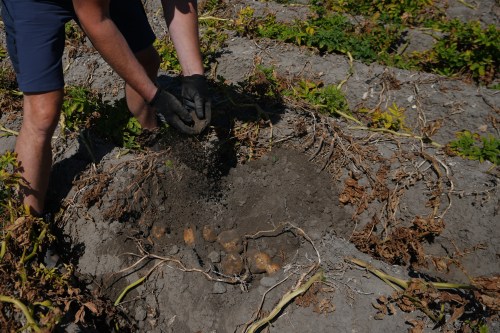
Crop-enhancement firm eyes potato prosperity

Aaron Epp 5 minute read Tuesday, Apr. 14, 2026

Of all the research labs in all the cities in all the world, Kinneret Shefer walks into St. Boniface Hospital’s.

The researcher and entrepreneur is the co-founder of GeneNeer Ltd., an agricultural biotechnology company from Israel. Earlier this year, the company established its North American operations at the Albrechtsen Research Centre in the central Winnipeg hospital.

“We moved to Canada because our technology developed, we are moving to implementation and we have some business agreements in negotiation,” said Shefer, who holds a PhD in genetic counselling from the Hebrew University of Jerusalem.

GeneNeer launched its Canadian operations in January. The company converted laboratory facilities at the research centre and had them operating within two weeks, allowing research activities to begin almost immediately.

Read
Tuesday, Apr. 14, 2026
No Subscription Required

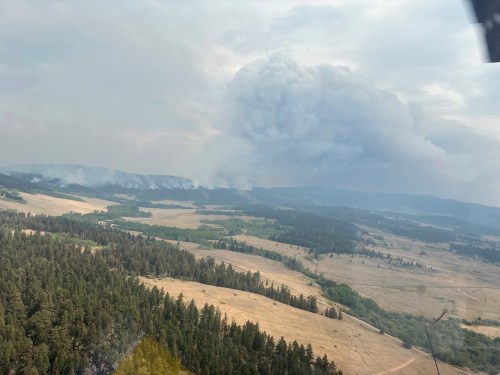
Manitoba students’ science projects aimed at eye health, wildfire prevention take top marks

Chris Kitching 5 minute read Preview
No Subscription Required

Manitoba students’ science projects aimed at eye health, wildfire prevention take top marks

Chris Kitching 5 minute read Sunday, Apr. 12, 2026

More than 350 students in grades 4 to 12 took part in MSSS, the province’s largest annual science event, at the University of Manitoba.

Read
Sunday, Apr. 12, 2026
No Subscription Required

Not consulted on Clear Lake motorboating: Chief

Connor McDowell 5 minute read Preview
No Subscription Required

Not consulted on Clear Lake motorboating: Chief

Connor McDowell 5 minute read Saturday, Apr. 11, 2026

The chief of Keeseekoowenin Ojibway First Nation says he did not consent to the return of motorboats at Clear Lake.

Read
Saturday, Apr. 11, 2026
No Subscription Required

Moon mission Earth photo could change your worldview

Jen Zoratti 5 minute read Preview
No Subscription Required

Moon mission Earth photo could change your worldview

Jen Zoratti 5 minute read Saturday, Apr. 11, 2026

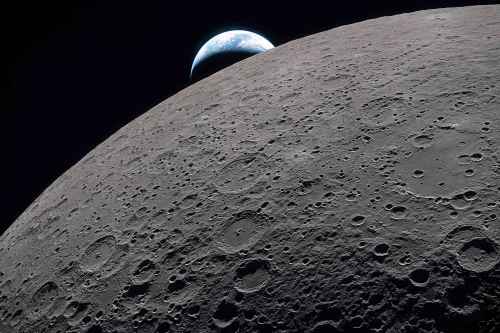
Having a photo of Earth — the whole Earth — taken by a human is an incredible thing, and now we have a new one. It’s a beautiful image. But it’s also a deeply moving one.

Read
Saturday, Apr. 11, 2026
No Subscription Required

Artemis II astronauts make long-distance call to the space station as they head home from the moon

Marcia Dunn, The Associated Press 5 minute read Preview
No Subscription Required

Artemis II astronauts make long-distance call to the space station as they head home from the moon

Marcia Dunn, The Associated Press 5 minute read Wednesday, Apr. 29, 2026

HOUSTON (AP) — Still aglow from their triumphant lunar flyby, the Artemis II astronauts made more history Tuesday: calling their friends aboard the International Space Station hundreds of thousands of miles away as they headed home from the moon.

It was the first moonship-to-spaceship radio linkup ever. NASA's Apollo crews had no off-the-planet company back in the 1960s and 1970s, the last time humanity set sail for deep space.

"We have been waiting for this like you can’t imagine,” Artemis II commander Reid Wiseman called out.

For Christina Koch on Artemis II and Jessica Meir aboard the space station, it marked a joyous space reunion despite being 230,000 miles (370,000 kilometers) apart. The two teamed up for the world's first all-female spacewalk in 2019 outside the orbiting lab.

Read
Wednesday, Apr. 29, 2026
No Subscription Required

Winnipeg dad, young son captivated by first mission to moon in more than a half-century

Tyler Searle 4 minute read Preview
No Subscription Required

Winnipeg dad, young son captivated by first mission to moon in more than a half-century

Tyler Searle 4 minute read Wednesday, Apr. 1, 2026

Father hopes witnessing the launch might leave an impression on his son who has developed a budding interest in astronomy.

Read
Wednesday, Apr. 1, 2026
No Subscription Required

The Latest: Artemis II astronauts reach orbit on historic mission to the moon and back

The Associated Press 22 minute read Preview
No Subscription Required

The Latest: Artemis II astronauts reach orbit on historic mission to the moon and back

The Associated Press 22 minute read Saturday, Apr. 25, 2026

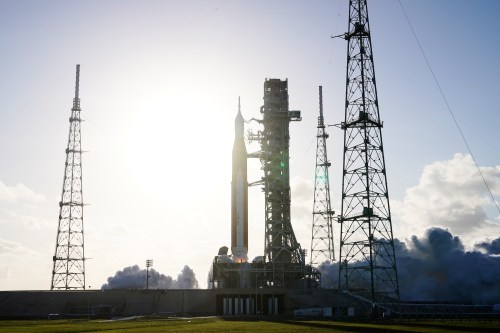
Four astronauts embarked on a high-stakes flight around the moon Wednesday, humanity’s first lunar voyage in more than half a century and the thrilling leadoff in NASA’s push toward a landing in two years.

NASA's launch team loaded more than 700,000 gallons of fuel into the 32-story Space Launch System rocket early Wednesday, setting the stage for blast off in the evening at Kennedy Space Center in Florida.

Artemis astronauts Reid Wiseman, Victor Glover, Christina Koch and Jeremy Hansen are on board. They’ll hurtle several thousand miles beyond the moon, hang a U-turn and then come straight back. No circling around the moon, no stopping for a moonwalk — just a quick out-and-back lasting less than 10 days. NASA promises more boot prints in the gray lunar dust, but not before a couple practice missions.

Unlike the Apollo missions that sent astronauts to the moon from 1968 through 1972, Artemis’ debut crew includes a woman, a person of color and a Canadian citizen.

Read
Saturday, Apr. 25, 2026
No Subscription Required

After 15 years of building North American brand, Winnipeg-based XiteBio Technologies Inc. eyes overseas markets

Aaron Epp 6 minute read Preview
No Subscription Required

After 15 years of building North American brand, Winnipeg-based XiteBio Technologies Inc. eyes overseas markets

Aaron Epp 6 minute read Monday, Mar. 23, 2026

Out of the laboratory and into farmers’ fields.

If you had to describe Manas Banerjee’s career trajectory in fewer than 10 words, you could do a lot worse than that.

Banerjee is the CEO and founder of XiteBio Technologies Inc., an agricultural biotechnology company based in south Winnipeg, but before that, he was a researcher, scientist and professor at a number of institutions.

After earning a PhD in soil microbiology from the University of Aberdeen in Scotland, Banerjee moved to Canada. He was a post-doctoral fellow at the University of Saskatchewan, a research associate at the University of Manitoba and an adjunct professor at Western University (Ontario), publishing numerous papers and book chapters related to soil science.

Read
Monday, Mar. 23, 2026
No Subscription Required

Infrequent lunar eclipse performs Copper Side of the Moon early Tuesday morning

Nicole Buffie 3 minute read Preview
No Subscription Required

Infrequent lunar eclipse performs Copper Side of the Moon early Tuesday morning

Nicole Buffie 3 minute read Saturday, Feb. 28, 2026

Stargazers in Manitoba have the chance Tuesday to watch the last total lunar eclipse on this side of the world until 2029.

Read
Saturday, Feb. 28, 2026
No Subscription Required

First Nation says Hydro misuse of river diversion destroying sturgeon population

Chris Kitching 5 minute read Preview
No Subscription Required

First Nation says Hydro misuse of river diversion destroying sturgeon population

Chris Kitching 5 minute read Thursday, Jan. 22, 2026

A northern First Nation is calling on Manitoba Hydro to alter its use of the Churchill River diversion to protect a lake sturgeon population allegedly decimated by hydroelectric operations.

Tataskweyak Cree Nation Chief Doreen Spence said the culturally significant species is facing extinction on the river system without immediate intervention, 50 years after Manitoba built the diversion to send water to large power generating stations.

“The diversion has artificially altered the flow of the water… so much that the river is barely able to sustain life as it once did,” Spence told reporters in Winnipeg Thursday.

“Manitoba Hydro must operate the diversion in sync with the natural flow regime of the river for the sturgeon to survive.”

Read
Thursday, Jan. 22, 2026
No Subscription Required

U of M researchers studying whether genetic testing helps zero in on effective mental-health treatment meds

Malak Abas 3 minute read Preview
No Subscription Required

U of M researchers studying whether genetic testing helps zero in on effective mental-health treatment meds

Malak Abas 3 minute read Thursday, Dec. 11, 2025

A team of University of Manitoba researchers is recruiting people seeking mental-health treatment for a study that could take the guesswork out of medication with the help of genetic testing.

The study will offer free pharmacogenomic testing — which predicts how a person may react to medications based on their genetic makeup — to 200 adults who are looking to start a new medication or switch their medication treating a mental-health issue.

“Someone with mental-health conditions, they (try) multiple medications, and sometimes it takes months or years to get to a point where those drugs work for them, or to have less side effects,” said Dr. Abdullah Maruf, the lead investigator on the study and assistant professor in U of M’s College of Pharmacy.

“Pharmacogenomic testing can find out how our body will respond to these kinds of medication.”

Read
Thursday, Dec. 11, 2025
No Subscription Required

U of M over the moon about satellite’s lunar launch

Malak Abas 3 minute read Preview
No Subscription Required

U of M over the moon about satellite’s lunar launch

Malak Abas 3 minute read Monday, Nov. 24, 2025

A milk-carton sized satellite built by Manitoba researchers will go where no Canadian spacecraft has gone before — the moon’s orbit.

Read
Monday, Nov. 24, 2025
No Subscription Required

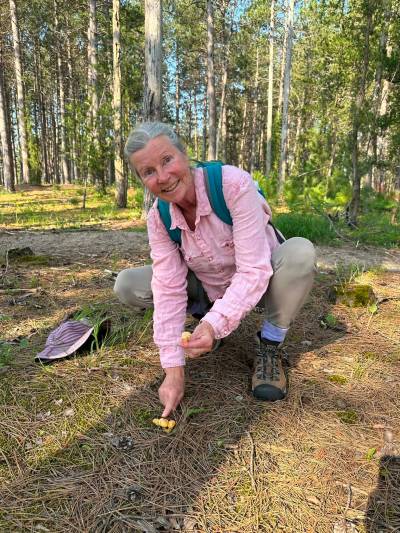
Author goes far and wide on quest to document all plants native to Manitoba

Colleen Zacharias 7 minute read Preview
No Subscription Required

Author goes far and wide on quest to document all plants native to Manitoba

Colleen Zacharias 7 minute read Saturday, Nov. 15, 2025

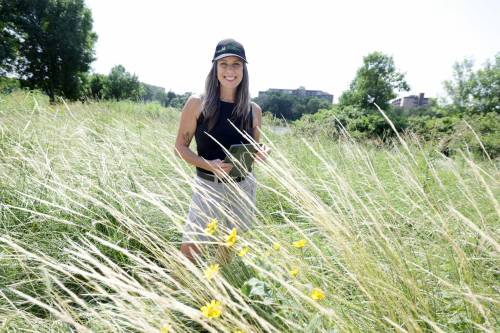
When Diana Bizecki Robson was growing up in Saskatoon during the 1970s, she enjoyed riding her bike to parks and riverbanks where she spent hours studying the diversity of wild plants and their pollinators.

After deciding to become a biologist, Bizecki Robson worked for a few years as an environmental consultant which allowed her to conduct plant surveys. But it was when the opportunity to work at the Manitoba Museum came along — in October 2003 — that she could finally pursue the type of field work and research she loves.

Today, Bizecki Robson is the curator of botany at the Manitoba Museum. She oversees a herbarium which holds over 50,000 specimens.

“One of the things I discovered as part of a collection assessment project that I did when I first got here was that the museum did not have a specimen of every single species of plant or fungus or lichen (from this province) in its collection,” said Bizecki Robson.

Read
Saturday, Nov. 15, 2025
No Subscription Required

Three scientists at US universities win Nobel Prize in physics for advancing quantum technology

Kostya Manenkov, Seth Borenstein And Mike Corder, The Associated Press 6 minute read Preview
No Subscription Required

Three scientists at US universities win Nobel Prize in physics for advancing quantum technology

Kostya Manenkov, Seth Borenstein And Mike Corder, The Associated Press 6 minute read Wednesday, Oct. 15, 2025

STOCKHOLM (AP) — Three scientists won the Nobel Prize in physics Tuesday for research on the strange behavior of subatomic particles called quantum tunneling that enabled the ultra-sensitive measurements achieved by MRI machines and laid the groundwork for better cellphones and faster computers.

The work by John Clarke, Michel H. Devoret and John M. Martinis, who work at American universities, took the seeming contradictions of the subatomic world — where light can be both a wave and a particle and parts of atoms can tunnel through seemingly impenetrable barriers — and applied them in the more traditional physics of digital devices. The results of their findings are just starting to appear in advanced technology and could pave the way for the development of supercharged computing.

The prizewinning research in the mid-1980s took the subatomic “weirdness of quantum mechanics” and found how those tiny interactions can have real-world applications, said Jonathan Bagger, CEO of the American Physical Society. The experiments were a crucial building block in the fast-developing world of quantum mechanics.

Speaking from his cellphone, Clarke, who spearheaded the research team, said: “One of the underlying reasons that cellphones work is because of all this work."

Read
Wednesday, Oct. 15, 2025
No Subscription Required

Ralliers decry Kinew’s pro-pipeline policy

Nicole Buffie 4 minute read Preview
No Subscription Required

Ralliers decry Kinew’s pro-pipeline policy

Nicole Buffie 4 minute read Saturday, Sep. 20, 2025

Almost 300 people braved the rain Saturday afternoon to demand Premier Wab Kinew and the NDP government take action on climate change.

A crowd donning rain jackets and umbrellas gathered on Osborne Street in front of the Fort Rouge Leisure Centre next to Kinew’s constituency office with posters decrying proposed pipelines and Manitoba’s extreme wildfire season.

“Watching how the weather has changed due to climate change has been really concerning to me. I look outside every day and I think about it,” said Ashley Blackshaw, an environmental studies graduate who drove to Winnipeg from Starbuck to attend Saturday’s rally.

Blackshaw made a custom sign bearing lyrics from rock band Smashmouth’s hit “All Star” saying “The ice we’re skating is getting pretty thin.”

Read
Saturday, Sep. 20, 2025
No Subscription Required

Will electric tractors gain traction? At a pilot event for farmers, researchers see possibilities

Michael Phillis, Melina Walling And Joshua A. Bickel, The Associated Press 7 minute read Preview
No Subscription Required

Will electric tractors gain traction? At a pilot event for farmers, researchers see possibilities

Michael Phillis, Melina Walling And Joshua A. Bickel, The Associated Press 7 minute read Friday, Oct. 10, 2025

EAST LANSING, Mich. (AP) — In the soft dirt of an indoor horseback riding ring last month, a group of farmers got ready to test drive a new piece of equipment: an electric tractor.

As they took turns climbing in — some surprised by its quick acceleration — they gave real-time feedback to the Michigan State University researchers who have been developing it for over two years.

The farmers remarked on the motor's quiet whir. Most were intrigued, or at least open to the idea. Some were concerned that the battery on the underside of the carriage would mean a lower clearance over the field, while others worried that it would simply be too expensive.

“What we hope to do when we retire is we want to get everything electric on the farm. The tractor is the last electric implement to get,” said Don Dunklee, one of the farmers to provide feedback. He runs a small organic vegetable farm that's relied on wind and solar for decades.

Read
Friday, Oct. 10, 2025
No Subscription Required

Province creates hunting buffer zone on Bloodvein First Nation

Carol Sanders 3 minute read Preview
No Subscription Required

Province creates hunting buffer zone on Bloodvein First Nation

Carol Sanders 3 minute read Monday, Sep. 15, 2025

The Manitoba government is creating a buffer zone restricting where non-Indigenous hunters can harvest moose on Bloodvein First Nation’s traditional lands.

Manitoba Natural Resources and Indigenous Futures Minister Ian Bushie announced the change late Monday as moose season began for game hunting areas 17, 17A and 17B that includes the traditional areas of the First Nation, located 285 kilometres north of Winnipeg.

The community, which established a check stop to prevent illegal drugs and contraband from entering the First Nation, warned “outside hunters” on social media weeks ago that they’re not welcome to take moose on their traditional lands.

The Manitoba Wildlife Federation has questioned the First Nation’s authority to block licensed hunters with a moose tag from the area and called on the provincial government to intervene.

Read
Monday, Sep. 15, 2025
No Subscription Required

Nation building needs research — not just infrastructure

Mario Pinto 5 minute read Saturday, Sep. 13, 2025

Living through the second Trump administration as a Canadian has been likened, by one commentator, to a teenager being kicked out of the house. We must grow up fast and deal with the fact that we can now only rely on ourselves. So, the federal government is moving fast on files related to security, sovereignty and connectivity. The Liberals passed Bill C-5 to expedite projects that will help Canadians live on our own. Wonderful.

But.

In our rush forward, we cannot overlook the power of nation-building research, which must go hand-in-glove with these infrastructure projects. Research and infrastructure are not competing priorities: they are essential partners in nation-building.

Bill C-5, the Building Canada Act, grants the federal government sweeping powers to quickly build large projects that help goods move faster and more easily. This act intends to strengthen our security, autonomy, resilience and advance the interests of Indigenous Peoples. But there can be no nation-building without nation-building research.

No Subscription Required

Residents pour cold water on proposed development in St. Vital

Joyanne Pursaga 5 minute read Preview
No Subscription Required

Residents pour cold water on proposed development in St. Vital

Joyanne Pursaga 5 minute read Friday, Sep. 12, 2025

Some south St. Vital residents hope to stop a development proposal to build 23 new homes over fears the construction would put their well water at risk.

The proposal aims to add the homes at 45 Daman Farm Rd., 100 Jean Louis Rd. and 2974 St. Mary’s Rd., a 57-acre property on the west side of St. Mary’s Road in the St. Vital Perimeter South neighbourhood. The area is located within city limits but does not have city water and sewer service.

“This particular property lies in a sensitive groundwater area and every well that’s drilled in this area just contaminates the water even further by adding more salt,” said Michelle Olivson, who lives in the area.

City staff recommended the housing application be rejected over the groundwater concerns but city council’s property and development committee voted in favour of the project Friday, echoing a previous community committee vote.

Read
Friday, Sep. 12, 2025