WEATHER ALERT

Economics and Resources

Please review each article prior to use: grade-level applicability and curricular alignment might not be obvious from the headline alone.

Put fairness at centre of Manitoba budget

Molly McCracken 5 minute read Thursday, Feb. 26, 2026

The thousands of Manitobans struggling to pay their rent and put food on the table are looking for relief in Manitoba’s upcoming spring budget. The wealthy are benefiting from the status quo; political leadership is needed to stop rising poverty and act on the gap between the rich and the rest of us. The Manitoba government must rise to the occasion and deliver strong policy responses to provide help and relief. Inaction will only let the income gap widen further.

Closing the gap between the rich and the rest of us is not only a moral and ethical imperative; it is also key to improving overall health, reducing crime, supporting labour force participation, and community well-being. Wealth concentration undermines democracy by enabling those with means to influence government in ways that benefit themselves to the disadvantage of the majority.

Recent Canadian data show income inequality at record levels, with the wealthiest households benefiting most. According to Statistics Canada, over the past year, those living in the lowest quarter have 0.5 per cent less disposable income. Those with the highest have 4.3 per cent more.

In the last budget, the Manitoba government took a promising step by clawing back the basic personal amount tax credit for those earning more than $200,000 a year. This is an important first step and should include more upper-class Manitobans.

Winnipeg School Division proposes 9.3 per cent tax increase

Maggie Macintosh 3 minute read Preview

Winnipeg School Division proposes 9.3 per cent tax increase

Maggie Macintosh 3 minute read Thursday, Feb. 26, 2026

Manitoba’s largest school division has tabled a draft budget that raises local property taxes by upwards of nine per cent.

The Winnipeg School Division has released a $549.7-million blueprint for its 82 schools, which are attended by 32,000 children.

The plan freezes staffing at current levels, upgrades information technology systems and resumes full-day kindergarten.

“What we’re proposing is basically a stand-pat budget where we want to maintain (our roster of) teachers, EAs and clinicians, ” chief superintendent Matt Henderson told a public budget meeting on Tuesday. “With that, though, comes some pressure.”

Read
Thursday, Feb. 26, 2026

Housing affordability challenges remain despite recent improvements: CMHC

Daniel Johnson, The Canadian Press 3 minute read Preview

Housing affordability challenges remain despite recent improvements: CMHC

Daniel Johnson, The Canadian Press 3 minute read Thursday, Feb. 26, 2026

A new analysis from the Canada Mortgage and Housing Corp. shows housing affordability challenges have eased in recent years but still remain at historic highs, and have even spread to other major cities.

The national housing agency says affordability issues are no longer limited to Canada's largest cities and have spread to other areas such as Ottawa, Montreal and Halifax. One of the key factors, CMHC said, was the impact of labour mobility brought on by remote work during the COVID-19 pandemic, which has persisted even as the job market has changed.

"Affordability started recovering slightly since 2023, when it reached historical lows. For home ownership, we observed improved affordability, while for renters we saw stabilization over the last two years," said Mathieu Laberge, CMHC chief economist and senior vice-president of housing insights, in a news release Wednesday.

"Even with these improvements, we cannot overlook how much housing affordability has eroded in recent years, especially in Ottawa, Montreal and Halifax, clearly demonstrating that Canada's housing affordability crisis is no longer limited to Toronto and Vancouver."

Read
Thursday, Feb. 26, 2026

First Nations awaiting Hydro consults

Gabrielle Piché 4 minute read Preview

First Nations awaiting Hydro consults

Gabrielle Piché 4 minute read Wednesday, Feb. 25, 2026

With licences for two major Manitoba Hydro projects set to expire later this year, affected First Nations await consultation — and want to see change.

Licences for the Churchill River Diversion and Lake Winnipeg Regulation projects, first issued in the 1970s, expire Sept. 1 and Aug. 1, respectively.

The diversion directs water to five stations accounting for roughly 75 per cent of Manitoba’s power generation. The latter project allows Hydro to generate power by manipulating Lake Winnipeg’s water levels.

There is no timeline for the licence renewals, said Environment Minister Mike Moyes. He said that would be dependent on consultations with impacted First Nations.

Read
Wednesday, Feb. 25, 2026
No Subscription Required

Organizations join forces to make First Nation kids’ dreams a little sweeter

John Longhurst 4 minute read Preview
No Subscription Required

Organizations join forces to make First Nation kids’ dreams a little sweeter

John Longhurst 4 minute read Wednesday, Feb. 25, 2026

Nearly two dozen children in Pukatawagan will be able to sleep in their own new beds this week, thanks to the Manitoba chapter of the Knights of Columbus and Sleep in Heavenly Peace.

The Knights, an organization that helps Catholic men live out their faith through service to their parishes and the community, has partnered with Sleep in Heavenly Peace to provide 22 beds for the children.

The beds, which are being shipped in pieces, will arrive this week by truck and train, together with 500 donated coats and seven wheelchairs. The cost of all the items, along with transportation, has been covered by the Manitoba chapter of the Knights.

A group of volunteers, led by Mark Desjardins, who leads the chapter, will leave Wednesday, driving to the community located about 200 kilometres north of The Pas to assemble and install the beds.

Read
Wednesday, Feb. 25, 2026

Unpredictable health-care costs a given, redundant health-system bureaucracy an unaffordable burden

Tom Brodbeck 5 minute read Preview

Unpredictable health-care costs a given, redundant health-system bureaucracy an unaffordable burden

Tom Brodbeck 5 minute read Tuesday, Feb. 24, 2026

It’s an annual ritual in Manitoba politics: the provincial government blows past its health-care budget, critics cry mismanagement and the government responds that the spending was unavoidable because people got sick, needed care and deserved treatment.

This year is no different. The NDP government last week approved an unbudgeted $200 million to cover health-care costs in the 2025-26 fiscal year. The province signed off on a special warrant declaring the spending is “required for the public good.”

That language sounds dramatic, but the reality is far less scandalous than critics would have people believe.

It’s not unusual for governments to exceed their health-care budgets. In fact, it happens virtually every year, no matter who’s in government.

Read
Tuesday, Feb. 24, 2026

First Nations hopeful as Hydro’s first Indigenous chair eyes reversing years of enmity

Gabrielle Piché 5 minute read Preview

First Nations hopeful as Hydro’s first Indigenous chair eyes reversing years of enmity

Gabrielle Piché 5 minute read Tuesday, Feb. 24, 2026

Manitoba Hydro’s first Indigenous board chair says he has reconciliation on his mind as First Nations-driven lawsuits pile up against the Crown corporation and two of its major project licences are set to expire.

“I think there’s a lot of opportunity on the reconciliation side in Manitoba,” said Jamie Wilson, 58, a former treaty commissioner. “The more you understand the history, the more you understand the opportunity.”

Wilson, a member of Opaskwayak Cree Nation, grew up on a farm in The Pas. He remembered neighbours worked at Hydro but didn’t think much about the public utility — just enough to know it kept the house warm in the winter.

Opaskwayak recently took Ottawa to court over a Grand Rapids hydro dam and its impact on band members, CBC reported.

Read
Tuesday, Feb. 24, 2026

In search of a better way to build Manitoba

Ron Hambley, Chris Lorenc and Shawn Wood 4 minute read Tuesday, Feb. 24, 2026

Manitoba was built through hard work, collaboration, and community. Every hospital, school, road, and bridge reflects the dedication of our construction industry. Today, the sector employs more than 57,000 Manitobans, contributes $4.2 billion annually to the provincial economy, and supports businesses in every region. We are proud of the role we play in building Manitoba’s future.

We are speaking out about the Manitoba Jobs Agreement (MJA) not to oppose the government’s goals, but to ensure public policy delivers real value, respects worker choice, and protects taxpayers. The practical consequences of the MJA are clear: fewer bidders, reduced competition, increased administrative burden, and higher project costs. When competition narrows, prices rise. When compliance complexity grows, risk premiums follow. All of this lands on a provincial budget already facing structural deficits.

The MJA imposes a specific labour relations structure on provincially funded projects exceeding $50 million. Successful bidders must hire union card-holding workers first if their own workforce is insufficient. Union membership becomes the deciding factor — not skill, experience, or performance. If the goal is to ensure Manitobans work on these projects, there is a simple solution: require contractors to certify that their workforce consists of Manitoba residents. A union card should not determine who is entitled to work on taxpayer-funded infrastructure. The agreement also introduces entirely new costs. All employers must pay 85 cents per hour worked to the Manitoba Building Trades Council; an unprecedented charge in Manitoba construction. On a typical school project, this payment alone can exceed $250,000, with no measurable benefit to taxpayers.

Open-shop contractors face additional costs, including compulsory union dues, numerous union fund contributions, and payments to third parties. Taken together, these requirements will add millions of dollars to publicly funded projects. It’s money that could otherwise be invested directly in classrooms, hospitals, and infrastructure.

Festival du Voyageur and the modern fur industry

Tracy Groenewegen 4 minute read Tuesday, Feb. 24, 2026

Festival du Voyageur, which wrapped up its 57th annual run this past weekend, is hard to pin down.

It is Western Canada’s largest winter festival and francophone event. It celebrates Indigenous history and culture. It used to hold staged gunfights or “skirmishes” and a casino.

It can be easy to forget that Festival du Voyageur is at its core a celebration of Canada’s fur trade history. Without the fur trade, there would be no Canada as we know it. Among other things, it was the engine of French settlement in North America and gave birth to the Metis Nation. At the same time, the fur trade had profound and lasting negative impacts on Indigenous communities and devastated local populations of beavers and other animals. Any event that commemorates a history as deeply contentious as that of the fur trade — especially one that draws tens of thousands of people each year — must do so responsibly.

Festival du Voyageur agrees.

Brandon-based Cando Rail & Terminals purchases Utah-based Savage Rail, absorbs 700+ U.S. employees

Aaron Epp 4 minute read Preview

Brandon-based Cando Rail & Terminals purchases Utah-based Savage Rail, absorbs 700+ U.S. employees

Aaron Epp 4 minute read Monday, Feb. 23, 2026

In a move the company’s chief executive describes as “transformative,” Cando Rail & Terminals Ltd. has acquired a leading rail provider in the United States.

The Brandon-based company, which owns and operates first- and last-mile rail infrastructure, announced on Monday its acquisition of Utah firm Savage Rail.

Savage Rail is part of Savage Enterprises LLC, a family of companies headquartered in Salt Lake City.

Terms of the deal, which is expected to close April 30, were not disclosed.

Read
Monday, Feb. 23, 2026

Councillors approve developer’s request to cut number of affordable units in new West Broadway apartment block

Malak Abas 4 minute read Preview

Councillors approve developer’s request to cut number of affordable units in new West Broadway apartment block

Malak Abas 4 minute read Monday, Feb. 23, 2026

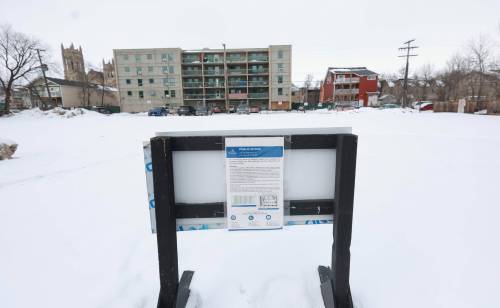
City councillors have approved a developer’s request to reduce the number of affordable housing units that will be included in the construction of a new Sherbrook Street apartment complex.

Read
Monday, Feb. 23, 2026

Town of Virden sues province, engineer firm over aquifer

Kevin Rollason 3 minute read Monday, Feb. 23, 2026

The Town of Virden is suing the provincial government and an engineering consulting firm for recommending it switch to a new aquifer, which ran out of drinking water four years later.

Big rent hikes — a made-in-Manitoba problem

Yutaka Dirks 5 minute read Preview

Big rent hikes — a made-in-Manitoba problem

Yutaka Dirks 5 minute read Monday, Feb. 23, 2026

Premier Wab Kinew began 2026 by capping the price of milk in a bid to make life more affordable for Manitobans.

Now, Manitobans feeling the pinch of stagnant wages and inflation won’t have to swallow cost increases with their morning bowl of cereal. This spring, the premier has an opportunity to address one of the single largest monthly household expenses paid by Manitobans: rent.

Few provinces regulate milk prices, but most Canadian jurisdictions regulate rents. In Manitoba, rent increases are allowed once a year and capped based on changes in the consumer price index. This annual rent guideline is a fair process that accounts for increased costs while protecting tenants from rent gouging.

Despite these rules, each year thousands of tenants continue to face huge rent hikes — some well over 100 per cent.

Read
Monday, Feb. 23, 2026

Manitoba urges court to throw out First Nation’s moose-hunt lawsuit

Erik Pindera 3 minute read Preview

Manitoba urges court to throw out First Nation’s moose-hunt lawsuit

Erik Pindera 3 minute read Sunday, Feb. 22, 2026

The Manitoba government is arguing a northern First Nation’s lawsuit over moose hunting on its traditional territory should be tossed out of court.

Misipawistik Cree Nation filed its statement of claim in the Court of King’s Bench in September, arguing licensed moose hunting on its traditional lands northwest of Lake Winnipeg infringes on the community’s treaty rights to hunt moose for food amid dwindling populations of the big game animal.

But in a recently filed statement of defence, the province argues it has upheld its duties.

“Manitoba denies that there have been any unjustified infringements of Treaty No. 5, that it has failed to act honourably toward the plaintiff, or that any court intervention or other remedy is required,” reads the government court filing.

Read
Sunday, Feb. 22, 2026

Alberta premier asks voters to bypass Indigenous rights

Niigaan Sinclair 5 minute read Preview

Alberta premier asks voters to bypass Indigenous rights

Niigaan Sinclair 5 minute read Saturday, Feb. 21, 2026

There is a standard playbook that politicians use when they have mismanaged an economy, want to divert attention from a scandal, or violate citizen rights and the law: Blame the brown people.

Read
Saturday, Feb. 21, 2026

Norway House files suit against Hydro, governments over Lake Winnipeg

Erik Pindera 4 minute read Preview

Norway House files suit against Hydro, governments over Lake Winnipeg

Erik Pindera 4 minute read Saturday, Feb. 21, 2026

Norway House Cree Nation is suing Manitoba Hydro and the provincial and federal governments over how the public utility manipulates the level of Lake Winnipeg.

It’s the latest litigation launched by a First Nation in relation to Hydro’s regulation of the outflow of the lake into the Nelson River, which it has done since the mid-1970s.

Norway House filed its claim in the Court of King’s Bench on Thursday. It alleges Hydro and the Manitoba government have misrepresented the severity and scope of the adverse effects to the community caused by the regulation operation and the construction of a channel from Lake Winnipeg to Playgreen Lake.

The community, which is about 460 kilometres north of Winnipeg, near the northern shore of Lake Winnipeg, hired engineering firm DHI Water and Environments Inc. to conduct a scientific assessment of the effects of the regulation project.

Read
Saturday, Feb. 21, 2026

Entrepreneurs lauded as Manitoba Queer Chamber of Commerce’s biz awards return

Aaron Epp 5 minute read Preview

Entrepreneurs lauded as Manitoba Queer Chamber of Commerce’s biz awards return

Aaron Epp 5 minute read Friday, Feb. 20, 2026

When Alana Fiks and Angela Farkas opened Black Market Provisions, they hired one employee and almost couldn’t imagine bringing on more.

“We tend to be sort of scared and risk averse, so even the thought of having employees at the time seemed like a dream to us,” said Fiks, who started the shop with Farkas in Winnipeg’s South Osborne neighbourhood almost seven years ago.

The entrepreneurs have built a workplace culture rooted in respect, transparency and well-being. Today, Black Market Provisions has four full-time and six part-time employees.

The Manitoba Queer Chamber of Commerce recognized Fiks and Farkas earlier this week when the organization named the duo as finalists for the Employer of the Year Award as part of its 10th annual MQCC Business Awards.

Read
Friday, Feb. 20, 2026

Data centres and infrastructure: an expensive pairing

Editorial 3 minute read Preview

Data centres and infrastructure: an expensive pairing

Editorial 3 minute read Friday, Feb. 20, 2026

Governments around the world — India being the latest — have been falling over themselves trying to lure power-hungry, water-thirsty data centre operations to build in their backyards.

Read
Friday, Feb. 20, 2026

North at risk from ‘old battles,’ federal spending priorities, Axworthy says

Gabrielle Piché 5 minute read Thursday, Feb. 19, 2026

Canada risks falling into a pattern of fighting “old battles” in the North — while ramping up defence spending — as it cuts funding to handle wildfires and internal migration, former federal minister Lloyd Axworthy warns.

U.S. International Trade Commission launches CUSMA rules-of-origin auto investigation

Kelly Geraldine Malone, The Canadian Press 3 minute read Preview

U.S. International Trade Commission launches CUSMA rules-of-origin auto investigation

Kelly Geraldine Malone, The Canadian Press 3 minute read Saturday, Feb. 21, 2026

WASHINGTON - The U.S. International Trade Commission has launched an investigation into rules-of-origin regulations for automobiles under the Canada-U.S.-Mexico agreement on trade.

A news release on the commission's website says the investigation will analyze the regulations' "impact on the U.S. economy, effect on U.S. competitiveness, and relevancy considering recent technology changes."

It's the third investigation of the rules since the trilateral trade pact, widely known as CUSMA, was adopted during the first administration of U.S. President Donald Trump. The commission is required to conduct an investigation every two years until 2031.

The report on automobiles must be delivered to Trump and the U.S. Senate by July of next year.

Read
Saturday, Feb. 21, 2026

Alberta’s Smith to put immigration, Constitution questions on fall referendum

Lisa Johnson, The Canadian Press 5 minute read Preview

Alberta’s Smith to put immigration, Constitution questions on fall referendum

Lisa Johnson, The Canadian Press 5 minute read Saturday, Feb. 21, 2026

EDMONTON - Alberta Premier Danielle Smith's government is putting nine questions to a provincewide referendum on Oct. 19, including proposals to restrict social services from some immigrants.

One question asks Albertans if non-permanent residents should be charged a "reasonable" fee to access health and education systems.

Another asks for approval to cut off newcomers from social services if they don't fall under "Alberta approved immigration status." The question doesn't define what that status means.

Other questions delve into the Constitution, asking whether Alberta should open negotiations with the rest of Canada to abolish the Senate and to give provinces the power to appoint superior court judges.

Read
Saturday, Feb. 21, 2026

City library visits up 28 per cent from 2022

Nicole Buffie 3 minute read Preview

City library visits up 28 per cent from 2022

Nicole Buffie 3 minute read Thursday, Feb. 19, 2026

Visits to Winnipeg libraries have increased, but changing habits may prevent them from reaching pre-pandemic levels, new data show.

In-person visits to the city’s 20 library branches in 2025 increased 28 per cent from 2022, the first year visits began to rebound after the COVID-19 pandemic, but they have yet to return to the “before” times.

There were 2.14 million visits in 2025, up from 2.08 million in 2024, but still down from 2019’s 2.4 million visits. The library’s highest year since 2012 was in 2016 when the branches saw 2.77 million visits.

During the pandemic, visits plummeted; there were only 622,000 visits in 2021 and 804,000 in 2020.

Read
Thursday, Feb. 19, 2026

Food inflation spiked 7.3% in January. Here’s what’s driving the increase

Craig Lord, The Canadian Press 6 minute read Preview

Food inflation spiked 7.3% in January. Here’s what’s driving the increase

Craig Lord, The Canadian Press 6 minute read Wednesday, Feb. 18, 2026

OTTAWA - Statistics Canada reported an easing in the headline inflation rate Tuesday but a jump in the pace of food inflation amid tax changes and lingering pressures at the grocery store continue to put the squeeze on consumers.

StatCan said Tuesday that the annual rate of inflation edged down to 2.3 per cent in January. Economists had expected inflation to hold steady at 2.4 per cent.

The agency said gas prices were 16.7 per cent lower year-over-year in January, largely thanks to the end of the consumer carbon price in April. Shelter inflation — long a pain for households in Canada — also fell to its lowest level in nearly five years as rent pressures abate.

Those declines helped offset food inflation, which accelerated to 7.3 per cent annually in January from 6.2 per cent a month earlier.

Read
Wednesday, Feb. 18, 2026

Cuban drivers face monthslong wait for gasoline in a government app designed to reduce lines

Andrea Rodriguez, The Associated Press 4 minute read Preview

Cuban drivers face monthslong wait for gasoline in a government app designed to reduce lines

Andrea Rodriguez, The Associated Press 4 minute read Wednesday, Feb. 18, 2026

HAVANA, Cuba (AP) — Drivers in Cuba are facing the prospects of waiting several months to refuel their cars, as fuel shortages caused by a U.S. oil siege intensify.

To avoid chaos outside gas stations, Cuba’s government last week made it obligatory for drivers to use an app known as Ticket to get refueling appointments.

But drivers in Havana told The Associated Press on Monday that the app is only awarding them appointments several weeks or months from now.

“I have (appointment) number seven thousand and something,” said Jorge Reyes, a 65-year-old who downloaded the app on Monday.

Read
Wednesday, Feb. 18, 2026