Economics and Resources
Please review each article prior to use: grade-level applicability and curricular alignment might not be obvious from the headline alone.
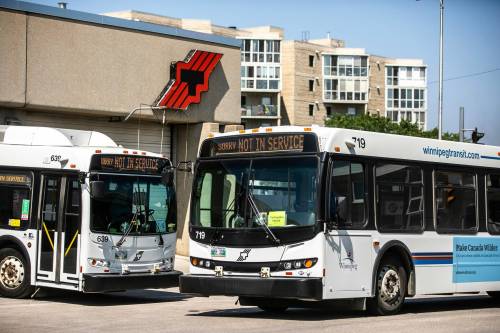
Funding transit is Manitoba’s future
5 minute read Preview Wednesday, May. 27, 2026
Manitoba delinquency rate rises amid cost of living strain: Equifax
4 minute read Preview Tuesday, May. 26, 2026
Reported Germany-Canada LNG deal would bolster investment case for Ksi Lisims: Eby
4 minute read Preview Wednesday, May. 27, 2026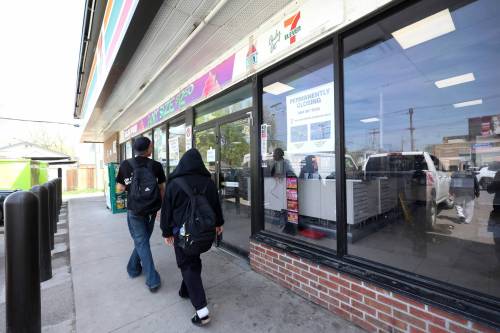
Two more 7-Eleven locations bite the dust
5 minute read Preview Monday, May. 25, 2026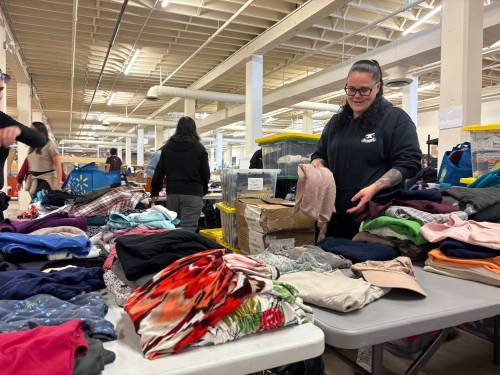
Linking Hope creates nonprofit connections to build a better future
4 minute read Preview Saturday, May. 23, 2026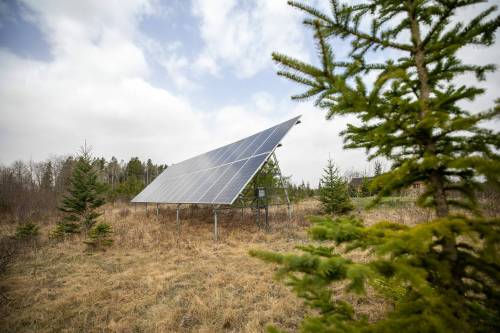
Proponents of solar power push for provincial infrastructure investment to boost grid resilience
15 minute read Preview Saturday, May. 23, 2026A Seal River proposal for all Manitoba’s needs
5 minute read Saturday, May. 23, 2026On Nov. 9, 2017, I stood in the Manitoba legislature and made a proposal whose time had not yet arrived.
I asked the chamber to protect the entire Seal River Watershed, roughly 50,000 square kilometres of intact boreal forest and tundra in northern Manitoba, a complete hydrological system running unbroken from its headwaters to Hudson Bay. No roads. No mines. No power corridors.
One of the last large watersheds left on Earth is still doing what watersheds are meant to do.
It was not a partisan proposal. It was not, that day, a particularly prominent one. The chamber was nearly empty. The proposal did not pass; it did not fail; it simply sat there. Within weeks, The Northern Miner picked it up and brought the idea to the national mining industry. Almost nobody else did.


Vast marine conservation reserve, bigger than P.E.I., to protect B.C. central coast
4 minute read Preview Saturday, May. 23, 2026Planning for an electric future — now
5 minute read Friday, May. 22, 2026The shift away from fossil fuels to an electrified economy will advantage those who strongly invest in renewables.

CRTC triples streamers’ financial contributions to Canadian content
4 minute read Preview Friday, Jun. 12, 2026
Small businesses’ capacity to hire youth being constrained: CFIB survey
3 minute read Preview Thursday, May. 21, 2026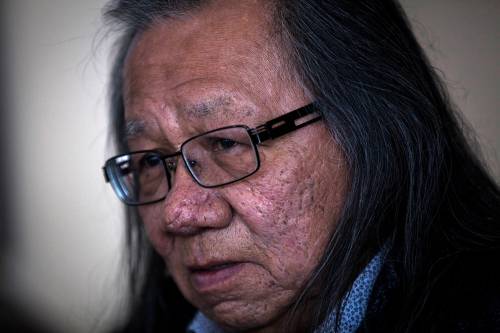
Hydro advisory circle brings ‘wealth of Indigenous perspectives’
5 minute read Preview Tuesday, May. 19, 2026
Alberta’s timing targets for West Coast pipeline ‘best-case scenario’: CIBC analysts
4 minute read Preview Wednesday, May. 20, 2026A critical project in waiting
4 minute read Saturday, May. 16, 2026Like most Manitobans I live in the city. I live in a home built about a century ago, in a well-treed neighbourhood. A 27-year-old gas furnace heats my home — one that needs replacing soon. I’d love to quit burning gas and electrify.
The options aren’t great. Electric heat costs more than double what gas does. Air source heat pumps work much of the winter, but fail during our worst cold snaps, leaving us dependent on expensive electric heat or gas backup — plus a noisy outdoor unit that ruins the patio.
If I had more land, like those with larger rural properties, I could bury horizontal coils in the ground for a fraction of the cost of drilling. But on my small city lot the only option is drilling 400- to 500-foot boreholes in the front yard. Expensive, even with Efficiency Manitoba incentives.
So: keep burning gas, or put up with a noisy compressor and still need a backup heat source. Those are my choices. But they don’t have to be.

$61-M investment in high-speed Internet planned for northern First Nations
4 minute read Preview Friday, May. 15, 2026
Shot-in-Manitoba films ready to screen, stream
4 minute read Preview Friday, May. 15, 2026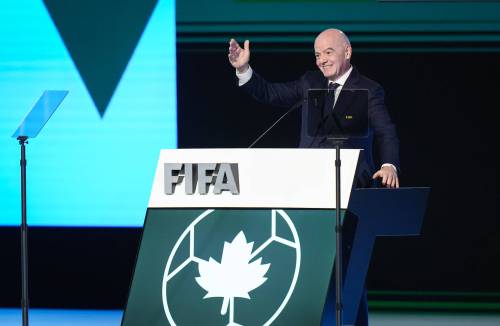
FIFA ticketing format arguably most blatant money-grab in history of organized sport
4 minute read Preview Friday, May. 15, 2026
AFN chief warns against changes to major projects development rules, calls for debate
4 minute read Preview Monday, Jun. 8, 2026The dangers of gambling on nuclear power
5 minute read Friday, May. 15, 2026Dismissing climate science, setting Canada apart from most nations and planting us firmly in the United States’ camp, the Carney government is betting the farm on a “nuclear renaissance.”
There have been numerous indications this was coming. But Energy Minister Tim Hodgson’s April 29 statement to the Canadian Nuclear Association, following immediately on the launch of the “Canada Strong Fund” left no doubt that our investment banker prime minister is determined to pursue his nuclear energy superpower dreams.
As the UN Climate Envoy, Mark Carney famously said there is “no path to net zero without nuclear.” This has been a mantra of successive Liberal governments even as Canada’s last nuclear build was in the 1980s, and nuclear’s share of global electricity production has been steadily declining. It’s also been the rallying cry of nuclear advocates spending big to persuade anxious populations experiencing floods, droughts and wildfires that nuclear power will solve our climate disaster in the making. That claim is false.
Eight years ago, the Liberals rolled out their “SMR roadmap,” predicting the first (slightly) smaller new reactors would be operational in 2026. It isn’t happening. A new report by M.V. Ramana and Susan O’Donnell — Assessing Small Modular Nuclear Reactors in Canada — details the $4.5 billion spent by Canadian governments on SMRs with zero kilowatts of electricity generated to date. Most of that money went to the potential first SMR in Canada, the BWRX 300, an American design by GE Hitachi that uses enriched uranium fuel, not available in Canada.

Discussion paper floats ways Ottawa can help fund giant electrical grid buildout
4 minute read Preview Friday, May. 15, 2026
AtkinsRéalis bets on nuclear-powered AI factories amid data centre surge
5 minute read Preview Saturday, Jun. 6, 2026City gets $4M from federal Housing Accelerator Fund
3 minute read Wednesday, May. 13, 2026Winnipeg is set to receive more than $4 million from the federal government for 150 housing units.