Canada: Opportunities and Challenges
Please review each article prior to use: grade-level applicability and curricular alignment might not be obvious from the headline alone.
Nova Scotia failing to properly oversee addictions, mental health care, says auditor
3 minute read Preview Wednesday, Jun. 24, 2026If life hands you a data centre, grow tomatoes
4 minute read Tuesday, Jun. 23, 2026People everywhere are protesting AI data centres, with good reason. They use a lot of water and energy, and they create a lot of noise. They create relatively few ongoing jobs after construction is complete.
Electricity used to power servers at AI centres creates heat. To keep running they must be cooled. More electricity is used to power chillers to cool the computers. In summer, chillers evaporate water and dissipate heat to the atmosphere. Lots of it. A few Olympic-size swimming pools worth, even in our cold climate.
A 100 MW (100,000 kW) data centre uses enough power to heat about 10,000 homes with electric baseboard heat or an electric furnace. Or about enough to heat 80 acres of greenhouse on the coldest days of January. To put that in perspective, the recently completed Keeyask dam produces about 695 MW of power. A 100 MW data centre uses about 14 per cent of the power produced by the Keeyask dam.
In Finland, a data centre was built under downtown Helsinki. Waste heat from the data centre is recycled to heat the buildings above it.
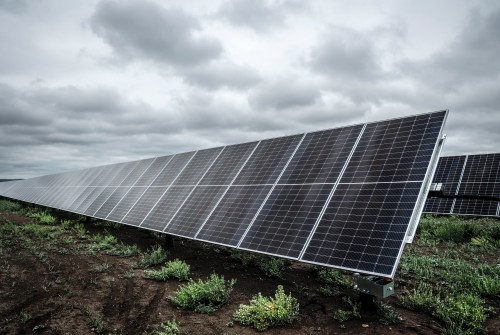
Ottawa tabs $21.6M for Sayisi Dene energy projects
3 minute read Preview Monday, Jun. 22, 2026
MMF suing governments over hunting, fishing rights
4 minute read Preview Monday, Jun. 22, 2026
Manitoba government unveils findings of grocery price study
5 minute read Preview Monday, Jun. 22, 2026
Many hands feed many mouths at Siloam Mission
4 minute read Preview Monday, Jun. 22, 2026
‘This is nuts’: The hard-fought race to build Canada’s next submarine fleet
7 minute read Preview Tuesday, Jul. 14, 2026
More than words: Military-Indigenous reconciliation event aims to build bridges between past and future
3 minute read Preview Saturday, Jun. 20, 2026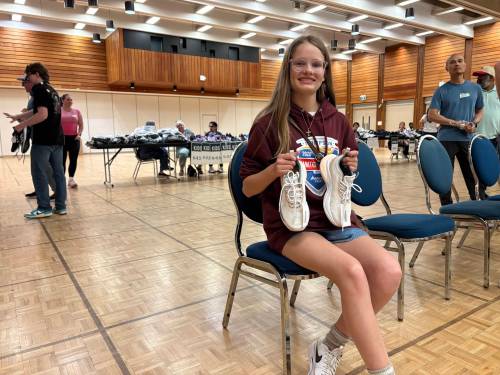
Happy feet: Students get outfitted with donated running shoes ahead of Manitoba Marathon
4 minute read Preview Saturday, Jun. 20, 2026
Rise in female chiefs ‘a beautiful resurgence’
5 minute read Preview Saturday, Jun. 20, 2026
Stopping AI ‘slop shots’ in modern politics
5 minute read Preview Saturday, Jun. 20, 2026
How Canada can continue to lead on news policy
5 minute read Preview Saturday, Jun. 20, 2026
Ryle perfect choice for Manitoba’s first associate chief judge for reconciliation
5 minute read Preview Friday, Jun. 19, 2026
Inuit could pursue foreign partners if relationship with Ottawa sours: ITK leader
6 minute read Preview Saturday, Jul. 11, 2026
Ottawa adding $5.4B for child care; provinces, advocates had warned progress at risk
5 minute read Preview Saturday, Jul. 11, 2026
Luxury tax on planes, cars yielded over $900M. Now it’s been scaled back
5 minute read Preview Saturday, Jun. 20, 2026
Kinew not swayed by PM’s support for silica sand mining project
5 minute read Preview Thursday, Jun. 18, 2026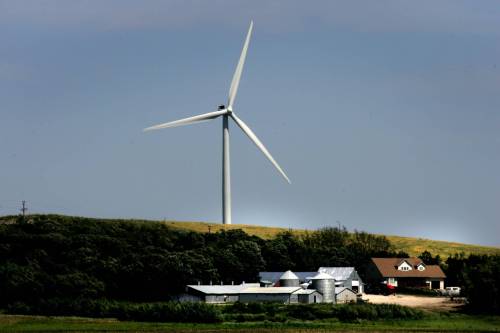
Opposition forms to First Nation’s bid for wind farm
3 minute read Preview Thursday, Jun. 18, 2026Canadians deserve clearer conversation about MAID
4 minute read Wednesday, Jun. 17, 2026When Canada legalized medical assistance in dying in June 2016, the public debate focused largely on one situation: people facing the end of life and suffering intolerably.
For many Canadians, that remains their understanding of the law today.
But Canada’s MAID framework has evolved significantly since then. In 2021, Parliament expanded the law through Bill C-7, creating two pathways for assisted death. The first pathway applies to people whose natural death is imminent and expected soon (reasonably foreseeable).
The second — known as “Track 2” — allows separate access to MAID for individuals with disabilities who are not dying.
Families shouldn’t have to fight this hard for help
4 minute read Wednesday, Jun. 17, 2026Receiving a diagnosis is the first of many hard steps in the lifetimes of young people who live with disabilities and their families.
What comes next for many families in Manitoba who have a child with a disability is often a harsh reality, plagued by uncertainty, further delays, difficult decisions, gaps in service, and difficulties accessing even the most basic support for their children.
Manitoba’s children’s disability services system has skilled, knowledgable, and supportive service providers. However, resources are scarce and case workers are stretched too thin. As a result, children with disabilities and their families are left with nowhere to turn for support and resources.
The Manitoba Advocate for Children and Youth (MACY) released Bridging the Gap: Achieving Substantive Equality for Children with Disabilities in Manitoba in 2021. The report outlined nine clear recommendations to improve access to services. Almost all those recommendations remain unfulfilled.
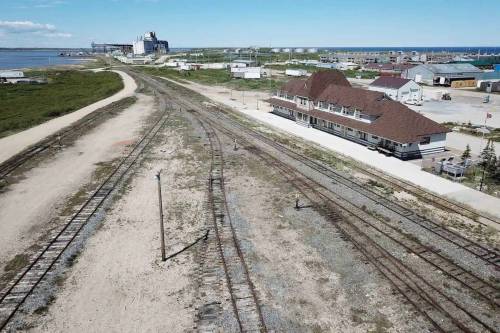
Potash ‘test shipment’ planned for Churchill
5 minute read Preview Tuesday, Jun. 16, 2026Town of Stonewall seeks judicial review of surrounding RM’s quarries approval
3 minute read Tuesday, Jun. 16, 2026The Town of Stonewall has asked a judge to quash the neighbouring Rural Municipality of Rockwood’s approvals of two new quarries that have already been subject to a legal challenge.
The town filed a notice of application in Court of King’s Bench last week, seeking a judicial review of Rockwood’s approval in April of applications from Heidelberg Materials Canada and Amrize Canada for new limestone quarry operations.
The move follows a similar court application last month from Manitoba Bear Rehabilitation Centre Inc., a black bear rescue located nearby the new quarries, whose co-owner has argued the operations would have devastating effects on the rescue.
Stonewall’s court filing names as respondents the rural municipality, Heidelberg Materials Canada, Amrize Canada and several individuals who own parcels of land where the quarry operations are to expand.

MPs urge action to undercut ‘manosphere’ by tackling anti-women ideology
4 minute read Preview Wednesday, Jul. 8, 2026