Learning and Planning
Please review each article prior to use: grade-level applicability and curricular alignment might not be obvious from the headline alone.
In search of a better way to build Manitoba
4 minute read Tuesday, Feb. 24, 2026Manitoba was built through hard work, collaboration, and community. Every hospital, school, road, and bridge reflects the dedication of our construction industry. Today, the sector employs more than 57,000 Manitobans, contributes $4.2 billion annually to the provincial economy, and supports businesses in every region. We are proud of the role we play in building Manitoba’s future.
We are speaking out about the Manitoba Jobs Agreement (MJA) not to oppose the government’s goals, but to ensure public policy delivers real value, respects worker choice, and protects taxpayers. The practical consequences of the MJA are clear: fewer bidders, reduced competition, increased administrative burden, and higher project costs. When competition narrows, prices rise. When compliance complexity grows, risk premiums follow. All of this lands on a provincial budget already facing structural deficits.
The MJA imposes a specific labour relations structure on provincially funded projects exceeding $50 million. Successful bidders must hire union card-holding workers first if their own workforce is insufficient. Union membership becomes the deciding factor — not skill, experience, or performance. If the goal is to ensure Manitobans work on these projects, there is a simple solution: require contractors to certify that their workforce consists of Manitoba residents. A union card should not determine who is entitled to work on taxpayer-funded infrastructure. The agreement also introduces entirely new costs. All employers must pay 85 cents per hour worked to the Manitoba Building Trades Council; an unprecedented charge in Manitoba construction. On a typical school project, this payment alone can exceed $250,000, with no measurable benefit to taxpayers.
Open-shop contractors face additional costs, including compulsory union dues, numerous union fund contributions, and payments to third parties. Taken together, these requirements will add millions of dollars to publicly funded projects. It’s money that could otherwise be invested directly in classrooms, hospitals, and infrastructure.

Tax-filing season begins today. Here’s all you need to know
4 minute read Preview Thursday, Feb. 26, 2026
Untapped workforce
5 minute read Preview Saturday, Feb. 21, 2026
Entrepreneurs lauded as Manitoba Queer Chamber of Commerce’s biz awards return
5 minute read Preview Friday, Feb. 20, 2026
Food inflation expected to jump in January amid tax changes: economists
4 minute read Preview Wednesday, Feb. 18, 2026
Elmwood students’ clothing venture instils pride, breaks down stereotypes in blue-collar neighbourhood
8 minute read Preview Friday, Feb. 13, 2026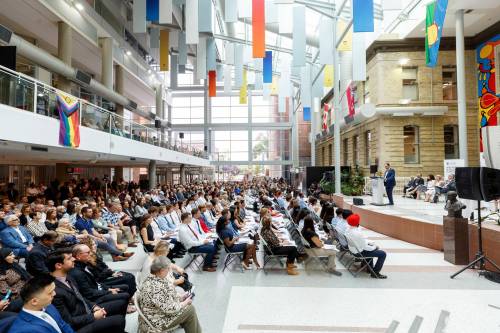
Canada’s university funding system is broken
5 minute read Preview Friday, Feb. 13, 2026
Manitoba chambers rolls out AI adoption training assessment tool
4 minute read Preview Wednesday, Feb. 11, 2026
Focus on local ‘fertile ground’ at 3rd annual MbTech Week
3 minute read Preview Tuesday, Feb. 10, 2026
Building up engineers: RRC Polytech, U of M celebrate collaboration
3 minute read Preview Wednesday, Feb. 4, 2026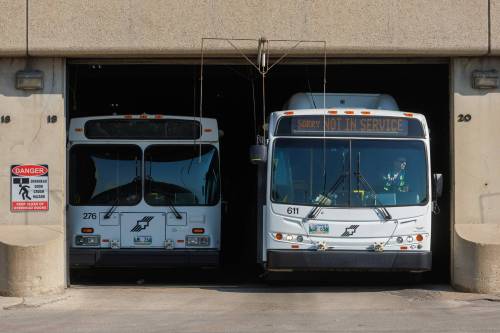
Without key GPS data, transit plan lacked direction
7 minute read Preview Wednesday, Feb. 4, 2026
Flexibility has become deal-breaker, not perk
6 minute read Preview Saturday, Jan. 17, 2026
Future students will be wired differently, thanks to AI
4 minute read Preview Friday, Jan. 16, 2026Is latest tech ‘game-changer’ just more of the same?
5 minute read Saturday, Jan. 3, 2026Maybe they’ve already thought of this. Maybe they just don’t care.
But building an artificial intelligence system that could leave one in five people without a job might not be the best idea in the world, or for the world.
Overseas manufacturing has already proven that cheap and sometimes barely functional is the enemy of the good: high-quality, locally manufactured products have their niche, but for the majority of sales, cost seems to regularly trump quality.
And if AI can make cheaper products — even if it fails to make better ones — well, the market will quickly pick the winners and losers.

Why I expelled AI from the classroom
5 minute read Preview Friday, Jan. 2, 2026
Video, photography, content-creation course puts focus on quality
3 minute read Preview Monday, Nov. 24, 2025
Starting strong: building habits for great career, reputation in work world
6 minute read Preview Saturday, Nov. 15, 2025
Influencers have more reach on 5 major platforms than news media, politicians: report
5 minute read Preview Friday, Nov. 14, 2025
Hurrying hard for Jamaican flavours infusing West St. Paul Curling Club
7 minute read Preview Saturday, Nov. 8, 2025

Puppy Sphere yoga chain rolls out ‘mood-boosting’ first classes in Winnipeg
4 minute read Preview Friday, Nov. 7, 2025
Invention of combine part reaps recognition in Time
4 minute read Preview Saturday, Nov. 1, 2025
Investment regulator funds program to help Indigenous youth manage settlement money
4 minute read Preview Saturday, Nov. 1, 2025