Land and Treaties: Relationships and Responsibilities
Please review each article prior to use: grade-level applicability and curricular alignment might not be obvious from the headline alone.

Ottawa renews commitment, provides funding, for Lake Winnipeg watershed protection
3 minute read Preview Wednesday, Sep. 9, 2026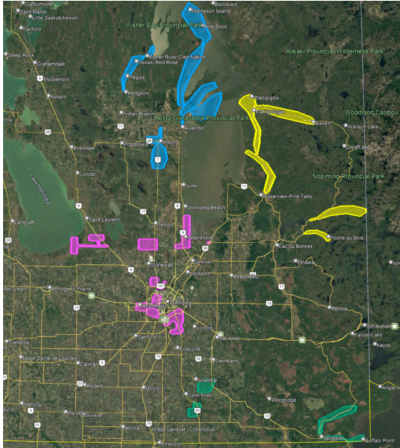
Winkler-based internet provider delivering high-speed service to 30 rural and First Nations Manitoba communities
3 minute read Preview Tuesday, Sep. 8, 2026Canadians do not want to sacrifice nature for development
4 minute read Tuesday, Sep. 8, 2026Prime Minister Mark Carney’s pledge to build faster — “Build, baby, build” — helped propel the Liberals to victory, but his government’s push to fast-track major development projects by cutting environmental oversight is sharply out of step with Canadians’ priorities.
It is a political miscalculation that could come back to haunt the Liberals at the ballot box.
New polling, commissioned by Nature Canada and conducted by EKOS Research Associates, shows strong support among Canadians for protecting nature and endangered species while building the economy.
Canadians soundly reject the notion that they must sacrifice conservation protections for economic development.
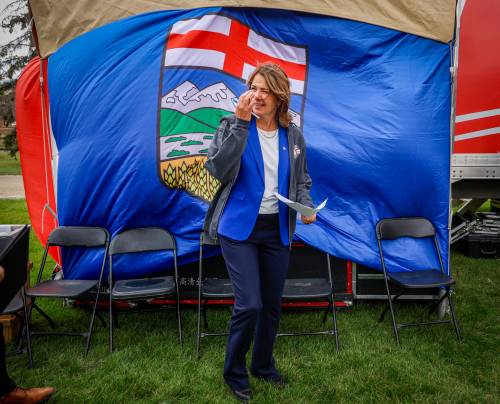
Smith’s pretzel logic confuses
4 minute read Preview Saturday, Sep. 5, 2026Canada’s first Ukrainian pioneers
4 minute read Saturday, Sep. 5, 2026On Aug. 24, Canadians of Ukrainian descent and Ukrainians throughout the diaspora celebrated the 35th anniversary of the restoration of Ukraine’s independence. This jubilant occasion identified Ukraine’s sovereignty within the international community.
Another milestone event will soon be addressed by Ukrainians. On Sept. 7, 1891 — 135 years ago — the first wave of Ukrainians arrived in our country.
Two adventurous individuals, Ivan Pylypiw and Wasyl Elyniak, were the first two officially recorded Ukrainian immigrants in Canada. They arrived in Montreal, on the steamship Oregon, and are considered the pioneers of the dynamic Ukrainian Canadian community that settled in Manitoba, Saskatchewan, and Alberta. Pylypiw and Elyniak were directly responsible for the first settlements on the Prairies by eventually bringing their own families and inspiring other households to come.
No one leaves their country unless inspired by some selfless ideal or compelled to do so by reasons of an imperative nature, such as politics and economics — as with the mass Ukrainian migration of 2022, after the Russian invasion, when millions of Ukrainians fled their homes and settled throughout Canada and the world.
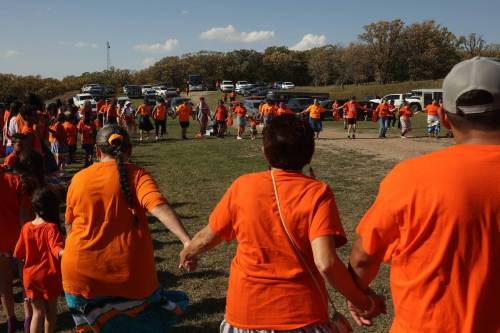
How to make National Day for Truth and Reconciliation personal
5 minute read Preview Friday, Sep. 4, 2026
Councillors want city to revamp homeless camp approach
5 minute read Preview Friday, Sep. 4, 2026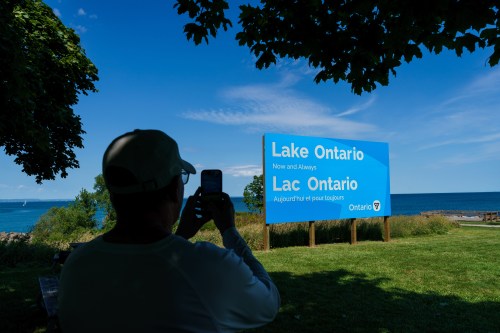
Apple begins replacing Lake Ontario with ‘Lake America’ on maps app for U.S. users
4 minute read Preview Friday, Sep. 4, 2026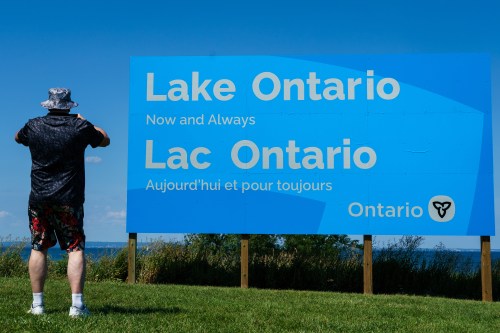
Trump contacted Apple directly to change name of Lake Ontario to Lake America: Burgum
5 minute read Preview Tuesday, Sep. 1, 2026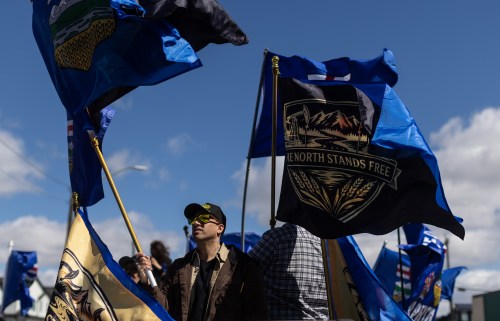
Separatists hold independence rally in lead-up to Alberta’s birthday bash
5 minute read Preview Monday, Sep. 21, 2026
Carney’s defence of Lake Ontario carries enormous weight
5 minute read Preview Friday, Aug. 28, 2026
Trump’s tariff tantrum, geopolitical turmoil could be blessings in disguise for Manitoba’s diversified economy
18 minute read Preview Friday, Aug. 28, 2026
Premiers at odds over leveraging potash in Canada’s trade war with U.S.
4 minute read Preview Sunday, Aug. 30, 2026
Ottawa funds sentencing program for northern Manitoba offenders
3 minute read Preview Thursday, Aug. 27, 2026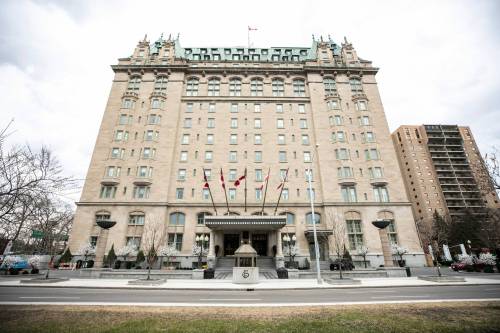
Owners, agents reviewing bids to purchase Fort Garry Hotel
3 minute read Preview Thursday, Aug. 27, 2026
Researchers tracking Manitoba monarchs migrating to Mexico
4 minute read Preview Wednesday, Aug. 26, 2026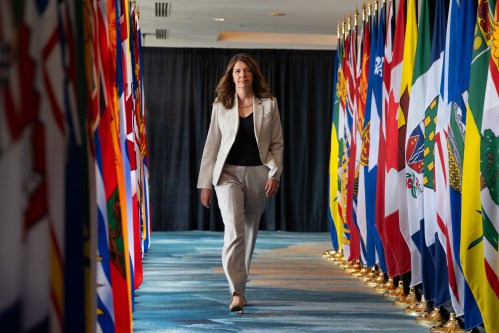
Alberta’s Smith bucks NDP call to cancel separation vote amid Canada-U.S. trade war
4 minute read Preview Wednesday, Sep. 16, 2026The rural/urban immigration difference
4 minute read Wednesday, Aug. 26, 2026Conversations about immigration often pretend that managing the numbers and where they go is as simple as turning a dial up or down. Like most things, the truth is more nuanced.
The Immigrant Employment Councils of Canada network’s 18-month engagement with over 1,100 employers, community and settlement service stakeholders made this apparent in many ways but, perhaps an underappreciated facet is the contrast between urban and rural immigration, and what challenges both immigrants and employers face in each context.
Rural and urban labour markets differ in structure, services and constraints, and a one-size solution will underdeliver everywhere.
This is why we have government programs such as the Rural Community Immigration Pilot, currently active in 14 areas across the country, as well as the provincial nominee program and provincial rural immigration pilots such as Manitoba’s West-Central Immigration Initiative.

Earth is simmering in its hottest water temps on record, and that’s bad for fish and us
5 minute read Preview Tuesday, Sep. 15, 2026
New exhibition offers up 125 different ways to look at Canada
6 minute read Preview Monday, Aug. 17, 2026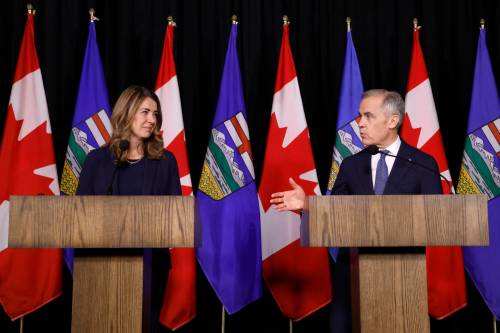
Indigenous peoples are deeply invested in Canada
5 minute read Preview Monday, Aug. 17, 2026Churches make collective gift toward fostering reconciliation
4 minute read Saturday, Aug. 15, 2026Three Canadian denominations have taken another step towards reconciliation with Indigenous people.
At a June 18 gifting ceremony here in Winnipeg, the United, Anglican and Presbyterian churches made a collective gift of $1.5 million towards the construction of a new permanent home for the National Centre for Truth and Reconciliation (NCTR) at the University of Manitoba’s Fort Garry campus.
In so doing, they were following up on the four calls to action for Canadian churches from the 2015 Truth and Reconciliation Commission’s final report.
One of them, call No. 59, asked churches that were involved in operating residential schools to support ways to help members of their congregations learn about their church’s role in colonization and residential schools.
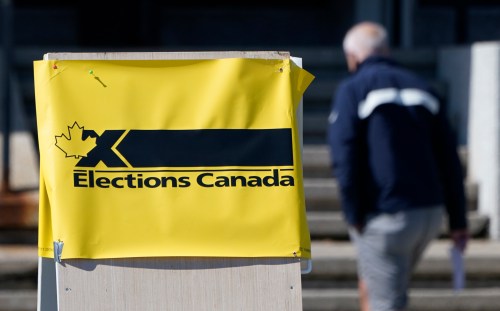
Elections Canada says 40% of people in Indigenous communities voted federally in 2025
3 minute read Preview Saturday, Sep. 5, 2026