Science (general)
Please review each article prior to use: grade-level applicability and curricular alignment might not be obvious from the headline alone.

16,000 fossil footprints in central Bolivia reveal dinosaur behavior
4 minute read Preview Tuesday, Dec. 9, 2025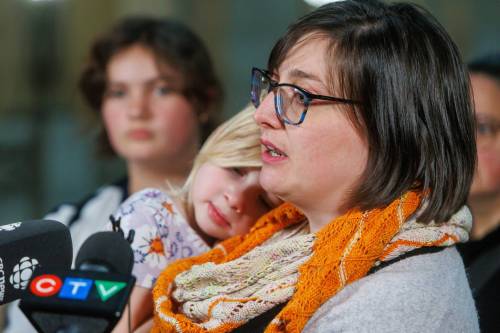
Beleaguered parents of young children with diabetes ask province for help in schools
4 minute read Preview Tuesday, Dec. 2, 2025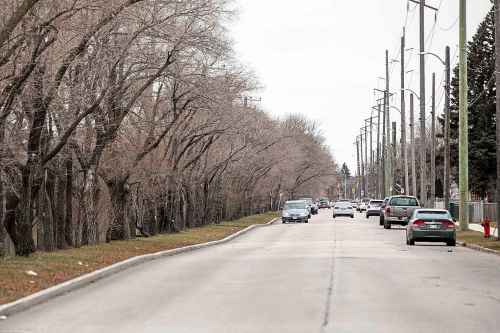
Hydro to cut down more than 260 trees on stretch of Selkirk Avenue
5 minute read Preview Friday, Nov. 28, 2025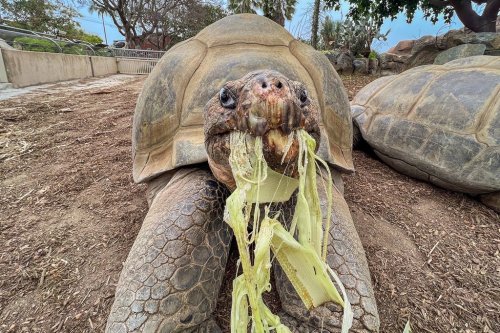
Gramma the Galapagos tortoise, oldest resident of San Diego Zoo, dies at about 141
3 minute read Preview Tuesday, Nov. 25, 2025
U of M over the moon about satellite’s lunar launch
3 minute read Preview Monday, Nov. 24, 2025Autoimmune diseases can strike any part of the body, and mostly affect women. Here’s what to know
6 minute read Monday, Nov. 24, 2025Our immune system has a dark side: It’s supposed to fight off invaders to keep us healthy. But sometimes it turns traitor and attacks our own cells and tissues.
What are called autoimmune diseases can affect just about every part of the body — even the brain — and tens of millions of people. While most common in women, these diseases can strike anyone, adults or children, and they’re on the rise.
New research is raising the prospect of treatments that might do more than tamp down symptoms. Dozens of clinical trials are testing ways to reprogram an out-of-whack immune system. Furthest along is a cancer treatment called CAR-T therapy that's had some promising early successes against lupus, myositis and certain other illnesses. It wipes out immune system B cells — both rogue and normal ones — and the theory is those that grow back are healthier. Other researchers are hunting ways to at least delay brewing autoimmune diseases, spurred by a drug that can buy some time before people show symptoms of Type 1 diabetes.
“This is probably the most exciting time that we’ve ever had to be in autoimmunity,” said Dr. Amit Saxena, a rheumatologist at NYU Langone Health.

What happens when your immune system hijacks your brain
7 minute read Preview Monday, Nov. 24, 2025
U of M chemist earns award for work on new drug candidate for treating Lou Gehrig’s disease
3 minute read Preview Monday, Nov. 17, 2025
Author goes far and wide on quest to document all plants native to Manitoba
7 minute read Preview Saturday, Nov. 15, 2025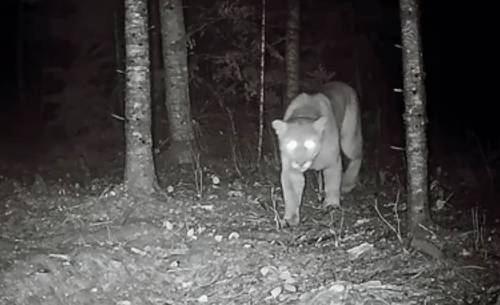
Cougar makes rare appearance in Manitoba
3 minute read Preview Friday, Nov. 14, 2025
Rare red auroras dazzle as part of Manitoba light show
3 minute read Preview Thursday, Nov. 13, 2025
Greenwashing rules to be scaled back, but scope of change remains unclear
5 minute read Preview Wednesday, Nov. 12, 2025
How Canada can regain its measles elimination status
6 minute read Preview Wednesday, Nov. 12, 2025
Elementary students share struggles with reading after report reveals education system failing
12 minute read Preview Sunday, Nov. 9, 2025
City tries to get the most bang for its (sewage) buck
4 minute read Preview Friday, Nov. 7, 2025
U of M research underscores importance of polar bears to future of Arctic
5 minute read Preview Tuesday, Oct. 28, 2025
Halloween pumpkin waste is a methane problem, but chefs and farmers have solutions
5 minute read Preview Tuesday, Oct. 28, 2025
Winnipeg-based organization injects federal funds into innovative, women-powered business in Bolivia
13 minute read Preview Friday, Oct. 10, 2025
Three scientists at US universities win Nobel Prize in physics for advancing quantum technology
6 minute read Preview Wednesday, Oct. 15, 2025Big Tobacco and Big Oil are eerily similar. One knowingly produces a product that slowly but surely kills its consumers. The other knowingly produces a product that surely but not slowly kills the planet.
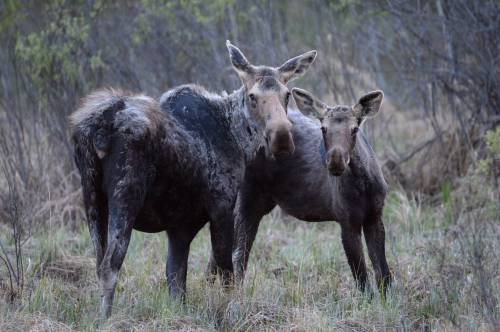
Only moratorium can save moose population: MWF
4 minute read Preview Wednesday, Sep. 24, 2025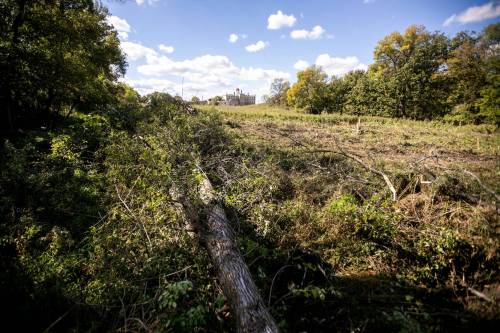
Another subdivision, another city problem
5 minute read Preview Tuesday, Sep. 23, 2025Wildfires like this aren’t normal. Stop trying to normalize them.
“Bring a pair of pants and a sweater to Clear Lake — it’s unseasonably cool because of the wildfires.” That was just one of those meteorological idiosyncrasies, attempting to reach back deep into long-forgotten geography lessons, that may seem obvious to those on the Prairies. But for the outsider, a visitor from Toronto, and indeed a relative newcomer to Canada, it was certainly a shock, and a stark reminder that I would be flying into a province still under a state of emergency, which had until recently been decimated by wildfires. It was also an introduction into what may be considered ‘normal’.
Visiting Manitoba this August was extraordinary — the people most certainly lived up to the “friendly” billing that adorns the licence plates, and the scenery of Riding Mountain National Park was worth the trip alone. However, there were a number of topics of conversation that made me question what I had come to know as accepted wisdom.
Talk about fishing restrictions, Indigenous rights, oil and gas permeated discussions, with healthy, good spirited debates. But for me, the most vexing issue was wildfires. More specifically, the extent of their aftermath, effects, and associated restrictions, have become normalized.