WEATHER ALERT

Democracy and governance in Canada

Please review each article prior to use: grade-level applicability and curricular alignment might not be obvious from the headline alone.
Banning YouTube removes tools from schools

Editorial 4 minute read Preview

Banning YouTube removes tools from schools

Editorial 4 minute read Saturday, May. 23, 2026

It’s been a long time since the norm for audio-visual presentations in classrooms took the form of a slide projector, or a TV cart with a VHS player and a small cathode-ray tube set.

But Manitoba’s premier is asking himself something lately: are the modern equivalents good for schools?

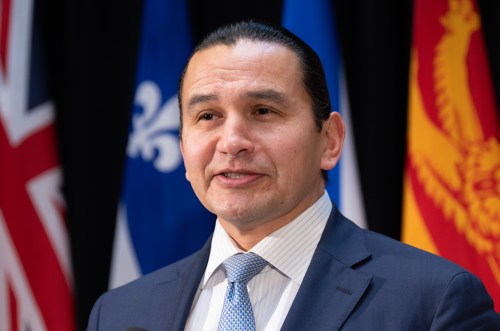
Premier Wab Kinew said during a recent CBC interview that he does not think YouTube, the popular video-streaming site, should be used in classrooms. He made the comment during a discussion on his broader effort to keep kids aged 15 and younger from accessing YouTube and other social media apps.

The comments have caused some consternation among educators who, while recognizing YouTube in general is not a great source of information for young people, believe it nevertheless offers access to a solid repository of educational video content provided by reputable sources.

Read
Saturday, May. 23, 2026

A Seal River proposal for all Manitoba’s needs

Steven Fletcher 5 minute read Saturday, May. 23, 2026

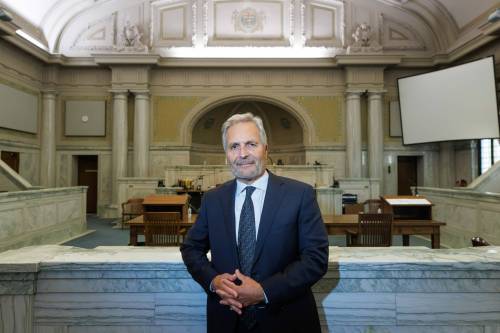
On Nov. 9, 2017, I stood in the Manitoba legislature and made a proposal whose time had not yet arrived.

I asked the chamber to protect the entire Seal River Watershed, roughly 50,000 square kilometres of intact boreal forest and tundra in northern Manitoba, a complete hydrological system running unbroken from its headwaters to Hudson Bay. No roads. No mines. No power corridors.

One of the last large watersheds left on Earth is still doing what watersheds are meant to do.

It was not a partisan proposal. It was not, that day, a particularly prominent one. The chamber was nearly empty. The proposal did not pass; it did not fail; it simply sat there. Within weeks, The Northern Miner picked it up and brought the idea to the national mining industry. Almost nobody else did.

Vast marine conservation reserve, bigger than P.E.I., to protect B.C. central coast

Marissa Birnie, The Canadian Press 4 minute read Preview

Vast marine conservation reserve, bigger than P.E.I., to protect B.C. central coast

Marissa Birnie, The Canadian Press 4 minute read Saturday, May. 23, 2026

An enormous national marine conservation reserve is being established on British Columbia's central coast, spanning an area larger than Prince Edward Island.

The protected area, named Mia-yaltwa Ha’lidzogm hoon, is the result of an agreement between six coastal First Nations and the provincial and federal governments.

An official says the area is around 6700 sq. km and will be operated by Parks Canada along with its Indigenous and federal partners.

The reserve is within the Great Bear Sea, a diverse marine ecosystem that covers more than half of B.C.'s coast and includes glass sponge reefs, salmon, killer whales and migrating humpbacks.

Read
Saturday, May. 23, 2026

Planning for an electric future — now

Norman Brandson 5 minute read Friday, May. 22, 2026

The shift away from fossil fuels to an electrified economy will advantage those who strongly invest in renewables.

Alberta is to vote on whether to hold a separation referendum. Here’s how we got here

Dayne Patterson, The Canadian Press 3 minute read Preview

Alberta is to vote on whether to hold a separation referendum. Here’s how we got here

Dayne Patterson, The Canadian Press 3 minute read Friday, May. 22, 2026

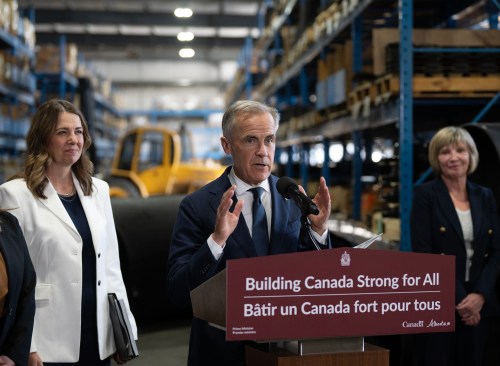
Premier Danielle Smith announced Thursday that Albertans will be going to the polls Oct. 19 to vote on whether there should be a future binding referendum on the province quitting Canada.

Here's a timeline of pivotal moments in Alberta's separatism debate:

Oct. 28, 1980 — The federal government ignites widespread alienation in Alberta with the National Energy Program, which seeks to cushion the shock of high oil prices through a system that artificially depresses prices for the oil-dependent province. Albertans view it as a federal money grab.

Feb. 17, 1982 — Gordon Kesler of the Western Canada Concept Party of Alberta wins a provincial byelection in the riding of Olds-Didsbury on a platform of Alberta separating from Canada. Later that year, he loses his seat in the general election, even though the party receives nearly 12 per cent of the popular vote.

Read
Friday, May. 22, 2026
No Subscription Required

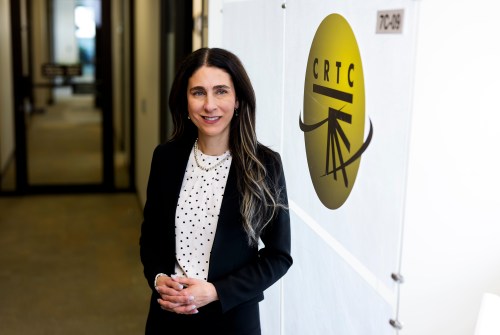
CRTC triples streamers’ financial contributions to Canadian content

Anja Karadeglija, The Canadian Press 4 minute read Preview
No Subscription Required

CRTC triples streamers’ financial contributions to Canadian content

Anja Karadeglija, The Canadian Press 4 minute read Friday, May. 22, 2026

OTTAWA - Large TV streaming services like Netflix must contribute 15 per cent of their Canadian revenues to Canadian content, the federal broadcast regulator said Thursday.

That’s three times the five-per-cent initial contribution requirement the CRTC set out in 2024, which is being challenged in court by major streamers, including Apple and Amazon.

Contribution requirements for traditional broadcasters, which currently pay between 30 and 45 per cent, will be lowered to 25 per cent.

"The total contributions are expected to stabilize the funding at more than $2 billion in support of Canadian and Indigenous content, such as French-language content and news," the regulator said in a press release.

Read
Friday, May. 22, 2026

Alberta legislature committee eyes separation vote as meeting hits bizarre roadblock

Jack Farrell, The Canadian Press 6 minute read Preview

Alberta legislature committee eyes separation vote as meeting hits bizarre roadblock

Jack Farrell, The Canadian Press 6 minute read Thursday, May. 21, 2026

EDMONTON, ALBERTA, CANADA - Alberta’s journey toward holding a fall referendum on separation took a bizarre turn Wednesday — straight into another roadblock.

It occurred when the governing United Conservative members on a bipartisan legislature committee introduced a motion to formally ask Premier Danielle Smith and her cabinet to initiate a provincewide vote on Alberta's status in Confederation this October.

The motion was expected to pass, given the UCP members on the committee outnumber the Opposition NDP members on it three to two.

But while the motion was still being debated, the UCP caucus published a news release announcing the vote had taken place and that the motion had passed.

Read
Thursday, May. 21, 2026

Winnipeg police get behind Ottawa’s ‘lawful access’ bill

Erik Pindera 3 minute read Preview

Winnipeg police get behind Ottawa’s ‘lawful access’ bill

Erik Pindera 3 minute read Wednesday, May. 20, 2026

Winnipeg Police Service Deputy Chief Cam Mackid said Wednesday the force fully supports the federal government’s proposed lawful access bill.

The legislation would give law enforcement and the national spy agency broader access to digital data following judicial authorization.

Part of the bill would require social media, internet service providers and telecommunication companies to adapt systems to allow for officials to more easily access data, after a warrant is obtained, and order certain providers to retain metadata for up to a year.

The bill has received significant pushback from advocates and technology companies who say it will erode privacy and civil rights and enable excessive surveillance.

Read
Wednesday, May. 20, 2026

Time for change? Province launches survey to review clock changes

Carol Sanders and Morgan Modjeski 5 minute read Preview

Time for change? Province launches survey to review clock changes

Carol Sanders and Morgan Modjeski 5 minute read Wednesday, May. 20, 2026

The provincial government has asked Manitobans to weigh in on whether to end the seasonal time change.

Read
Wednesday, May. 20, 2026

Premier has everyone’s attention on and about social media; now it’s time for some careful thought

Dan Lett 5 minute read Preview

Premier has everyone’s attention on and about social media; now it’s time for some careful thought

Dan Lett 5 minute read Wednesday, May. 20, 2026

Using social media to condemn social media may seem hypocritical. But when you look at the audience Premier Wab Kinew commands across his social media accounts, there is a certain logic. An admittedly perverse logic, but logic all the same.

Read
Wednesday, May. 20, 2026

Words matter

Frances Ravinsky 4 minute read Wednesday, May. 20, 2026

I have been following with interest the media’s reporting of the ban in Manitoba’s Legislative Assembly on the use of the words racist, bigot, homophobe, misogynist and transphobe to call out hateful speech. The stated goal of the ban is “to improve House decorum.”

I’ve appreciated the fulsome coverage of this issue in the Free Press through the publishing of editorials, op-eds and letters to the editor. I was in particular struck by Premier Wab Kinew’s comments during his May 7 monthly interview with Marcy Markusa on CBC Radio.

Kinew’s strong opposition to the ban raises a critical question: How do we keep democratic civil society alive while silencing the calling out of discriminatory language and behaviour? Of course we can’t. By confusing decorum with silence we run the risk of contributing to a “head in the sand” mindset; to what American journalist and activist Barbara Ehrenreich referred to as a “Smile or Die” culture.

But then a followup question emerges: How do we effectively voice our legitimate dissent in ways that move us towards correcting discriminatory practices? A “no holds barred” approach to voicing our opposition may not be the answer. It’s all too easy to slip into shaming people by lobbing ad hominem/ad feminam attacks across partisan lines.

Designated encampments are a poor solution

Kate Sjoberg 5 minute read Wednesday, May. 20, 2026

The overall shrinking of public space and degradation of the policy environment on use of public space is contributing to people experiencing homelessness being less safe — and contributing to interest in ideas like designated encampments. Unfortunately, this direction fails to centre the interests of people living unhoused. Further, we forget too easily that any consideration of land use on Treaty 1 land needs to start with historic claims and ancestral rights.

Among people experiencing homelessness, Indigenous people are overrepresented. Many people are living unsheltered on their own ancestral territories. Having endured intergenerational theft that started with land (transferred to settlers whose descendants now enjoy generational wealth), and continued with limits on movement, ability to make money, access to education and more, they are now actively surviving homelessness. Yet, the limits on their person continue.

Recent years have seen the closure and limits on use of public space throughout the downtown and broader city. These include Portage Place mall, the Millennium Library and Winnipeg Transit, and previously through the closure of downtown single-room occupancy hotels and their barrooms.

For some time, the city has been telegraphing an intention to limit access to outdoor public space according to housing status. At every opportunity, those cautioning against this move have raised the problem of limiting those with ancestral rights, and further limiting free movement of citizens on public land. The latter has been decided through B.C. legal process, and suggests the City of Winnipeg’s exposure to risk as it moves forward.

Hydro advisory circle brings ‘wealth of Indigenous perspectives’

Carol Sanders 5 minute read Preview

Hydro advisory circle brings ‘wealth of Indigenous perspectives’

Carol Sanders 5 minute read Tuesday, May. 19, 2026

The board of Manitoba Hydro has appointed an Indigenous advisory circle as part of the Crown corporation’s reconciliation efforts.

Former Fox Lake Cree Nation chief and Keeyask Hydropower Limited Partnership board chair Robert Wavey will co-chair the group with Manitoba Hydro board chairman Jamie Wilson. The provincial government ordered the creation of the advisory circle in its 2023 mandate letter to Hydro’s board.

“I think we wanted to get everything right on this one,” Wilson said when asked why it has taken more than two years to appoint Indigenous advisers.

“This is a pretty fantastic group of people from a diverse background, including communities that are directly impacted by Hydro development in the past,” the first Indigenous chairman of the Manitoba Hydro board said in an interview Tuesday.

Read
Tuesday, May. 19, 2026

This not just in: treaty rights carry legal force and are protected in the Constitution

Tom Brodbeck 5 minute read Preview

This not just in: treaty rights carry legal force and are protected in the Constitution

Tom Brodbeck 5 minute read Tuesday, May. 19, 2026

More than a century after the numbered treaties were signed across Western Canada, the courts delivered a blunt reminder last week that those agreements are not ancient historical footnotes.

They still carry legal force and governments cannot ignore them.

Two major court rulings — one in Manitoba and one in Alberta — reinforced a reality many Canadians still do not fully understand: treaties between First Nations and the Crown remain constitutionally protected agreements that continue to shape Canadian law, public policy and governments’ obligations today.

The decisions also underscored something else: Canadians would benefit greatly from learning more about treaties, why they were negotiated as Canada expanded westward and why courts continue to uphold Indigenous and treaty rights.

Read
Tuesday, May. 19, 2026

Alberta’s timing targets for West Coast pipeline ‘best-case scenario’: CIBC analysts

Lauren Krugel, The Canadian Press 4 minute read Preview

Alberta’s timing targets for West Coast pipeline ‘best-case scenario’: CIBC analysts

Lauren Krugel, The Canadian Press 4 minute read Wednesday, May. 20, 2026

CALGARY - The targeted timeline the Alberta government set out for construction to begin on a potential new West Coast oil pipeline is ambitious, with many obstacles yet to clear, analysts at CIBC World Markets wrote in a recent report.

The province aims to submit a proposal to the federal major projects office by July 1, have it designated a project of national interest by Oct. 1 and get shovels in the ground as early as Sept. 1, 2027. Oil could begin to flow around 2033 or 2034, a provincial official told a media background briefing last week.

"While we are encouraged by the continued sense of urgency, we would characterize these timelines as optimistic and reflective of a best-case scenario," analysts Robert Catellier and Rogan Anantharajah wrote in a Monday industry update.

The Alberta government laid out those targets Friday after it and Ottawa finalized one of the last outstanding elements of the energy accord they signed late last year: an agreement on how the market price on carbon is to gradually increase to $130 a tonne by 2040.

Read
Wednesday, May. 20, 2026

Americans are looking back centuries to find Canadian ancestors — and citizenship

Nono Shen, The Canadian Press 10 minute read Preview

Americans are looking back centuries to find Canadian ancestors — and citizenship

Nono Shen, The Canadian Press 10 minute read Wednesday, May. 20, 2026

Cody Sibley was born and raised in Louisiana, but he always felt his family shared strong ties to Canada thanks to his Acadian ancestors from Nova Scotia.

Sibley said that as an eighth-generation descendant of Acadians, his family's roots could be traced back to "generation zero," Agathe Doucet, who was baptized on Jan. 19, 1710, in Nova Scotia.

He said Doucet married to Pierre Pitre in 1727, but the couple's lives were turned upside down in 1755 when British soldiers arrived at their doors and ordered their expulsion; like many Acadians, they ended up in Louisiana, where the community went on to become known as Cajuns.

Sibley is now among a surge of Americans combing through genealogical records in the hopes of finding a Canadian ancestor — some, like Sibley's, dating back hundreds of years, long before Canada officially existed. They plan to use the information to claim Canadian citizenship, under recently introduced legal changes that remove the so-called "first-generation limit" on citizenship for people born or adopted outside Canada to a Canadian citizen.

Read
Wednesday, May. 20, 2026

It takes a village to raise — and educate — a child

Jerry Storie 6 minute read Tuesday, May. 19, 2026

The oft-quoted saying, “it takes a village to raise a child,” resembles an African proverb. In the Yoruba language, the saying goes “two eyes birth a child, but 200 eyes raise it.”

Over the past several decades, that saying has come to mean something entirely different from what villagers meant, in Africa and in the small town where I grew up. The saying meant two, equally important things. It meant the community has a stake in ensuring that children are properly cared for, but the saying also meant that children must be taught and understand their obligations to the community at large.

The 200 eyes raising the child in the village did not look away when the parents or a child failed to observe community standards. When a child disrespected someone in the community, they were corrected. The village had a clear code of conduct that governed what was expected behaviour. These mores, or societal expectations, were understood and enforced by both parents and community members.

Everyone needs to understand their society’s written and unwritten rules. It is our obligation to teach our children the expectations we have of each other.

The folly of war: the wisdom of peace

John R. Wiens 6 minute read Preview

The folly of war: the wisdom of peace

John R. Wiens 6 minute read Tuesday, May. 19, 2026

In the 1980s I was a peace advocate —I still am. One of the founders and first president of the Educators for Social Responsibility, I helped organize, promote and speak at peace and anti-nuclear rallies and marches. We developed, collected and distributed peace curricula from across Canada for teaching in Manitoba schools.

Read
Tuesday, May. 19, 2026

$61-M investment in high-speed Internet planned for northern First Nations

Carol Sanders 4 minute read Preview

$61-M investment in high-speed Internet planned for northern First Nations

Carol Sanders 4 minute read Friday, May. 15, 2026

More homes on remote Manitoba First Nations will have access to high-speed Internet that most Canadians take for granted thanks to $61 million in new federal funding.

“Your communities have been living way too long without internet,” federal Northern and Arctic Affairs Minister Rebecca Chartrand told a gathering at Wasagamack Anisininew Nation Thursday. The MP for northern Manitoba said the four projects will deliver modern, reliable internet to 2,309 households.

“This really is a public safety issue and an equity issue,” Chartrand said in the community 600 kilometres north of Winnipeg that’s accessible by air, water and winter road.

“The lack of broadband has been a public safety failure. When families can’t call for help or nurses can’t access files or lives are at risk when you’re travelling roads without phone service, without internet,” she said.

Read
Friday, May. 15, 2026

Province has to untie Winnipeg’s hands in fight against vacant, boarded-up properties

Tom Brodbeck 5 minute read Preview

Province has to untie Winnipeg’s hands in fight against vacant, boarded-up properties

Tom Brodbeck 5 minute read Friday, May. 15, 2026

Mayor Scott Gillingham deserves credit for at least trying to tackle one of Winnipeg’s most stubborn urban problems: derelict, boarded-up houses that sit vacant for years, rot into neighbourhood eyesores and too often become fire traps.

Read
Friday, May. 15, 2026

AFN chief warns against changes to major projects development rules, calls for debate

Alessia Passafiume, The Canadian Press 4 minute read Preview

AFN chief warns against changes to major projects development rules, calls for debate

Alessia Passafiume, The Canadian Press 4 minute read Saturday, May. 16, 2026

OTTAWA - The national chief of the Assembly of First Nations says proposed changes to major project development rules are "not acceptable" and risk trampling on the rights of First Nations.

The federal government is proposing to grant authority to review interprovincial pipelines and transmission lines, and offshore renewable energy projects, to the Canada Energy Regulator instead of the Impact Assessment Agency of Canada.

The proposal, which will undergo a 30-day consultation process, would undo the move the Liberals made eight years ago to create the Impact Assessment Agency as a one-stop shop for all national project reviews.

National Chief Cindy Woodhouse Nepinak told The Canadian Press the proposed changes "demonstrate a pattern of exclusion" and she rejects the compressed timeline to submit feedback.

Read
Saturday, May. 16, 2026

Churchill project not worth the risk

Deveryn Ross 4 minute read Preview

Churchill project not worth the risk

Deveryn Ross 4 minute read Tuesday, May. 12, 2026

Premier Wab Kinew is banking on the redevelopment of the Port of Churchill as the game-changing project that will put Manitoba back in the black. That’s a risky bet for several reasons.

Read
Tuesday, May. 12, 2026

Economic growth now tops environment as priority in energy policy, poll suggests

David Baxter, The Canadian Press 5 minute read Preview

Economic growth now tops environment as priority in energy policy, poll suggests

David Baxter, The Canadian Press 5 minute read Tuesday, May. 12, 2026

OTTAWA - More Canadians now say economic growth should be a bigger priority in Canada's energy policy than protecting the environment, a new Angus Reid Institute report suggests.

The pollster released a report Monday indicating 61 per cent of Canadians now see economic growth as the biggest priority in energy policy. The question offered two options on the top priority shaping federal energy policy: economic growth or environmental protection.

That's a shift in public opinion since seven years ago, when the same question had 55 per cent of Canadians saying the environment should be the top priority in energy policy.

Shachi Kurl, Angus Reid Institute president, said climate change was a top issue for voters in both the 2019 and 2021 elections, but opinion research shows the sense of urgency surrounding it has been declining in recent years.

Read
Tuesday, May. 12, 2026

Job-site policy cited in cost of Brandon school construction

Connor McDowell 5 minute read Saturday, May. 9, 2026

BRANDON — The Construction Association of Rural Manitoba has said it will cost as much as 20 per cent more to build a school in Brandon because of the labour policy introduced by the provincial government in 2025.

The regulations include prioritizing union workers when adding extra staff and paying a fee of 85 cents per worker per hour, executive director Shawn Wood said.

“We know from talking to our members: if they’re going to bid on a project, just the additional admin costs and the additional cost of that 85 cents per man hour puts them anywhere from a five to 20 per cent increase in cost,” Wood said.

“I believe the Brandon school will be closer to the 20 per cent.”