Psychology
Please review each article prior to use: grade-level applicability and curricular alignment might not be obvious from the headline alone.

Court orders Instagram and Facebook’s Meta to pay $567M to address kids’ mental health online
5 minute read Preview Saturday, Aug. 29, 2026
Government overrides school board in ‘mature minor’ controversy
5 minute read Preview Tuesday, Aug. 4, 2026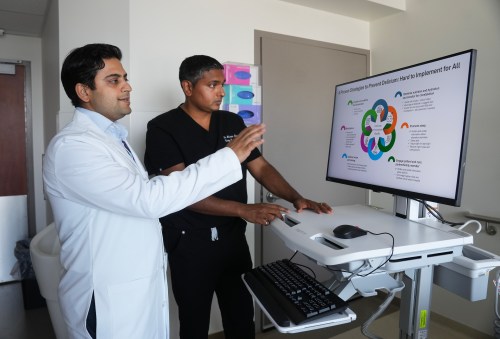
Delirium is often missed by health providers. Could an AI risk predictor help?
7 minute read Preview Monday, Aug. 10, 2026Thinking is competitive advantage
5 minute read Saturday, Aug. 1, 2026Artificial Intelligence is set to become one of the greatest productivity tools businesses have ever seen. Ironically, its greatest value comes from rewarding the people who think the best rather than those who simply use it the most.
Every credible AI expert reinforces AI is just another tool. When used properly, it is potentially very powerful and can provide some excellent value — but it is not a holistic solution to every problem your business faces. As AI becomes more efficient, it creates more time for humans to think more deeply and become more capable.
You must maintain the “human in the loop.” Unless thinking and guidance are properly connected, a business can never achieve necessary alignment.
In other words, does the AI tool do what you need it to — or meant it to — in your organization? You will only know if you set an objective, test the tool, review the results and compare them with what you intended to achieve.
Tanning is getting hot again. Here’s what it really does to your skin
6 minute read Tuesday, Aug. 25, 2026Nichole Sims started using a tanning bed at 15 because she said everyone around her was doing it, especially before events like homecoming dances and prom.
Eight years later, she was diagnosed with melanoma — a potentially life-threatening skin cancer.
During that time, Sims has seen tanning become even more popular among young people online. She tries to counter the misinformation on social media that touts tanning as a mood booster and beauty requirement by sharing her own experience.
“I just feel like our generation doesn’t really look into a lot of risks. They just kind of live in the moment," Sims said.

What to know about postpartum psychosis, which can affect a new mom’s sense of reality
4 minute read Preview Saturday, Aug. 22, 2026
Toba Centre here to help kids who’ve suffered the unimaginable
6 minute read Preview Saturday, Jul. 25, 2026
Giant metal roosters spread autism acceptance in Maine after town zoning spat
5 minute read Preview Monday, Aug. 10, 2026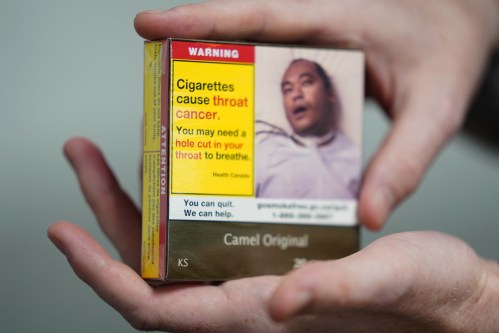
New graphic images are rolling out on cigarette packs in Canada. Could more be done?
6 minute read Preview Thursday, Jul. 23, 2026Policing in trying situations
4 minute read Wednesday, Jul. 22, 2026The caller to police was concerned about a family member who suffered from a severe mental-health illness, and who was somewhere in the neighbourhood, behaving in a manner they feared put people at risk.
With around 17 years of police service by then, most in patrol, I already had considerable experience with mental-health-related calls for service.
From experience, I knew that, regardless of what you knew about the situation going in and any plans of approach you made in advance based on that information, once you encountered the person involved all bets were usually off.
Because situations suddenly and unpredictably change.
Canada overlooks scores of workers
4 minute read Wednesday, Jul. 22, 2026Canada has a labour shortage and a labour surplus at the same time. Canada’s labour force shortages are no longer a temporary challenge. Across the country, “help wanted” signs are everywhere.
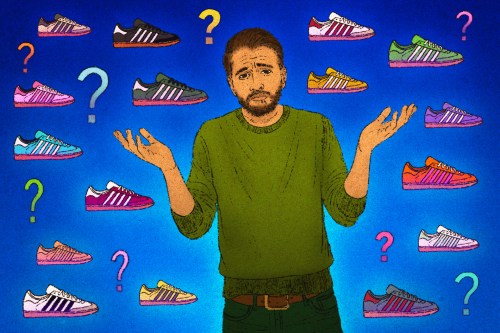
Cut the number of choices you make each day. Your brain will thank you
6 minute read Preview Monday, Aug. 17, 2026
Hegseth announces new policy to test troops for low testosterone
5 minute read Preview Thursday, Jul. 16, 2026
Sports gambling marketing during World Cup raises concerns about negative influence on susceptible audiences
5 minute read Preview Saturday, Jul. 11, 2026
‘It’s infectious’: Optimism a priority for Ontario town’s chief positivity officer
4 minute read Preview Saturday, Jul. 11, 2026Ready or not: youth aging out of care
5 minute read Friday, Jul. 10, 2026Youth in care face the same pressures as other young people their age, except they navigate those transitions without stable family relationships, financial resources or informal support.

Vaping: a clear and present danger
4 minute read Preview Monday, Jul. 6, 2026
The dream of the ’90s is alive in summertime
4 minute read Preview Saturday, Jul. 4, 2026We know who is at risk, but we wait anyway
4 minute read Friday, Jul. 3, 2026Children with disabilities are experiencing a mental health crisis and Manitoba’s systems are waiting for them to really struggle before they respond.
Across Canada, children with disabilities experience far higher rates of mental health challenges than their peers. Nearly three-quarters of children and youth with disabilities experience elevated mental health challenges. More than one-third score in the “very high” mental health difficulty category, a rate nearly 10 times higher than among children without disabilities.
Between 30 to 50 per cent of children with neurodevelopmental disabilities are diagnosed with mental health conditions, compared to eight to 18 per cent among typically developing children. This includes children with autism, ADHD, FASD, intellectual disabilities, learning disabilities and communication disorders.
Children who struggle with communication, sensory regulation, mobility, executive functioning, or social interaction are often excluded long before systems recognize the emotional consequences of that exclusion. Loneliness and exclusion are not side issues — they are public health issues for children with disabilities.

Most Canadian teens have seen violence, gore online: survey
4 minute read Preview Tuesday, Jul. 21, 2026
Bruce Oake Recovery Centre staff lead participants from darkness, despair of addiction
23 minute read Preview Friday, Jun. 26, 2026
Australia plans to strengthen laws banning children from social media
4 minute read Preview Saturday, Jun. 27, 2026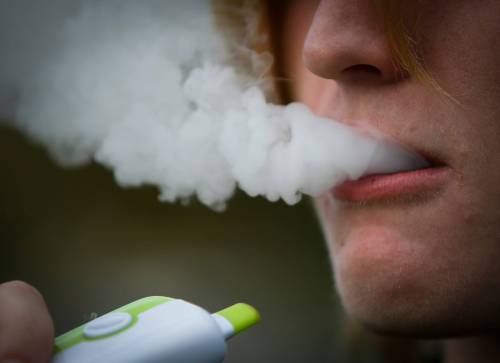
Growing number of Manitoba youths are addicted to vaping
11 minute read Preview Thursday, Jun. 25, 2026