Social Studies (general)
Please review each article prior to use: grade-level applicability and curricular alignment might not be obvious from the headline alone.
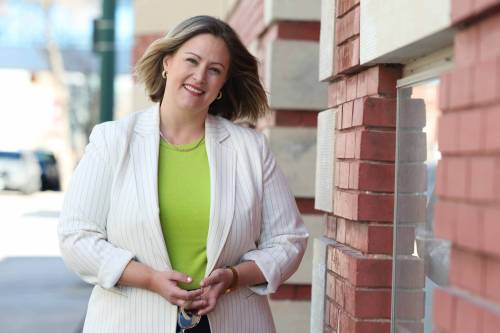
People for Education explore convergence of public education and truth and reconciliation
4 minute read Preview Sunday, May. 17, 2026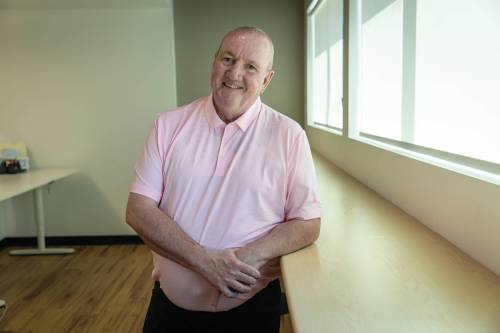
Alain Boucher: insuffler l’espoir au coeur du traitement
4 minute read Preview Saturday, May. 16, 2026A critical project in waiting
4 minute read Saturday, May. 16, 2026Like most Manitobans I live in the city. I live in a home built about a century ago, in a well-treed neighbourhood. A 27-year-old gas furnace heats my home — one that needs replacing soon. I’d love to quit burning gas and electrify.
The options aren’t great. Electric heat costs more than double what gas does. Air source heat pumps work much of the winter, but fail during our worst cold snaps, leaving us dependent on expensive electric heat or gas backup — plus a noisy outdoor unit that ruins the patio.
If I had more land, like those with larger rural properties, I could bury horizontal coils in the ground for a fraction of the cost of drilling. But on my small city lot the only option is drilling 400- to 500-foot boreholes in the front yard. Expensive, even with Efficiency Manitoba incentives.
So: keep burning gas, or put up with a noisy compressor and still need a backup heat source. Those are my choices. But they don’t have to be.
Files offer insight into people who joined Nazi party
5 minute read Saturday, May. 16, 2026North Americans still can’t find out who was in the Epstein files. But those of German descent who live in Canada and the U.S. can now easily learn if their ancestors were Nazis.
In March, the U.S. National Archives released a searchable database containing the records of millions of Germans who joined the National Socialist German Workers’ Party, or Nazi Party, from 1929-43.
Through the records, which were seized by the Americans following the second World War, those who want to know can find out if grandpa or grandma was a Nazi.
Prior to the online release of the records, getting that information was a laborious process that involved making a written request to the Berlin Document Centre in Germany or the German federal archives. It could take months to get a response.
Solidarity Dialogues workshops counter polarization
5 minute read Saturday, May. 16, 2026Amal Elsana Alhjooj is not a person to sit idly by when she encounters a challenge, conflict or situation that needs correcting. Over the years, that attitude and activism have led her to establish several innovative social justice and civil society initiatives that, among other achievements, have enhanced the livelihood and independence of Bedouin women in Israel, where Alhjooj was raised, and the relationship between Jews and Arabs both in Israel, Palestine and in Canada, where Alhjooj now lives.
Alhjooj’s most recent venture is a series of workshops called Solidarity Dialogues.
Solidarity Dialogues is an offshoot of PLEDJ, a social change non-profit that Alhjooj, who is Muslim, co-established in 2021 with Brian Bronfman, the Jewish president of the Peace Network for Social Harmony, to empower and organize marginalized communities to address systematic injustices that impede their lives.
Solidarity Dialogues is more narrow in scope, as it is designed specifically to address the deep seated polarization currently permeating Canadian workplaces, schools and society in general. Solidarity Dialogues’ series of workshops provide participants with the tools to navigate that polarization and the heated, intolerant and uncomfortable exchanges that tend to characterize that polarization. By differentiating between dialogue and debate, and hurt and harm, the workshops provide participants with safe spaces in which to step out of their comfort zones, listen empathetically and openly to others’ lived experiences, and develop mutual understanding and an ability to respond to conflict.

Fort Richmond elementary school shedding racist lord’s name
4 minute read Preview Friday, May. 15, 2026
$61-M investment in high-speed Internet planned for northern First Nations
4 minute read Preview Friday, May. 15, 2026
Shot-in-Manitoba films ready to screen, stream
4 minute read Preview Friday, May. 15, 2026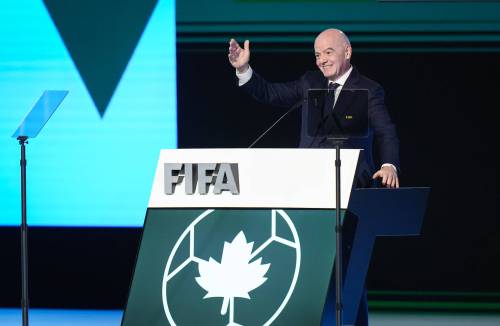
FIFA ticketing format arguably most blatant money-grab in history of organized sport
4 minute read Preview Friday, May. 15, 2026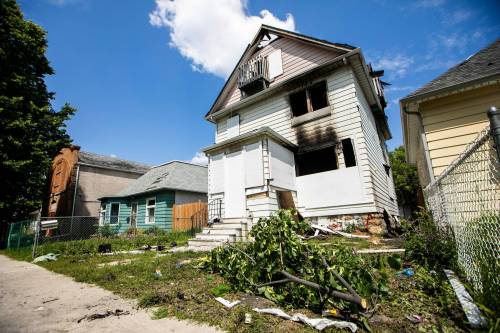
Province has to untie Winnipeg’s hands in fight against vacant, boarded-up properties
5 minute read Preview Friday, May. 15, 2026
AFN chief warns against changes to major projects development rules, calls for debate
4 minute read Preview Monday, Jun. 8, 2026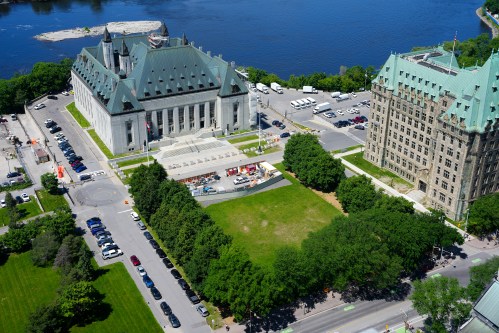
Supreme Court recognizes intimate partner violence as a legal basis for civil damages
5 minute read Preview Monday, Jun. 8, 2026
A third world war — not as close as many fear
5 minute read Preview Friday, May. 15, 2026The dangers of gambling on nuclear power
5 minute read Friday, May. 15, 2026Dismissing climate science, setting Canada apart from most nations and planting us firmly in the United States’ camp, the Carney government is betting the farm on a “nuclear renaissance.”
There have been numerous indications this was coming. But Energy Minister Tim Hodgson’s April 29 statement to the Canadian Nuclear Association, following immediately on the launch of the “Canada Strong Fund” left no doubt that our investment banker prime minister is determined to pursue his nuclear energy superpower dreams.
As the UN Climate Envoy, Mark Carney famously said there is “no path to net zero without nuclear.” This has been a mantra of successive Liberal governments even as Canada’s last nuclear build was in the 1980s, and nuclear’s share of global electricity production has been steadily declining. It’s also been the rallying cry of nuclear advocates spending big to persuade anxious populations experiencing floods, droughts and wildfires that nuclear power will solve our climate disaster in the making. That claim is false.
Eight years ago, the Liberals rolled out their “SMR roadmap,” predicting the first (slightly) smaller new reactors would be operational in 2026. It isn’t happening. A new report by M.V. Ramana and Susan O’Donnell — Assessing Small Modular Nuclear Reactors in Canada — details the $4.5 billion spent by Canadian governments on SMRs with zero kilowatts of electricity generated to date. Most of that money went to the potential first SMR in Canada, the BWRX 300, an American design by GE Hitachi that uses enriched uranium fuel, not available in Canada.
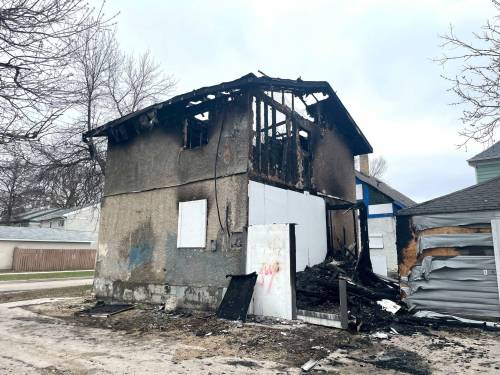
City working to reduce number of vacant buildings but can do more, mayor says
4 minute read Preview Thursday, May. 14, 2026
Indigenous hoopster’s son on mission to get dad inducted into Canadian Basketball Hall of Fame
8 minute read Preview Thursday, May. 14, 2026
Tories question CBC funding of spoof-style Indigenous show on residential schools
7 minute read Preview Friday, May. 15, 2026
Discussion paper floats ways Ottawa can help fund giant electrical grid buildout
4 minute read Preview Friday, May. 15, 2026
AtkinsRéalis bets on nuclear-powered AI factories amid data centre surge
5 minute read Preview Saturday, Jun. 6, 2026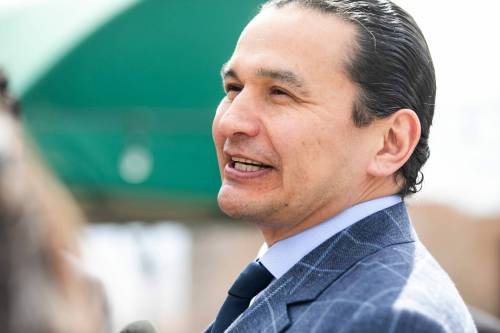
Kinew says watchdog could enforce proposed social media ban
3 minute read Preview Wednesday, May. 13, 2026
College of Registered Nurses of Manitoba apologizes to Indigenous people
4 minute read Preview Wednesday, May. 13, 2026City gets $4M from federal Housing Accelerator Fund
3 minute read Wednesday, May. 13, 2026Winnipeg is set to receive more than $4 million from the federal government for 150 housing units.
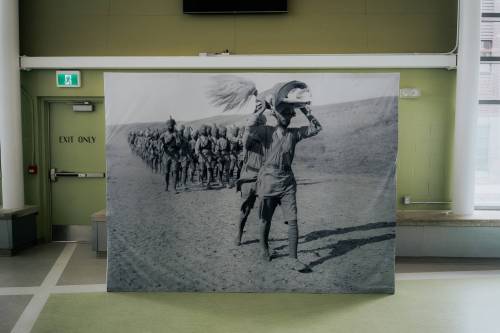
Exhibit helps tell story of Sikh immigrant who put life on line
4 minute read Preview Thursday, May. 14, 2026