Skip to content

October 25, 2026

Winnipeg
5° C, Windy

Full Forecast

    • Media Literacy and Learning Contact
    • Contact Us
    • Advertising Contact
    • Send a Letter to the Editor
    • Staff biographies
    • Submit a News Tip
    • Subscribe to Newsletters
    • Notifications
    • My Account
    • Log Out
    • Log in
    • Create Account
    • Grid View
    • List View
    • Compact View
    • Text Size
    • Translate
    • Dark Mode
    • Light Mode
    • System Default
Manage Subscription
Log in Create Account
  • Home
  • About
  • The Student Press
  • PressKid
  • Free Press 101
  • Events and Extras
  • Newsstand
  • Browse news by subject
  • Contact Us

© 2026 Winnipeg Free Press

Close
  • Quick Links

    • Free Press 101: How we practise journalism
    • Reader Bridge
    • Home
    • Local
    • Canada
    • World
    • Community Connect
    • Classifieds
    • Newsletters
    • Obituaries
    • Photo and Book Store
    • Copyright and Licensing Requests
    • Archives
    • Contests
    • Publications
    • Sponsored Content
    • Privacy Policy
    • Employee Code of Conduct Policy
    • Supplier Code of Conduct Policy
    • Report on Forced Labour and Child Labour in Supply Chains

    Ways to support us

    • Become a Patron
    • Pay it Forward program
    • Subscribe
    • Support Faith coverage
    • Support Arts coverage
  • Replica E-Edition

    • About the E-Edition
    • Winnipeg Free Press

    Business

    • All Business
    • Agriculture
    • Personal Finance
  • Arts & Life

    • All Arts & Life
    • The Arts
    • Autos
    • Books
    • Cannabis
    • Celebrities
    • Diversions
    • Puzzles
    • Environment
    • Events
    • Faith
    • Food & Drink
    • Health
    • Life & Style
    • Movies
    • Music
    • Science & Technology
    • TV
    • Travel
  • Sports

    • All Sports
    • Amateur
    • Auto Racing
    • Blue Bombers
    • Curling
    • Football
    • Goldeyes
    • Golf
    • Grey Cup
    • High School
    • Hockey
    • Horse Racing
    • Winnipeg Jets
    • Manitoba Moose
    • Manitoba Open
    • MLB
    • NBA
    • Olympics
    • Soccer
  • Opinion

    • All Opinion
    • Analysis
    • Columnists
    • Editorials
    • Editorial Cartoon
    • Letters to the Editor
    • Send a Letter to the Editor

    Media

    • All Media
    • Photo Galleries
    • Video

    Homes

    • Property Listings
    • Featured News
    • Renovation and design
    • New homes
    • Resale homes
  • About Us

    • About Us
    • Media Kit
    • Contact Us
    • Carrier Positions & Retailer Requests
    • FP Newspapers Inc.
    • History
    • Internships
    • Job Opportunities
    • Privacy Policy
    • Retail Locations
    • Staff Biographies
    • Terms and Conditions
Manage Subscription
Log in Create Account
Winnipeg Free Press Logo Media Literacy & Learning
    • Media Literacy and Learning Contact
    • Contact Us
    • Advertising Contact
    • Send a Letter to the Editor
    • Staff biographies
    • Submit a News Tip
    • Subscribe to Newsletters
    • Notifications
    • My Account
    • Log Out
    • Log in
    • Create Account
    • Grid View
    • List View
    • Compact View
    • Text Size
    • Translate
    • Dark Mode
    • Light Mode
    • System Default
  • Menu
  • Home
  • About
  • The Student Press
  • PressKid
  • Free Press 101
  • Events and Extras
  • Newsstand
  • Browse news by subject
  • Contact Us
    • My Account
    • Log Out
    • Log in
    • Create Account
    • Grid View
    • List View
    • Compact View
    • Text Size
    • Translate
    • Dark Mode
    • Light Mode
    • System Default
The Free Press Social Studies Grade 11: History of Canada Education Subject Becoming a Sovereign Nation 1867-1931

Advanced Search

Education Subjects
Media Literacy Topics
Clear filters

Becoming a Sovereign Nation 1867-1931

Please review each article prior to use: grade-level applicability and curricular alignment might not be obvious from the headline alone.
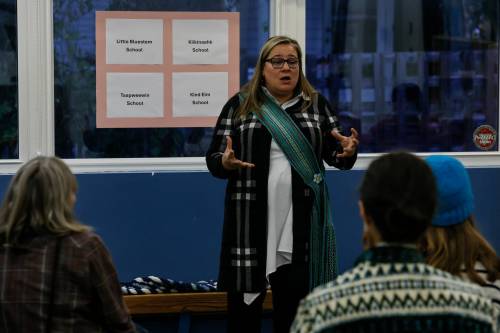
JOHN WOODS / FREE PRESS
                                Teresa Byrne, a Métis way of life teacher, speaks to some parents and students during a Wolseley School renaming community meeting Tuesday.

Truth, home, nature: Renaming process for Wolseley School 'requires care’

Maggie Macintosh 5 minute read Preview

Truth, home, nature: Renaming process for Wolseley School 'requires care’

Maggie Macintosh 5 minute read Wednesday, Oct. 15, 2025

Wolseley School will be renamed after the towering trees that surround it, a perennial grass found in nearby Omand’s Creek or a Michif phrase.

Read
Wednesday, Oct. 15, 2025
The Survivors’ Flag hangs to honour Indigenous Peoples who were forced to attend residential schools, on the grounds of the legislature in Victoria, B.C., on Wednesday, Sept. 28, 2022. THE CANADIAN PRESS/Chad Hipolito
No Subscription Required

First Nation in B.C. says 41 more graves found by penetrating radar at school site

The Canadian Press 4 minute read Preview
No Subscription Required

First Nation in B.C. says 41 more graves found by penetrating radar at school site

The Canadian Press 4 minute read Friday, Feb. 20, 2026

SECHELT - An 18-month investigation at a former residential school site in British Columbia's Sunshine Coast has found more evidence of children who disappeared there, the area’s First Nation says.

The shishalh First Nation in Sechelt, B.C., said in a release Friday that 41 "additional unmarked graves" had been found as a result of a search with ground-penetrating radar in the area around the St. Augustine’s Residential School site.

It said the discovery brought the number of suspected graves at the site to 81, after initial findings that were announced in 2023.

"Today is a day of loss for our community and for our families," said Chief Lenora Joe in a video statement.

Read
Friday, Feb. 20, 2026
Brent Bellamy Photo
                                The Union Bank Tower, Canada’s first skyscraper, the tallest building in the country at its completion.
No Subscription Required

Try out being a tourist at home — in Winnipeg

Brent Bellamy 6 minute read Preview
No Subscription Required

Try out being a tourist at home — in Winnipeg

Brent Bellamy 6 minute read Monday, Jul. 28, 2025

Many Canadians and Manitobans are rethinking their travel plans to the United States this summer. We might take this opportunity to become tourists in our own city, rediscovering Winnipeg — a city that is often underappreciated, but one that is truly unique in Canada.

Read
Monday, Jul. 28, 2025
Gracieuseté
                                La Maison Hourie, à Portage-la-Prairie.
                                Supplied
                                La Maison Hourie de Portage-la-Prairie
No Subscription Required

Sauver la Maison Hourie, le vote est ouvert

Marie Wielgocki 4 minute read Preview
No Subscription Required

Sauver la Maison Hourie, le vote est ouvert

Marie Wielgocki 4 minute read Saturday, Apr. 12, 2025

Organisée par la Fiducie nationale du Canada, la compétition Next Great Save offre un financement et de la visibilité aux lieux historiques menacés partout dans le pays. Cette année, la maison Hourie de Portage-la-Prairie fait partie des douze finalistes. Les gagnants sont choisis par vote du public, qui est ouvert jusqu’au 17 avril.

Sauver l’un des bâtiments emblématiques de l’histoire du Manitoba. Voilà l’objectif du musée de Fort la Reine à Portage-la-Prairie, qui a inscrit au concours l’une de ses bâtisses: la Maison Hourie. C’est sur le site nextgreatsave.ca que le public, seul juge de la finale de cette compétition nationale, est invité à voter pour sauver son patrimoine favori. Parmi les finalistes, la Maison Hourie est le seul édifice situé au Manitoba.

Restaurer la maison Hourie

Les règles sont simples: pour sauver son patrimoine, chaque finaliste mène sa campagne de sensibilisation pour récolter le maximum de soutien. Parrainé par Ecclesiastical Insurance, ce concours s’inscrit dans les missions de la Fiducie nationale du Canada, créée en 1973. Principal organisme de bienfaisance national, la Fiducie a contribué depuis sa création à la protection de plus de 835 lieux partout au Canada.

Read
Saturday, Apr. 12, 2025
Free Press files
                                Clockwise, from top left: Lillian Beynon Thomas, Winona Dixon, Dr. Mary Crawford and Amelia Burritt presented the final petition for women’s suffrage on Dec. 23, 1915 to the Manitoba Legislature. The amendment to the Manitoba Elections Act allowing women to vote, the first such legislation in Canada, was passed on Jan. 28, 1916.
No Subscription Required

Life of pioneer for women’s rights in Manitoba chronicled in new account

Reviewed by Faith Johnston 5 minute read Preview
No Subscription Required

Life of pioneer for women’s rights in Manitoba chronicled in new account

Reviewed by Faith Johnston 5 minute read Saturday, Dec. 21, 2024

Manitobans with an interest in history are proud that our province was the first in Canada to grant women the vote, but if asked who led the women’s suffrage campaign here, most would say Nellie McClung. A minority might say it was a team effort. Few would name Lillian Beynon Thomas.

Law professor Robert Hawkins became interested in Thomas because of her determined efforts to have a dower act passed in Manitoba. After devoting several years to the dower campaign, Thomas realized it would never happen without women’s suffrage. So in 1913, she organized the Political Equality League to lead the fight.

Born in 1874, Thomas came from a relatively poor family homesteading near Hartney. After finishing high school, she taught in rural schools off and on for 13 years, saving enough money to further her education; in 1905, when only 11 per cent of university grads were women, Thomas graduated from Brandon University. The following year, having had enough of teaching, she landed a job with the Manitoba Free Press.

For the next 11 years, Thomas edited the women’s page of a widely distributed weekly, The Prairie Farmer, and for five years wrote a daily column in the Free Press as well.

Read
Saturday, Dec. 21, 2024
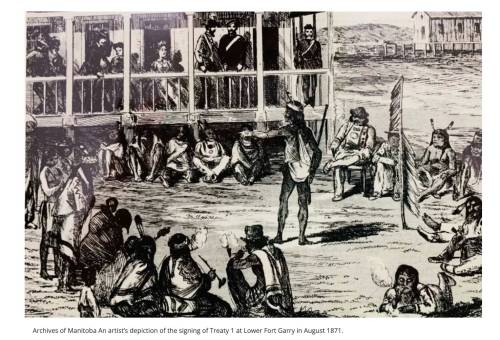
An artist’s depiction shows the signing of Treaty 1 at Lower Fort Garry in August 1871. (Archives of Manitoba)
No Subscription Required

Rupert’s Land inhabitants blindsided by Canada’s purchase of their homeland in 1869

Tom Brodbeck 7 minute read Preview
No Subscription Required

Rupert’s Land inhabitants blindsided by Canada’s purchase of their homeland in 1869

Tom Brodbeck 7 minute read Saturday, Oct. 26, 2024

When the Hudson’s Bay Company (HBC) reached an agreement to sell Rupert’s Land to Canada in the spring of 1869, it came as a complete surprise to the people living in what is today Western Canada. They were neither consulted on the proposed annexation nor given any details about how it would affect their lives.

Read
Saturday, Oct. 26, 2024
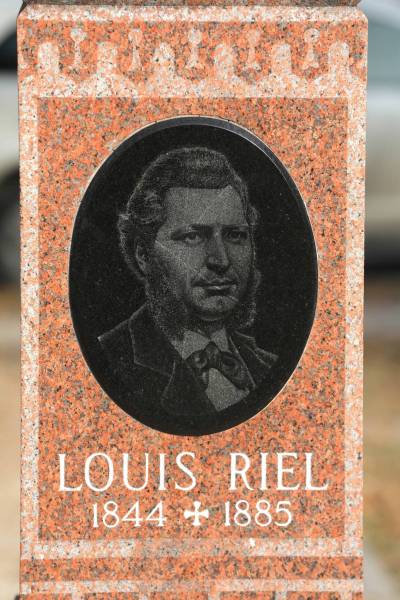
RUTH BONNEVILLE / WINNIPEG FREE PRESS FILES
                                A new motion is calling for an image of Métis leader Louis Riel to be placed in Winnipeg city council chambers.
No Subscription Required

Riel’s vision grows stronger

Niigaan Sinclair 5 minute read Preview
No Subscription Required

Riel’s vision grows stronger

Niigaan Sinclair 5 minute read Friday, Nov. 24, 2023

As the first visionary of Manitoba, Riel fought the rest of his life to stop British domination and destruction of Indigenous lives, while stubbornly maintain the independent and unique multicultural spirit that birthed this place.

Read
Friday, Nov. 24, 2023
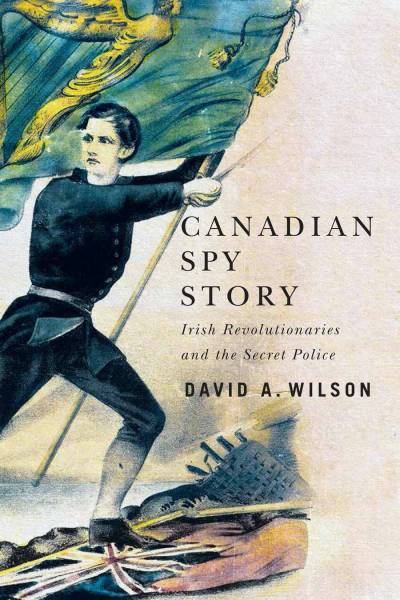
Canadian Spy Story
                                 Canadian Spy Story
No Subscription Required

Fenians fancied a Manitoba foothold

Reviewed by Douglas J. Johnston 4 minute read Preview
No Subscription Required

Fenians fancied a Manitoba foothold

Reviewed by Douglas J. Johnston 4 minute read Saturday, Aug. 6, 2022

Sometimes it’s the local angle that turns a book into a bit of a revelation.

Read
Saturday, Aug. 6, 2022
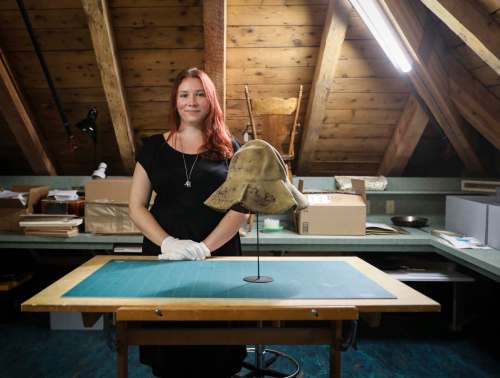
Among the items at the St. Boniface Museum is this hat, which belonged to curator Emilie Bordeleau-Laroche’s great-great grandfather Alfred Desorches, who fought in the 1885 Battle of Frog Lake. The suede hat bears marks of that battle and others. (Jessica Lee / Winnipeg Free Press)
No Subscription Required

St. Boniface Museum home to 30,000 artifacts, many connected to founder of Manitoba

Brenda Suderman 7 minute read Preview
No Subscription Required

St. Boniface Museum home to 30,000 artifacts, many connected to founder of Manitoba

Brenda Suderman 7 minute read Monday, Oct. 18, 2021

St. Boniface Museum is home to 30,000 artifacts, many connected to the founder of Manitoba.

Read
Monday, Oct. 18, 2021
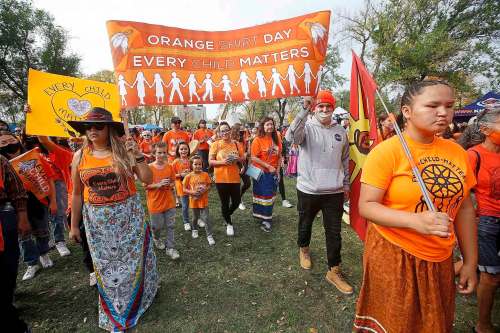
Several thousand gathered for a Healing Walk through downtown Winnipeg on the National Day for Truth and Reconciliation Thursday. (John Woods / The Canadian Press)
No Subscription Required

Manitobans take to streets in name of truth, reconciliation

Julia-Simone Rutgers and Gabrielle Piché 6 minute read Preview
No Subscription Required

Manitobans take to streets in name of truth, reconciliation

Julia-Simone Rutgers and Gabrielle Piché 6 minute read Thursday, Sep. 30, 2021

A sea of orange flooded downtown Winnipeg, as thousands of Manitobans came together to honour residential school survivors, mourn those lost to the system, and mark the first National Day for Truth and Reconciliation.

On Thursday morning, outside the towering Canadian Museum for Human Rights, a historic sight: crowds of people in orange shirts honouring a group of Sixties Scoop, residential school and day school survivors gathered on the steps.

"We went there as beautiful children; we wake up every day with these memories,” Gerry Shingoose — herself a residential school survivor — called into a megaphone, looking out at the growing crowd.

"Today is such a beautiful day to honour each one of us."

Read
Thursday, Sep. 30, 2021
MIKAELA MACKENZIE / WINNIPEG FREE PRESS
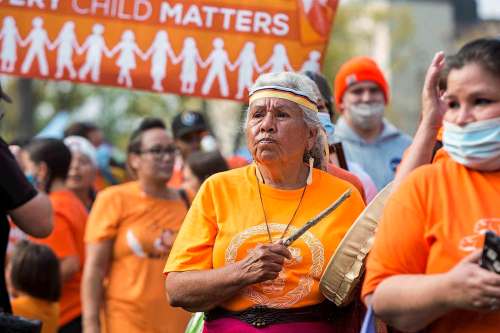
Mary Starr walks in a march that went from the Canadian Museum for Human Rights to St. John's Park on the first National Day for Truth and Reconciliation in Winnipeg on Thursday, Sept. 30, 2021. For --- story.
Winnipeg Free Press 2021.
No Subscription Required

Heavy hearts, happy hearts

Melissa Martin 5 minute read Preview
No Subscription Required

Heavy hearts, happy hearts

Melissa Martin 5 minute read Thursday, Sep. 30, 2021

The marchers arrive at St. John's Park at almost exactly the minute predicted. They arrive in a great orange wave, all wearing shirts the same colour. They arrive led by the drum, and the riders on horseback, and the tendrils of smudge that curl over Main Street, cleansing the path to the park where the powwow is underway.

"Are we all going to fit into the park, guys?" one young woman gasps, laughing as she surveys the scene.

In a way they do, in a way they don't. For hours, the people flow into the park from all directions. They flow by the hundreds, and then the thousands. They flow until the fields show less green than orange, until lines for the porta-potties stretch into the dozens, until the whole park is alive with laughter and conversation.

The crowd looks like Manitoba. It contains faces of all ages, all races. Most of the people here are Indigenous, but on this day they are joined in solidarity by people of all nations; a movement, generations in the making, to call for a way forward, to call for action on reconciliation, to call for justice for Indigenous people.

Read
Thursday, Sep. 30, 2021
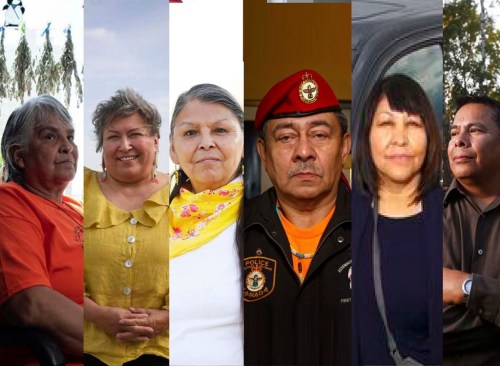
Portraits of survivors, tales of strength
No Subscription Required

Portraits of survivors, tales of strength

7 minute read Preview
No Subscription Required

Portraits of survivors, tales of strength

7 minute read Wednesday, Sep. 29, 2021

Since 2013, Sept. 30 has been known as Orange Shirt Day — to honour the children who survived Indian residential schools and to remember those who did not return home.

It is also now the National Day for Truth and Reconciliation, which asks all Canadians to reflect upon relationships with Indigenous people, remember the harms of the past, and focus on ways to commit to healthy and positive growth throughout all communities today.

Here are six inspiring stories of Manitoba survivors of the residential school, day school, and child welfare systems:


Read
Wednesday, Sep. 29, 2021
MIKE DEAL / WINNIPEG FREE PRESS Flags representing (from left) Treaty One First Nations, the Métis Nation and Dakota Nations were raised at City Hall Wednesday morning and will be flying permanently as part of an ongoing commitment to reconciliation.
No Subscription Required

Flags of Treaty One, the Dakota and Métis fly at city hall

Gabrielle Piché 3 minute read Preview
No Subscription Required

Flags of Treaty One, the Dakota and Métis fly at city hall

Gabrielle Piché 3 minute read Wednesday, Sep. 15, 2021

Drumbeats reverberated as four Indigenous leaders rode horseback past the brick-walled restaurants on King Street: it was the beginning of a ceremony to recognize the place of Indigenous people in Winnipeg.

On Wednesday morning, the flags of Treaty One First Nations, the Dakota and the Métis were hoisted at city hall. They'll be there permanently, alongside the flags of Canada, Manitoba and Winnipeg.

"It'll make our people proud that their flag will be flying at city hall," said Sagkeeng First Nation Chief Derrick Henderson. "That is so significant."

Chiefs, representatives of various Indigenous groups and Winnipeg Mayor Brian Bowman spoke at the flag-raising event. Ribbon skirts, headdresses and face masks were abundant among the crowd.

Read
Wednesday, Sep. 15, 2021
MIKAELA MACKENZIE / WINNIPEG FREE PRESS
The maze-like halls of expansive production office
No Subscription Required

Set of The Porter a testament to the special connection production has with Winnipeg's Black history

Julia-Simone Rutgers 12 minute read Preview
No Subscription Required

Set of The Porter a testament to the special connection production has with Winnipeg's Black history

Julia-Simone Rutgers 12 minute read Thursday, Sep. 2, 2021

On a rainy Friday evening in Winnipeg’s landmark Nutty Club building, camera crews, grips, food services, hair and makeup teams, stand-ins and actors are spinning about in dance-like organized chaos.

The five-storey candy warehouse — first erected in 1905 and still standing in the shadow of active CP and CN rail lines — has been transformed, pulled back to its turn-of-the-20th-century roots as a set for CBC’s upcoming TV drama The Porter. At each stop along the building’s steep wooden staircase, the team behind Canada’s largest Black-led production is hard at work bringing the roaring ‘20s — and an oft-forgotten story of Black liberation and empowerment — to life.

On one floor, cast and crew block their scene movements, listening raptly to directors, speaking in huddles, donning crisp white shirts and suspenders or gowns, preparing for the crack of the clapperboard.

A floor above, the members of the “video village” tuck on their headphones, lean over screens and warn each other not to move, lest the ceilings shake below.

Read
Thursday, Sep. 2, 2021
JOHN WOODS / WINNIPEG FREE PRESS
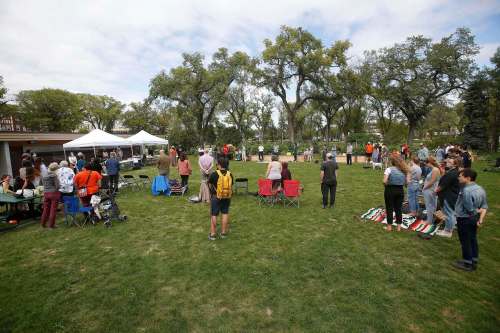
People take part in a Red River Echoes community meeting at Vimy Ridge Park to discuss renaming the Wolseley neighbourhood in Winnipeg on Sunday.
No Subscription Required

Group engages community on renaming Wolseley neighbourhood

Malak Abas 5 minute read Preview
No Subscription Required

Group engages community on renaming Wolseley neighbourhood

Malak Abas 5 minute read Monday, Aug. 30, 2021

In 1870, Col. Garnet Wolseley led a military expedition into Manitoba to violently overthrow Louis Riel’s provisional government at the Red River Colony. On Sunday afternoon, a group gathered at Vimy Ridge Park to discuss how to push for the renaming of the neighbourhood that bears his name.

Red River Echoes, a Métis collective that first came together with the purpose of “bringing an alternative voice to what Métis people think in Manitoba” after Manitoba Metis Federation president David Chartrand put out an ad with the Winnipeg Free Press in March in support of the Winnipeg Police Service, put together the rendezvous to take questions and comments community members might have around the growing conversation to rename Wolseley.

"With a lot of names being changed right now, we thought it was a good opportunity,” Red River Echoes member Claire Johnston said. “And Wolseley in particular has a really violent and negative association for Métis people, and also all other people of colour in who live in Winnipeg.”

In the months since the remains of 215 children were found in unmarked graves near a residential school in Kamloops, B.C., calls have been sparked across the country to rename landmarks named after people who had a hand in the colonization of Canada. In Winnipeg, Wolseley isn’t the first instance — calls to rename Bishop Grandin Boulevard due to its namesake’s hand in the residential school system have resulted in consultations and a possible recommendation for its renaming coming to city council this fall.

Read
Monday, Aug. 30, 2021
MIKAELA MACKENZIE / WINNIPEG FREE PRESS
The Craig Block, which has gone up for sale, housed perhaps the first Black union in North America, the Order of Sleeping Car Porters.
No Subscription Required

Craig Block link to city’s Black history

Cody Sellar 4 minute read Preview
No Subscription Required

Craig Block link to city’s Black history

Cody Sellar 4 minute read Thursday, Aug. 26, 2021

Above a fruit seller in a small brick building on Main Street, a group of Black railway porters made history.

The Order of Sleeping Car Porters, formed in Winnipeg in 1917, was North America’s first Black labour union. Five years later, they established offices and a meeting hall on the second storey of the building, the Craig Block, at 795 Main St.

Now, the building has hit the market, without any historical status protections or a bronze plaque to commemorate its history.

History writer Christian Cassidy said he’s seen the building, which recently housed retail store Ma’s Fishing, go up for sale once or twice in the past. Each time, he worries someone will buy it and knock it down. It’s one of last buildings that links Winnipeg to the history of its Black communities.

Read
Thursday, Aug. 26, 2021
The not-for-profit museum relies on admission fees, donations and sales from its railway car gift shop to meet its modest annual budget of about $30,000. The museum’s board is working to find backers and new ways to raise operating funds. (Alex Lupul / Winnipeg Free Press)

Winnipeg Railway Museum can punch your ticket to the past, but it also needs your help

Brenda Suderman 7 minute read Preview

Winnipeg Railway Museum can punch your ticket to the past, but it also needs your help

Brenda Suderman 7 minute read Sunday, Aug. 15, 2021

The Winnipeg Railway Museum, run by the Midwestern Rail Association and the Winnipeg Model Railway Club, is "the coolest indoor museum in Canada in the winter and the hottest ticket in town in summer."

Read
Sunday, Aug. 15, 2021

Harvesting rights were never surrendered

Jerry Daniels 5 minute read Thursday, Nov. 26, 2020

I AM dismayed that we are still arguing about the inherent rights of First Nation people to harvest from our lands and waters. Let me be clear, we have never given up our inherent right to hunt and fish.

The treaties we signed and the rulings of the highest courts of the Canadian state affirm our autonomy and freedom to engage in sustainable harvesting without interference from colonial governments.

This battle is happening across the country. Our Mi’kmaq relatives are fighting to protect their rights and livelihood on the East Coast, and here in what is now known as Manitoba, we have to defend against a provincial government that, in the middle of a global pandemic, is attempting to intimidate our people on their own land using the recently passed Wildlife Amendment Act.

Since the Wildlife Amendment Act came into effect on Oct. 10, more than three dozen people have faced charges or been given warnings by the provincial government, which has trumpeted their actions as “continuing enforcement” against “illegal hunting” in several recent news releases. Let’s be clear that the province is taking legal action against our people for exercising their inherent right to harvest; this debate is not about sport hunting. This is about our right to harvest to be able to provide for our families — the way we always have since time immemorial.

RUTH BONNEVILLE / WINNIPEG FREE PRESS FILES
A statue of Nellie McClung and her compatriots in the
No Subscription Required

Time to make McClung a pioneer — again

Carl DeGurse 5 minute read Preview
No Subscription Required

Time to make McClung a pioneer — again

Carl DeGurse 5 minute read Saturday, Jan. 25, 2020

A famous Winnipegger enthusiastically promoted selective breeding among humans for the refinement of the species. She championed the forced sterilization of people who were considered “unfit,” meaning people judged as “feeble-minded.”

She left Winnipeg and moved to Edmonton, where she was elected as an MLA and was a main promoter of the Alberta Sexual Sterilization Act, legislation that allowed the sterilization of almost 3,000 people. The victims were disproportionately immigrants and Indigenous people.

By today’s standards, she would be considered a racist.

What do we do about Nellie McClung?

Read
Saturday, Jan. 25, 2020
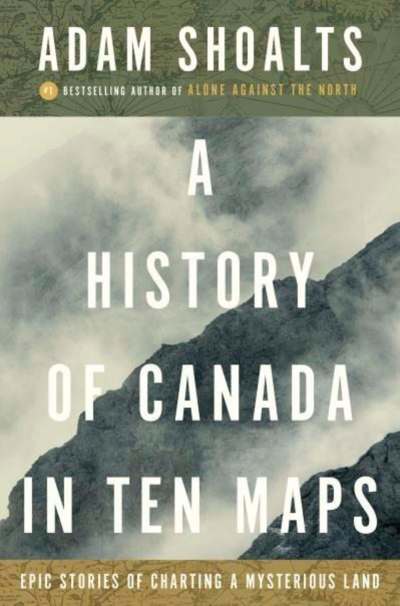
Map-based history of Canada a marvel
No Subscription Required

Map-based history of Canada a marvel

Reviewed by Douglas J. Johnston 3 minute read Preview
No Subscription Required

Map-based history of Canada a marvel

Reviewed by Douglas J. Johnston 3 minute read Saturday, Oct. 28, 2017

If you like maps, you’ll like this book; if you like both maps and crisply recounted Canadian history, you’ll love it.

Adam Shoalts is the author of a previous Canadian bestseller, 2015’s Alone Against the North, which recounted his exploration of the muskeg and river wilderness that is the Hudson Bay Lowlands.

The maps of his second book are springboards for his accounts of how this country’s vast expanses were charted.

Shoalts believes maps have been fundamental in shaping our view of Canada. He supports this belief by offering up pivotal moments in our country’s history via stories built around 10 specific maps, most of which, in turn, are the product of specific explorations.

Read
Saturday, Oct. 28, 2017
National Archives of Canada / THE CANADIAN PRESS FILES
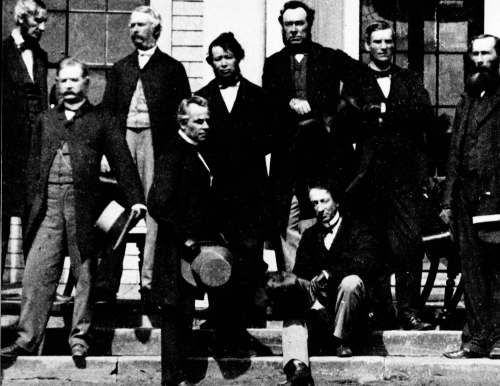
Several of the Fathers of Confederation at the Charlottetown Conference in September 1864. Sir John A. Macdonald and Georges-Étienne Cartier are in the foreground.

A country born amid controversy

Allan Levine 5 minute read Preview

A country born amid controversy

Allan Levine 5 minute read Friday, Jun. 30, 2017

Given his penchant to portray Canadian history as a glorious fusion of brazen courage, underdog determination, generosity of spirit and the march of progress, Prime Minister Justin Trudeau definitely would have been in his element had he been in Toronto 150 years ago.

The new province of Ontario had the most to gain from Confederation. By virtue of its large population, Ontario’s politicians were to dominate the new federal or central government and the province’s economic potential was seemingly unlimited. (It is not by accident that the western boundary of Ontario set in the early 1880s extends as far as Kenora, 1,900 kilometres from Toronto.)

Thus, on July 1, 1867, there was great optimism among Toronto’s 50,000 citizens. The ringing of the bells at St. James Cathedral at midnight on June 30 had signified that the Dominion of Canada was now a reality.

The publisher of the Toronto Globe, George Brown, a key player who, along with John A. Macdonald and George-Étienne Cartier, had made Confederation a reality, had stayed up most of the night composing a 9,000-word article about the meaning of Confederation that took up the entire front page of the Globe on July 1. “We hail the birthday of a new nationality,” he wrote. “A United British America, with its four millions of people, takes its place this day among the nations of the world.”

Read
Friday, Jun. 30, 2017
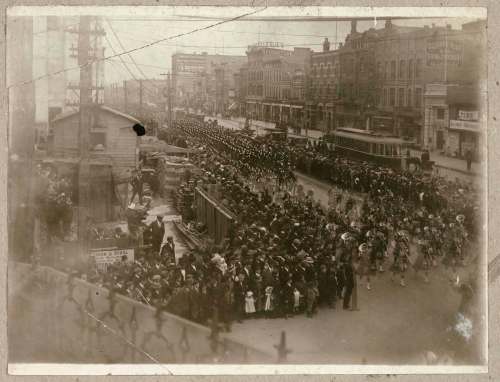
Jubilee parade 1897

While our 150th birthday party is a big, 'Dominion Day' began with respectful restraint

Randy Turner 16 minute read Preview

While our 150th birthday party is a big, 'Dominion Day' began with respectful restraint

Randy Turner 16 minute read Saturday, Oct. 11, 2025

It’s safe to say what is now called Canada Day had modest beginnings in these parts.As far back as 1869 — two years after Confederation and one year before Manitoba was born — the July 3 issue of the Nor’Wester, the paper of record for the “Colony of Assiniboia,” dutifully reported that celebrations on July 1 were muted.

“Dominion Day was kept in our little town by the raising of the ‘Canadian’ flag upon the now celebrated staff — said to be 70 feet, be the same 20 feet more or less — which flag was liberal sainted during the day by an ‘Anvil Chorus’ adapted to ‘God Save the Queen’ and ‘Hurrah! for the New Dominion,” the paper noted. “The affair was wound up by a large bonfire in the evening.

“Not a gun was heard, or a funeral note or anything else,” the account added, “but then you see the H.B.C. (Hudson Bay Company) is keeping her patriotism like champagne, well bottled and wired down, for a future occasion, when we may expect to see it burst forth in a manner calculated to astonish the natives.”

Of course, these were the days of the Riel Rebellion in the Red River Colony. Not exactly the time to be popping that “champagne” in public. Besides, the majority of the less than 1,000 colony settlers considered themselves British. And a vast majority of residents, the Métis under Riel, were literally at war with the new Canada.

Read
Saturday, Oct. 11, 2025
BORIS MINKEVICH / WINNIPEG FREE PRESS
This is painted on the back side of one of the glass protective boxes.

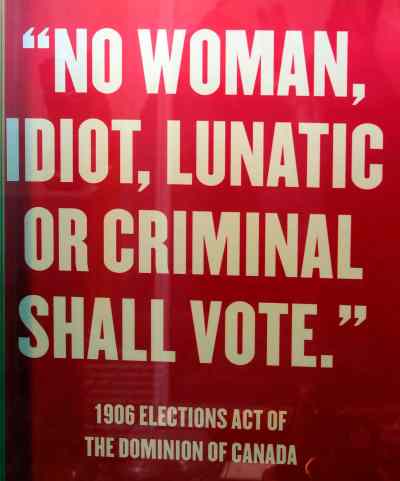
Century of progress: 'Prairie grit' helped Manitoba women secure the right to vote

Mia Rabson 7 minute read Preview

Century of progress: 'Prairie grit' helped Manitoba women secure the right to vote

Mia Rabson 7 minute read Monday, Oct. 6, 2025

OTTAWA — Almost a century after Nellie McClung pushed Manitoba to become the first province to allow women to vote or run for office, she would have been pretty proud of what women have achieved, says her granddaughter Marcia McClung.

But she also probably would have been a little disappointed to see women have not achieved true equality, be it in the workplace, the political world or even in many families.

Although Nellie McClung dreamed that if women could secure the right to vote, all the other rights to become equals with men would surely follow, she knew when she died, in 1951, that had not happened.

“She did acknowledge there wouldn’t have been any progress without the vote,” Marcia said in an interview with the Winnipeg Free Press. “It was a really significant step.”

Read
Monday, Oct. 6, 2025
WAYNE GLOWACKI / WINNIPEG FREE PRESS
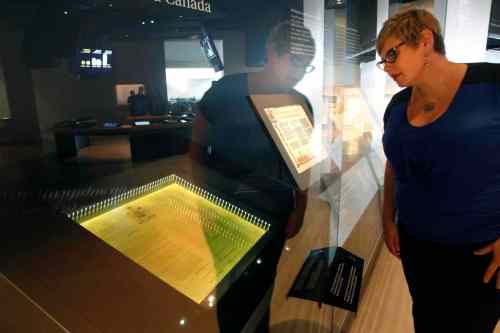
Heather Bidzinski views the Proclamation of the Constitution Act document at the Canadian Museum for Human Rights Wednesday.

Constitution Act, Treaty 1 at CMHR

By Ashley Prest 3 minute read Preview

Constitution Act, Treaty 1 at CMHR

By Ashley Prest 3 minute read Thursday, Dec. 18, 2014

The original Treaty No. 1 land agreement of 1871 and the 1982 Proclamation of the Constitution Act are two of 11 historic and rarely loaned artifacts on display at the Canadian Museum for Human Rights.

The documents can be viewed in the CMHR's Protection Rights in Canada gallery and Canadian Journeys gallery and are on loan until September 2015 from the Library and Archives Canada based in Gatineau, Que. The display has been open to public viewing since the museum's opening day on Nov. 11.

Signed at Lower Fort Garry by Chippewan and Cree First Nations leaders and Queen Victoria, the Treaty No. 1 agreement is the original document with affixed seals and ribbon.

"Just looking at the display in the case, we've got 250 years of Canadian legal tradition and human rights tradition in these documents. There is a really wide breadth of historical significance," said Heather Bidzinski, the CMHR's head of collections.

Read
Thursday, Dec. 18, 2014
  • First
  • Previous
  • 1
  • 2
  • 3
  • 4
  • 5
  • Next
  • Last
Winnipeg Free Press Logo
Links
Replica E-Edition Front Page Arts & Life Business Canada Local Opinion Sports World Reader Bridge
WFP Events Free Press 101: How we practise journalism Media Kit About Us Archives Community Connect Classifieds Contests
FP Features Homes Newsletters Obituaries Podcasts Puzzles Photo and Book Store Become a Free Press Patron Privacy Policy
    • Media Literacy and Learning Contact
    • Contact Us
    • Advertising Contact
    • Send a Letter to the Editor
    • Staff biographies
    • Submit a News Tip
    • Subscribe to Newsletters
    • Notifications
    • My Account
    • Log Out
    • Log in
    • Create Account
    • Grid View
    • List View
    • Compact View
    • Text Size
    • Translate
    • Dark Mode
    • Light Mode
    • System Default
©2026 Winnipeg Free Press