Social Studies Grade 9: Canada in the Contemporary World

Please review each article prior to use: grade-level applicability and curricular alignment might not be obvious from the headline alone.
Youth unemployment more than just an economic statistic

Tory McNally 5 minute read Preview

Youth unemployment more than just an economic statistic

Tory McNally 5 minute read Saturday, May. 23, 2026

For many young Canadians, getting a first job is no longer a simple rite of passage. It has become a source of stress, frustration and uncertainty about the future.

Across Canada, teenagers and young adults are sending out resumés, applying online for hours at a time and following up with employers, only to hear nothing back. For students trying to save for tuition, get experience or simply gain independence, the struggle to find work is becoming increasingly discouraging.

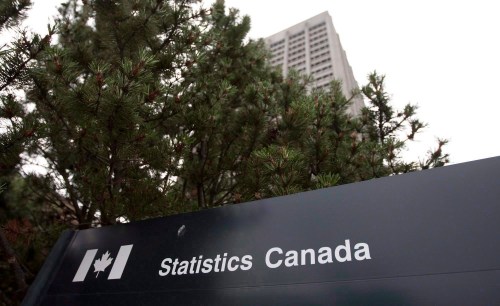
Statistics Canada reported the national unemployment rate for youth ages 15 to 24 reached 14.3 per cent in April, far above the overall unemployment rate of 6.9 per cent. The youth unemployment rate remains significantly higher than the pre-COVID-19 pandemic average of 10.8 per cent.

Behind those numbers are young people who are eager to work but unable to gain a foothold in the labour market. Many employers continue to ask for experience even for entry-level positions, leaving students and recent grads trapped in a cycle where they cannot gain experience because nobody will hire them.

Read
Saturday, May. 23, 2026
No Subscription Required

Manitoba’s newspapers portrayed province as rife with untamed potential — to the detriment of the Indigenous community

Reviewed by Matt Henderson 5 minute read Preview
No Subscription Required

Manitoba’s newspapers portrayed province as rife with untamed potential — to the detriment of the Indigenous community

Reviewed by Matt Henderson 5 minute read Saturday, May. 23, 2026

Historian Howard Zinn once compared the historian’s perspective to that of the mapmaker. We have the human tendency to see the world from our point of view, regardless of our best intentions and feigned attempts at objectivity.

Such is the same for newspapers, both historically and in their present form. Newspapers carry with them a certain perspective — a leaning of sorts that is inherent and molded in the perspective of owners, editorial boards and journalists themselves.

You can’t be neutral on a moving train, as Zinn would argue.

In the 19th century, however, newspapers notoriously and explicitly saw the world and tried to shape it from the perspective and agenda of its owners. George Brown’s Globe in Upper Canada, for example, was a classic example of a partisan media that used its platform to undermine rivals, the French and various governments.

Read
Saturday, May. 23, 2026

Outrage over Northland Tales program hypocritical

Niigaan Sinclair 5 minute read Preview

Outrage over Northland Tales program hypocritical

Niigaan Sinclair 5 minute read Friday, May. 22, 2026

Mud-slinging isn’t stopped by slinging more mud — and the concept behind the satirical TV show Northland Tales is an attempt to harmfully engage with a set of harmful beliefs and behaviours.

Read
Friday, May. 22, 2026

Vast marine conservation reserve, bigger than P.E.I., to protect B.C. central coast

Marissa Birnie, The Canadian Press 4 minute read Preview

Vast marine conservation reserve, bigger than P.E.I., to protect B.C. central coast

Marissa Birnie, The Canadian Press 4 minute read Saturday, May. 23, 2026

An enormous national marine conservation reserve is being established on British Columbia's central coast, spanning an area larger than Prince Edward Island.

The protected area, named Mia-yaltwa Ha’lidzogm hoon, is the result of an agreement between six coastal First Nations and the provincial and federal governments.

An official says the area is around 6700 sq. km and will be operated by Parks Canada along with its Indigenous and federal partners.

The reserve is within the Great Bear Sea, a diverse marine ecosystem that covers more than half of B.C.'s coast and includes glass sponge reefs, salmon, killer whales and migrating humpbacks.

Read
Saturday, May. 23, 2026

Planning for an electric future — now

Norman Brandson 5 minute read Friday, May. 22, 2026

The shift away from fossil fuels to an electrified economy will advantage those who strongly invest in renewables.

Alberta is to vote on whether to hold a separation referendum. Here’s how we got here

Dayne Patterson, The Canadian Press 3 minute read Preview

Alberta is to vote on whether to hold a separation referendum. Here’s how we got here

Dayne Patterson, The Canadian Press 3 minute read Friday, May. 22, 2026

Premier Danielle Smith announced Thursday that Albertans will be going to the polls Oct. 19 to vote on whether there should be a future binding referendum on the province quitting Canada.

Here's a timeline of pivotal moments in Alberta's separatism debate:

Oct. 28, 1980 — The federal government ignites widespread alienation in Alberta with the National Energy Program, which seeks to cushion the shock of high oil prices through a system that artificially depresses prices for the oil-dependent province. Albertans view it as a federal money grab.

Feb. 17, 1982 — Gordon Kesler of the Western Canada Concept Party of Alberta wins a provincial byelection in the riding of Olds-Didsbury on a platform of Alberta separating from Canada. Later that year, he loses his seat in the general election, even though the party receives nearly 12 per cent of the popular vote.

Read
Friday, May. 22, 2026

As permafrost thaws, some headwaters in Canada’s North turn orange and toxic: study

Jordan Omstead, The Canadian Press 7 minute read Preview

As permafrost thaws, some headwaters in Canada’s North turn orange and toxic: study

Jordan Omstead, The Canadian Press 7 minute read Friday, May. 22, 2026

Ancient bedrock exposed by disappearing permafrost is releasing toxic metals into Canada's northern rivers, a new study says, with once-pristine subarctic streams now comparable in some cases to highly acidic, contaminated mining sites.

The findings out of Yukon point to an "unfolding environmental disaster," one co-author said, and adds to alarm over the rapid climate-fuelled changes in the North.

"We don't know the end point, but there's nothing about this that gives me any feeling of like, 'oh, we're going to be OK'," said co-author Sean Carey, a professor at McMaster University.

"I'm not even a gloomy person. This looks pretty gloomy."

Read
Friday, May. 22, 2026
No Subscription Required

CRTC triples streamers’ financial contributions to Canadian content

Anja Karadeglija, The Canadian Press 4 minute read Preview
No Subscription Required

CRTC triples streamers’ financial contributions to Canadian content

Anja Karadeglija, The Canadian Press 4 minute read Friday, May. 22, 2026

OTTAWA - Large TV streaming services like Netflix must contribute 15 per cent of their Canadian revenues to Canadian content, the federal broadcast regulator said Thursday.

That’s three times the five-per-cent initial contribution requirement the CRTC set out in 2024, which is being challenged in court by major streamers, including Apple and Amazon.

Contribution requirements for traditional broadcasters, which currently pay between 30 and 45 per cent, will be lowered to 25 per cent.

"The total contributions are expected to stabilize the funding at more than $2 billion in support of Canadian and Indigenous content, such as French-language content and news," the regulator said in a press release.

Read
Friday, May. 22, 2026

Is demographic collapse a good idea?

Gwynne Dyer 5 minute read Preview

Is demographic collapse a good idea?

Gwynne Dyer 5 minute read Thursday, May. 21, 2026

Smartphones seem to be directly linked to a worldwide crash in the birth rate.

It is “quite plausible that the modern digital media environment has had profound effects on society that have led to a decline in romantic coupling,” said Melissa Kearney, professor of economics at the University of Notre Dame.

She has to talk that way, being an academic, but what she means is that people are doomscrolling, not copulating.

That’s old news, but the evidence for it is more impressive because it is data-based. That’s what we have social scientists for, and John Burn-Murdoch, a columnist with the Financial Times, realized that you could quantify the data if you talk to enough of them. So he did, and learned that the big drop in the birth rate happened precisely when people got smartphones.

Read
Thursday, May. 21, 2026

Asian Heritage Month: more than a celebration

Fortunato Lim 4 minute read Thursday, May. 21, 2026

May is Asian Heritage Month in Canada. In Manitoba, it is a time to honour the many Asian communities who have shaped this province through culture, labour, leadership, family, food, faith, art, advocacy and public service. Celebration matters. But so do the stories that give celebration its sweetness.

Asian Canadian history is made of many threads.

We remember Chinese labourers who helped build the Canadian Pacific Railway while later facing the Chinese Head Tax and the Chinese Exclusion Act.

We remember the South Asian passengers of the Komagata Maru, denied entry by immigration rules designed to exclude them.

Alberta legislature committee eyes separation vote as meeting hits bizarre roadblock

Jack Farrell, The Canadian Press 6 minute read Preview

Alberta legislature committee eyes separation vote as meeting hits bizarre roadblock

Jack Farrell, The Canadian Press 6 minute read Thursday, May. 21, 2026

EDMONTON, ALBERTA, CANADA - Alberta’s journey toward holding a fall referendum on separation took a bizarre turn Wednesday — straight into another roadblock.

It occurred when the governing United Conservative members on a bipartisan legislature committee introduced a motion to formally ask Premier Danielle Smith and her cabinet to initiate a provincewide vote on Alberta's status in Confederation this October.

The motion was expected to pass, given the UCP members on the committee outnumber the Opposition NDP members on it three to two.

But while the motion was still being debated, the UCP caucus published a news release announcing the vote had taken place and that the motion had passed.

Read
Thursday, May. 21, 2026

Louis Riel division hires province’s first Indigenous woman superintendent

Maggie Macintosh 4 minute read Preview

Louis Riel division hires province’s first Indigenous woman superintendent

Maggie Macintosh 4 minute read Wednesday, May. 20, 2026

The new leader of the Louis Riel School Division is a Métis teacher who has — not unlike the founder of Manitoba — dedicated much of her life to supporting Indigenous families.

Jackie Connell has been named the incoming superintendent and chief executive officer of the St. Vital-based board office in charge of educating 17,000 students.

The board of trustees announced her historic appointment, which begins Aug. 4, late Tuesday.

“I feel Indigenous women are inherently built to lead. I don’t know that education systems always see or honour that leadership,” Connell said in an interview Wednesday.

Read
Wednesday, May. 20, 2026

Winnipeg police get behind Ottawa’s ‘lawful access’ bill

Erik Pindera 3 minute read Preview

Winnipeg police get behind Ottawa’s ‘lawful access’ bill

Erik Pindera 3 minute read Wednesday, May. 20, 2026

Winnipeg Police Service Deputy Chief Cam Mackid said Wednesday the force fully supports the federal government’s proposed lawful access bill.

The legislation would give law enforcement and the national spy agency broader access to digital data following judicial authorization.

Part of the bill would require social media, internet service providers and telecommunication companies to adapt systems to allow for officials to more easily access data, after a warrant is obtained, and order certain providers to retain metadata for up to a year.

The bill has received significant pushback from advocates and technology companies who say it will erode privacy and civil rights and enable excessive surveillance.

Read
Wednesday, May. 20, 2026

Time for change? Province launches survey to review clock changes

Carol Sanders and Morgan Modjeski 5 minute read Preview

Time for change? Province launches survey to review clock changes

Carol Sanders and Morgan Modjeski 5 minute read Wednesday, May. 20, 2026

The provincial government has asked Manitobans to weigh in on whether to end the seasonal time change.

Read
Wednesday, May. 20, 2026

Premier has everyone’s attention on and about social media; now it’s time for some careful thought

Dan Lett 5 minute read Preview

Premier has everyone’s attention on and about social media; now it’s time for some careful thought

Dan Lett 5 minute read Wednesday, May. 20, 2026

Using social media to condemn social media may seem hypocritical. But when you look at the audience Premier Wab Kinew commands across his social media accounts, there is a certain logic. An admittedly perverse logic, but logic all the same.

Read
Wednesday, May. 20, 2026

Small businesses’ capacity to hire youth being constrained: CFIB survey

Ritika Dubey, The Canadian Press 3 minute read Preview

Small businesses’ capacity to hire youth being constrained: CFIB survey

Ritika Dubey, The Canadian Press 3 minute read Thursday, May. 21, 2026

TORONTO - A weaker economy and rising costs are leaving little room for small businesses to hire and train inexperienced youth, a new report suggests.

While small businesses remain the "training ground" for many young people entering the workforce, a survey by the Canadian Federation of Independent Business says small businesses are facing challenges from weak demand and rising payroll costs.

That's leaving many business owners with fewer resources to hire and train young workers.

"For many small businesses, taking a chance on someone with no experience, especially when training requires considerable time and effort, is simply not feasible in the current climate," the report said.

Read
Thursday, May. 21, 2026

Words matter

Frances Ravinsky 4 minute read Wednesday, May. 20, 2026

I have been following with interest the media’s reporting of the ban in Manitoba’s Legislative Assembly on the use of the words racist, bigot, homophobe, misogynist and transphobe to call out hateful speech. The stated goal of the ban is “to improve House decorum.”

I’ve appreciated the fulsome coverage of this issue in the Free Press through the publishing of editorials, op-eds and letters to the editor. I was in particular struck by Premier Wab Kinew’s comments during his May 7 monthly interview with Marcy Markusa on CBC Radio.

Kinew’s strong opposition to the ban raises a critical question: How do we keep democratic civil society alive while silencing the calling out of discriminatory language and behaviour? Of course we can’t. By confusing decorum with silence we run the risk of contributing to a “head in the sand” mindset; to what American journalist and activist Barbara Ehrenreich referred to as a “Smile or Die” culture.

But then a followup question emerges: How do we effectively voice our legitimate dissent in ways that move us towards correcting discriminatory practices? A “no holds barred” approach to voicing our opposition may not be the answer. It’s all too easy to slip into shaming people by lobbing ad hominem/ad feminam attacks across partisan lines.

Designated encampments are a poor solution

Kate Sjoberg 5 minute read Wednesday, May. 20, 2026

The overall shrinking of public space and degradation of the policy environment on use of public space is contributing to people experiencing homelessness being less safe — and contributing to interest in ideas like designated encampments. Unfortunately, this direction fails to centre the interests of people living unhoused. Further, we forget too easily that any consideration of land use on Treaty 1 land needs to start with historic claims and ancestral rights.

Among people experiencing homelessness, Indigenous people are overrepresented. Many people are living unsheltered on their own ancestral territories. Having endured intergenerational theft that started with land (transferred to settlers whose descendants now enjoy generational wealth), and continued with limits on movement, ability to make money, access to education and more, they are now actively surviving homelessness. Yet, the limits on their person continue.

Recent years have seen the closure and limits on use of public space throughout the downtown and broader city. These include Portage Place mall, the Millennium Library and Winnipeg Transit, and previously through the closure of downtown single-room occupancy hotels and their barrooms.

For some time, the city has been telegraphing an intention to limit access to outdoor public space according to housing status. At every opportunity, those cautioning against this move have raised the problem of limiting those with ancestral rights, and further limiting free movement of citizens on public land. The latter has been decided through B.C. legal process, and suggests the City of Winnipeg’s exposure to risk as it moves forward.

Hydro advisory circle brings ‘wealth of Indigenous perspectives’

Carol Sanders 5 minute read Preview

Hydro advisory circle brings ‘wealth of Indigenous perspectives’

Carol Sanders 5 minute read Tuesday, May. 19, 2026

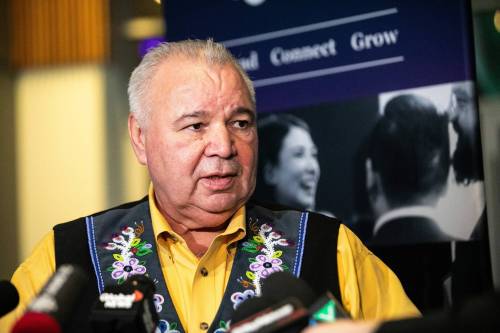
The board of Manitoba Hydro has appointed an Indigenous advisory circle as part of the Crown corporation’s reconciliation efforts.

Former Fox Lake Cree Nation chief and Keeyask Hydropower Limited Partnership board chair Robert Wavey will co-chair the group with Manitoba Hydro board chairman Jamie Wilson. The provincial government ordered the creation of the advisory circle in its 2023 mandate letter to Hydro’s board.

“I think we wanted to get everything right on this one,” Wilson said when asked why it has taken more than two years to appoint Indigenous advisers.

“This is a pretty fantastic group of people from a diverse background, including communities that are directly impacted by Hydro development in the past,” the first Indigenous chairman of the Manitoba Hydro board said in an interview Tuesday.

Read
Tuesday, May. 19, 2026

This not just in: treaty rights carry legal force and are protected in the Constitution

Tom Brodbeck 5 minute read Preview

This not just in: treaty rights carry legal force and are protected in the Constitution

Tom Brodbeck 5 minute read Tuesday, May. 19, 2026

More than a century after the numbered treaties were signed across Western Canada, the courts delivered a blunt reminder last week that those agreements are not ancient historical footnotes.

They still carry legal force and governments cannot ignore them.

Two major court rulings — one in Manitoba and one in Alberta — reinforced a reality many Canadians still do not fully understand: treaties between First Nations and the Crown remain constitutionally protected agreements that continue to shape Canadian law, public policy and governments’ obligations today.

The decisions also underscored something else: Canadians would benefit greatly from learning more about treaties, why they were negotiated as Canada expanded westward and why courts continue to uphold Indigenous and treaty rights.

Read
Tuesday, May. 19, 2026

Alberta’s timing targets for West Coast pipeline ‘best-case scenario’: CIBC analysts

Lauren Krugel, The Canadian Press 4 minute read Preview

Alberta’s timing targets for West Coast pipeline ‘best-case scenario’: CIBC analysts

Lauren Krugel, The Canadian Press 4 minute read Wednesday, May. 20, 2026

CALGARY - The targeted timeline the Alberta government set out for construction to begin on a potential new West Coast oil pipeline is ambitious, with many obstacles yet to clear, analysts at CIBC World Markets wrote in a recent report.

The province aims to submit a proposal to the federal major projects office by July 1, have it designated a project of national interest by Oct. 1 and get shovels in the ground as early as Sept. 1, 2027. Oil could begin to flow around 2033 or 2034, a provincial official told a media background briefing last week.

"While we are encouraged by the continued sense of urgency, we would characterize these timelines as optimistic and reflective of a best-case scenario," analysts Robert Catellier and Rogan Anantharajah wrote in a Monday industry update.

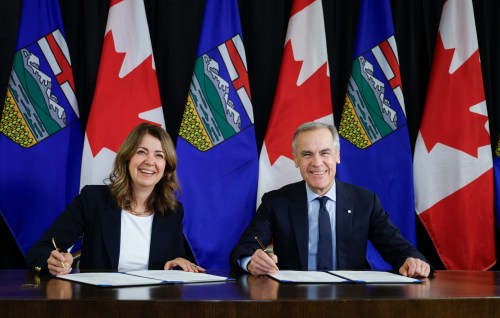
The Alberta government laid out those targets Friday after it and Ottawa finalized one of the last outstanding elements of the energy accord they signed late last year: an agreement on how the market price on carbon is to gradually increase to $130 a tonne by 2040.

Read
Wednesday, May. 20, 2026

Americans are looking back centuries to find Canadian ancestors — and citizenship

Nono Shen, The Canadian Press 10 minute read Preview

Americans are looking back centuries to find Canadian ancestors — and citizenship

Nono Shen, The Canadian Press 10 minute read Wednesday, May. 20, 2026

Cody Sibley was born and raised in Louisiana, but he always felt his family shared strong ties to Canada thanks to his Acadian ancestors from Nova Scotia.

Sibley said that as an eighth-generation descendant of Acadians, his family's roots could be traced back to "generation zero," Agathe Doucet, who was baptized on Jan. 19, 1710, in Nova Scotia.

He said Doucet married to Pierre Pitre in 1727, but the couple's lives were turned upside down in 1755 when British soldiers arrived at their doors and ordered their expulsion; like many Acadians, they ended up in Louisiana, where the community went on to become known as Cajuns.

Sibley is now among a surge of Americans combing through genealogical records in the hopes of finding a Canadian ancestor — some, like Sibley's, dating back hundreds of years, long before Canada officially existed. They plan to use the information to claim Canadian citizenship, under recently introduced legal changes that remove the so-called "first-generation limit" on citizenship for people born or adopted outside Canada to a Canadian citizen.

Read
Wednesday, May. 20, 2026

It takes a village to raise — and educate — a child

Jerry Storie 6 minute read Tuesday, May. 19, 2026

The oft-quoted saying, “it takes a village to raise a child,” resembles an African proverb. In the Yoruba language, the saying goes “two eyes birth a child, but 200 eyes raise it.”

Over the past several decades, that saying has come to mean something entirely different from what villagers meant, in Africa and in the small town where I grew up. The saying meant two, equally important things. It meant the community has a stake in ensuring that children are properly cared for, but the saying also meant that children must be taught and understand their obligations to the community at large.

The 200 eyes raising the child in the village did not look away when the parents or a child failed to observe community standards. When a child disrespected someone in the community, they were corrected. The village had a clear code of conduct that governed what was expected behaviour. These mores, or societal expectations, were understood and enforced by both parents and community members.

Everyone needs to understand their society’s written and unwritten rules. It is our obligation to teach our children the expectations we have of each other.

The folly of war: the wisdom of peace

John R. Wiens 6 minute read Preview

The folly of war: the wisdom of peace

John R. Wiens 6 minute read Tuesday, May. 19, 2026

In the 1980s I was a peace advocate —I still am. One of the founders and first president of the Educators for Social Responsibility, I helped organize, promote and speak at peace and anti-nuclear rallies and marches. We developed, collected and distributed peace curricula from across Canada for teaching in Manitoba schools.

Read
Tuesday, May. 19, 2026