Historical Connections

Please review each article prior to use: grade-level applicability and curricular alignment might not be obvious from the headline alone.
No Subscription Required

Renewed museum showcases history of former municipality with wealth of artifacts

Brenda Suderman 7 minute read Preview
No Subscription Required

Renewed museum showcases history of former municipality with wealth of artifacts

Brenda Suderman 7 minute read Sunday, Sep. 26, 2021

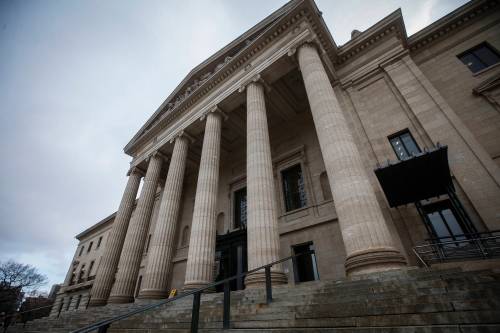
Writer Brenda Suderman continues her tour of Winnipeg’s community museums with a stop at St. Vital Museum, 600 St. Mary’s Rd., operated since 1985 by the St. Vital Historical Society. Closed during the past 18 months due to the global pandemic, the doors to this former historic firehall, police station and municipal office are open 10 a.m. to 4 p.m. every Saturday. Call 204-255-2864 for more information. Admission is free but donations are welcome.

• • •

An onstage curiosity for years, Jimmy Moore’s shovel fiddle now attracts interest without a string plucked or a note played.

“He was very creative,” recalled daughter Myrna Moore of the former St. Vital resident of Métis heritage who died in 1991.

Read
Sunday, Sep. 26, 2021
No Subscription Required

At 50, the WAG is embracing a spirit of reconciliation and reinvention

Alan Small 6 minute read Preview
No Subscription Required

At 50, the WAG is embracing a spirit of reconciliation and reinvention

Alan Small 6 minute read Friday, Sep. 24, 2021

Paintings by Vincent Van Gogh and Group of Seven artists such as L.L. FitzGerald were among the famous paintings on display when the Winnipeg Art Gallery opened its doors 50 years ago today.

Grand works all, but it was a few sculptures by Inuit artists that were also on display that caught the eye of Princess Margaret, who gave the gallery its grand unveiling on Sept. 25, 1971, during her royal visit to the city, the Free Press reported then.

Perhaps the princess was onto something. Half a century later, works by Indigenous artists are no longer mere curiosities that add variety to exhibitions showcasing the old masters.

Indigenous art at the WAG has become the showcase.

Read
Friday, Sep. 24, 2021
No Subscription Required

Winnipeg School Division to review all its schools named after people

Maggie Macintosh 6 minute read Preview
No Subscription Required

Winnipeg School Division to review all its schools named after people

Maggie Macintosh 6 minute read Thursday, Sep. 23, 2021

Manitoba’s largest school board is reviewing all of its K-12 building titles to determine whether the namesakes and their respective legacies are in line with modern-day morals.

Last week, Jamie Dumont, vice-chairwoman of the board of trustees in the Winnipeg School Division, introduced a motion to undertake an evaluation of all schools named after people and research each historical figure’s resumé.

“We operate, as a school division, under a number of values and, in many cases, we are very much a leader in diversity, equity, inclusion and Indigenous education — so I think it’s important that, as a board, we ensure that our schools and our buildings don’t contradict these values,” Dumont said during a virtual board meeting Sept. 13.

The review will identify whether any buildings are named after individuals with a history of actions that are discriminatory or not in accordance with WSD values, namely: inclusiveness, diversity, reconciliation, and respect for the rights and human dignity of others, or both.

Read
Thursday, Sep. 23, 2021
No Subscription Required

Shoal Lake 40 toasts clean water

Melissa Martin 6 minute read Preview
No Subscription Required

Shoal Lake 40 toasts clean water

Melissa Martin 6 minute read Wednesday, Sep. 15, 2021

SHOAL LAKE 40 FIRST NATION – As he raised his glass, Chief Vernon Redsky looked at the water and a memory came rushing back. It reminded him of when he was a kid, he said, and the water in Shoal Lake was crystal-clear like that, back when he and his friends would splash along the shore, drinking from the lake when they got thirsty.

So he thought about that as he clinked his glass against two others, and took a sip. A toast, to the first officially safe tap drinking water in Shoal Lake 40: on Wednesday, after 24 years, the Treaty Three First Nation’s boil water advisory officially ended.

“It’s surreal to be at this moment,” Redsky said at a ceremony to celebrate the achievement, as well as the opening of the community’s new school.

One day earlier, a government official in Kenora, Ont., had officially approved the latest test results from Shoal Lake 40’s new water treatment plant, which started pumping this summer. That night, Redsky couldn’t sleep; he called a former chief to talk about the long road they had travelled to get to this point.

Read
Wednesday, Sep. 15, 2021
No Subscription Required

Flags of Treaty One, the Dakota and Métis fly at city hall

Gabrielle Piché 4 minute read Preview
No Subscription Required

Flags of Treaty One, the Dakota and Métis fly at city hall

Gabrielle Piché 4 minute read Wednesday, Sep. 15, 2021

Drumbeats reverberated as four Indigenous leaders rode horseback past the brick-walled restaurants on King Street: it was the beginning of a ceremony to recognize the place of Indigenous people in Winnipeg.

On Wednesday morning, the flags of Treaty One First Nations, the Dakota and the Métis were hoisted at city hall. They'll be there permanently, alongside the flags of Canada, Manitoba and Winnipeg.

"It'll make our people proud that their flag will be flying at city hall," said Sagkeeng First Nation Chief Derrick Henderson. "That is so significant."

Chiefs, representatives of various Indigenous groups and Winnipeg Mayor Brian Bowman spoke at the flag-raising event. Ribbon skirts, headdresses and face masks were abundant among the crowd.

Read
Wednesday, Sep. 15, 2021
No Subscription Required

Winnipeg Police Museum shines a light on the history of policing in city

Brenda Suderman 8 minute read Preview
No Subscription Required

Winnipeg Police Museum shines a light on the history of policing in city

Brenda Suderman 8 minute read Sunday, Sep. 5, 2021

Worn for only a few days or weeks, a set of frayed and grimy canvas armbands stored in a back room at the Winnipeg Police Museum bear the weight of more than a century of history.

Originally fastened around a jacket sleeve with a set of snaps or modified with hand stitched elastic, these armbands bear witness to the involvement of special police constables in the 1919 Winnipeg General Strike.

“They knew they were going to have all these civilians, so they needed ways to identify them,” museum curator Tammy Skrabek said, pointing to the large plastic bin of armbands stored on a shelf in a large second-floor archives room.

Along with the white armbands, printed with the words Special Police Winnipeg, the museum owns a bin of pinback celluloid buttons also issued to the anti-strike, anti-union volunteers hastily commissioned as police officers during the strike, which saw more than 30,000 workers participate, including most of Winnipeg’s Police Department.

Read
Sunday, Sep. 5, 2021
No Subscription Required

Set of The Porter a testament to the special connection production has with Winnipeg's Black history

Julia-Simone Rutgers 12 minute read Preview
No Subscription Required

Set of The Porter a testament to the special connection production has with Winnipeg's Black history

Julia-Simone Rutgers 12 minute read Thursday, Sep. 2, 2021

On a rainy Friday evening in Winnipeg’s landmark Nutty Club building, camera crews, grips, food services, hair and makeup teams, stand-ins and actors are spinning about in dance-like organized chaos.

The five-storey candy warehouse — first erected in 1905 and still standing in the shadow of active CP and CN rail lines — has been transformed, pulled back to its turn-of-the-20th-century roots as a set for CBC’s upcoming TV drama The Porter. At each stop along the building’s steep wooden staircase, the team behind Canada’s largest Black-led production is hard at work bringing the roaring ‘20s — and an oft-forgotten story of Black liberation and empowerment — to life.

On one floor, cast and crew block their scene movements, listening raptly to directors, speaking in huddles, donning crisp white shirts and suspenders or gowns, preparing for the crack of the clapperboard.

A floor above, the members of the “video village” tuck on their headphones, lean over screens and warn each other not to move, lest the ceilings shake below.

Read
Thursday, Sep. 2, 2021
No Subscription Required

Group engages community on renaming Wolseley neighbourhood

Malak Abas 4 minute read Preview
No Subscription Required

Group engages community on renaming Wolseley neighbourhood

Malak Abas 4 minute read Monday, Aug. 30, 2021

In 1870, Col. Garnet Wolseley led a military expedition into Manitoba to violently overthrow Louis Riel’s provisional government at the Red River Colony. On Sunday afternoon, a group gathered at Vimy Ridge Park to discuss how to push for the renaming of the neighbourhood that bears his name.

Red River Echoes, a Métis collective that first came together with the purpose of “bringing an alternative voice to what Métis people think in Manitoba” after Manitoba Metis Federation president David Chartrand put out an ad with the Winnipeg Free Press in March in support of the Winnipeg Police Service, put together the rendezvous to take questions and comments community members might have around the growing conversation to rename Wolseley.

"With a lot of names being changed right now, we thought it was a good opportunity,” Red River Echoes member Claire Johnston said. “And Wolseley in particular has a really violent and negative association for Métis people, and also all other people of colour in who live in Winnipeg.”

In the months since the remains of 215 children were found in unmarked graves near a residential school in Kamloops, B.C., calls have been sparked across the country to rename landmarks named after people who had a hand in the colonization of Canada. In Winnipeg, Wolseley isn’t the first instance — calls to rename Bishop Grandin Boulevard due to its namesake’s hand in the residential school system have resulted in consultations and a possible recommendation for its renaming coming to city council this fall.

Read
Monday, Aug. 30, 2021
No Subscription Required

Craig Block link to city’s Black history

Cody Sellar 4 minute read Preview
No Subscription Required

Craig Block link to city’s Black history

Cody Sellar 4 minute read Thursday, Aug. 26, 2021

Above a fruit seller in a small brick building on Main Street, a group of Black railway porters made history.

The Order of Sleeping Car Porters, formed in Winnipeg in 1917, was North America’s first Black labour union. Five years later, they established offices and a meeting hall on the second storey of the building, the Craig Block, at 795 Main St.

Now, the building has hit the market, without any historical status protections or a bronze plaque to commemorate its history.

History writer Christian Cassidy said he’s seen the building, which recently housed retail store Ma’s Fishing, go up for sale once or twice in the past. Each time, he worries someone will buy it and knock it down. It’s one of last buildings that links Winnipeg to the history of its Black communities.

Read
Thursday, Aug. 26, 2021
No Subscription Required

Boulevard, greenway could be renamed by end of year

Maggie Macintosh 3 minute read Preview
No Subscription Required

Boulevard, greenway could be renamed by end of year

Maggie Macintosh 3 minute read Sunday, Aug. 22, 2021

Bishop Grandin Boulevard and the greenway that runs parallel to it — both of which are named after an architect of the residential school system — could have new titles before the end of the year.

The volunteer board that oversees the greenway’s operations issued a notice this week to inform community members of its ongoing support for the City of Winnipeg’s efforts to explore cutting ties with Bishop Vital-Justin Grandin (1829-1902) as a namesake for local landmarks.

The board indicated renaming consultations are underway and it anticipates a report with a recommendation on the subject will be brought forward to city council this fall.

“I don’t want people to think we’re sitting on our hands and letting this fall by the wayside,” said Derick Young, president of Bishop Grandin Greenway Inc.

Read
Sunday, Aug. 22, 2021
No Subscription Required

City considering new name for park near former residential school to honour Indigenous leader

Joyanne Pursaga 5 minute read Preview
No Subscription Required

City considering new name for park near former residential school to honour Indigenous leader

Joyanne Pursaga 5 minute read Thursday, Aug. 19, 2021

AS a residential high school student, the site now known as Wellington Park offered him rare moments of joy.

As an adult survivor of that system, it helped trigger both positive memories and quiet, disturbing flashbacks.

Theodore Fontaine, who died in May, found more than a chance to play hockey and baseball at the Assiniboia Indian Residential School, according to his wife Morgan Fontaine.

“These fields, this was just for him a time of that little taste of freedom that he longed for.… It was just before his seventh birthday (that) he lost his freedom,” she said.

Read
Thursday, Aug. 19, 2021
No Subscription Required

Oh, Canada! We have a racism problem

Ruby Latif - Contributing Columnist, Toronto Star 4 minute read Preview
No Subscription Required

Oh, Canada! We have a racism problem

Ruby Latif - Contributing Columnist, Toronto Star 4 minute read Wednesday, Oct. 15, 2025

Sorry, Canada — as much as we like to believe we’re a multicultural country, we’re not as tolerant as we think we are.

Read
Wednesday, Oct. 15, 2025
No Subscription Required

Preserving stories of Muslim history in Manitoba

John Longhurst  3 minute read Preview
No Subscription Required

Preserving stories of Muslim history in Manitoba

John Longhurst  3 minute read Friday, Feb. 5, 2021

It was in the early 1900s when one of the first Muslims to live in Manitoba arrived in the province.

His name was Ahmed Awid, and he came from what is now Lebanon — one of perhaps fewer than 1,000 Muslims in Canada at the time.

Awid settled in Brandon, where he married a local woman and established two successful businesses before moving to Edmonton in 1928.

Awid’s story is one of many told in a new book: Muslims in Manitoba: a History of Resilience and Growth.

Read
Friday, Feb. 5, 2021
No Subscription Required

Indigenous, Muslim youth event seeks to build friendships

John Longhurst 2 minute read Preview
No Subscription Required

Indigenous, Muslim youth event seeks to build friendships

John Longhurst 2 minute read Saturday, Feb. 15, 2020

Indigenous and Muslim youth in Winnipeg are invited to get to know each other at a special gathering Sunday.

Longing for Belonging — sponsored by the Ma Mawi Wi Chi Itata Centre and the Islamic Social Services Association, with financial support from the Winnipeg Foundation — is a free event for youth ages 14 to 20. It’s happening at the United Way (580 Main St.) from 11 a.m. to 3 p.m.

Space is limited to 60 participants, but there is still room for a few more, event co-organizer Sarah Parkar of the Islamic association said.

The goal is to “provide a safe space where Indigenous and Muslim youth can learn about each other and break down stereotypes,” Parkar said.

Read
Saturday, Feb. 15, 2020
No Subscription Required

Riel, le lien entre les francos d’Amérique

Daniel Bahuaud de La Liberté pour le Winnipeg Free Press  5 minute read Preview
No Subscription Required

Riel, le lien entre les francos d’Amérique

Daniel Bahuaud de La Liberté pour le Winnipeg Free Press  5 minute read Saturday, Nov. 18, 2017

Pour Jocelyn Jalette, bédéiste de Joliette, au Québec, pas besoin d’être métis, ou manitobain, ou encore francophone en milieu minoritaire pour apprécier le combat, le triomphe et la tragédie de Louis Riel. Et voici pourquoi.

Dans La République assassinée des Métis, la bande dessinée de Jocelyn Jalette qui vient tout juste d’être publiée aux Éditions du Phoenix (www.editionsduphoenix.com), des personnages fictifs côtoient Louis Riel et Gabriel Dumont, mais aussi les politiciens Louis-Hippolyte Lafontaine, Louis-Joseph Papineau et Honoré Mercier.

Une palette de personnages pour mieux placer la résistance des Métis dans un contexte francophone plus large, comme le souligne l’auteur de 47 ans :

“Les liens sont étroits entre la résistance des Métis, Louis Riel et les francophones du Québec. Surtout quand on se rappelle que la lutte pour assurer un statut d’égalité entre le français, l’anglais, et les cultures francophone et anglophone, c’est l’affaire de tous les francophones.”

Read
Saturday, Nov. 18, 2017
No Subscription Required

Map-based history of Canada a marvel

Reviewed by Douglas J. Johnston 3 minute read Preview
No Subscription Required

Map-based history of Canada a marvel

Reviewed by Douglas J. Johnston 3 minute read Saturday, Oct. 28, 2017

If you like maps, you’ll like this book; if you like both maps and crisply recounted Canadian history, you’ll love it.

Adam Shoalts is the author of a previous Canadian bestseller, 2015’s Alone Against the North, which recounted his exploration of the muskeg and river wilderness that is the Hudson Bay Lowlands.

The maps of his second book are springboards for his accounts of how this country’s vast expanses were charted.

Shoalts believes maps have been fundamental in shaping our view of Canada. He supports this belief by offering up pivotal moments in our country’s history via stories built around 10 specific maps, most of which, in turn, are the product of specific explorations.

Read
Saturday, Oct. 28, 2017
No Subscription Required

Book details 1953 Cold War experiments on Winnipeg

Carol Sanders 5 minute read Preview
No Subscription Required

Book details 1953 Cold War experiments on Winnipeg

Carol Sanders 5 minute read Friday, Oct. 13, 2017

Winnipeg was duped into being a “guinea pig” for American chemical warfare experiments in 1953, but no one knows what effect it had on city residents, a University of Manitoba pharmacology professor emeritus says.

“It’s too late now to do anything about it or to know what health effects it had on people,” Frank LaBella said Thursday of the aerosol cloud of zinc cadmium sulphide that was sprayed in Winnipeg to test ways of distributing chemical and biological warfare agents.

The deceitful operation by the United States army came to light in 1980 and is back in the spotlight with the publication of a book by an American researcher that includes declassified information. Behind the Fog: How the U.S. Cold War Radiological Weapons Program Exposed Innocent Americans, by Lisa Martino-Taylor, details the testing carried out in cities in the U.S. and Winnipeg (which resembled target sites in the Soviet Union).

“Nobody knew what was going on,” LaBella said. In 1953, Winnipeg city council was told civil defence authorities were testing the effects of smoke over the city using “harmless fluorescent powder.”

Read
Friday, Oct. 13, 2017
No Subscription Required

Traversant le Canada en 20 chansons

Manella Vila Nova 4 minute read Preview
No Subscription Required

Traversant le Canada en 20 chansons

Manella Vila Nova 4 minute read Saturday, Jul. 8, 2017

De La Rochelle à la Colombie-Britannique en passant par l’Acadie, le Québec, l’Ontario et les Prairies, voici le voyage que proposera la chorale québécoise En Supplément’Air dans la Cathédrale de Saint-Boniface à l’occasion du 150e anniversaire de la Confédération canadienne, le 11 juillet.

Le Chœur En Supplément’Air a été fondé en 2015 par Carole Bellavance, la directrice artistique de la chorale. “Cette année, le chœur compte 300 choristes de toute la province du Québec. Tous les étés, nous organisons une tournée avec une quarantaine d’entre eux. Nous sommes partis le 3 juillet pour un premier concert à Ottawa, puis nous nous rendrons à North Bay, Sault Sainte-Marie, Thunder Bay. Nous terminerons à Winnipeg le 11 juillet,” Bellavance a dit.

C’est la première fois que le chœur se déplace aussi loin à l’ouest du Canada. “Avec notre spectacle Le périple de la chanson francophone en Haute-Amérique, nous voulons faire valoir l’histoire de la chanson francophone au Canada à travers le temps. Nous avons choisi des chansons de partout pour mettre en valeur les régions. Le propos se prête bien à la grande aventure de la francophonie canadienne. J’ai profité du 150e anniversaire de la Confédération pour faire vivre aux choristes les chansons francophones canadiennes, et pas seulement québécoises.”

Harmonisé et orchestré par François Couture, le spectacle met la culture francophone au premier plan. “La culture francophone a été apportée de l’Europe. Pour illustrer cela, notre première chanson s’intitule Je pars à l’autre bout du monde. Au début du spectacle, on se sent vraiment à La Rochelle. Ensuite, on arrive dans les Maritimes avec des chansons qui reflètent l’histoire de l’Acadie, puis du Québec, et le développement de l’Ontario. Nous suivons le trajet de la chanson francophone, d’est en ouest.”

Read
Saturday, Jul. 8, 2017
No Subscription Required

‘Cette terre n’a fait aucun mal’

Gavin Boutroy de La Liberté pour le Winnipeg Free Press 5 minute read Preview
No Subscription Required

‘Cette terre n’a fait aucun mal’

Gavin Boutroy de La Liberté pour le Winnipeg Free Press 5 minute read Saturday, May. 13, 2017

Le 3 mai, une caravane d’étudiants en architecture paysagiste de l’Université du Manitoba a été accueillie devant le bâtiment d’autogouvernement de la Nation Dakota de Sioux Valley. Ils ont présenté à un comité du conseil de bande leurs plans pour l’aménagement d’un centre de guérison sur les lieux de l’École industrielle indienne de Brandon.

L’École industrielle indienne de Brandon était un pensionnat autochtone où, de 1895 à 1972, des enfants autochtones étaient éduqués par divers ordres religieux selon la politique d’assimilation du gouvernement canadien. Le chef de la Nation Dakota de Sioux Valley, Vincent Tacan, indique qu’il y a grand nombre de survivants de l’ancien pensionnat dans sa Nation.

“Nous avons besoin de guérir. Nous sentons les effets intergénérationnels des pensionnats autochtones. Essayer d’aller de l’avant avant de guérir serait inutile.”

Le Sud-ouest du Manitoba n’a aucun centre de guérison avec un environnement approprié aux cultures autochtones. Le chef Tacan note que les membres de sa Nation en besoin de traitement doivent se rendre à Regina, ou encore en Alberta.

Read
Saturday, May. 13, 2017
No Subscription Required

Uncovering Canada’s Arctic sea battle

By Alexandra Paul 4 minute read Preview
No Subscription Required

Uncovering Canada’s Arctic sea battle

By Alexandra Paul 4 minute read Tuesday, Aug. 6, 2013

In 1697, a single French ship sank a British warship, captured a second ship and chased off a third ship.

It was an audacious act of war that nearly turned into a suicide mission, but the Battle of Hudson Bay is a forgotten chapter in Canada's history.

That could change with an intrepid group's plan to film an educational video in Churchill this summer for a curriculum kit aimed at high school students. And if they can find the ship that sank, it would be a bonus.

Three hundred years ago, an imperious colonial aristocrat pointed his sails north from New France (modern Quebec), departing with a fleet of wooden sailing ships.

Read
Tuesday, Aug. 6, 2013
No Subscription Required

Hardship, history live in rock of ancient fort

By Bill Redekop 5 minute read Preview
No Subscription Required

Hardship, history live in rock of ancient fort

By Bill Redekop 5 minute read Saturday, Jul. 13, 2013

CHURCHILL -- Samuel Hearne, English explorer and governor of Fort Prince of Wales in the late 1700s, claimed the beavers he let waddle around the stone fort made better pets than some cats and dogs.

"I kept several," he wrote in his journal, "... til they became so domesticated as to answer to their names...and follow as a dog would do; and they were as pleased at being fondled as any animal I ever saw."

You had to do something, after all, stuck in a fort made out of quartzite rock, on a desolate point overlooking Hudson Bay, buffeted by northern gales and frequent blizzards and surrounded by sea ice two-thirds of the year.

Fort Prince of Wales, built in the mid-1700s, is testament to the extraordinary mettle of those first immigrants, mostly Scots from the Orkney Islands, who plied the fur trade for the Hudson's Bay Co., and the First Nations people who traded with them.

Read
Saturday, Jul. 13, 2013
No Subscription Required

Canadian political culture grew out of War of 1812

Reviewed by Graeme Voyer 3 minute read Preview
No Subscription Required

Canadian political culture grew out of War of 1812

Reviewed by Graeme Voyer 3 minute read Saturday, Jun. 16, 2012

THE War of 1812 -- a conflict between Britain and the United States, much of it contested on Canadian soil -- was a decisive event in Canadian history.

The U.S. proved unable to conquer and annex Britain's Upper and Lower Canadian colonies, thus ensuring that Canada would develop as an independent nation within the British imperial orbit.

This summer marks the 200th anniversary of the outbreak of the war. Recent years have witnessed a flurry of scholarship on the conflict -- Ontario historian Wesley Turner's 2011 biography of British general Isaac Brock comes to mind -- but it is difficult to imagine a better introduction to the War of 1812 than this account by York University professor of political science James Laxer.

This military and diplomatic history of the War emphasizes the roles played by two inspired leaders on the British and Canadian side: Brock, the commander of the forces of Upper Canada and the head of its civil government; and his ally Tecumseh, a Shawnee chief who joined the British to fight the Americans who were systematically encroaching on native land.

Read
Saturday, Jun. 16, 2012

Uniform decision takes military out of Pride march

Nicole Buffie 5 minute read Preview

Uniform decision takes military out of Pride march

Nicole Buffie 5 minute read Wednesday, Jun. 3, 2026

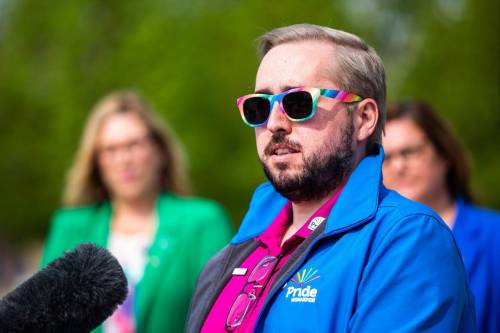
Pride Winnipeg’s president says 17 Wing Winnipeg’s decision not to send a military contingent to this year’s pride parade because of a ban on uniforms shows the military’s true colours.

Ahead of Sunday’s annual parade, Pride Winnipeg said it had banned military personnel in uniform based on community consultations and feedback. President Barry Karlenzig said the ban was supposed to apply only for this year’s march, and military members were welcome to come wearing everyday clothes, including branded T-shirts or golf shirts.

In response, 17 Wing Winnipeg pulled out of its participation in the parade.

“It has me sit back and say, ‘Is the military in the parade for the right reasons?’ Same as what we ask with police, same as what we ask with corporate partners, is you should be there for the community and to support the community. Are you there to support the community or are you there for the photo ops?” Karlenzig said Wednesday.

Read
Wednesday, Jun. 3, 2026

AFN chief rebukes Alberta separation talks in meeting with King Charles

Alessia Passafiume, The Canadian Press 3 minute read Preview

AFN chief rebukes Alberta separation talks in meeting with King Charles

Alessia Passafiume, The Canadian Press 3 minute read Wednesday, Jun. 3, 2026

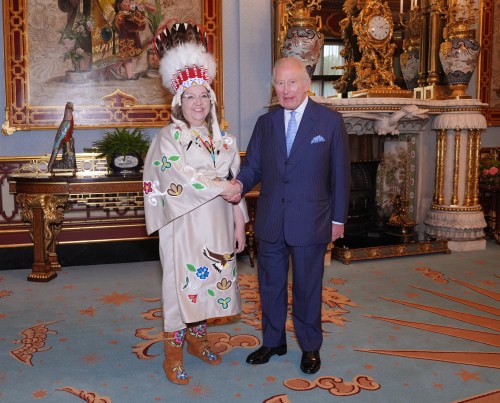
OTTAWA - The national chief of the Assembly of First Nations rebuked the Alberta separation movement during a meeting with King Charles at Buckingham Palace on Tuesday.

"The King was there with us in unison, that First Nations are foundational partners in the creation of Canada, and our relationship cannot be changed or moved just from politics," Cindy Woodhouse Nepinak told The Canadian Press in an interview.

"As long as the sun shines, the grass grows and the river flows, we're all treaty people in Canada."

The Alberta government is putting forward a referendum in October asking voters if they want to remain part of Canada or to pursue a second binding referendum on separating from Canada.

Read
Wednesday, Jun. 3, 2026